


Mahogany Sideboard with Drawers
A mahogany sideboard with drawers brings structured dignity to a dining room, offering deep storage and rich timber grain.
Mahogany Sideboard with Drawers
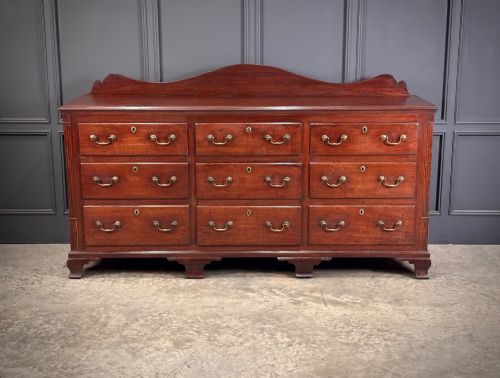
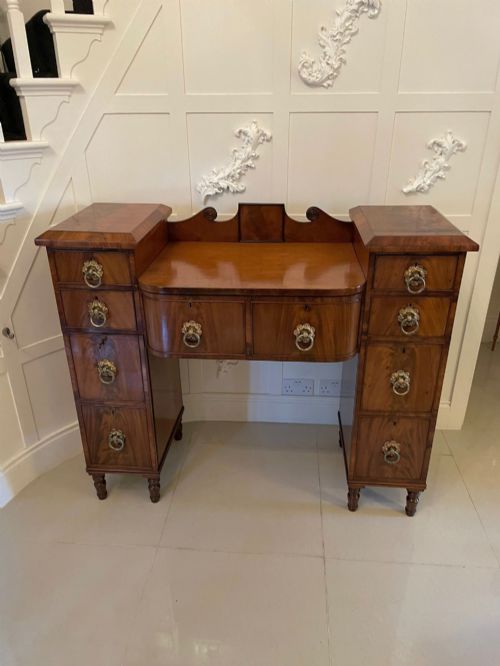
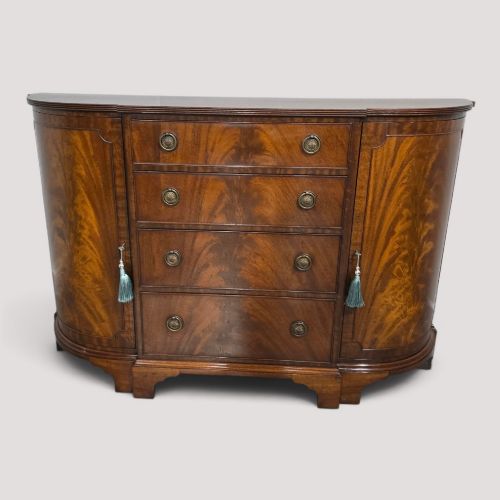
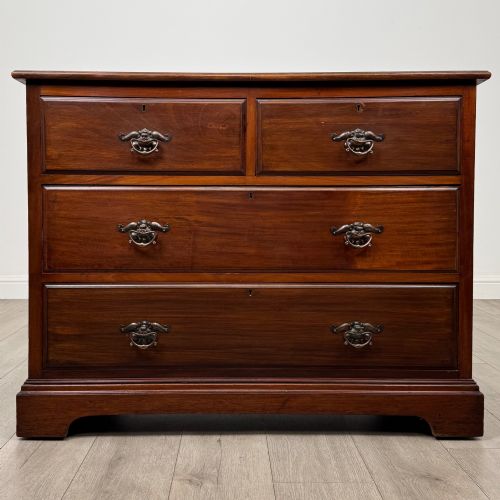
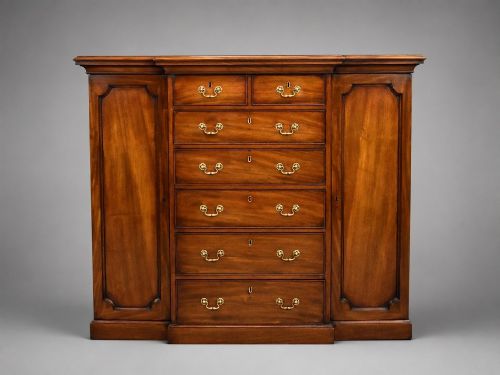
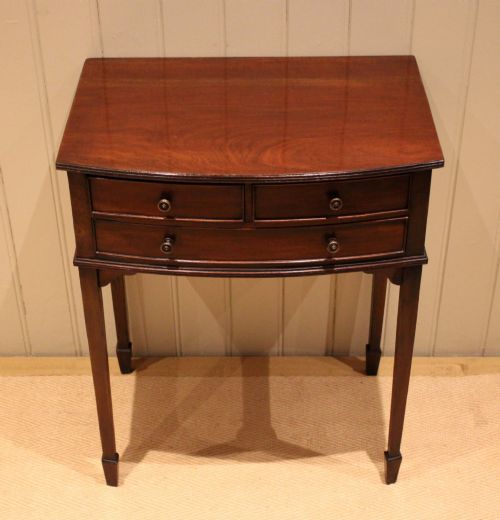
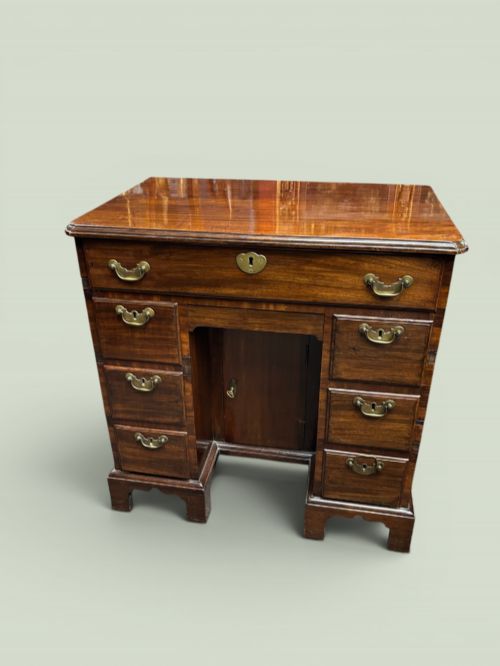
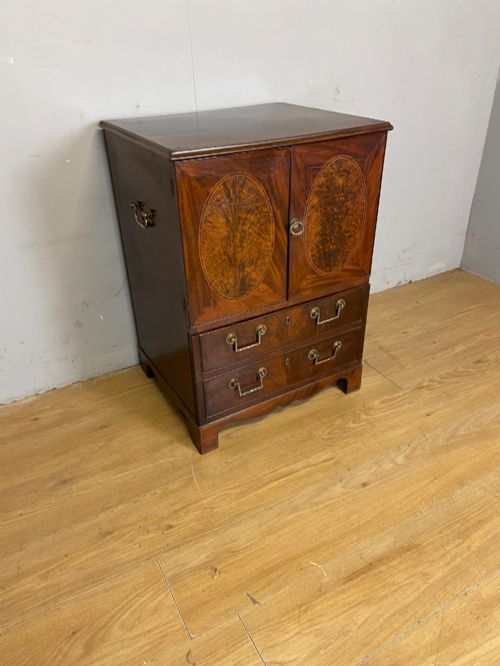
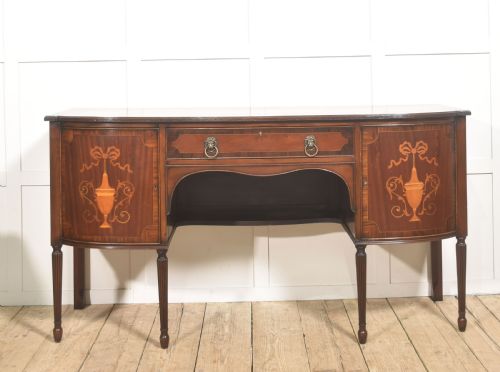
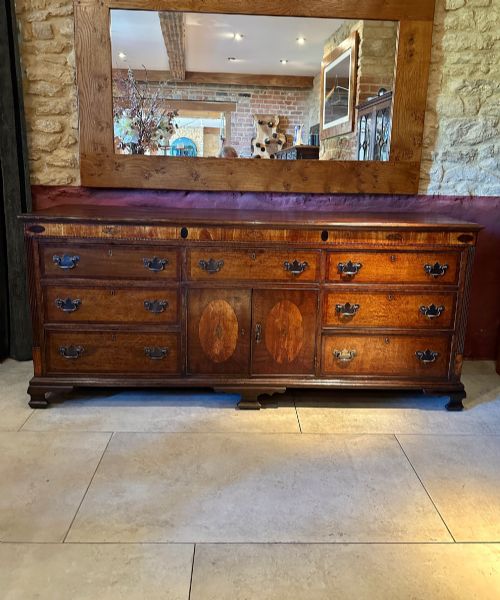
When you search for a mahogany sideboard with drawers, you encounter a practical dining room form that evolved through the Georgian, Regency and Edwardian eras to serve food and store linens. The pieces seen on this page span server tables, chiffoniers and cupboard bases, reflecting how cabinetmakers adapted the form for domestic service over two centuries.
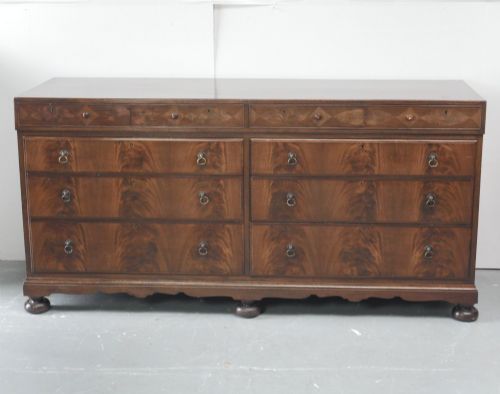
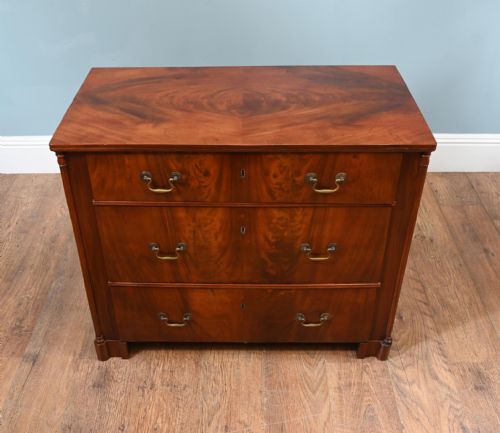
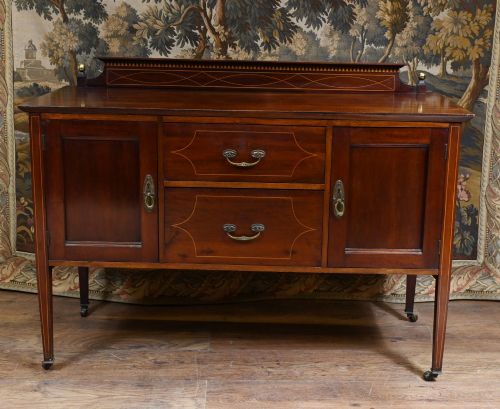
You are most likely to meet Georgian examples with flame veneers and Edwardian pieces of Sheraton revival design featuring boxwood and satinwood inlay. These variations demonstrate the enduring appeal of rich timber paired with functional drawer space in British interiors.

How they were made
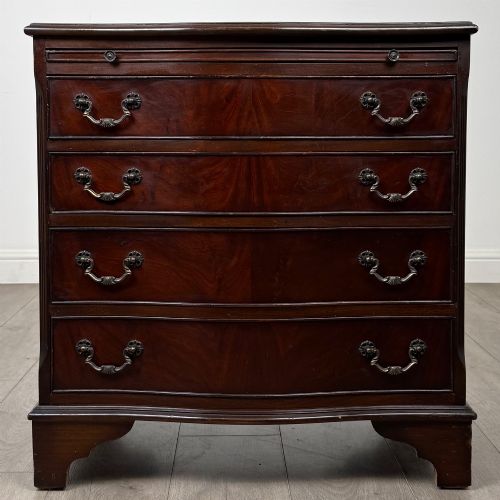
Makers constructed these carcases primarily in solid mahogany and pine, often applying figured flame mahogany veneers to drawer fronts and door panels to create dramatic visual movement. Secondary timbers such as oak appeared in drawer linings, while contrasting stringing of satinwood and boxwood defined the edges of Sheraton revival pieces.
Cabinetmakers secured brass handles and backplates to the drawer fronts, pairing functional hardware with decorative brass gallery rails or inlay work. The surfaces received hand-polished finishes that highlighted the deep red and brown tones of the wood.
What varies in quality
The degree of timber selection sets the baseline for quality, visible in the symmetry and depth of flame mahogany veneers across multiple drawer fronts. Superior execution shows in precise geometric inlay and tightly fitted drawer construction that glides smoothly within its runners.
Proportion and architectural restraint distinguish the finer examples from simpler provincial pieces. Cabinetmakers who matched grain patterns continuously across adjacent drawers achieved a level of visual harmony that lesser workshops omitted.
Goodall of Manchester
The Mahogany Sideboard with Drawers Glossary
- Flame mahogany
- A veneer cut from the branch junction of the tree, producing a distinctive rippled pattern resembling flickering flames. This decorative wood was prized for central door panels and principal drawer fronts.
- Cross-banding
- A border veneer applied around the edge of a table top or drawer front where the grain runs perpendicular to the main surface. It created a neat framing effect on Sheraton revival and Georgian pieces.
- Chiffonier
- A low cabinet with enclosed shelves below and frequently a tiered shelf back above, designed for serving food and storing silver. Regency and George III examples often incorporated a writing drawer.
- Cellarette
- A fitted drawer or standalone box lined for cooling and storing wine bottles safely. These compartments appeared within larger sideboard carcases during the Georgian period.
- Sheraton revival
- A late nineteenth and early twentieth century design movement inspired by the neoclassical furniture of George Sheraton. Pieces from this revival used light wood inlay, tapered legs and satinwood cross-banding.
Mahogany Sideboard with Drawers: Frequently Asked Questions
How do I spot a Georgian sideboard?
Look for hand-cut dovetails inside the drawers and dense, heavy mahogany timbers that show subtle variations in colour.
Georgian pieces often display restrained classical proportions without the heavy ornamentation found in later Victorian revivals.
Where were sideboards placed?
Dining rooms formed the natural home for these large serving pieces, positioned against a main wall to hold silver and dishes during meals.
Smaller scaled servers also found use in grand hallways as console tables.
How do I care for mahogany?
Keep the wood away from direct heat sources and strong sunlight to prevent the polish from fading and the timber from drying out.
Apply a traditional beeswax polish occasionally to nourish the grain and maintain the surface lustre.
What is satinwood inlay?
Satinwood inlay involves contrasting pale, golden-yellow timber strips set into recesses cut into the darker mahogany carcase.
This technique created delicate geometric borders and classical motifs popular during the Sheraton revival.