

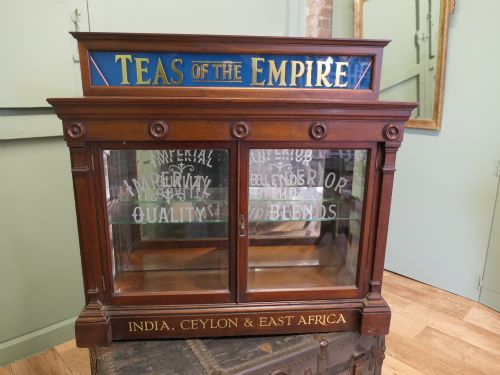

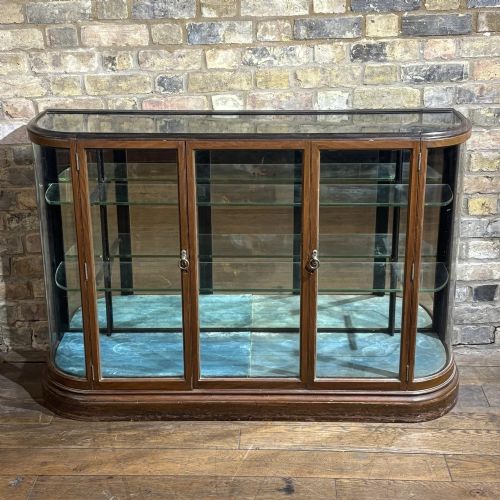
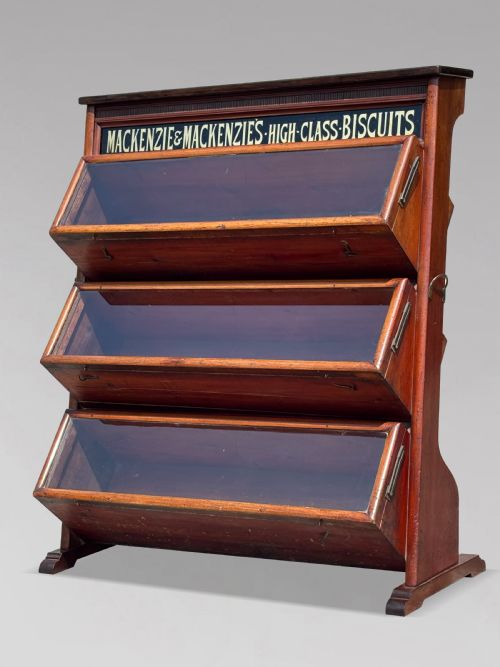
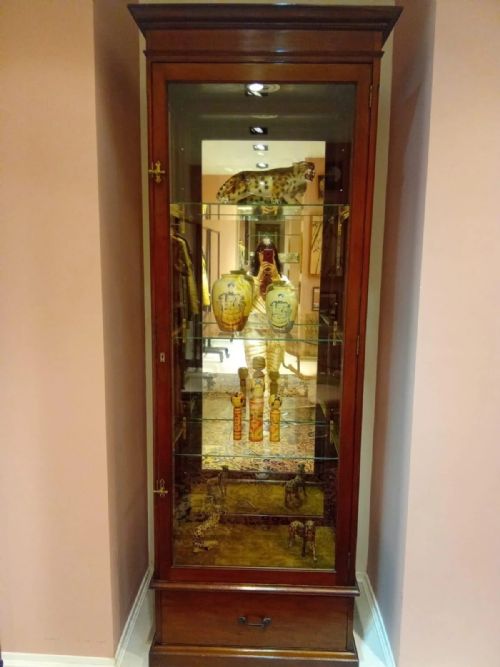


Mahogany Shop Display Case
A mahogany shop display case brings trade history into a room, offering sturdy glass and timber framing built to showcase small wares.
Mahogany Shop Display Case
A mahogany shop display case comprises countertop units, tall freestanding cabinets and shop counters designed for commercial retail from the Victorian era through the 1930s. Buyers examine pieces originating from chemist shops, confectioners and haberdasheries, with Edwardian and 1920s examples appearing most frequently.
The objects serve to hold goods securely while offering maximum visibility to customers through glazed panels and adjustable glass shelves. Makers adapted these cases for specific trades, incorporating mirrored interiors, specialised drawers and advertising signage for brands like Fry's and Rowntree's.
Materials and Construction
Makers built these pieces primarily using solid mahogany or hardwood frames housing large expanses of clear glass. Brass hardware secures doors and hinges, while internal mirrored panels and fabric or felt linings enhance the presentation of the goods.
Joinery techniques focus on structural rigidity to support heavy glass panes and frequent commercial use. Countertop boxes and tall vitrines often feature moulded cornices, plinths and glazed doors operating with tight tolerances.
Mahogany Shop Display Case Retail Price Guide 2026
Typical asking prices for mahogany shop display case among the pieces listed under this phrase on Sellingantiques today, from the lower quarter to the upper quarter. They describe what is for sale here now, not the wider market.
Listings feature mahogany, brass, mirror and felt across Victorian, Edwardian and 1920s commercial forms.
Assessing Quality
Quality rests in the crispness of the mahogany timber framing, the thickness of the plate glass and the integration of original brass fittings. Superior examples display refined proportions and sound structural joinery that withstands decades of commercial handling.
F Sage And Co·John Stow Ltd
The Mahogany Shop Display Case Glossary
- Vitrine
- A glass display cabinet used primarily for showing fine objects or retail goods. These units often feature glazed sides alongside front doors.
- Haberdashery cabinet
- A specialised storage and display unit featuring numerous shallow drawers with glass fronts. Retailers utilised these to sort and display small sewing goods and accessories.
- Shop counter
- A substantial retail furnishing combining a solid timber base with a glazed display top. Assistants served customers across these units while keeping merchandise visible.
- Apothecary box
- A compact container or small cabinet designed to hold medicinal phials and powders. Chemists placed these portable boxes on counters for immediate retail access.
Mahogany Shop Display Case: Frequently Asked Questions
What were these cases used for?
Shopkeepers utilised these glazed timber units to protect valuable merchandise from dust and handling while keeping goods clearly visible to passing customers. Retailers ranged from confectioners and jewellers to chemists and haberdasheries.
Inside, adjustable glass shelves and mirrored backs allowed shop assistants to arrange items effectively. Countertop versions placed small goods directly at eye level for counter transactions.
How do I date a display case?
Dating relies on examining the timber construction, glass thickness, brass hardware styles and overall aesthetic proportions of the piece. Victorian and Edwardian examples often display heavier mouldings and distinct brass catches compared to later 1920s commercial units.
Original trade advertising, painted lettering or maker plaques provide precise chronological markers. Structural clues such as hand-cut joinery versus machine milling also point toward specific decades.
How do I clean the glass?
Maintenance requires gentle cleaning solutions applied to a soft cloth rather than directly onto the glass, protecting antique timber frames from moisture damage. Vinegar-based solutions or mild soapy water lift grease without harming aged surfaces.
Care must be taken around hand-painted advertising signage or delicate gilt lettering to prevent flaking. Dry microfiber cloths finish the surface safely.