

Mahogany Sheet Music Holder
A mahogany sheet music holder offers a practical way to store folios and scores while anchoring a room with rich timber grain.
Mahogany Sheet Music Holder
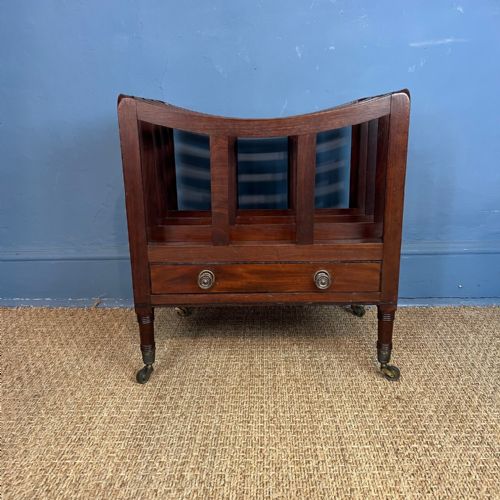
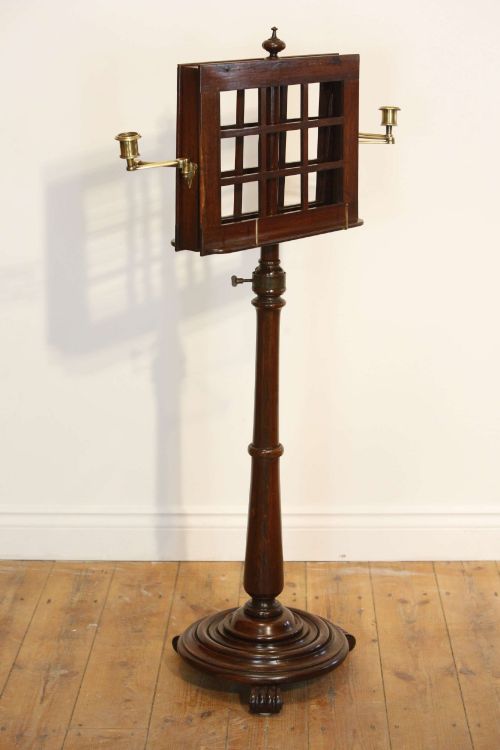
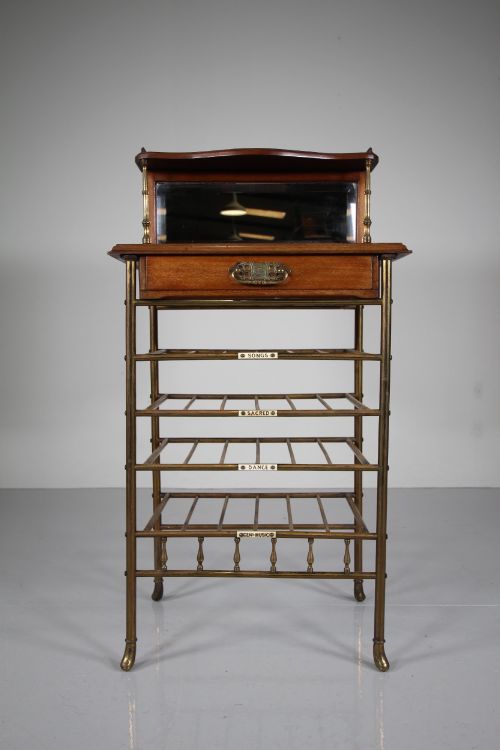
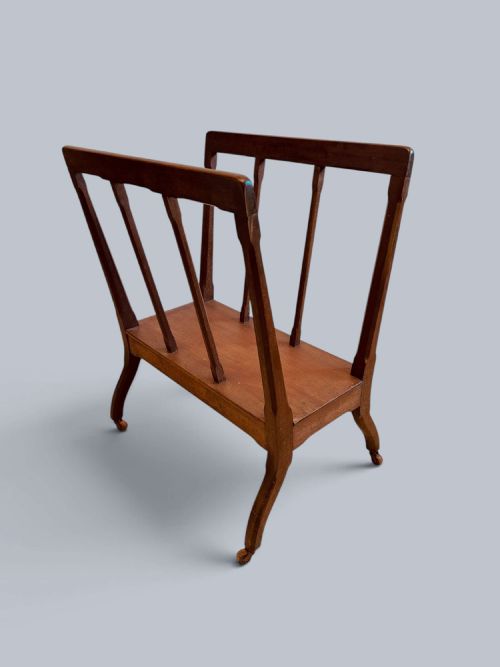
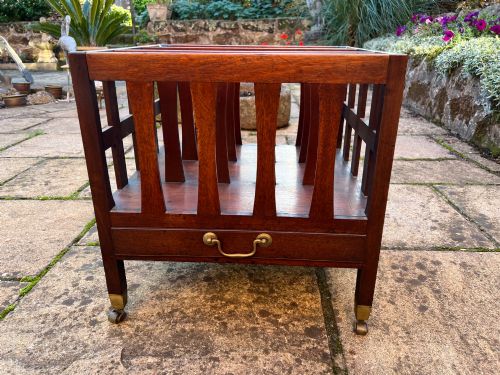
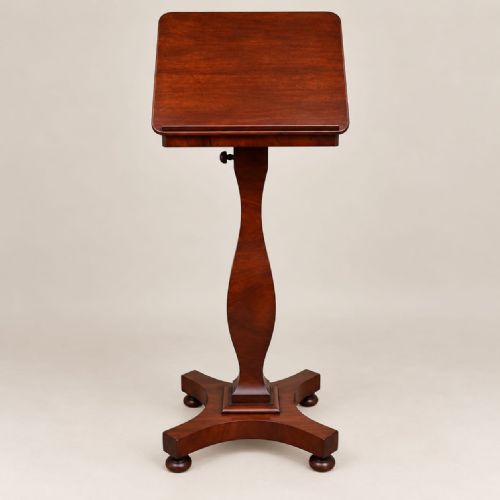
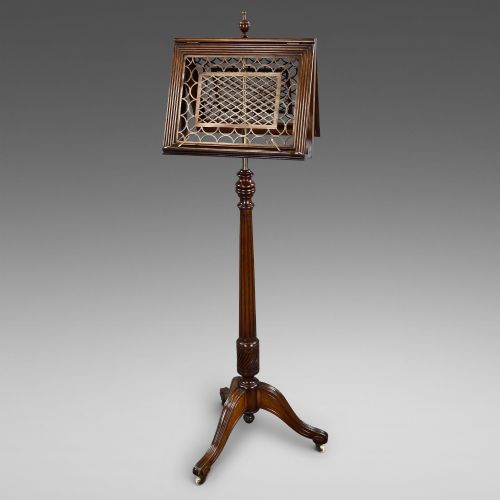
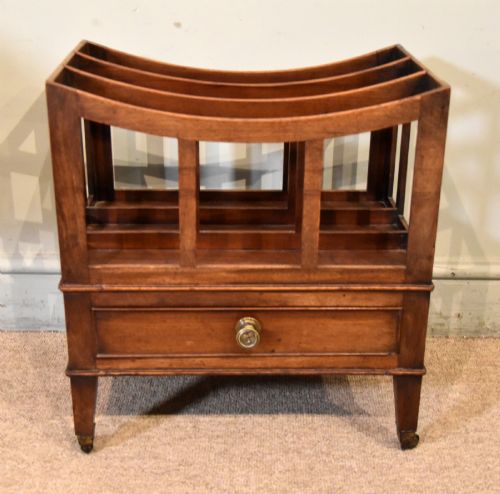
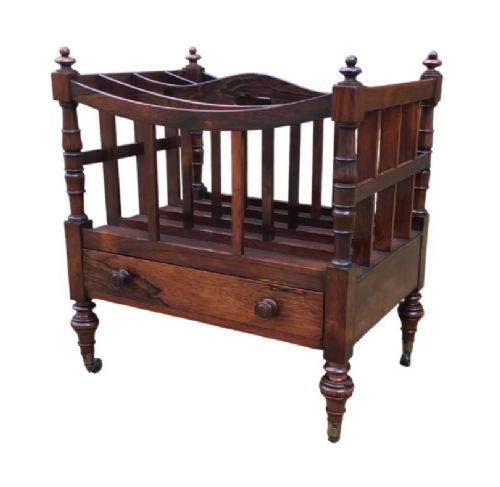
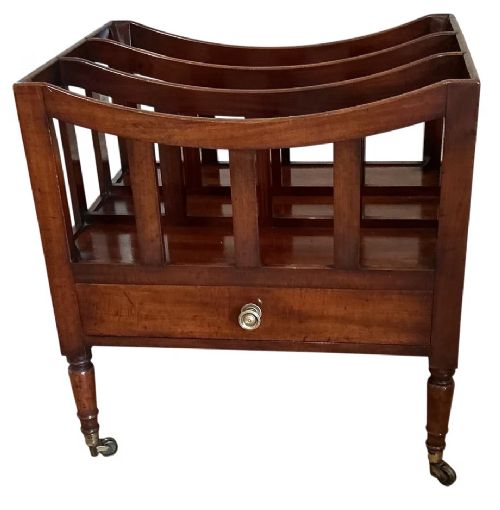
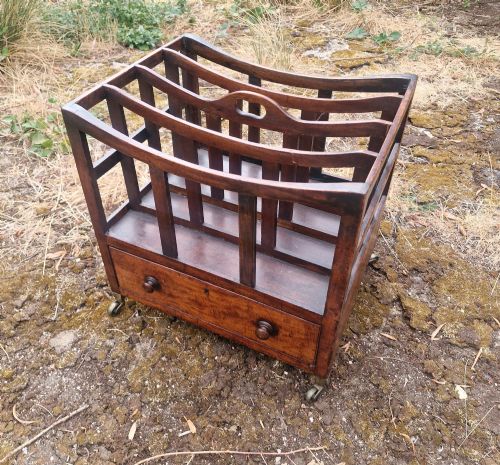
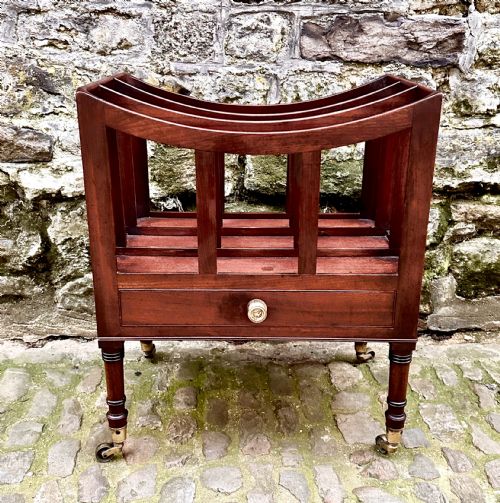
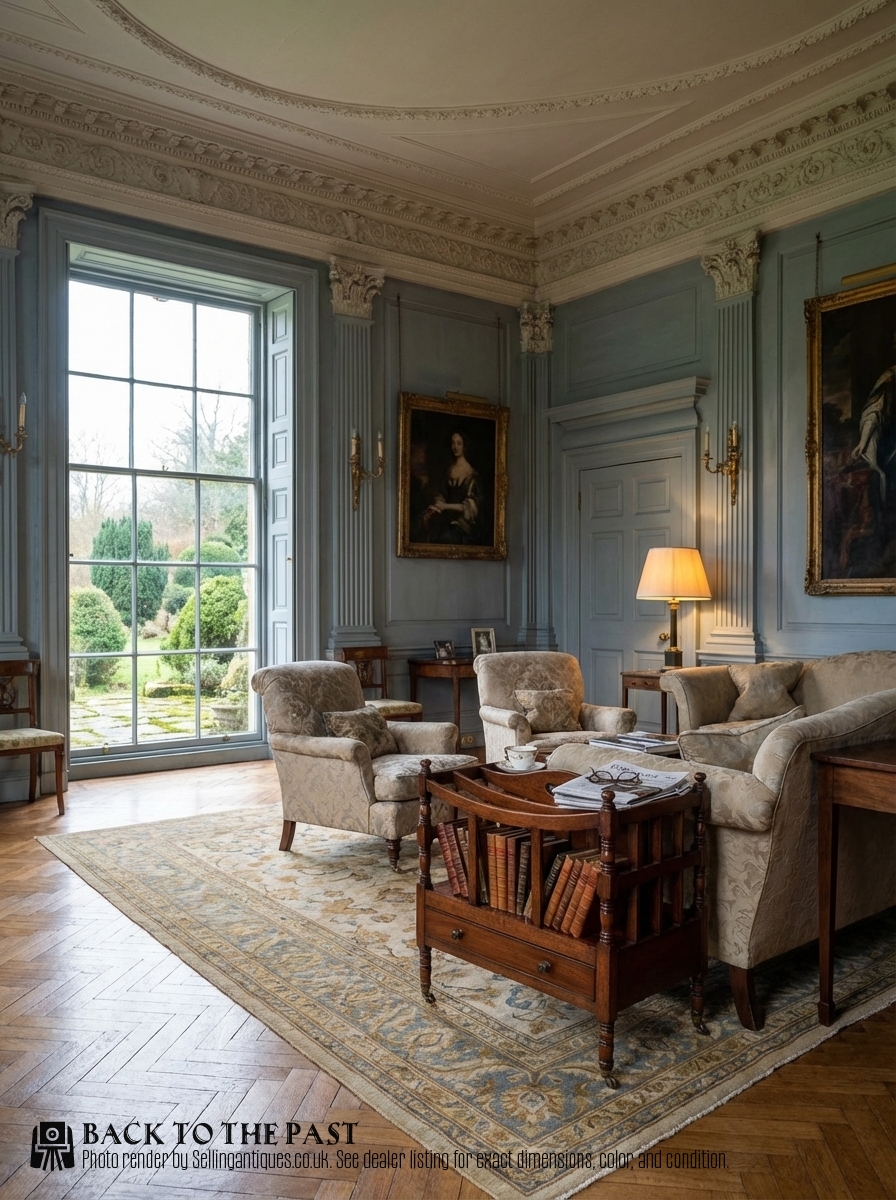
A mahogany sheet music holder, frequently catalogued as a canterbury or magazine tidy, serves to organise bound scores and loose folios near a piano or seating area. These pieces typically take the form of open-slatted divisions raised on low legs or castors, sometimes incorporating a single drawer at the base.
The pieces on this page span the Georgian, Regency, William IV, and Victorian eras, with dates reaching back to around eighteen hundred and the eighteen-thirties. Most examples you meet here are classic canterburys featuring three pierced scroll divisions constructed from solid mahogany and its veneers.
How they were made
Cabinet makers constructed these holders primarily from mahogany, utilising the dense grain for both structural stability and polished decorative surfaces. Brass fittings, including delicate castors and drawer handles, appear frequently across the pieces to assist mobility and daily use.
Joinery techniques involve pierced scrollwork for the upright divisions and careful framing to support the slatted bases. Drawers on the George III examples feature hand-cut joints, combining functional storage with the refined cabinet-making standards of the period.
Mahogany Sheet Music Holder Retail Price Guide 2026
Typical asking prices for mahogany sheet music holder among the pieces listed under this phrase on Sellingantiques today, from the lower quarter to the upper quarter. They describe what is for sale here now, not the wider market.
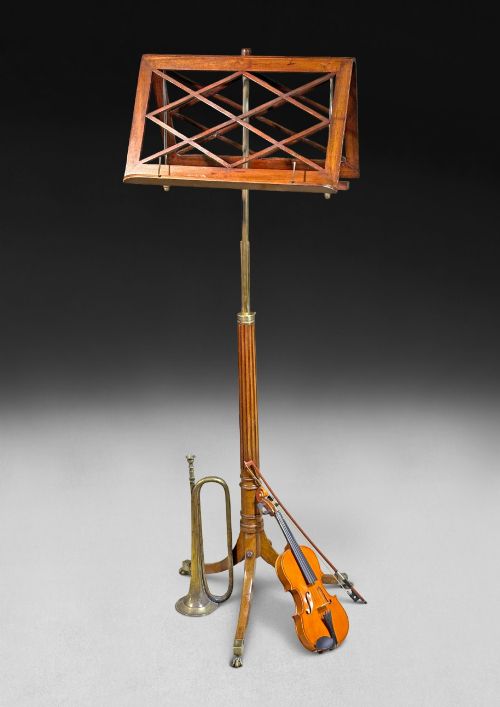
Musicians relied on these low stands so heavily that even a stray violin bow occasionally found a temporary home between the slats.
What varies in quality
The distinction between standard examples and superior pieces rests on the crispness of the pierced scrollwork and the selection of figured mahogany timber. Finer iterations display thoughtful proportions, integrated drawers, and original brass castors that elevate the piece from a simple tidy to a polished furniture item.
Age and period details also dictate the character of each item, with Georgian and Regency pieces showing more deliberate attention to the turning of legs and the shaping of slats. Consistency in the timber grain and the retention of period brassware separate the utilitarian items from the more decorative workshops.
The Mahogany Sheet Music Holder Glossary
- Canterbury
- A low stand with divisions for holding sheet music or books, typically fitted with castors for easy movement around a music room or parlour.
- Regency
- A style period dating roughly from eighteen eleven to eighteen twenty-one, known for classical restraint, clean lines, and architectural influence in British furniture.
- Georgian
- The period spanning the reigns of the first four Georges, celebrated for steady developments in domestic furniture design and the prominent use of mahogany.
- Pierced scroll
- Cut-out woodwork shaped into sweeping, decorative curves, commonly used to form the open upright divisions of a music stand.
Mahogany Sheet Music Holder: Frequently Asked Questions
What is a canterbury used for?
A canterbury was originally designed to hold sheet music, folios, and books close to a keyboard instrument for easy access during practice.
Over time, owners also used them to store newspapers and magazines in the parlour or living room.
How do I identify a Regency canterbury?
Regency pieces often display classical restraint, clean lines, and specific turning on the legs that reflect the early nineteenth-century aesthetic.
They frequently incorporate brass castors and pierced scroll divisions characteristic of the period.
Are all these holders made of mahogany?
The pieces listed across this page are constructed from mahogany, sometimes paired with brass for castors and small fittings.
This dense timber provides the rich grain and structural strength needed for slatted music divisions.
Do these music holders include drawers?
Some examples feature a single shallow drawer incorporated into the base beneath the slatted divisions.
This compartment provided extra storage for smaller musical accessories, tuning keys, or loose notes.