
Mahogany Serving Buffet
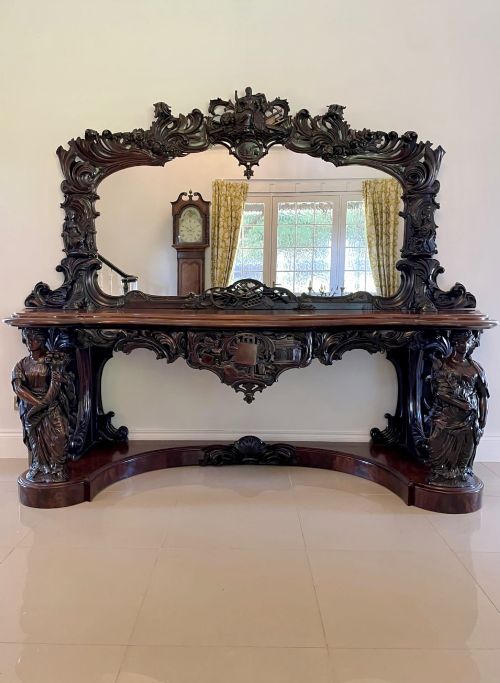
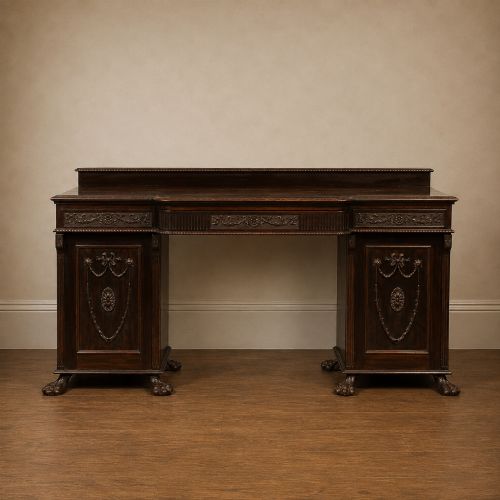
A mahogany serving buffet provides the dining room with a substantial timber surface for service, drawing on Georgian, Regency and Victorian forms.
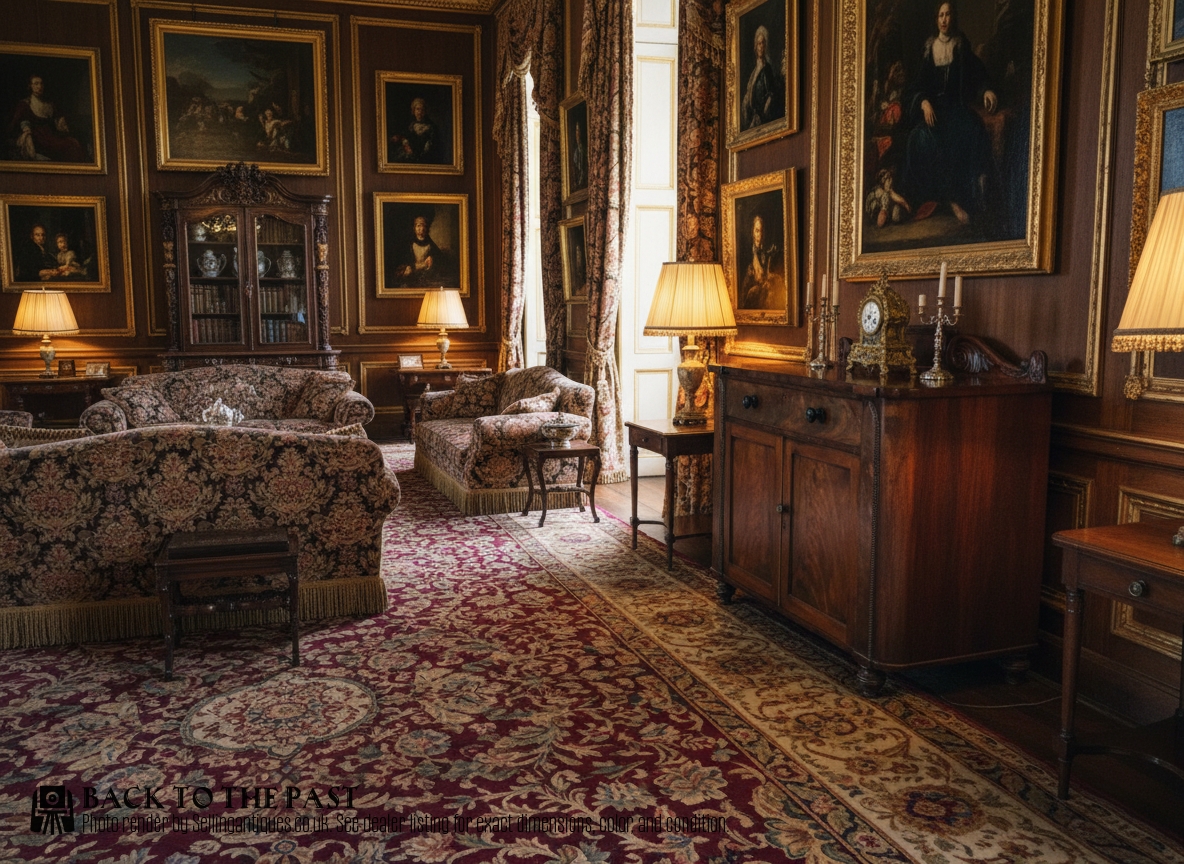
Mahogany Serving Buffet
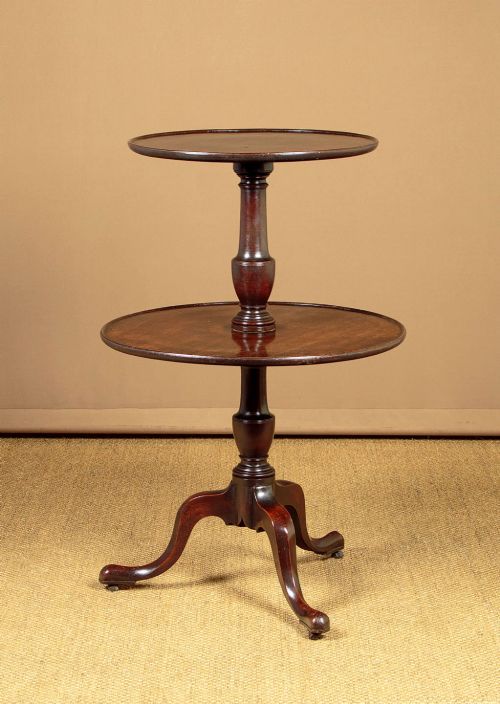
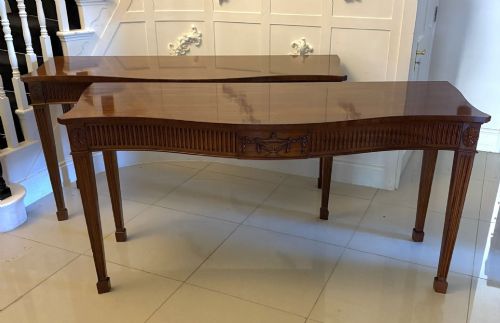
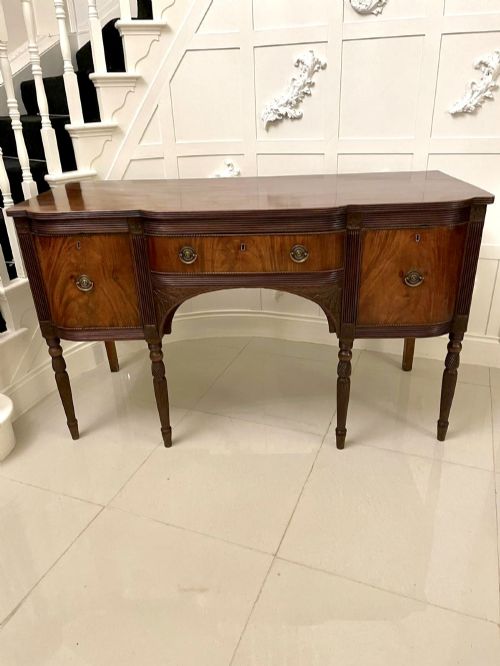
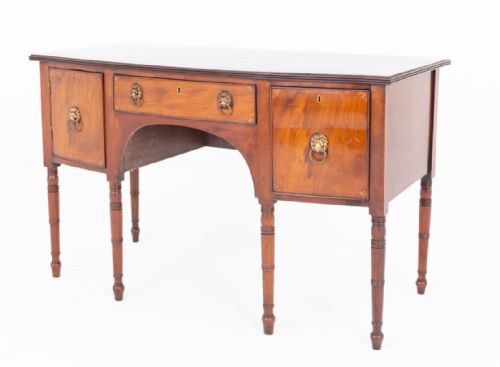
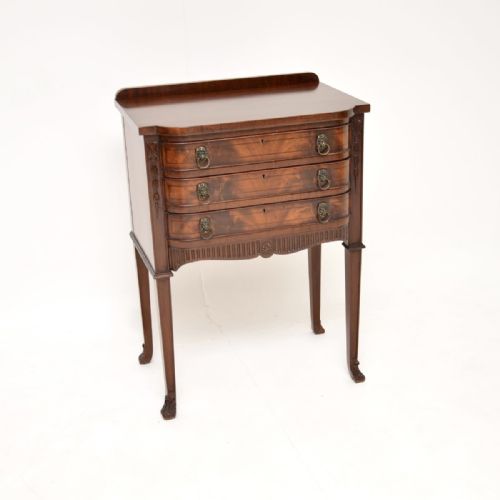
A mahogany serving buffet encompasses a variety of dining room furniture designed for presentation and storage, including sideboards, serving tables and multi-tiered dumb waiters. These pieces span from the 18th century through the Victorian era, offering long horizontal surfaces alongside tiered stacking.
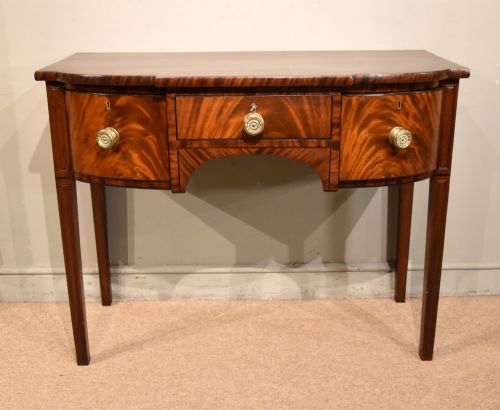
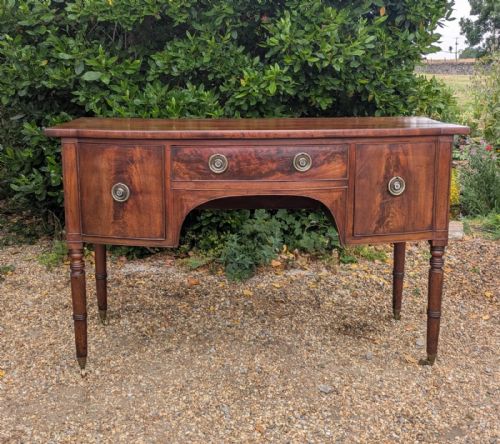
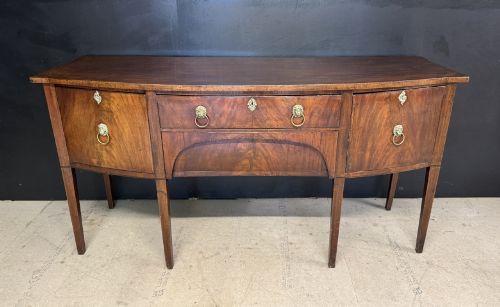
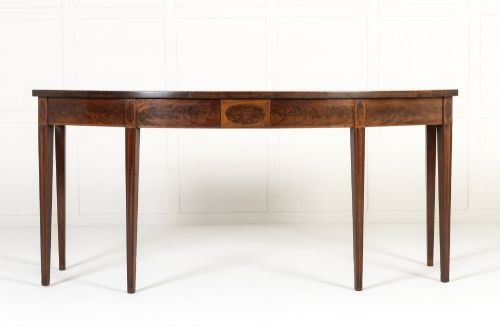
The version most commonly encountered on this page is the sideboard or serving table originating from the Georgian and Regency periods. Such pieces often incorporate breakfront designs, bow fronts or serpentine shapes intended for formal dining spaces.
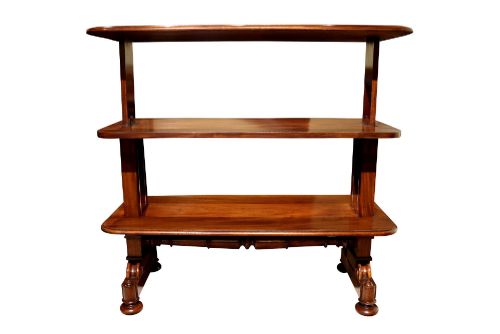
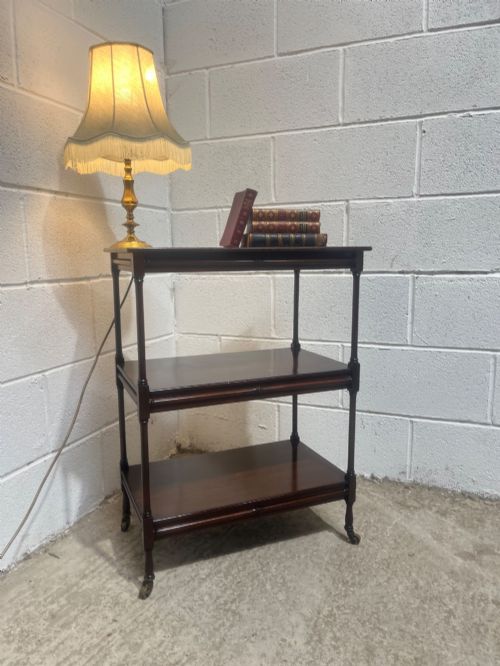
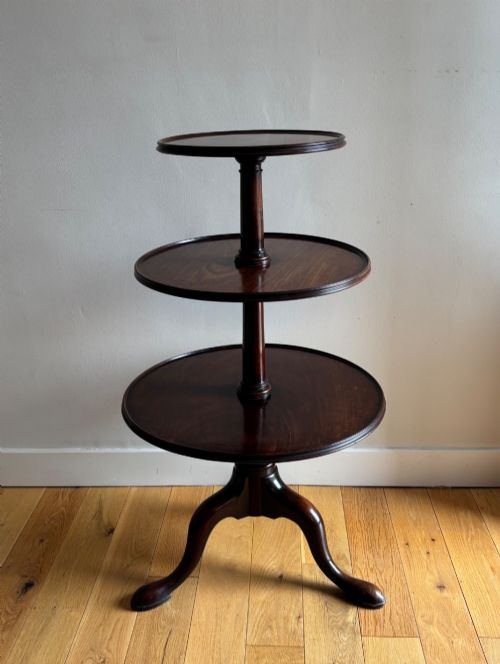
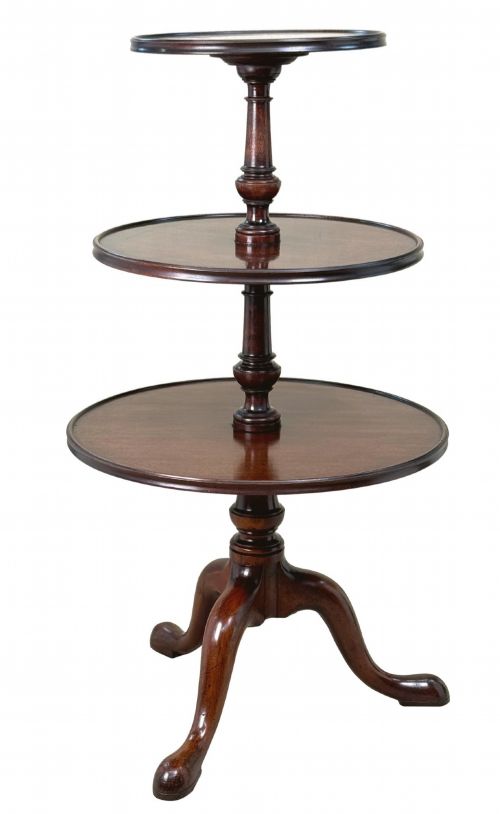
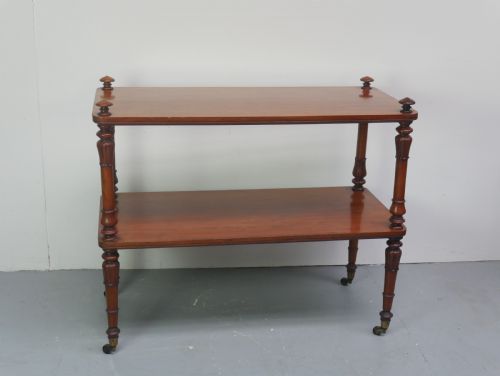
Tiered dumb waiters and buffets also appear frequently among the listings, providing rotating or fixed shelves supported on central columns or castors. These functional dining accessories reflect the changing domestic service requirements of the 19th century.
Materials and construction
Makers utilised solid timber and flame mahogany veneer over secondary woods, selecting boards for depth of grain and rich natural tone. Cabinet makers applied boxwood and satinwood inlay to create contrasting borders and neoclassical motifs across drawer fronts and top surfaces.
Structural elements frequently incorporated turned or reeded legs, brass castors for mobility, and brass stringing or inlay. Multi-tiered pieces relied on central turned pillars to support graduated circular or rectangular trays.
Listings feature mahogany serving buffets spanning from the 18th century through the Victorian period, including Georgian, Regency, and Edwardian styles.
Markers of quality
Quality rests upon the selection of timber figures, where symmetrical flame mahogany and crisp boxwood stringing elevate a piece above plain stock. The precision of the cabinet work, particularly in curved serpentine or breakfront forms, dictates the standing of the work.
Hardware and carved detail further separate examples, with original brass fittings, well-defined neoclassical carving and solid secondary framing marking the upper tier of production.
Gillows
The Mahogany Serving Buffet Glossary
- Serpentine
- A front profile that curves outward in the centre and inward at the sides. This shape demands high cabinet-making skill to execute cleanly in solid timber.
- Dumb waiter
- A tiered piece of dining room furniture with rotating or fixed shelves on a central column. It allowed diners to help themselves without servants present.
- Breakfront
- A piece of furniture where the central section projects forward from the flanking wings. It creates architectural depth in large sideboards.
- Stringing
- Thin lines of contrasting wood inlay used to outline drawers and panels. Boxwood and satinwood are typical materials for this decorative banding.
- Etagere
- A set of open shelves for displaying or serving items. These tiered stands often run on original brass castors.
Mahogany Serving Buffet: Frequently Asked Questions
How were dumb waiters used?
Dumb waiters stood beside the dining table to hold dishes, glassware, and dessert courses during meals. They allowed diners to serve themselves without servants lingering in the room.
Multi-tiered revolving trays meant food and tableware remained accessible from various seating positions around the dining space.
Where do I place a buffet?
A mahogany serving buffet traditionally stands against a dining room wall to support serving dishes during formal meals. Their narrow depth allows them to sit comfortably in hallways or drawing rooms as display surfaces.
Positioning them away from direct heat sources protects the polished mahogany surface and veneered details from drying out.
How do I date a sideboard?
Dating relies on stylistic clues, timber choice, and construction methods visible in the drawers and backboards. Georgian pieces often display straight or bow fronts with delicate satinwood inlay, while Victorian examples tend to be heavier with carved mirror backs.
Hardware such as original brass ring pulls and castors also points toward specific manufacturing decades.
How do I care for mahogany?
Maintenance requires regular dusting with a soft, dry cloth to prevent surface grit from scratching the French polished finish. Periodic application of quality wax feeds the timber and preserves the depth of the grain.
Direct sunlight causes mahogany to lighten over time, so positioning pieces out of harsh rays maintains the rich colour.