


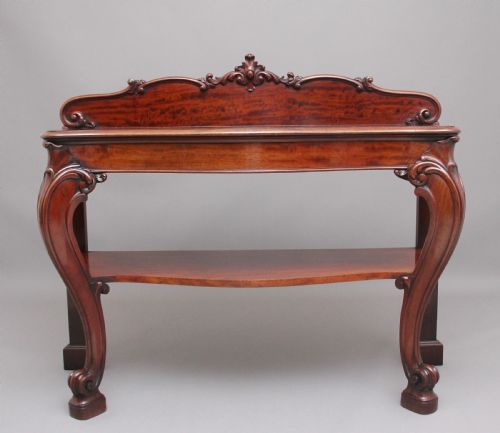


William IV Carved Sideboard
A william iv carved sideboard brings monumental presence to a dining room, combining rich timber and bold classical carving.
William IV Carved Sideboard
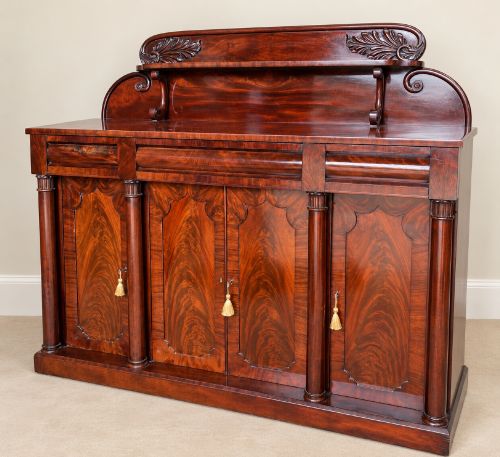
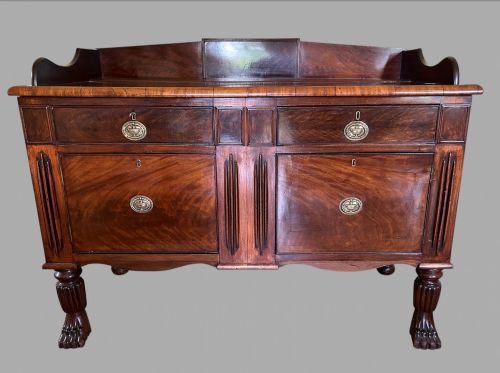
When you search for a william iv carved sideboard, you encounter substantial dining furniture dating predominantly from the nineteenth century. These pieces often take the form of pedestal sideboards, breakfront designs, or serving tables built to anchor a formal interior.
The aesthetic sits firmly within the william iv style, drawing on late regency influences while introducing heavier proportions and vigorous carving. Many examples use flame mahogany veneer to create striking grain patterns across doors and drawer fronts.
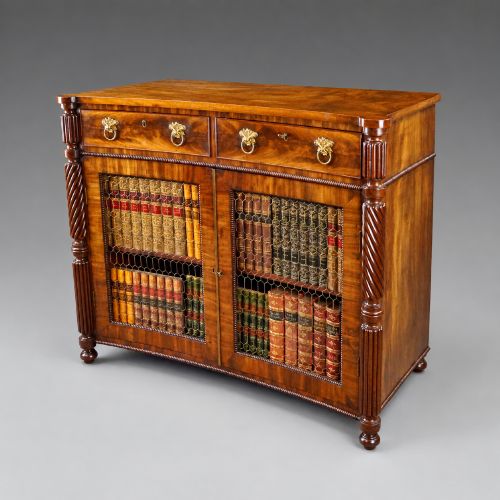
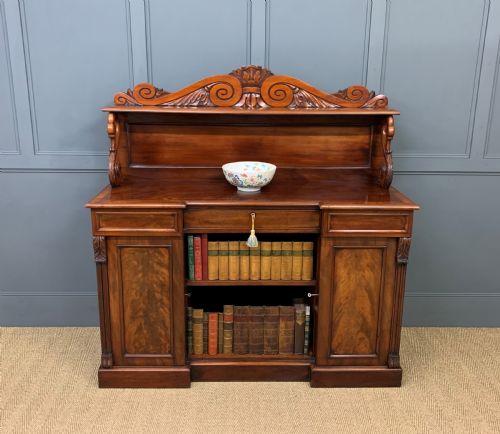
Alongside standard pedestal sideboards, the selection includes related forms such as chiffoniers and side cabinets. These variations share the characteristic timber and carving vocabulary typical of the period.
Materials and Construction
Cabinetmakers utilised solid mahogany and flame mahogany veneer applied to secondary timbers like pine. This technique provided deep, figured surfaces on the main panels while maintaining structural stability.
Carved elements, including scrollwork and classical motifs, were executed by hand in solid timber before being applied to the frame. Brass fittings and glass doors occasionally appear on related side cabinets and chiffoniers.
Some pedestal sideboards secretly conceal zinc-lined cellarets designed to keep your claret cool during long dinners.
Assessing Quality and Execution
The depth and crispness of the carving dictate much of the visual distinction between examples. Sharp, well-defined scrollwork and robust structural joinery mark out superior workshop output.
The choice of timber grain also separates standard items from exceptional pieces. Symmetrical flame mahogany veneer carefully matched across large doors demonstrates higher cabinetmaking ambition.
Gillows of Lancaster and London
The William IV Carved Sideboard Glossary
- Flame mahogany veneer
- A thin slice of timber cut from where branches join the main trunk, creating a fiery, undulating grain pattern. This was laid over a stable secondary wood to present a decorative surface.
- Pedestal sideboard
- A large dining room piece featuring a central section flanked by two heavy cupboards or pedestals. These often incorporate cellarets or deep drawers inside.
- Chiffonier
- A lower cabinet used for storing dining silver or linen, frequently topped with a shelf or a mirror back. They share the timber vocabulary of larger sideboards.
- Breakfront
- A piece of furniture where the central section projects forward from the flanking cupboards. This creates architectural depth and visual weight.
- Serving table
- An open-leg table used for presenting food during meals, standing without the enclosed cupboards found on standard sideboards.
William IV Carved Sideboard: Frequently Asked Questions
Where should I place a sideboard?
These large pieces suit dining rooms or spacious hallways where their monumental proportions can anchor the space.
Ensure adequate wall clearance so the deep pedestals and heavy doors open without obstruction.
How do I care for mahogany?
Maintain the polished timber by dusting regularly with a dry cloth and avoiding direct sunlight.
Occasional applications of appropriate wax nourish the flame mahogany veneer and preserve the lustre.
What is the difference between a sideboard and a chiffonier?
Sideboards are generally larger dining room pieces with enclosed pedestals designed for heavy storage.
Chiffoniers are more compact cabinets, often featuring shelves or mirror backs for display purposes.
How do I identify the period?
Look for heavy classical carving, scrolled brackets, and rich flame mahogany typical of nineteenth century British cabinetmaking.
Construction details like secondary pine framing and traditional joinery help confirm the era.