
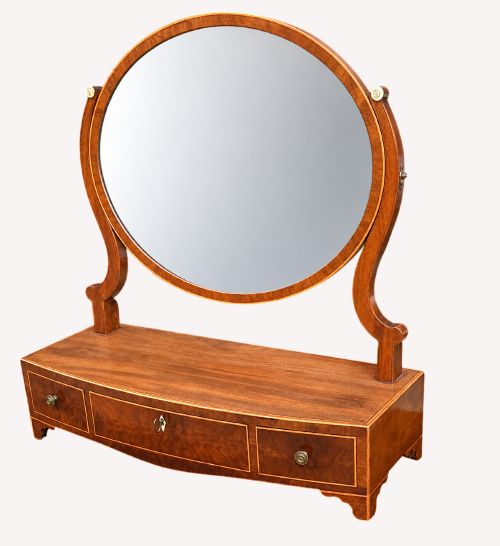
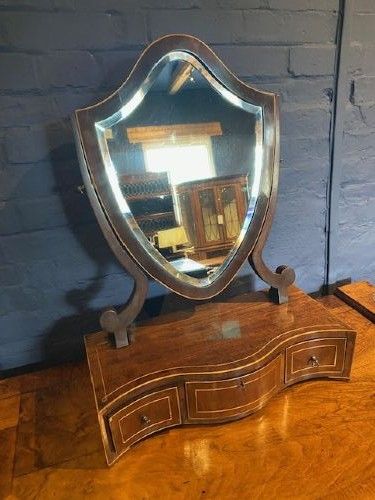
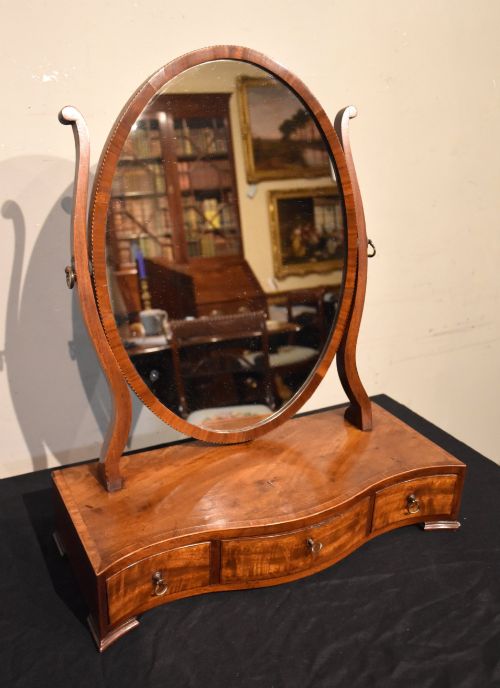
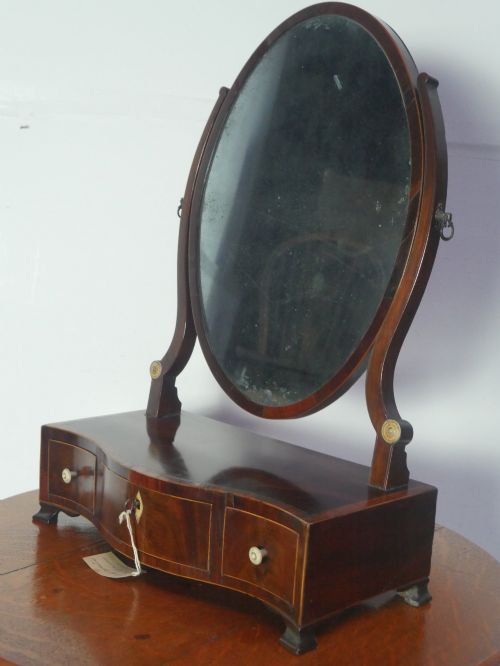




Mahogany Serpentine Mirror
A mahogany serpentine mirror brings tactile warmth and fluid line to a room, offering the classic functionality of a period dressing glass.
Mahogany Serpentine Mirror
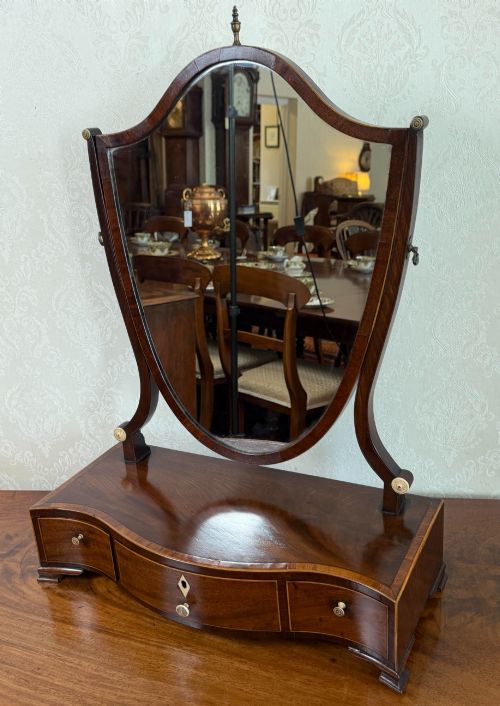
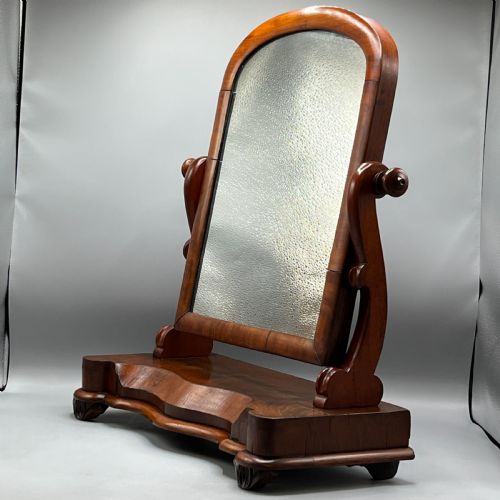
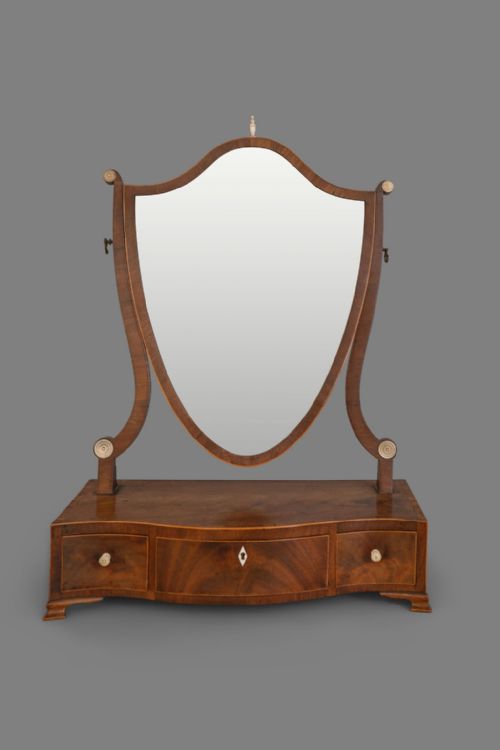
When you search for a mahogany serpentine mirror, you enter the world of Georgian and Victorian table or toilet glasses designed to sit atop dressing tables and chests. The pieces appearing here span the eighteenth and nineteenth centuries, taking the form of swing mirrors attached to upright arms above small, shaped bases.
The characteristic undulating front gives these items their name, frequently incorporating small drawers for trinkets or powder. Most examples belong to the Georgian and Victorian periods, manifesting either as rectangular upright plates or as oval and shield-shaped glasses hung between delicate horns.
While primarily domestic accessories, the selection occasionally encompasses larger dressing table mirrors alongside related forms like box mirrors and console tables. The predominant versions met on this page maintain the traditional proportions of eighteenth-century craftsmanship, utilised daily for personal grooming.
How they were made
Cabinetmakers constructed these frames predominantly from solid mahogany, frequently selecting stock with rich grain patterns or flame figuring to catch the light. Carpenters shaped the distinctive undulating fronts through careful sawing and planing of timber, mounting the pivoting glass plates within rebated wooden frames.
Surface enrichment often involved contrasting stringing and inlay using materials such as boxwood and satinwood, adding linear definition to the base drawers. Brass fittings, including pivoting screw knobs and small drop handles, secure the mirror plates and operate the drawer compartments.
Secret compartments inside small box drawers occasionally awaited discovery, designed for hiding letters or small coins from prying eyes.
What varies in quality
The distinction between standard examples and superior pieces rests largely on the choice of timber and the crispness of the serpentine shaping. Finer pieces display carefully selected flame mahogany veneers and delicate boxwood stringing that follow the complex curves without buckling.
Proportion and hardware also dictate the standing of a piece, with finer mirrors retaining their original brass adjusting screws and well-dovetailed drawer boxes. The fluidity of the curved base and the balance between the upright supports and the glass plate reveal the maker's hand.
The Mahogany Serpentine Mirror Glossary
- Serpentine
- A shape featuring a central convex curve flanked by two concave curves, creating an undulating line across the front of the base.
- Toilet mirror
- A smaller tabletop dressing glass designed to sit upon a chest of drawers or a dedicated table during the eighteenth and nineteenth centuries.
- Boxwood stringing
- Thin inlaid lines of contrasting pale wood set flush into the darker mahogany surface to outline panels and drawer edges.
- Swing mirror
- A glass plate hung on pivoting pins between two vertical upright posts, allowing the user to tilt the angle of reflection.
- Shield glass
- A mirror plate cut into the rounded, tapered shape of a heraldic shield, popular during the late Georgian era.
Mahogany Serpentine Mirror: Frequently Asked Questions
Where did people place these mirrors?
These items traditionally sat upon dressing tables, large chests, or sideboards in bedrooms and dressing rooms. They provided a movable reflective surface close to natural window light for personal grooming.
Today, they function well upon modern chests of drawers or console tables in hallways and living spaces, adding period character without demanding floor space.
How do I date a mahogany serpentine mirror?
Dating relies upon examining the construction methods of the base drawers, the profile of the mirror supports, and the secondary timbers used inside. Eighteenth-century examples often feature hand-cut dovetails and lighter framing.
Victorian pieces frequently display heavier proportions, darker finishes, and machine-cut elements. The presence of original mirror glass with faint foxing also aids in establishing age.
Are the mirror plates original?
Many surviving pieces have replacement mirror plates due to the fragile nature of old silvered glass over centuries of use. Original plates often exhibit characteristic oxidation spots, uneven thickness, or slight distortion in the reflection.
Replacement glass does not necessarily diminish the decorative utility of the piece, provided the frame and secondary woods remain undisturbed.
How do I care for the wood and glass?
Maintenance requires keeping the mahogany away from direct sunlight and sudden temperature shifts to prevent timber shrinkage or veneer lifting. Gentle dusting with a dry cloth preserves the polished surface.
Glass cleaner applied directly to the cloth rather than the mirror prevents moisture from seeping behind the plate into the old wooden rebate.