

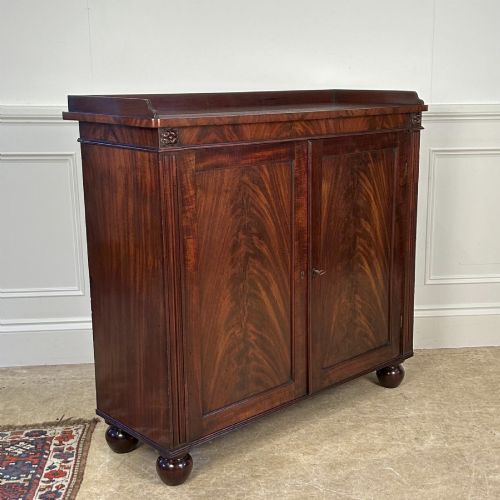
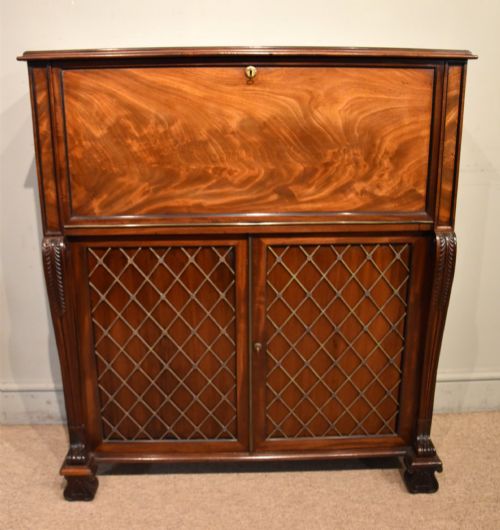


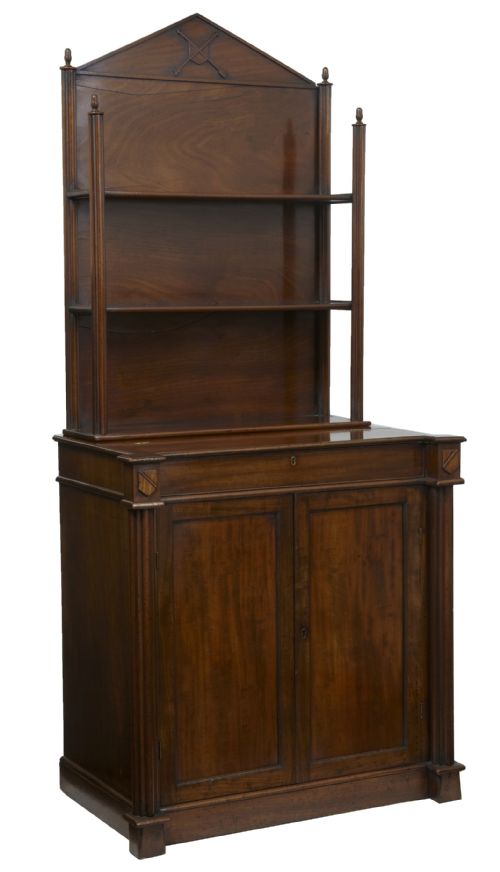


Mahogany Secretaire Cupboard
A mahogany secretaire cupboard combines domestic storage with a fitted writing drawer, offering period joinery suited to study or reception rooms.
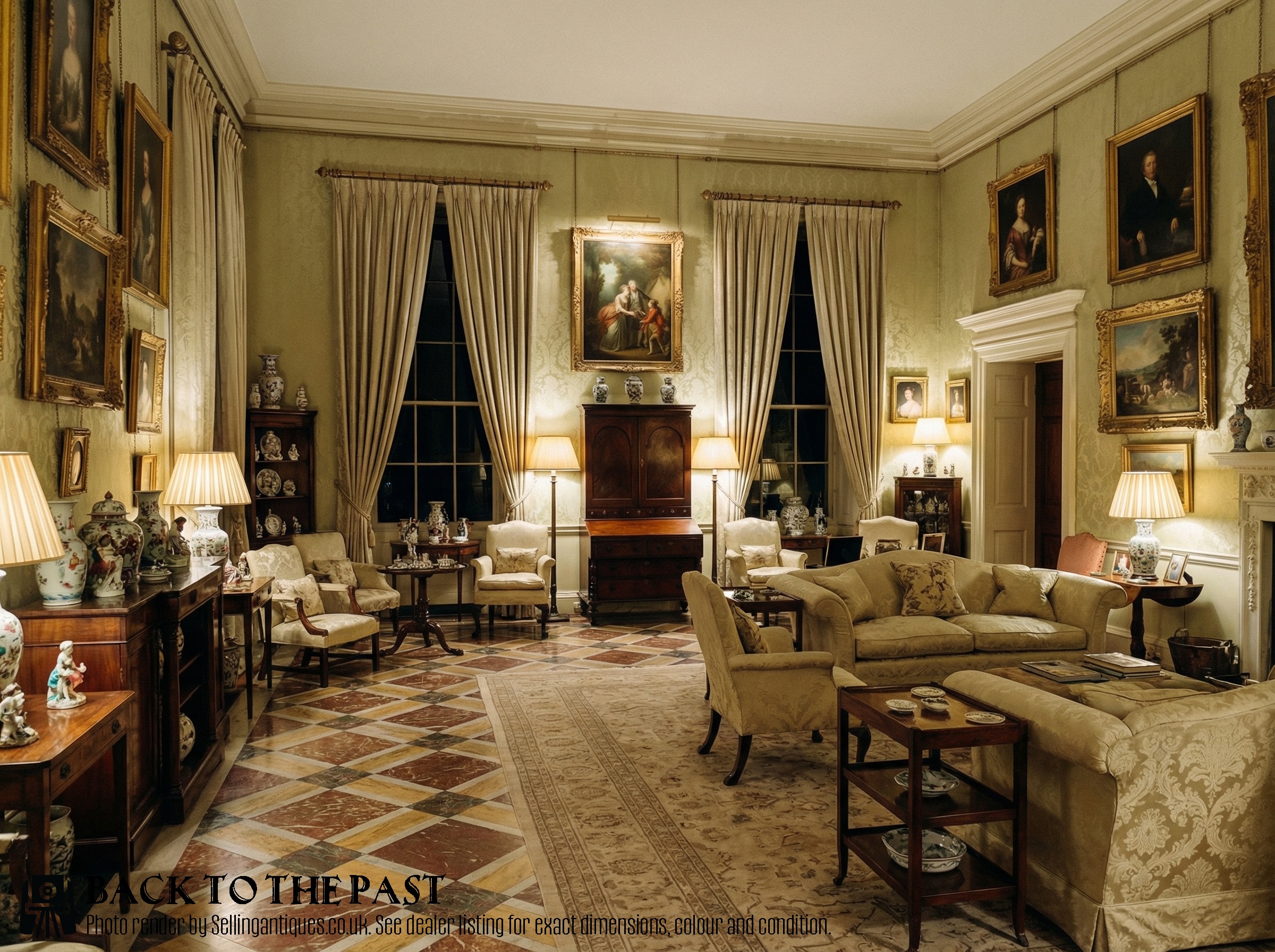
Mahogany Secretaire Cupboard
When searching for a mahogany secretaire cupboard, buyers encounter substantial case furniture designed to conceal a writing surface behind a drop-front drawer or fall-front panel. The examples recorded here span the Georgian, Regency, and Victorian eras, taking forms ranging from compact side cabinets and low press cupboards to tall glazed bookcases and breakfront display units.
The most frequent variations on this page include tall bookcases with glazed upper doors above secretaire drawers, alongside lower press cupboards and campaign chests. These pieces bridge the gap between heavy library storage and practical desk space, often incorporating adjustable internal shelves and fitted small drawers within the writing compartment.
How they were made
Makers constructed these cabinets using solid mahogany and flame mahogany veneer applied to secondary carcase timbers, frequently enriching the surfaces with satinwood inlay and marquetry detail. Brass handles, escutcheons, and occasionally glass panes complete the structural composition.
Joinery techniques relied on dovetailed drawer construction and cabinet-making standards associated with workshops like Gillows, integrating fitted interior compartments with pigeonholes and small drawers behind the main secretaire drop-front.
Mahogany Secretaire Cupboard Retail Price Guide 2026
Typical asking prices for mahogany secretaire cupboard among the pieces listed under this phrase on Sellingantiques today, from the lower quarter to the upper quarter. They describe what is for sale here now, not the wider market.
Current listings feature mahogany, satinwood inlay, glass, and brass, spanning Georgian, Regency, and Victorian styles.
What varies in quality
Quality in these pieces is dictated by the selection of figured veneer, such as flame mahogany, and the precision of contrasting satinwood inlay. The crispness of carved mouldings and the architectural proportion of glazed bookcase sections further separate standard production pieces from higher-tier workshop output.
Interior complexity marks another distinction, where finely fitted writing drawers with multiple secret compartments and small turned pulls indicate superior craftsmanship compared to simpler utilitarian interiors.
Gillows
The Mahogany Secretaire Cupboard Glossary
- Secretaire
- A writing drawer or compartment featuring a drop-front that conceals pigeonholes and small drawers. This element transforms a standard storage cabinet into a dual-purpose writing desk.
- Press Cupboard
- A large piece of case furniture featuring linen presses or deep shelving enclosed by doors, often built with a secretaire section integrated into the lower chest.
- Flame Mahogany
- A veneer cut from timber where the branch meets the trunk, producing a distinctive rippled, flame-like pattern. It was utilised on principal drawer fronts and cabinet doors for decorative effect.
- Breakfront
- A cabinet design where the central section projects forward from the flanking wings. This architectural arrangement creates depth and shadow on larger bookcases and side cabinets.
- Satinwood
- A pale, durable exotic timber used for contrasting stringing, banding, and marquetry inlays. It highlights borders and drawer fronts against darker mahogany carcases.
Mahogany Secretaire Cupboard: Frequently Asked Questions
What is a mahogany secretaire cupboard?
It is a piece of case furniture that combines general storage, such as cupboards or bookshelves, with a dedicated writing drawer featuring a drop-front.
These units allow owners to store household linens, books, or papers while maintaining a concealed writing surface that pulls down when needed.
How do I identify a Georgian piece?
Georgian pieces generally display restrained classical proportions, solid mahogany construction, and understated bracket feet or plinth bases.
Cabinet-making from this period prioritises structural harmony and clean lines over heavy ornamentation.
Where were they used?
These cabinets served primarily in libraries, withdrawing rooms, and large bedrooms of substantial houses.
Housekeepers and estate managers also utilised press cupboard variants for linen storage and household administration.
What is flame mahogany veneer?
Flame mahogany is a highly figured wood veneer cut from specific sections of the tree trunk to create wavy, flame-like patterns.
Cabinet-makers applied these veneers to prominent exterior surfaces like drawer fronts and door panels to catch the light.