
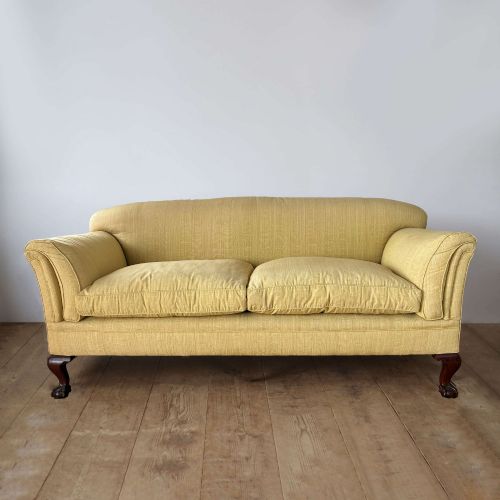
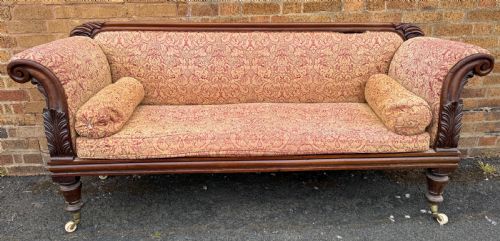


Mahogany Scroll Settee
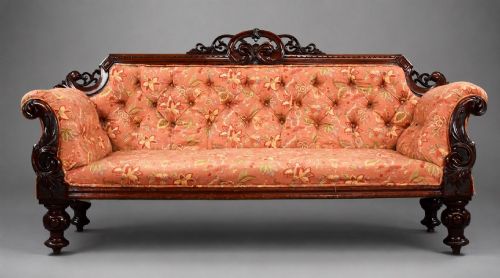
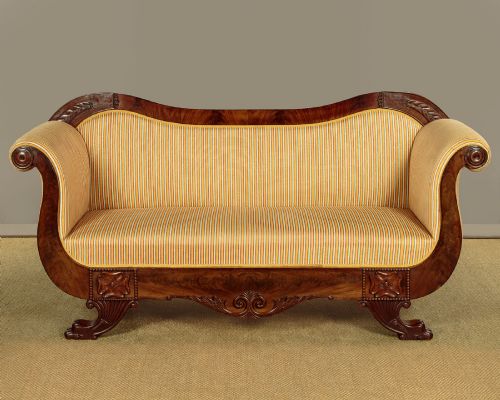
A mahogany scroll settee is a substantial nineteenth-century seating piece defined by sweeping wooden arms, built to anchor a formal drawing room.
Mahogany Scroll Settee
A mahogany scroll settee is a seating piece encountered primarily across nineteenth-century periods, including Regency, William IV, and Victorian eras. These large items take the form of double-ended sofas, scroll-end couches, and country house settees.
The version a buyer meets most frequently on this page is the nineteenth-century mahogany frame with prominent scrolled arms. Pieces span from the early Regency period through the mid-nineteenth century and into later Victorian variations.
Materials and Construction
Makers utilised solid mahogany and mahogany veneers for the structural frames, often carving the wood into elaborate scroll ends and show frames. Brass fittings and castors appear on the feet of various models to assist movement across heavy carpets.
Internal upholstery structures rely on fabric, hessian, and woven textiles, finished with outer coverings such as damask, brown leather, or standard upholstery fabric. Many frames support deep springing and padding to form the characteristic bolster and scroll contours.
Listings feature nineteenth-century pieces spanning Regency, William IV, and Victorian periods, constructed primarily from mahogany with fabric and leather upholstery.
Judging the Standard
The level of craftsmanship is visible in the execution of the carved mahogany frame and the symmetry of the double scroll ends. Sharp, deep carving on the show frame separates superior output from simpler, plain designs.
Proportion and scale dictate the visual weight of the piece within a room. Well-balanced proportions between the wooden frame and the upholstered body indicate higher maker intent.
Howard and Sons·Holland and Sons
The Mahogany Scroll Settee Glossary
- Scroll end
- A wooden or upholstered arm that curls outward in a spiral scroll shape. This profile defines the silhouette of the piece.
- Show frame
- The exposed wooden structure surrounding the upholstered portions of a settee. Carving and joinery are visible on these exterior wooden surfaces.
- Double-ended sofa
- A seating form with identical or matching scroll ends at both sides, allowing a person to recline from either direction.
- Récamier
- A type of daybed or chaise longue featuring an elevated headrest and a lower foot end, associated with neoclassical designs.
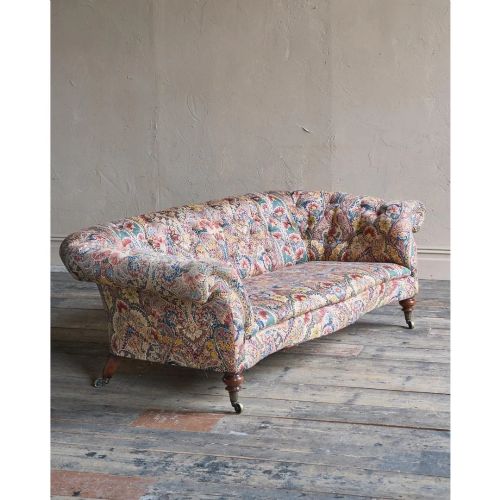
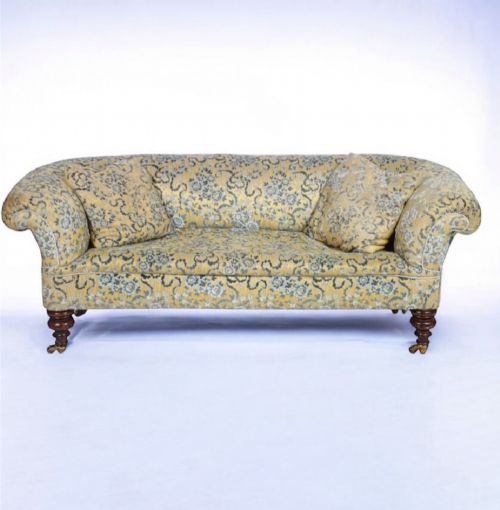
- Chesterfield
- A large upholstered sofa style characterised by deep buttoning and rolled arms. These appear alongside standard scroll settees in nineteenth-century homes.
Mahogany Scroll Settee: Frequently Asked Questions
How do I date a mahogany scroll settee?
Dating relies on stylistic shifts visible in the mahogany frame and carving details. Regency and William IV pieces often display crisp, classical lines, whereas Victorian examples introduce heavier proportions and denser ornamentation.
Secondary indicators include the construction methods of the internal frame and the type of secondary woods used underneath the mahogany show frame.
What is the difference between a settee and a couch?
Historically, terms such as settee, couch, and sofa overlap significantly in nineteenth-century records. A settee generally implies a seat designed for multiple people with a fully upholstered back and arms.
Scroll-end couches and daybeds often feature a single raised headrest or asymmetric ends intended for reclining rather than upright sitting.
Where were these settees placed originally?
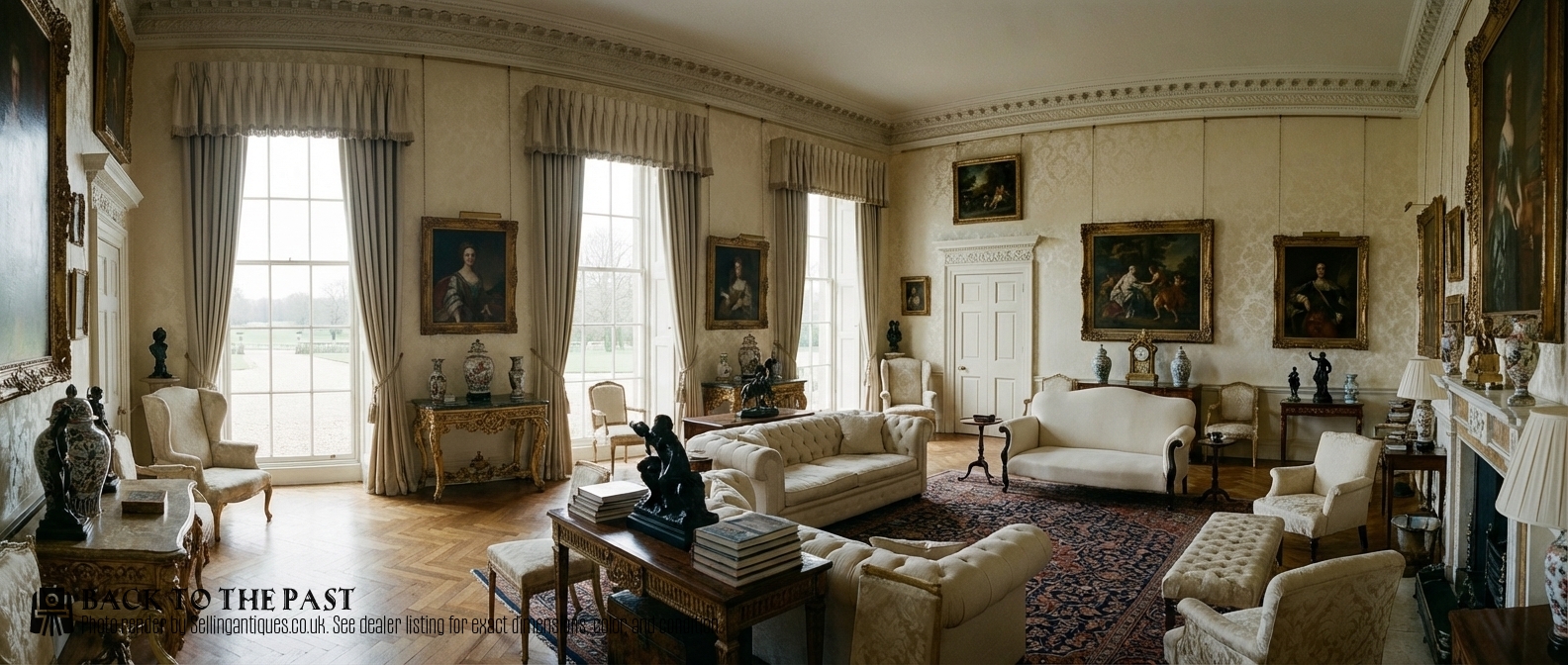
These large seating items belonged in the principal public rooms of grand houses. Drawing rooms and formal saloons accommodated double-ended sofas where guests gathered.
Country house interiors also utilised them in large hallways or libraries, where their substantial mahogany frames provided both seating and architectural presence.
How should I care for the mahogany frame?
Maintenance requires keeping the polished mahogany away from direct heat sources and strong sunlight to prevent the timber from drying out. Routine dusting with a dry cloth preserves the finish.
Applied beeswax can nourish the wood periodically, while the upholstered sections require regular gentle vacuuming using a low-suction attachment.