


Carved Mahogany Salon Settee
A carved mahogany salon settee brings formal Victorian and Edwardian elegance to a room, offering generous seating framed in rich timber.
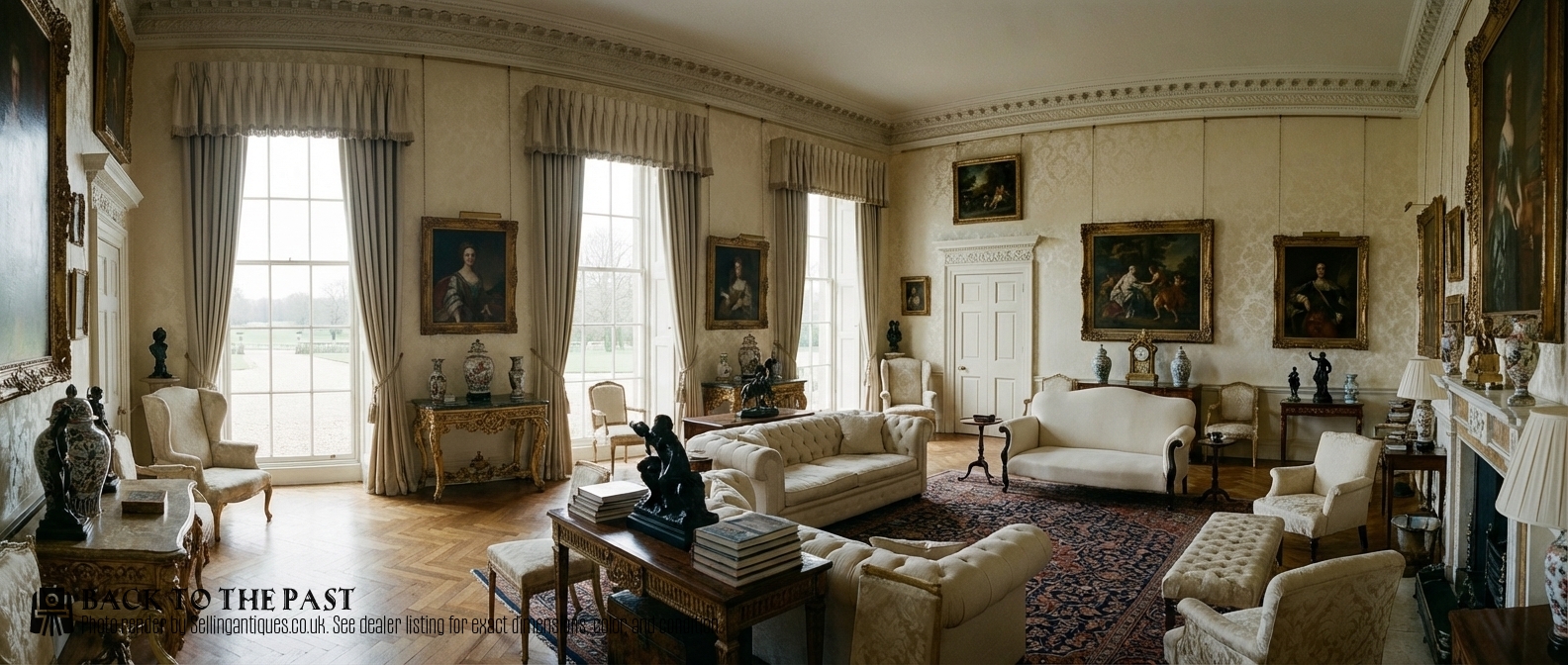
Carved Mahogany Salon Settee
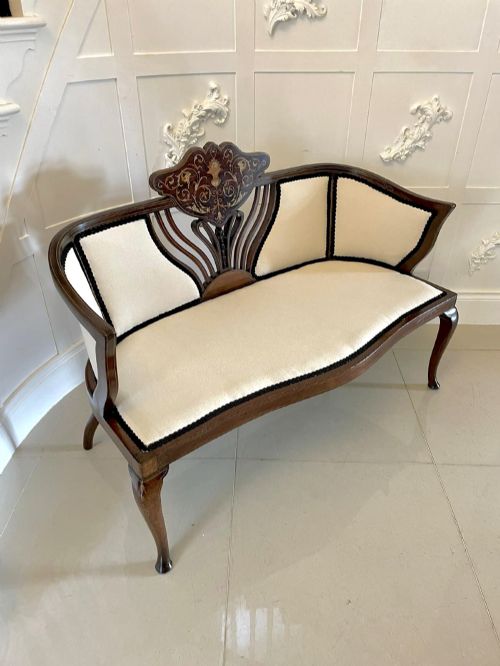
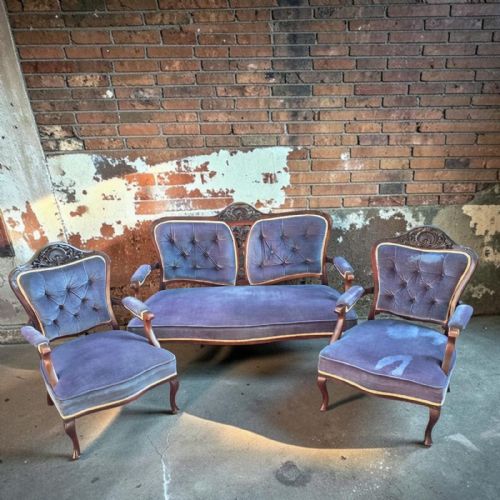
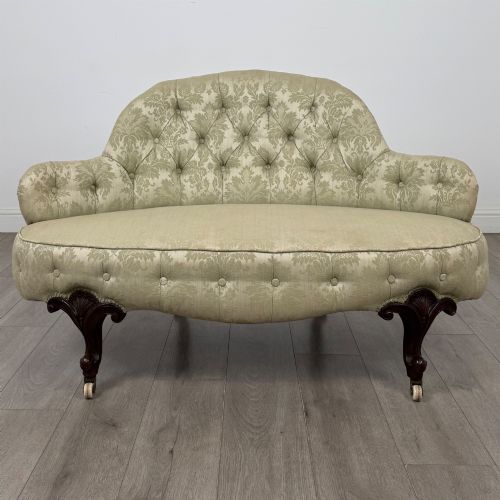
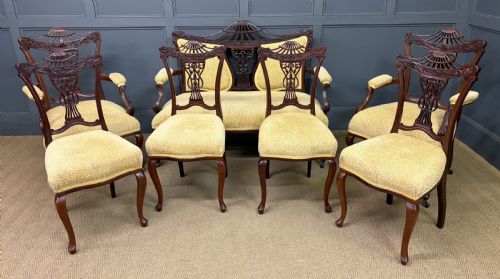
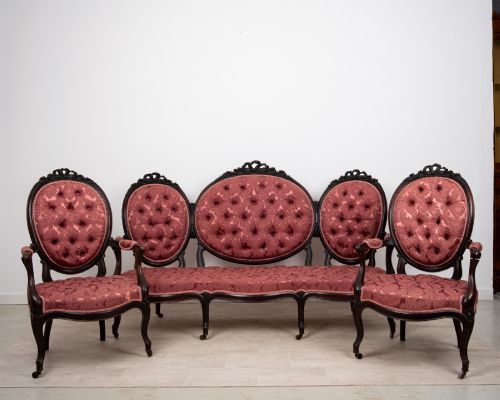
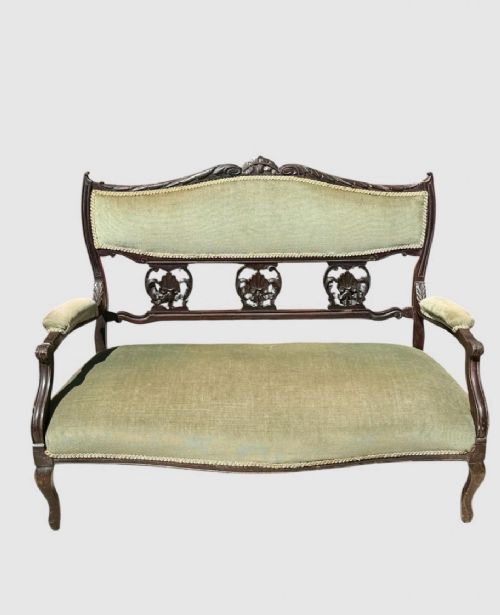
A carved mahogany salon settee represents formal Victorian and Edwardian seating designed for reception rooms and parlours. These pieces range from compact two-seaters to larger framed sofas and complete salon suites.
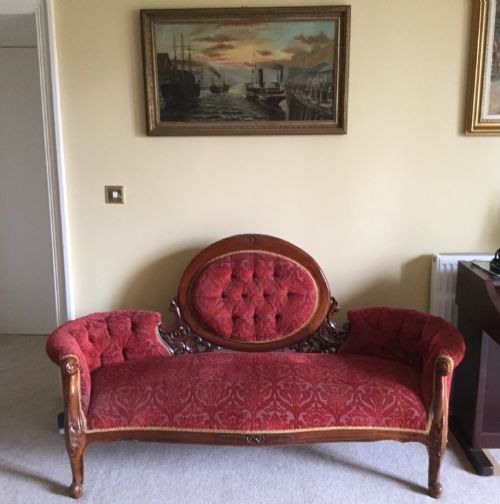
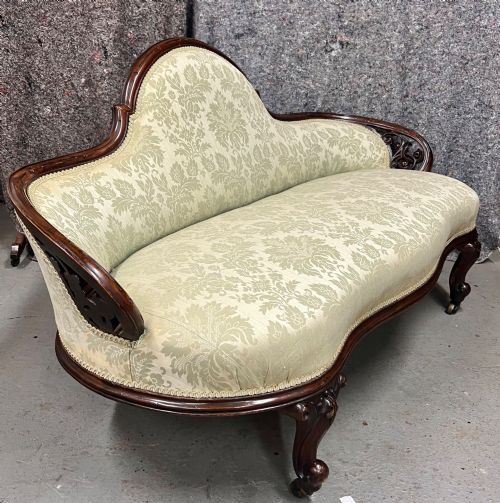
The most common versions on this page date from the nineteenth century into the early twentieth century. They appear in styles from Victorian Rococo Revival to Chippendale, often featuring exposed timber frames.
Makers fashioned these settees for display and formal entertaining in period homes. Buyers encounter single items as well as pieces that form part of larger parlour suites.
Materials and construction
Joiners built the primary frames using solid mahogany, sometimes incorporating boxwood inlay for decorative contrast. Artisans carved floral and scrolling motifs directly into the dense timber surrounds.
Upholstery materials include velvet, damask, brocade, and fabric, often supported by sprung settee bases and deep buttoning. Brass components appear in supporting hardware and castors.
Some nineteenth-century settees offered reversible reclining positions so callers could converse facing either direction in the parlour.
Assessing quality in period settees
The crispness of the timber carving distinguishes finer salon furniture from simpler production. Deeply sculpted frames and precise inlay reflect higher workshop standards during the Victorian and Edwardian periods.
The proportion of the frame and the retention of original structural rigidity mark the upper tier of surviving examples. Subtle variations in timber grain and the complexity of the double-ended or shaped backrest also separate standard pieces from exceptional ones.
Morison & Co Edinburgh
The Carved Mahogany Salon Settee Glossary
- Salon suite
- A matching set of seating furniture designed for a formal reception room. It typically includes a settee and matching parlour chairs.
- Double ended sofa
- A form of settee featuring symmetrically scrolled or raised ends allowing a person to recline at either side. This design gained popularity during the Victorian era.
- Boxwood inlay
- Contrasting pale wood inserted into the darker mahogany surface in linear or geometric patterns. Craftsmen utilised this technique to adorn Edwardian and late Victorian cabinetwork.
- Brocade
- A rich shuttle-woven fabric featuring raised decorative patterns. It frequently appears on period upholstery.
- Rococo Revival
- A nineteenth-century design movement favouring asymmetrical curves, naturalistic leaf carving, and ornamental scrolls. This style heavily influenced mid-Victorian seating.
Carved Mahogany Salon Settee: Frequently Asked Questions
How do I date a salon settee?
Examine the stylistic cues within the carved mahogany frame and the overall proportions of the piece. Victorian examples often display heavier scrolling and deep buttoning, whereas Edwardian items may incorporate lighter inlaid details.
Reference the listed periods such as 1880, 1890, or 1900 to match specific design characteristics against documented eras.
Can I use these settees daily?
These pieces function well in modern interiors when the internal springing and upholstery remain sound. Many surviving settees retain robust mahogany frames suitable for regular seating.
Some examples offered for re-upholstery require modern webbing or fabric replacement before heavy domestic use.
What is a salon suite?
A salon suite comprises a matching set of chairs and a settee intended for formal entertaining rooms. These groupings ensure a cohesive aesthetic throughout a Victorian or Edwardian parlour.
Individual items from these suites sometimes appear independently on the market.