
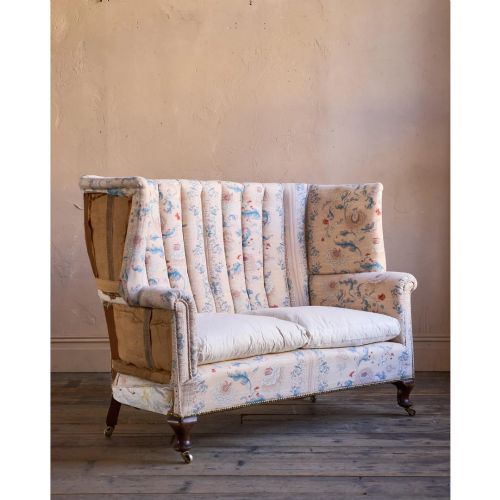


Traditional Upholstered Loveseat
These traditional upholstered loveseats combine deep seating with period frames, offering a compact spot for sitting that anchors a room.
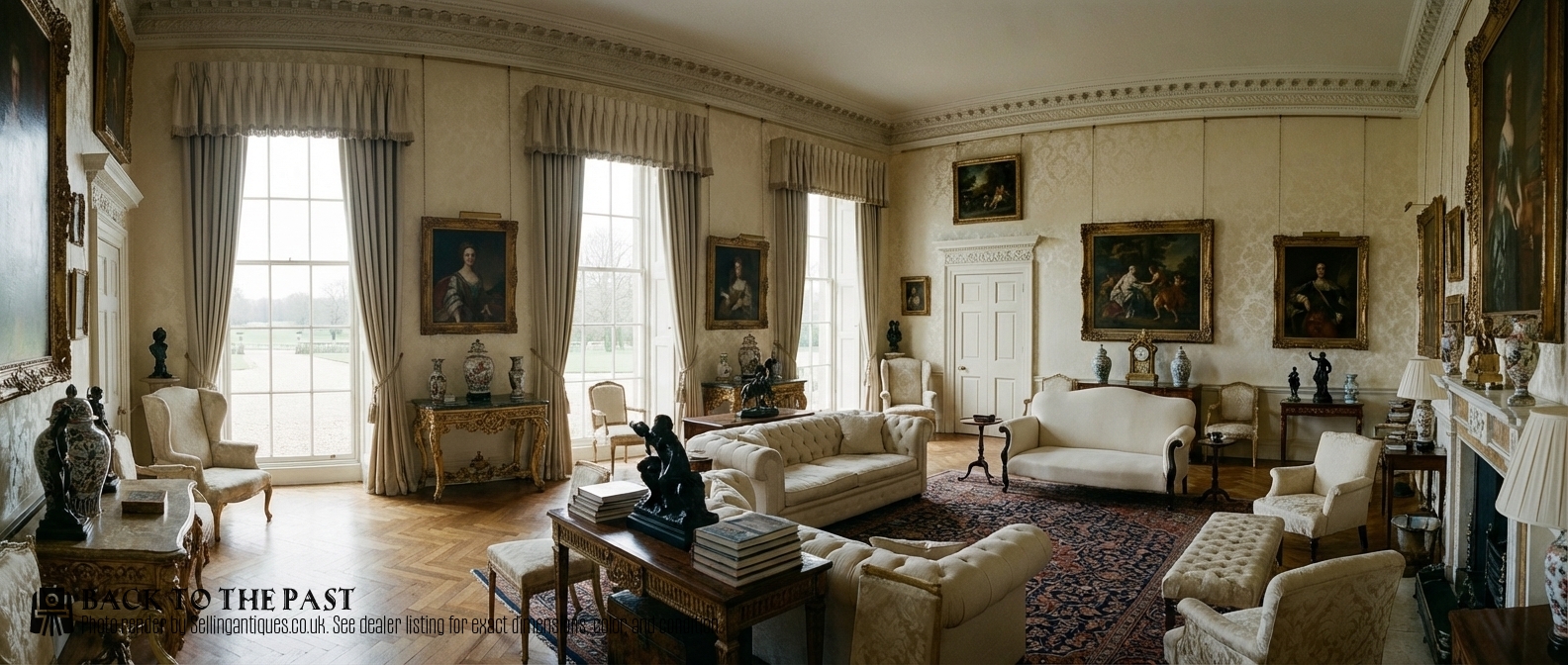
Traditional Upholstered Loveseat
When you search for a traditional upholstered loveseat, you look at compact two-seater settees and sofas spanning the Victorian, Edwardian, and Georgian periods. These pieces provide intimate seating for two while retaining the formal lines of antique furniture.
The versions you most likely meet on this page include Victorian button-back salon settees, Edwardian two-seater sofas, and Queen Anne style walnut settees. Makers styled these with exposed timber frames in mahogany, walnut, and oak alongside fully upholstered bodies.
Object types vary across settees, sofas, and chairback settees, often featuring turned legs or wingback designs. Origins span English workshops and French influences, creating distinct seating proportions for period interiors.
How they were made
Frames rely on hardwoods such as mahogany, walnut, oak, and general timber to provide structural support for the upholstered body. Joinery techniques secure the legs, backs, and arms before traditional stuffing and fabric layers are applied.
Upholstery materials include various fabrics, tapestry fabric, hessian, and ticking fabric, sometimes finished with exposed brass castors or decorative wood carving. Wood components receive turned, carved, or inlaid details depending on the prevailing style of the era.
Even antique settees occasionally require a polite reminder that jumping on the nineteenth-century ticking fabric is strictly frowned upon.
What varies in quality
The refinement of the timber framing distinguishes different examples, ranging from plain hardwood supports to elaborately carved and turned mahogany or walnut frames. Hand-carved details, marquetry inlay, and robust leg turnings elevate the visual weight of the piece.
Upholstery execution also separates pieces, with button-backed work and specialised fabric choices such as tapestry or ticking demonstrating superior workshop time and material investment. The integrity of the underlying frame construction dictates how solidly the two-seater holds its form.
Howard And Sons
The Traditional Upholstered Loveseat Glossary
- Settee
- A long upholstered seat for more than one person, typically featuring a back and arms. These forms serve as the primary two-seater seating option in many period listings.
- Wingback
- A chair or sofa style featuring high side panels attached to the arms to shield from draughts. This form appears on specific Victorian double wingback sofa designs.
- Canape
- A French-style ornamental settee with an exposed wooden frame and upholstered seat and back. Examples often showcase decorative woodwork from the nineteenth century.
- Japanned
- A style of European decorative finishing that emulates East Asian lacquer work using resin-based varnishes. This technique appears on specific English settees from the nineteen-thirties.
- Turned
- Wood shaped on a lathe to create cylindrical or decorative profile columns for legs and stretchers. Turned walnut and mahogany legs support many Victorian and Edwardian settees.
Traditional Upholstered Loveseat: Frequently Asked Questions
How do I date a traditional upholstered loveseat?
Dating relies on examining the timber frame style, leg turnings, and upholstery methods. Victorian pieces often feature button-backed upholstery and mahogany frames, while Edwardian examples show lighter proportions.
Earlier Georgian and Queen Anne style pieces display characteristic cabriole legs or walnut frames. Comparing these structural elements to documented period designs clarifies the decade of manufacture.
Are these settees comfortable for daily use?
These pieces provide firm, upright seating typical of historical furniture rather than deep modern lounging. Their internal construction uses traditional stuffing methods that support an upright posture.
Living with them involves appreciating their compact scale as two-seater furniture. They fit well in smaller reception spaces or bedrooms while offering functional seating.
What fabrics should I expect on antique settees?
Listings record materials ranging from basic ticking fabric and hessian to decorative tapestry fabric and standard upholstery cloth. Original textiles are uncommon due to age, so many pieces wear later replacement coverings.
Choosing a piece depends on whether you prefer existing period-appropriate upholstery or a neutral fabric ready for custom recovering. The underlying frame remains the permanent historical component.
How do I distinguish Victorian from Edwardian styles?
Victorian settees tend to feature heavier carved mahogany frames, darker wood tones, and elaborate button-backed upholstery. They prioritize formal presence and substantial proportions in the room.
Edwardian pieces generally present lighter walnut or mahogany frames with simpler lines and brighter aesthetic influences. Comparing the weight of the woodwork and the complexity of the carvings reveals the stylistic shift.