



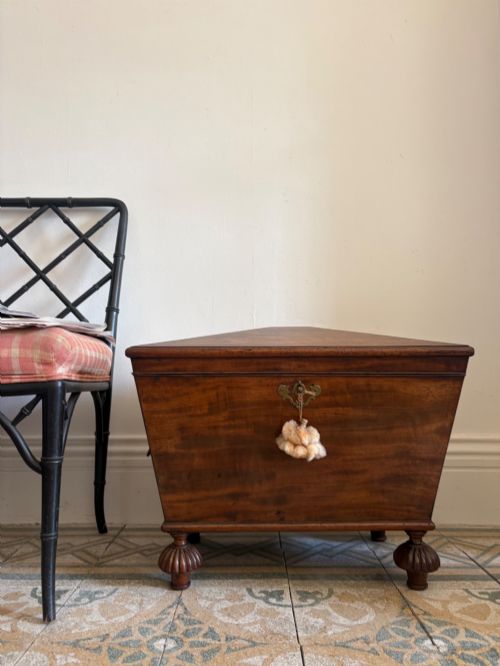
Mahogany Sarcophagus Wine Cooler
A mahogany sarcophagus wine cooler is a formal dining room vessel designed to chill bottles in ice.
Mahogany Sarcophagus Wine Cooler
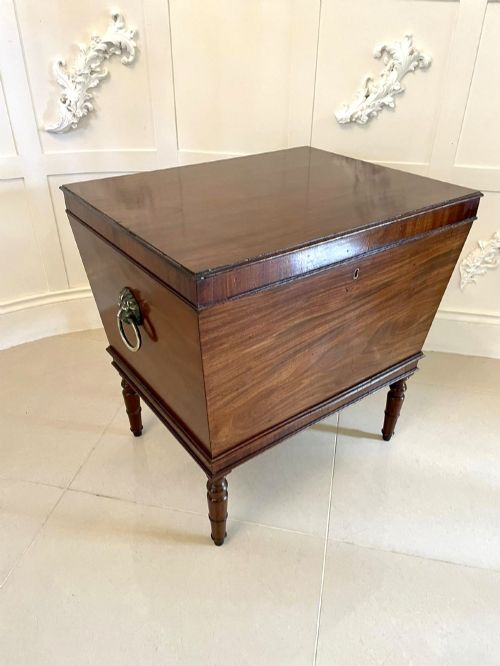
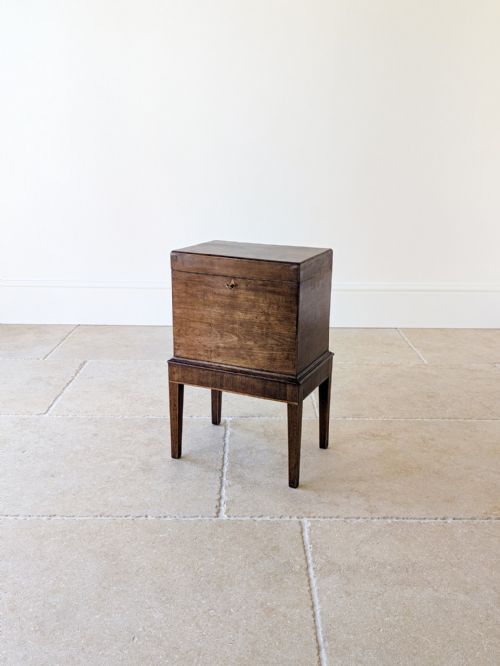
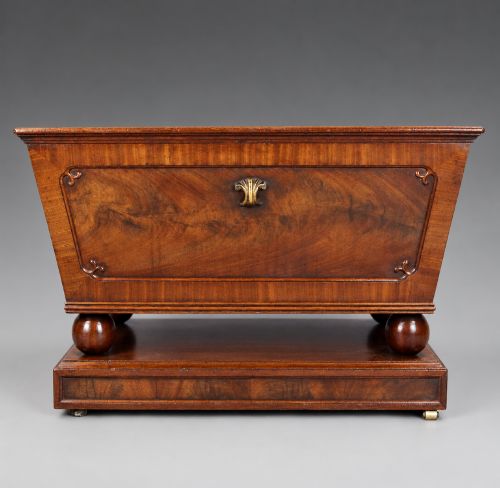
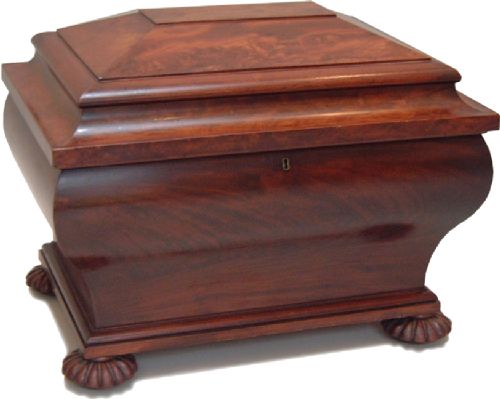
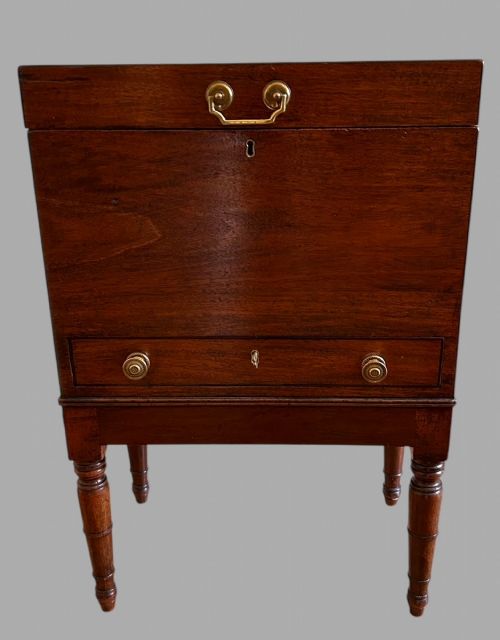
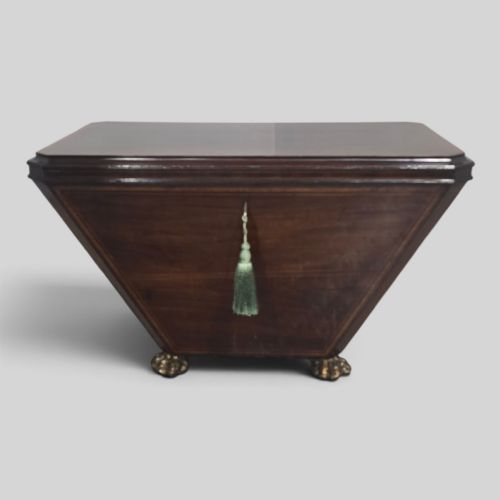
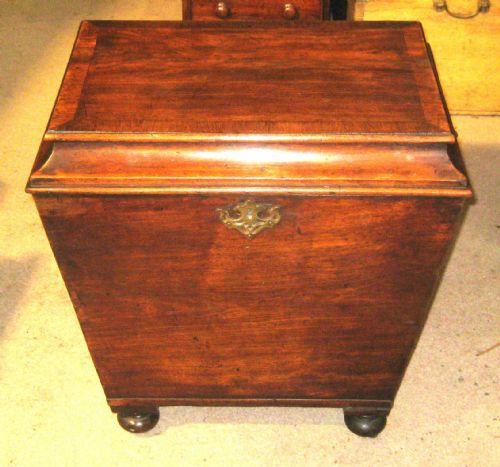
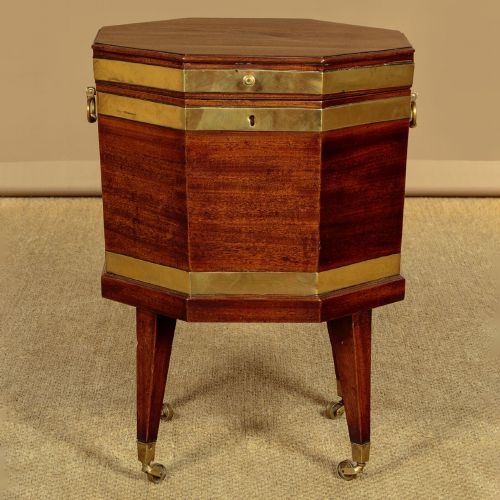
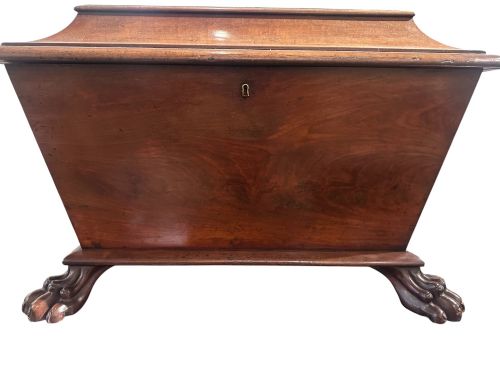
A mahogany sarcophagus wine cooler is a heavy container built to hold wine bottles and ice during formal dining in the eighteenth and nineteenth centuries. These pieces take their name from classical stone tombs, featuring a tapered body and a hinged lid that often sits upon a plinth or feet. The version most commonly met on this page dates from the Regency and Georgian periods, constructed in rich timber with classical proportions.
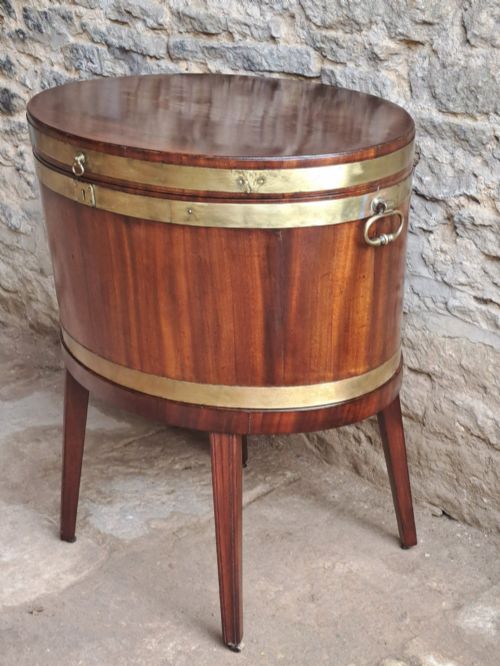
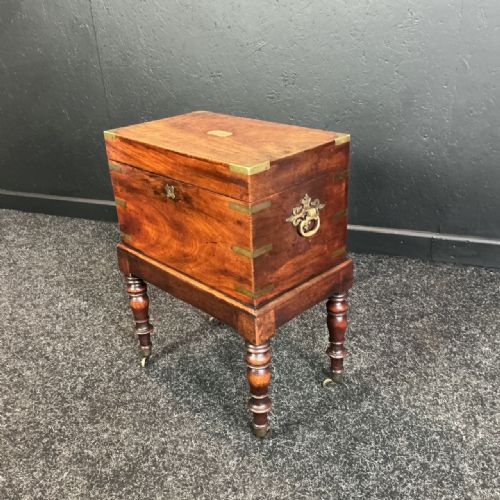
Makers and cabinet-makers built these cellarettes to stand beneath sideboards or within dining rooms until required for service. Inside, lead liners and internal partitions kept ice in contact with the bottles while draining meltwater safely away. They survive in various forms, from plain octagonal boxes to deeply carved sarcophagi decorated with brass handles and lion paw feet.
How they were made
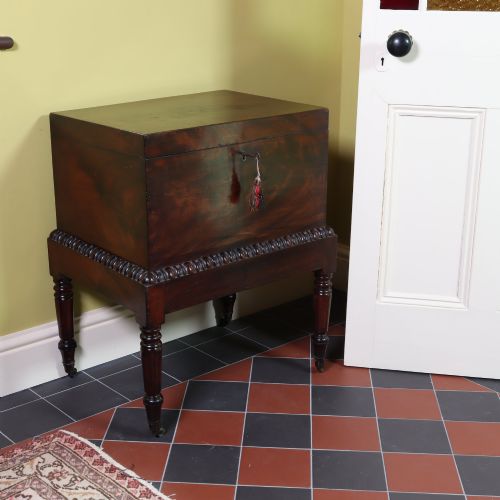
Cabinet-makers relied heavily upon solid mahogany and figured veneers such as flame mahogany, laid over sturdy secondary timbers to construct the heavy carcass. Brass fittings, including carrying handles, lion masks, and secure locks, added both structural reinforcement and decorative contrast to the dark wood. Lead linings were soldered directly into the interior chambers to hold ice and water without leaking into the surrounding cabinetwork.
Surface decoration frequently incorporated boxwood inlay, ebonised wood details, or gilt ormolu mounts depending on the reigning style of the period. Carved elements such as paw feet, scrolling foliage, or reeded mouldings were shaped by hand from solid timber blocks before being fixed to the base and corners.
Materials recorded on this page include flame mahogany, brass, ormolu, boxwood inlay, and ebonised wood.
What varies in quality
Quality rests upon the choice of timber figure and the crispness of the hand-carved details across the lid and plinth. Pieces featuring highly figured flame mahogany or Cuban mahogany display a superior depth of grain that elevates the entire object. Finer examples retain their original fitted lead interiors, complex internal dividers, and heavy cast brass hardware rather than later replacements.
Proportion and architectural harmony separate standard utility boxes from master-built dining room furniture. A well-balanced sarcophagus form maintains precise symmetry and taut lines, whereas lesser examples can appear heavy-handed or lack refined moulding transitions.
Edwards and Roberts·Gillows·Wilkinson
The Mahogany Sarcophagus Wine Cooler Glossary
- Cellarette
- A lockable container used for storing and cooling wine bottles in the dining room. They often sat on the floor beneath a sideboard and could be locked to protect valuable vintages.
- Sarcophagus
- A classical coffin shape with a sloping lower body and a domed or peaked lid. Cabinet-makers adopted this ancient architectural form for large wine coolers during the Regency period.
- Flame mahogany
- A veneer cut from the branch junction of the mahogany tree where the grain twists into flickering flame patterns. Furniture makers reserved this timber for the most prominent exterior surfaces.
- Ormolu
- Gilt bronze mounts applied to furniture for decorative effect. The technique involves creating an amalgam of gold and mercury applied to cast bronze.
- Lead liner
- A watertight internal container fitted into wine coolers to hold ice and bottles. The soft metal resisted corrosion from moisture and melting ice over decades of service.
Mahogany Sarcophagus Wine Cooler: Frequently Asked Questions
What is a mahogany sarcophagus wine cooler used for?
These vessels were placed in the dining room to chill wine bottles in ice during long meals. Servants filled the lead-lined interior with ice and water so that guests could be served cooled wine without leaving the table.
Today, collectors repurpose these sturdy containers as decorative side tables, log bins, or plant holders in traditional interiors. Their generous internal capacity and strong architectural presence make them versatile statement pieces for living spaces.
How do I tell Regency from Georgian coolers?
Georgian coolers often feature cleaner, straight-sided box shapes, brass bands, and simpler bracket feet or spade feet. Timber choices in the eighteenth century tended towards straight-grained mahogany with restrained inlay.
Regency examples embrace the heavier classical sarcophagus form with bold carved paw feet, lion mask ring handles, and rich flame mahogany veneers. They often incorporate heavier moulding profiles inspired by ancient Roman architecture.
Did these coolers always have lead linings?
Most authentic period coolers featured a fitted lead lining soldered at the corners to contain melting ice water safely. These linings frequently bear the marks of heavy use and oxidation from centuries past.
Some surviving pieces have lost their original lead inserts due to repairs or conversions, leaving an empty timber interior. Finding a cooler with its intact original lead liner is considered a major bonus for collectors.
How do I care for antique mahogany wood?
Keep the timber away from direct sunlight and heat sources to prevent the mahogany veneer from drying and lifting. Regular dusting with a soft cloth and occasional application of traditional beeswax maintains the natural lustre.
Avoid placing wet items directly onto the polished wooden surfaces, especially if the internal lead liner is missing or compromised. Gentle handling of the original brass handles and hinges preserves their historic mountings.