


Edwardian Wine Cellarette
These edwardian wine cellarette pieces bring period character to dining rooms, combining robust timber construction with refined storage for vintage bottles.
Edwardian Wine Cellarette
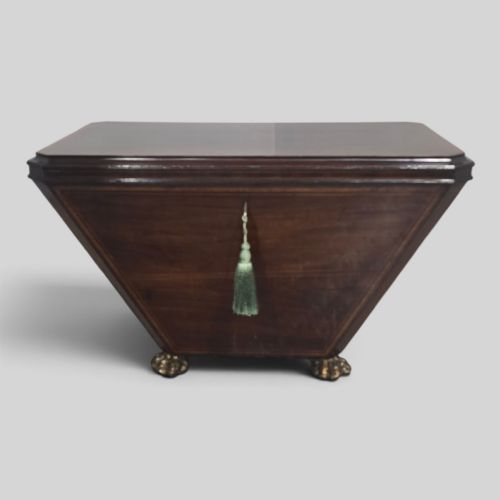
An edwardian wine cellarette is a specialised container designed to hold bottles and ice for dining service, often taking the form of a freestanding chest or a raised stand. These pieces draw on earlier Georgian and Regency aesthetics while reflecting the proportions and preferences of the early twentieth century.
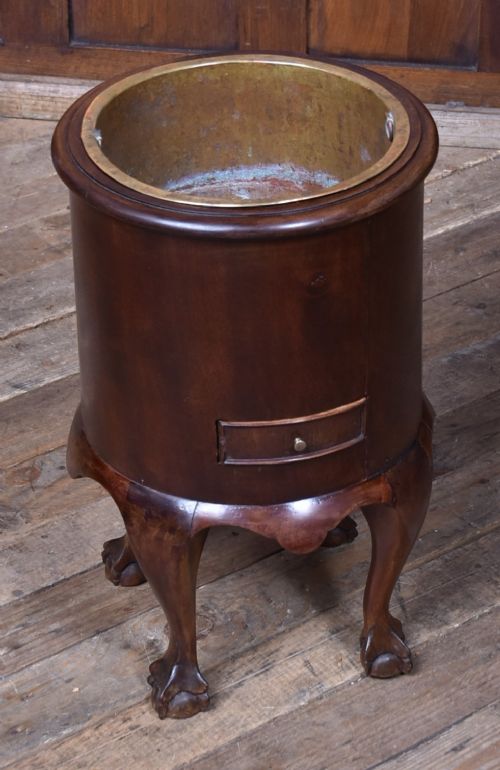
The versions most commonly met on this page combine mahogany timber with satinwood inlay or brass bound detailing. Makers produced both traditional lidded boxes and elevated drinks tables or jardiniere stands adapted for storage.
While many date from the Edwardian era itself, the selection also includes revivals from the nineteenth and early twentieth centuries. Buyers encounter objects ranging from sarcophagus forms to barrel-shaped bottle storage.
How they were made
Craftsmen built these cellarettes primarily using solid mahogany and wood veneers over softwood carcases. Timber selection prioritised rich grain figures, often enhanced by contrasting satinwood inlay work.
Metal fittings played both a structural and decorative role, featuring brass bands, handles and liners. Joinery techniques ensured sturdy construction capable of holding the substantial weight of liquid-filled bottles and ice.
Listings incorporate multiple timber varieties, predominantly mahogany and satinwood, paired with brass fittings across various revival styles.
What varies in quality
Quality rests in the crispness of the cabinetmaking and the selection of timber veneers. Finer pieces display precise inlay work and substantial brass mounts rather than simpler surface decoration.
Proportion and interior arrangement set apart standard items from exceptional examples. Pieces bearing documented workshop attribution command attention for their superior execution of period revival styles.
Edwards and Roberts·Freemans of Norwich·Whytock and Reid
The Edwardian Wine Cellarette Glossary
- Cellarette
- A lockable container designed for storing wine bottles near the dining table. They frequently feature fitted interiors to separate individual bottles.
- Satinwood
- A durable, yellowish timber prized for its lustrous grain and used extensively for contrasting inlay work on mahogany furniture.
- Brass bound
- A method of reinforcing wooden tubs or chests with metal bands fixed by screws or rivets. This technique appears often on military-inspired or campaign pieces.
- Sarcophagus form
- A coffin-like silhouette with a tapered or stepped lid popular for large wine coolers during the Regency and later revival periods.
- Jardiniere stand
- A decorative pedestal or holder originally intended for indoor plants, occasionally adapted for use as a bottle holder.
Edwardian Wine Cellarette: Frequently Asked Questions
What is an Edwardian wine cellarette?
An Edwardian wine cellarette is a lidded container or stand built to store and cool wine bottles during the early twentieth century. These items were positioned in dining rooms to keep beverages close at hand during meals.
They draw heavily on Georgian and Regency design vocabulary, frequently rendered in mahogany with brass mounts or satinwood inlay.
How were cellarettes used?
Cellarettes held wine bottles alongside ice or cold water to chill the contents before serving. Servants accessed the bottles during dinner parties without needing to fetch them from a cellar.
Over time, many lost their metal liners and transitioned to general bottle storage or decorative display pieces within living spaces.
Are these pieces made of solid mahogany?
Many examples utilise solid mahogany for structural components and frames, while incorporating wood veneers across larger flat surfaces. This combination provided stability and allowed cabinetmakers to showcase figured grain patterns.
Secondary timbers such as softwood appear in concealed areas like interior bases and carcase linings.
How do I spot a revival piece?
Revival pieces imitate earlier Georgian, Regency or Victorian styles while utilising manufacturing methods and timber treatments characteristic of a later date. Examining the interior construction and secondary woods helps clarify the actual period of manufacture.
Stylistic cues often mix design elements from multiple decades into a single unified object.