


Mahogany Salon Sofa
A mahogany salon sofa brings formal elegance to a reception room, combining sturdy hardwood frames with decorative upholstery and historic detailing.

Mahogany Salon Sofa
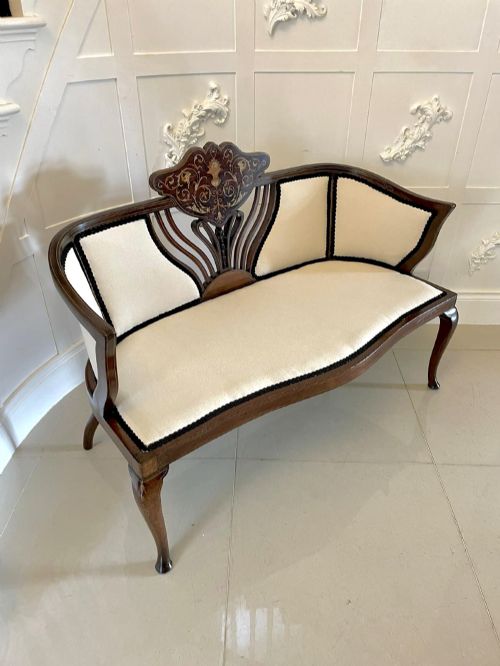
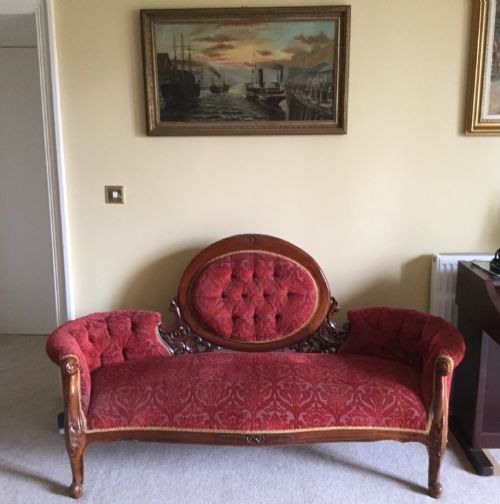
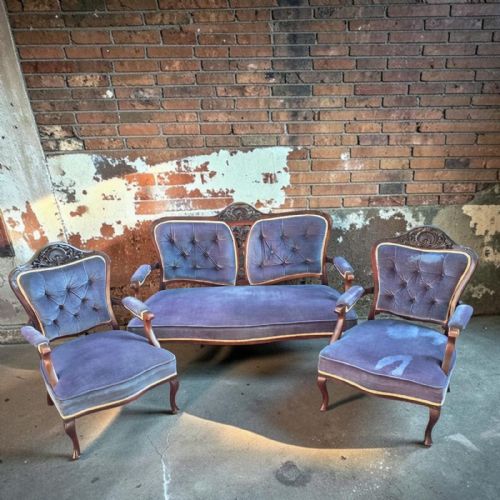
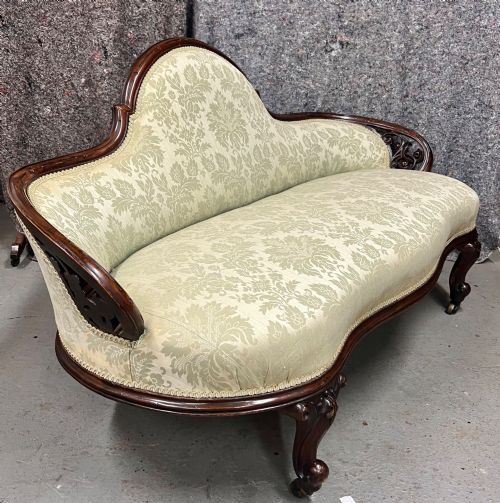
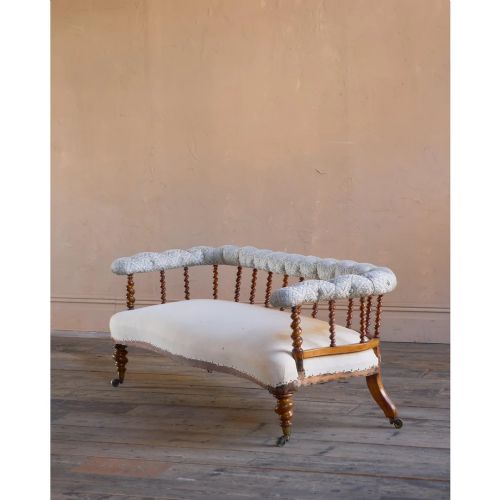
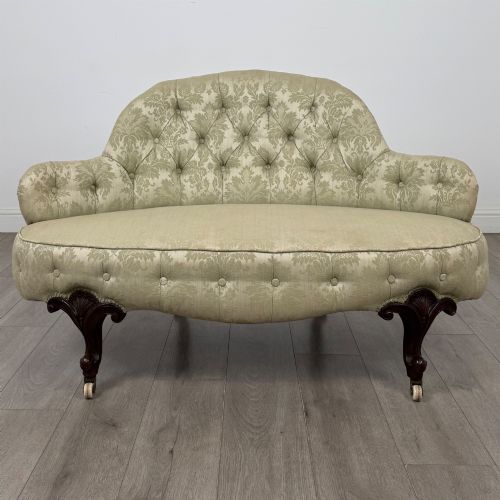
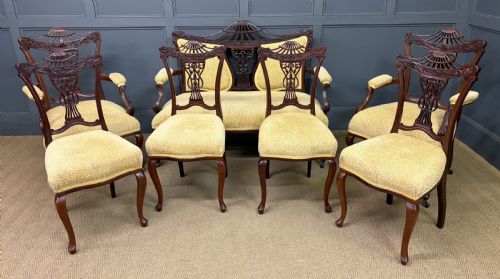
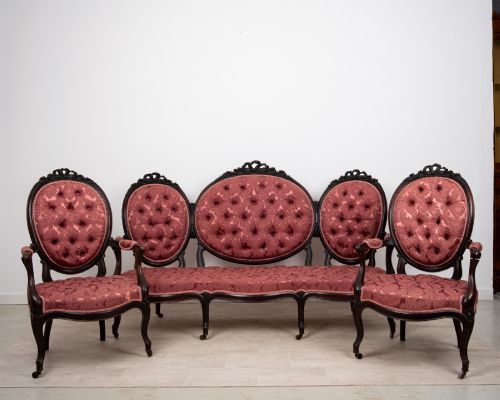
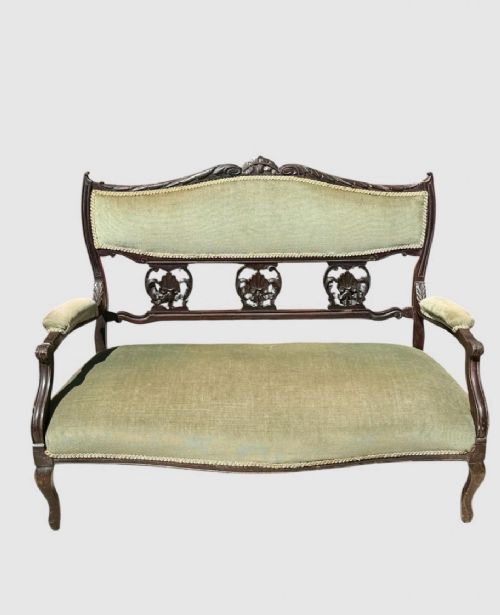
A mahogany salon sofa is a formal two or three-seater seat designed for nineteenth-century and early twentieth-century drawing rooms and reception spaces. The pieces seen here span the Victorian, Edwardian, and nineteenth-century periods, often appearing as standalone settees or as part of larger parlour suites.
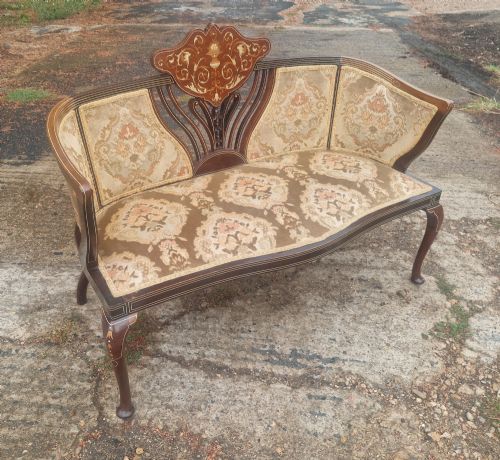
The form varies from double-ended settees and spindle-back designs to French Empire revival pieces with ormolu mounts and Chippendale style carved frames. Edwardian examples frequently feature delicate inlaid decoration, whereas Victorian versions tend towards robust carved woodwork and deep buttoned upholstery.
Buyers also encounter related seating formats such as salon window sofas, end-of-bed benches, and comprehensive salon suites that include matching armchairs and chairs.
Construction and Materials
Cabinet makers utilised solid mahogany for the structural frames, often selecting finely grained timber that took a smooth polish and supported intricate carving work. Structural strength relied on traditional joinery, sturdy sprung settee bases, and substantial hardwood foundations.
Decorative embellishments involved contrasting timbers and metals applied directly to the mahogany framework. Craftsmen incorporated satinwood, boxwood inlay, and bone for linear stringing and marquetry patterns, while French Empire revival variants integrated cast brass and ormolu mounts.
Upholstery completed the construction using materials appropriate to the period, ranging from deep pile brocade, velvet, and damask to standard upholstery fabric and deep buttoning techniques.
Several pieces double as end-of-bed seating, proving that historic Victorians appreciated putting their boots up in style.
Distinctions in Quality
Quality rests primarily on the crispness of the timber carving and the precision of any inlaid marquetry work. Finer pieces demonstrate careful selection of mahogany grain alongside neat boxwood, satinwood, or bone detailing that remains flush with the surrounding wood.
The structural ambition of the frame also dictates standing, with substantial carved Victorian show-wood frames or elaborate Edwardian inlaid architecture holding greater presence than plainer output. Furthermore, makers of note, such as documented cabinet-making firms, elevate the desirability of individual examples.
C. Hindley & Sons·Morison & Co
The Mahogany Salon Sofa Glossary
- Marquetry
- Decorative veneer work arranged in pictorial or geometric patterns using various coloured woods. It frequently appears on Edwardian and Victorian salon furniture to create contrasting borders.
- Ormolu
- Gilded bronze mounts applied to furniture for decorative effect. This technique is commonly found on French Empire revival pieces.
- Settee
- An upholstered seat with a back and arms designed for multiple people. The term is often used interchangeably with sofa in historical inventories.
- Boxwood inlay
- Narrow strips of pale yellowish boxwood inserted into grooves in darker mahogany. It provides sharp linear contrast on Edwardian and late Victorian pieces.
- Buttoned upholstery
- A method where tufts or buttons are pulled tight through the padding to form a quilted, diamond pattern. This finish provides structural tension and visual texture to the backrests.
Mahogany Salon Sofa: Frequently Asked Questions
How do I style a salon sofa?
These sofas suit formal reception rooms, large hallways, or generous bedrooms where their decorative woodwork and upholstery remain visible. Pair them with understated surrounding furniture to let the mahogany frame stand out.
Edwardian inlaid versions fit neatly at the foot of a bed or alongside matching salon chairs, while larger Victorian settees anchor a traditional living space.
How do I date a mahogany sofa?
Dating relies on stylistic shifts visible in the woodwork and decorative motifs. Victorian examples typically show heavier carved mahogany frames, deep buttoning, and robust proportions.
Edwardian pieces generally present lighter forms, satinwood or boxwood inlay, and tapered legs, reflecting the shift towards cleaner turn-of-the-century aesthetics.
Are these sofas comfortable?
Comfort depends on the historical era and internal spring construction. Many feature sprung settee bases and upholstered backs, though formal salon seating generally offers a more upright posture than modern lounging sofas.
Re-upholstered examples often combine historical frames with modern internal support for daily use.