

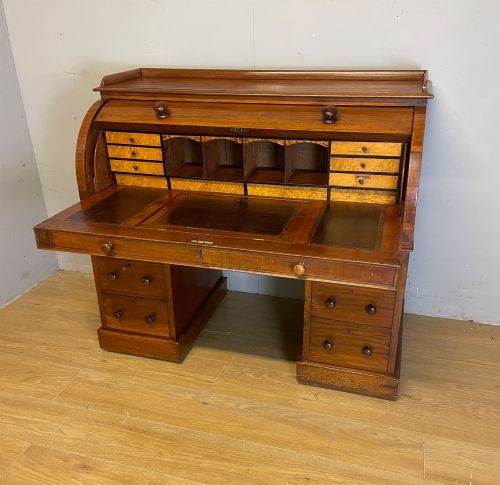
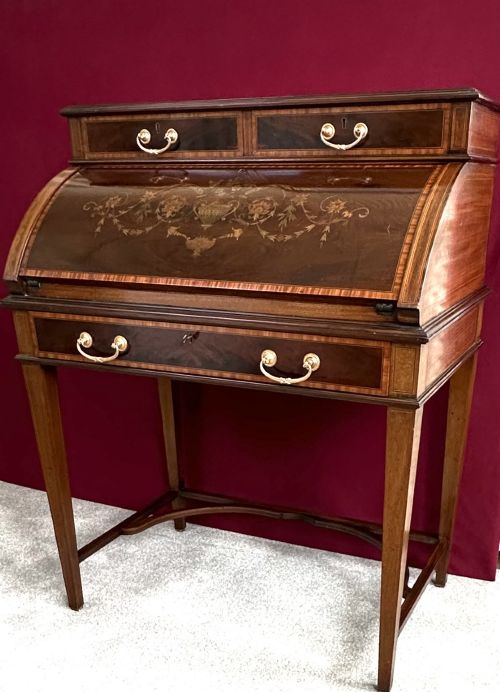
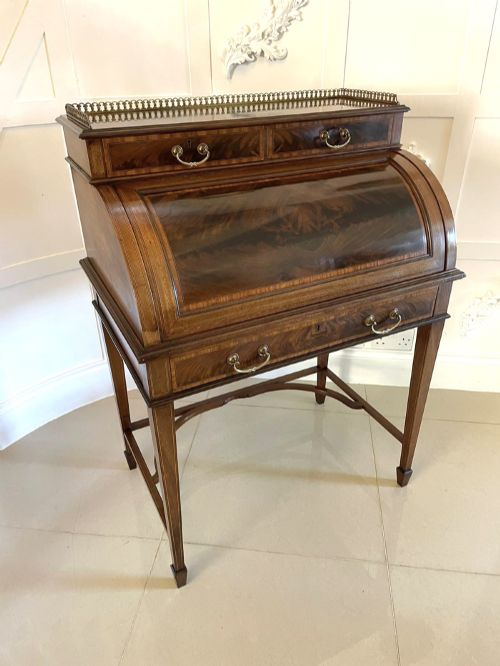
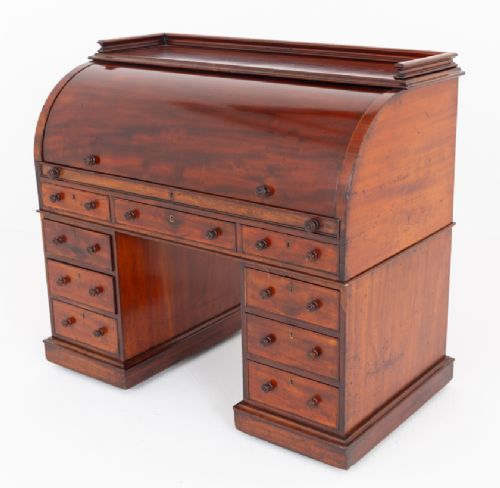
Mahogany Roll Top Bureau
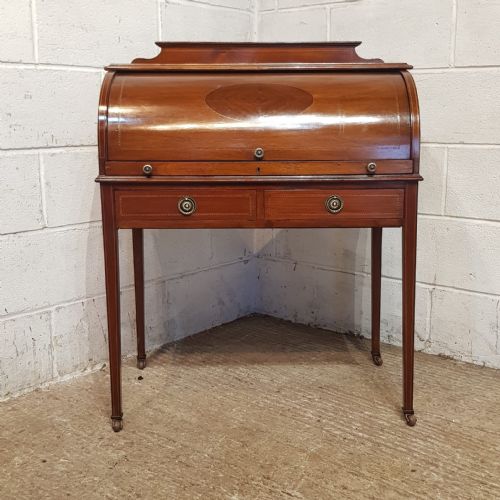
These mahogany roll top bureau pieces offer a practical writing surface that conceals papers beneath a curved wooden cover.
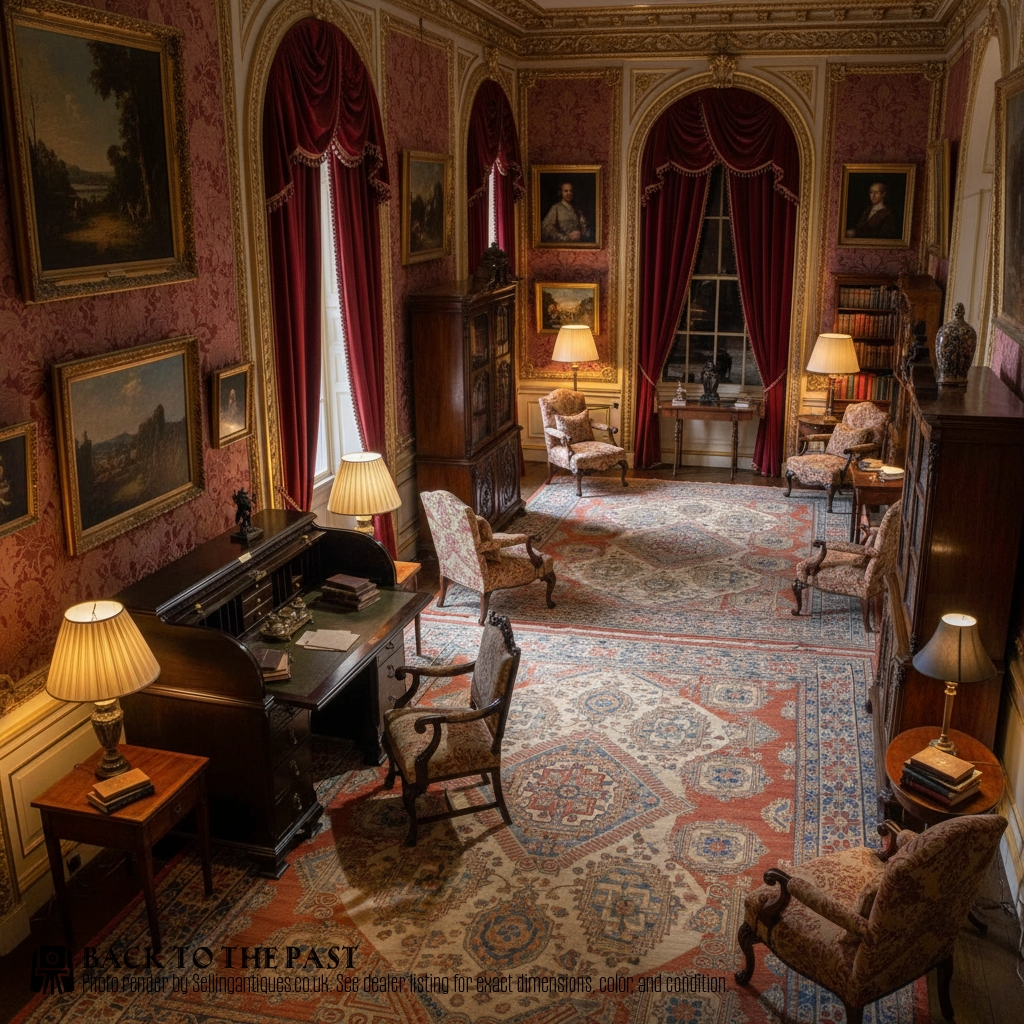
Mahogany Roll Top Bureau
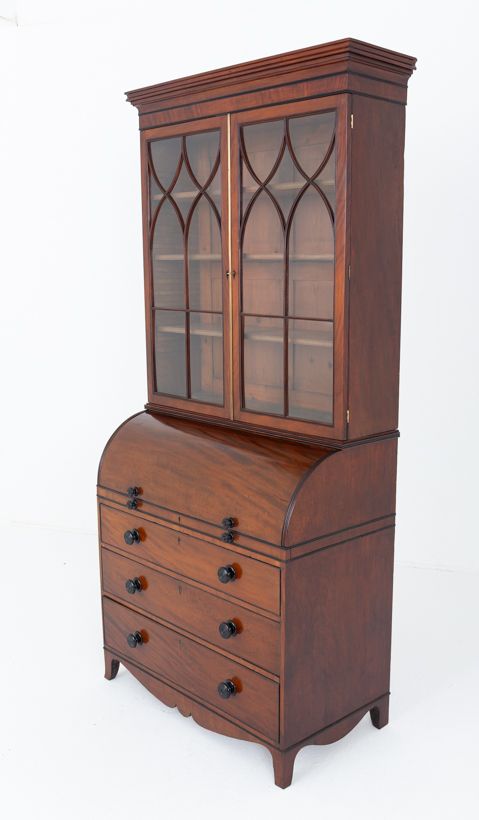
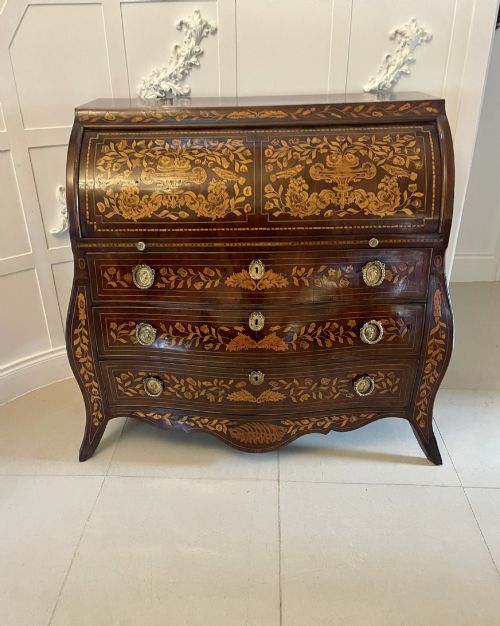
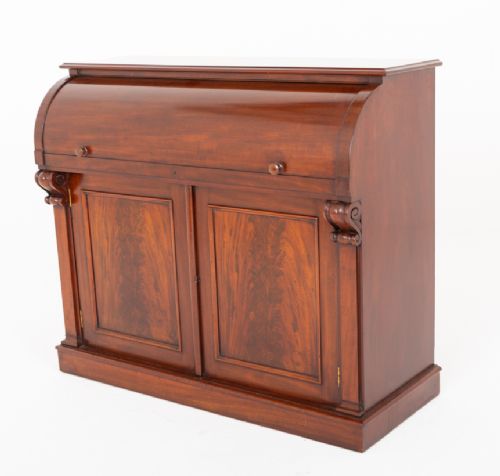
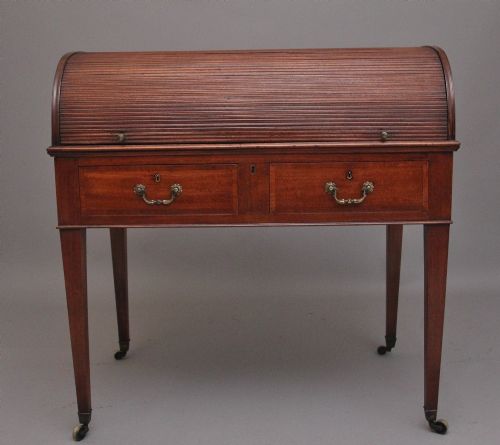
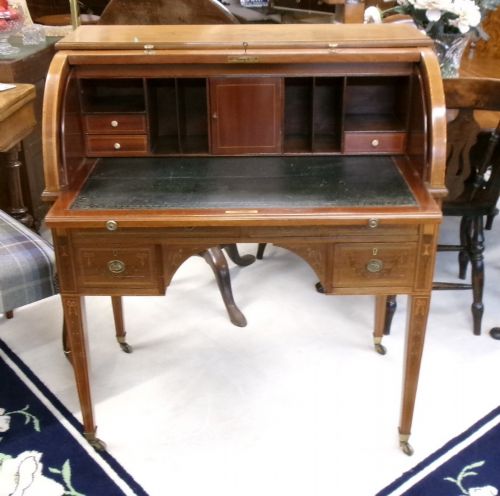
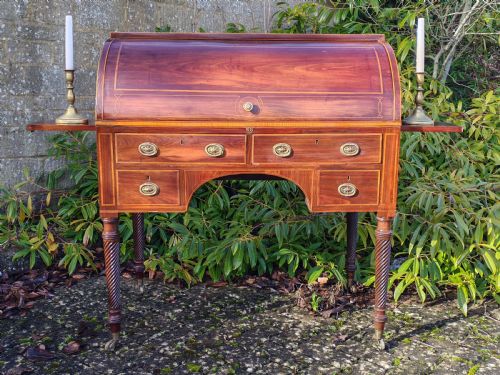
A mahogany roll top bureau provides a private writing space enclosed by a rolling cylinder or tambour shutter. The form spans several eras, appearing in Georgian, Regency, Victorian, and Edwardian designs.
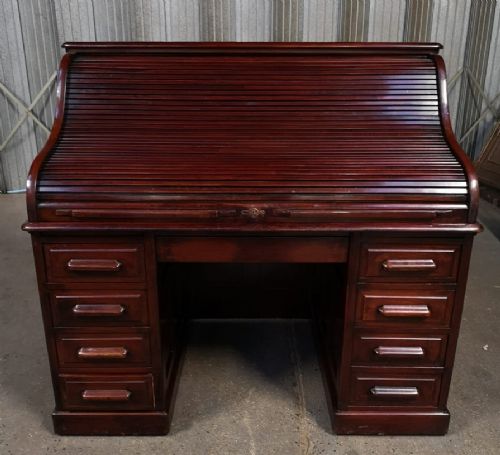
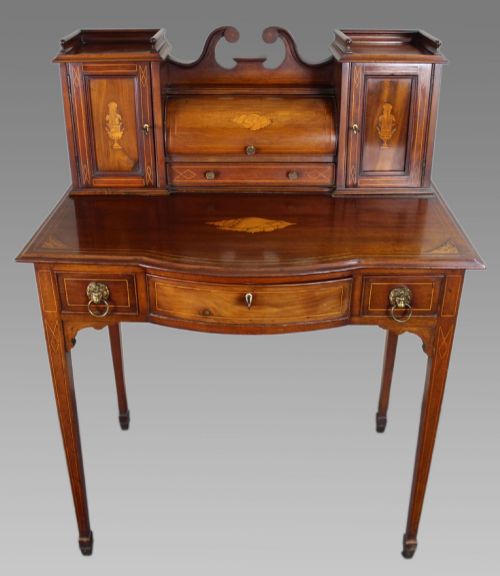
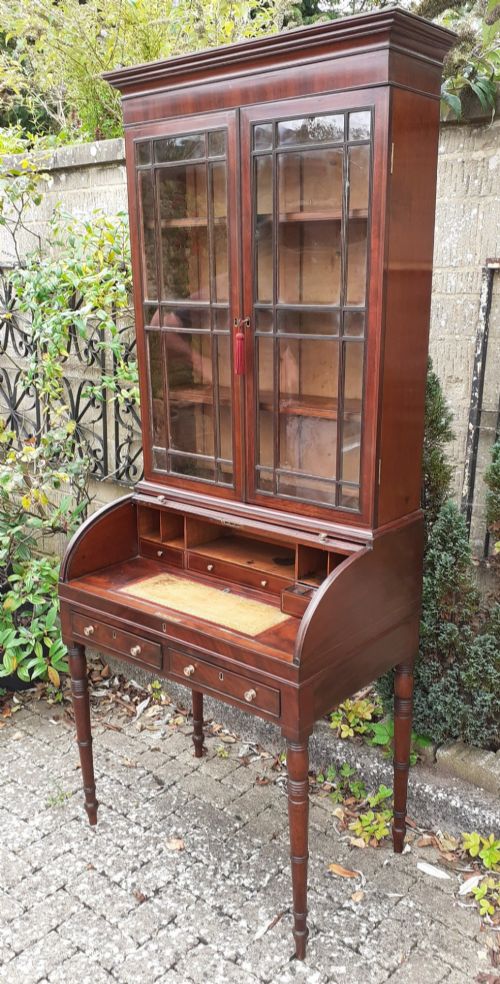
Most examples found on this page date from the nineteenth and early twentieth centuries. These range from compact ladies writing desks to large pedestal desks and towering bureau bookcases.
Makers adapted the cylinder form for various domestic settings, incorporating fitted interior drawers, pigeonholes, and pull-out writing slides.
How they were made
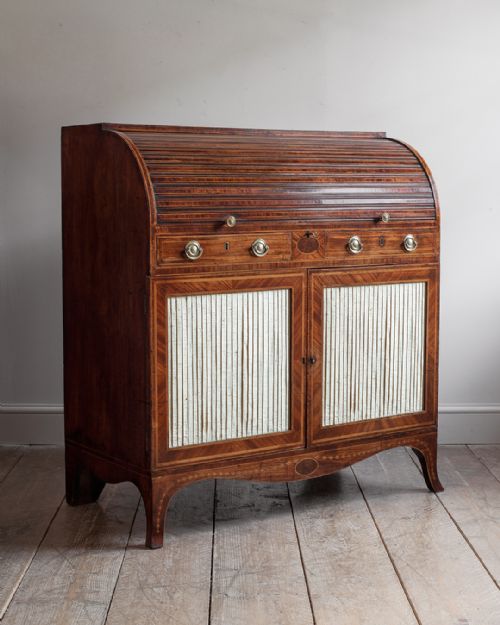
Joiners built these desks primarily using solid mahogany and figured mahogany veneers over secondary timbers. Workshops frequently added contrasting satinwood inlay, ebony stringing, and brass hardware to enrich the facade.
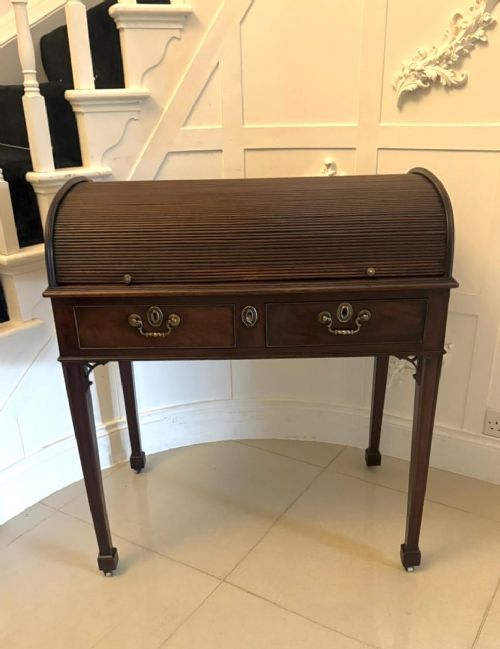
The characteristic roll top operates either as a solid mahogany cylinder or as a tambour constructed from narrow wooden slats glued to a flexible canvas backing. This mechanism requires precise woodworking so the curved shutter slides smoothly within grooved tracks.
Mahogany Roll Top Bureau Retail Price Guide 2026
Typical asking prices for mahogany roll top bureau among the pieces listed under this phrase on Sellingantiques today, from the lower quarter to the upper quarter. They describe what is for sale here now, not the wider market.
Materials recorded across these listings include solid mahogany, satinwood inlay, tambour slats, brass ring handles, and glass panel doors.
What varies in quality
The refinement of the internal fittings and the choice of timber figure largely determine the grade of a piece. Superior examples display carefully selected grain patterns across the cylinder and drawer fronts, alongside neatly dovetailed internal compartment drawers.
The execution of decorative elements such as marquetry inlay, ormolu mounts, and brass handles reveals the standard of the workshop. Smooth operation of the sliding writing surface and the curved roll top also indicates careful initial construction and subsequent preservation.
Maple & Co. London·Tudor & Burrey Shrewsbury
The Mahogany Roll Top Bureau Glossary
- Cylinder desk
- A writing desk featuring a quarter-circle rotating wooden cylinder that covers the writing surface and interior compartments when closed.
- Tambour
- A flexible shutter made from narrow strips of wood glued to canvas, allowing the roll top to slide around a curved track.
- Pedestal desk
- A heavy freestanding desk supported by two vertical banks of drawers rather than conventional legs.
- Bureau bookcase
- A dual-purpose piece combining a lower writing desk with an upper shelved bookcase enclosed by doors.
- Marquetry
- Decorative patterns formed by fitting together thin veneers of various coloured woods and other materials.
Mahogany Roll Top Bureau: Frequently Asked Questions
How do I operate the roll top?
The curved cylinder or tambour slides along grooved tracks within the desk frame, usually linked to an internal mechanism. Pulling the writing slide forward often releases the roll top to glide open.
Ensure the internal drawers are pushed fully home before attempting to close the cylinder, as obstructions can jam the mechanism.
Where were these desks used?
These pieces served primarily as private writing cabinets for managing correspondence and household accounts in the home. They appeared in libraries, studies, and drawing rooms.
Larger pedestal versions functioned as business desks in gentleman's offices, while smaller satinwood inlaid variants suited ladies sitting rooms.
How do I date a mahogany bureau?
Dating relies on observing structural characteristics, timber selection, and decorative styles across the piece. Georgian and Regency examples often feature clean architectural lines, whereas Victorian and Edwardian pieces frequently incorporate heavier proportions or marquetry inlay.
Secondary woods inside the drawers and the style of brass hardware offer further clues to the period of manufacture.
How do I care for the mahogany finish?
Maintain the wood by applying traditional beeswax polish sparingly and buffing gently with a soft cloth. Keep the desk away from direct sunlight and heat sources to prevent the mahogany veneer from drying out or splitting.
Avoid using modern liquid silicones or harsh chemical cleaners on antique polished surfaces.