



Curved Barrel Desk
A curved barrel desk or matching tub armchair brings practical workspace comfort and solid period character to any study.
Curved Barrel Desk
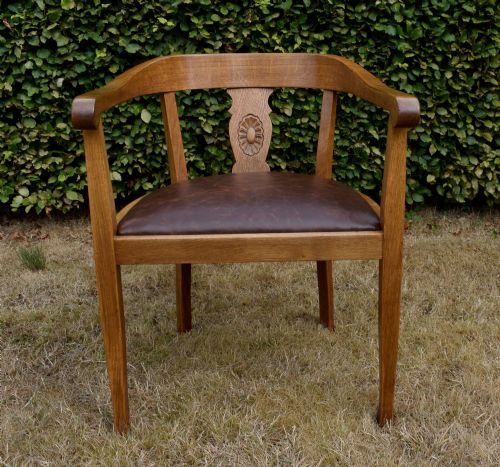
When you search for a curved barrel desk, you are looking at nineteenth- and early twentieth-century workspace furniture and seating designed around enclosing curves. The selection spans the Victorian and Edwardian eras through to the nineteen-twenties and thirties, drawing on Arts and Crafts, Queen Anne style, and bentwood traditions.
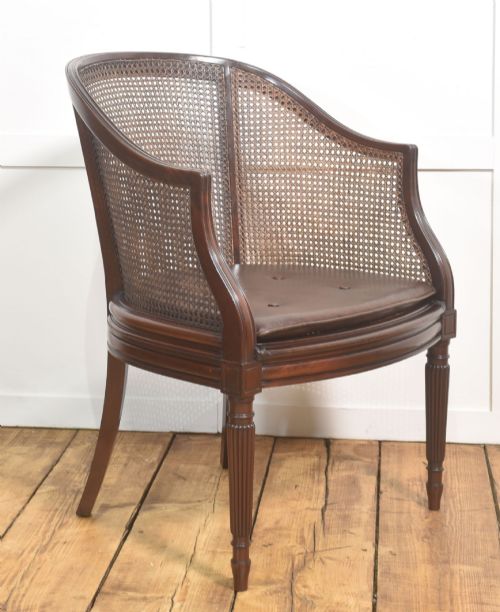
Most pieces met on this page take the form of tub armchairs and related seating designed to accompany writing furniture, alongside cylinder desks from the late nineteenth century. These forms utilise enclosing backs and supportive wooden frames shaped for extended periods of work.
How they were made
Makers constructed these pieces primarily from solid timber frames in mahogany, oak, and satinwood, frequently incorporating steam-bent elements to achieve the characteristic curved barrel shape. Inlaid details and brass fittings appear across Edwardian and Victorian examples to finish the woodwork.
Upholstery forms a major part of the construction, utilising leather, velvet, fabric, and cane panels set within the wooden tubs. Newly upholstered pieces sit alongside original surfaces, maintaining the structural integrity of the curved backrests.
Curved Barrel Desk Retail Price Guide 2026
Typical asking prices for curved barrel desk among the pieces listed under this phrase on Sellingantiques today, from the lower quarter to the upper quarter. They describe what is for sale here now, not the wider market.
Listings span the Victorian and Edwardian eras, with pieces dated from eighteen-ninety through to nineteen-thirty-one.
What varies in quality
Quality in these items rests on the execution of the timber work and the integrity of the curved framing. Pieces featuring finely figured mahogany or quarter-sawn oak with crisp inlay display a higher standard of cabinetmaking than simpler utility pieces.
The method of construction in the curved backrest dictates the longevity and strength of the chair or desk. Expert steam-bending and tight joinery create seamless barrel shapes that maintain stability without relying on heavy secondary bracing.
Thonet
The Curved Barrel Desk Glossary
- Tub armchair
- A comfortable chair featuring a continuous curved back and arms that form a deep, enclosed seating area. This form dominates the seating choices found in this category.
- Cylinder desk
- A writing desk featuring a quarter-cylinder rolling wooden shutter that encloses the desk surface and pigeonholes. These items represent the primary desk form recorded in the evidence.
- Arts and Crafts
- A design movement prioritising traditional craftsmanship, visible construction, and simple forms. Pieces from this style often utilise solid oak and straightforward joinery.
- Satinwood
- A durable, dense tropical timber with a lustrous, golden sheen utilised for fine inlay and decorative banding. Cabinetmakers favoured it for contrast against darker woods like mahogany.
- Bentwood
- Wood softened by steam and bent under pressure into permanent curves. This technique allows for the smooth, rounded profiles seen in modernist and Thonet seating.
Curved Barrel Desk: Frequently Asked Questions
What is a curved barrel desk?
A curved barrel desk incorporates rounded wooden elements and enclosing forms, often paired with matching tub armchairs designed for the writer.
These pieces emerged during the Victorian and Edwardian periods to provide both formal presence and ergonomic comfort in private studies.
How do I date a tub armchair?
Dating relies on identifying timber choices, stylistic markers such as inlay or Queen Anne legs, and construction methods. Edwardian examples often feature lighter mahogany and refined stringing.
Earlier Victorian pieces tend to be heavier in proportion, while nineteen-twenties items introduce bentwood techniques and Arts and Crafts simplicity.
Are these chairs comfortable for daily work?
The enclosing tub shape provides natural support for the back and arms during extended periods of sitting at a desk. Many examples feature upholstered leather or fabric pads designed specifically for this purpose.
Some pieces also incorporate cane panels for breathable backrests, balancing rigidity with flexible support.
What timber was used most often?
Mahogany and oak form the vast majority of the framing materials across both Victorian and Edwardian eras. Cabinetmakers selected these hardwoods for their strength and stability when shaped into curved barrel profiles.
Satinwood also appears as a contrasting timber used primarily for decorative inlay work on the frames.