

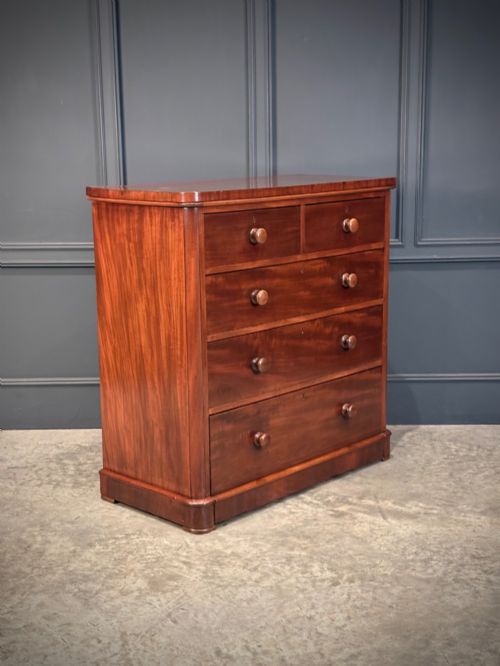
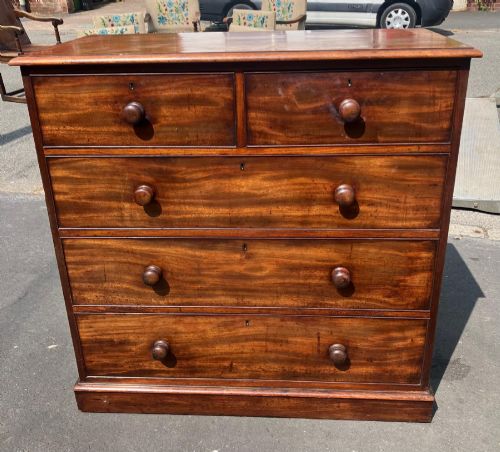
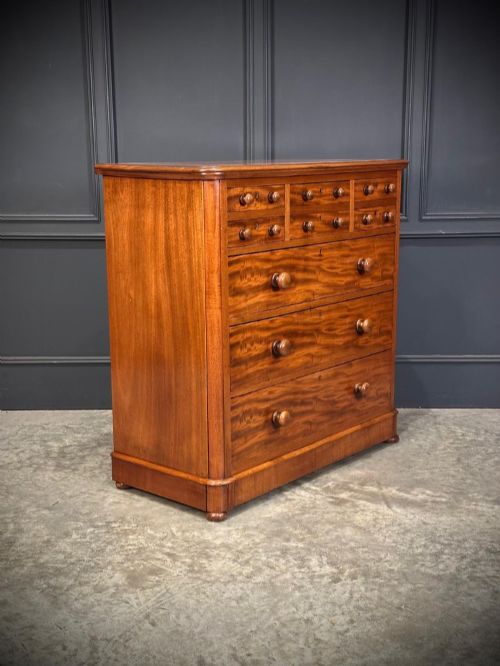
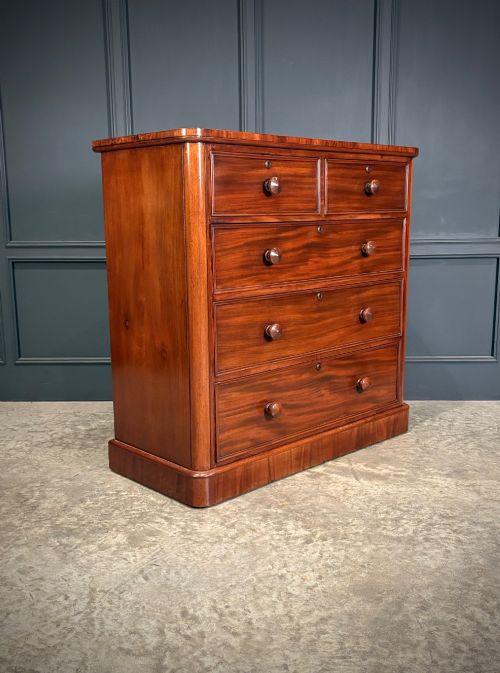
Mahogany Plinth Chest
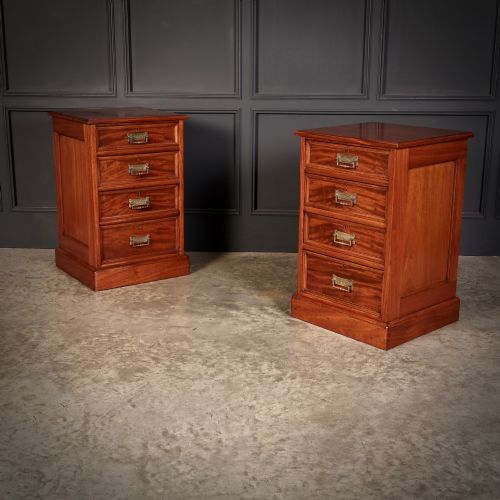
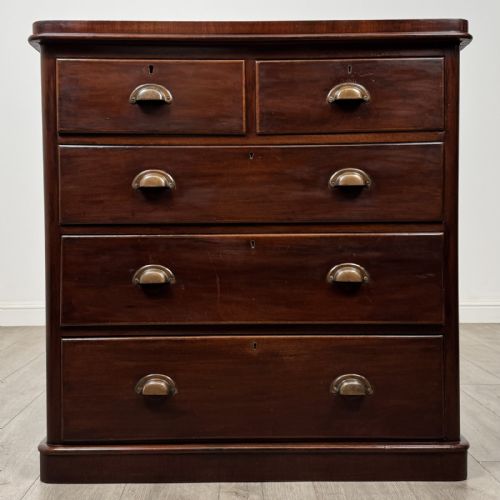
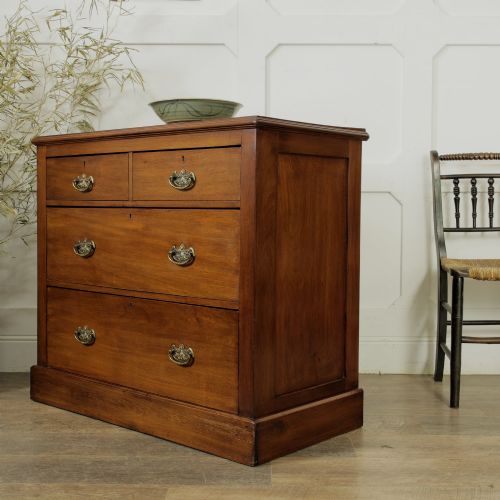
A mahogany plinth chest delivers solid storage with a clean, low base instead of traditional bracket feet.
Mahogany Plinth Chest
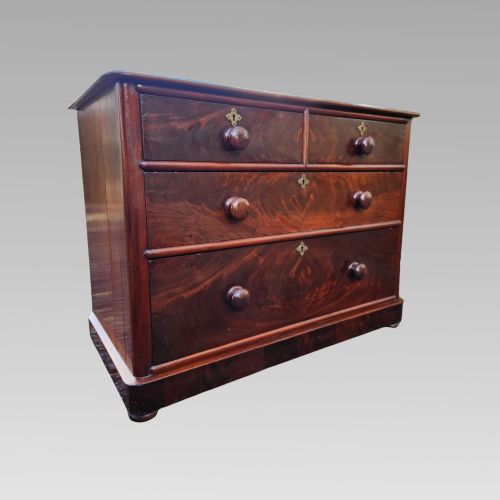
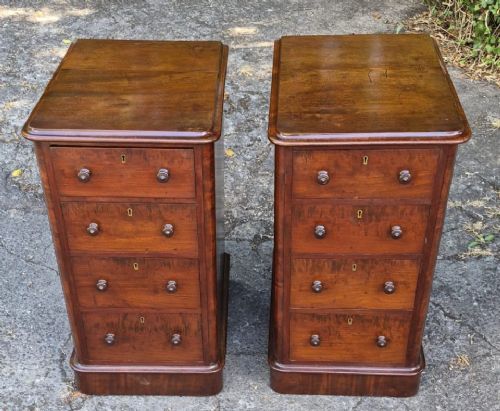
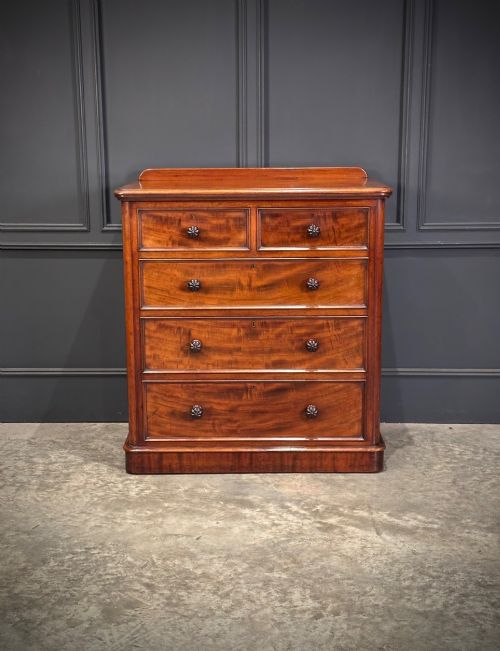
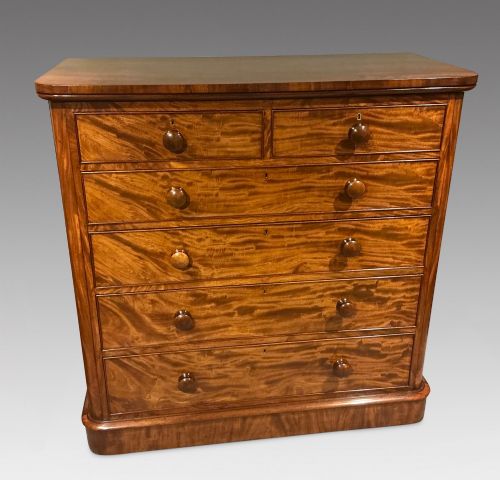
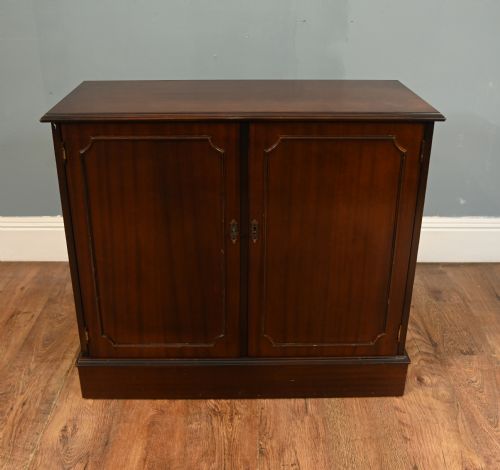
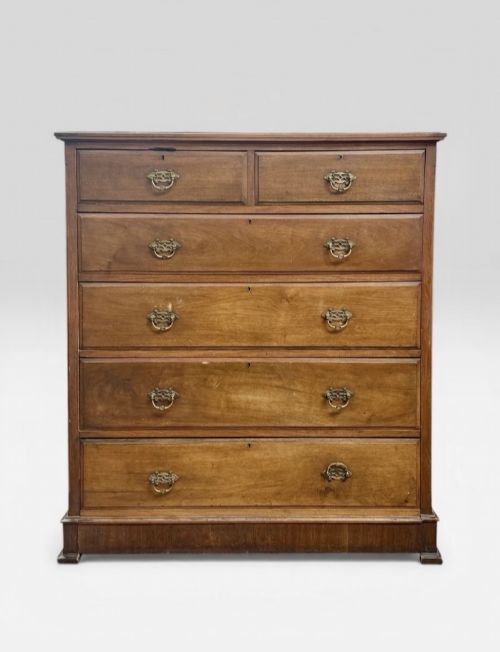
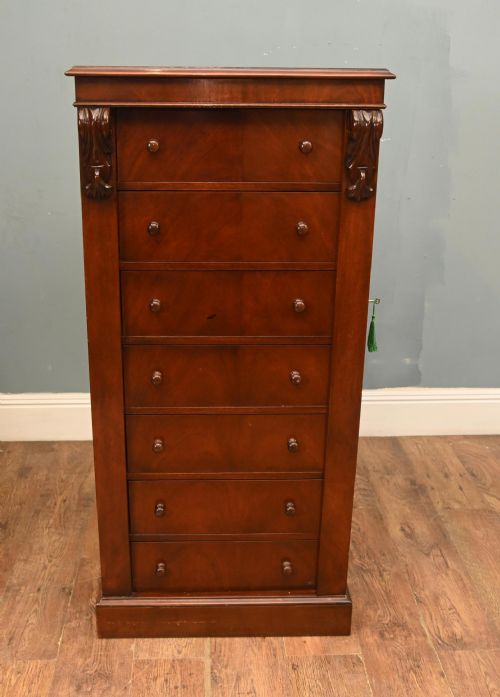
A mahogany plinth chest provides sturdy storage through multiple drawer configurations, most frequently seen as Victorian chests of drawers resting firmly on flat plinth bases rather than elevated legs. These pieces range from standard bedroom chests with deep drawers to taller Wellington chests and smaller bedside cabinets.
The materials span solid timbers and veneered surfaces, with various examples incorporating secondary woods like oak, pine, or chestnut within their carcass construction. The form remains practical and architectural, relying on the solid rectangular foundation of the plinth to anchor the piece visually.
How they were made
Cabinet makers utilised dense tropical timber alongside native secondary woods, often applying flame mahogany veneer to primary drawer fronts to create figured grain patterns. Carcasses commonly feature pine or oak framing, while internal drawer linings employ secondary timbers.
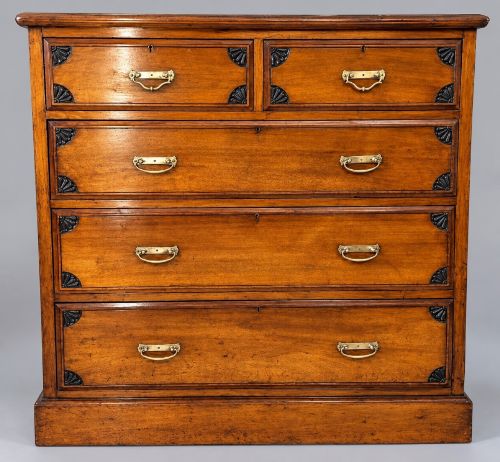
Joinery techniques combined traditional dovetailed drawer construction with heavy structural plinth bases, occasionally enhanced by carved corbels or brass handles. Inlaid details using boxwood further decorated select surfaces across the Victorian and Edwardian periods.
Mahogany Plinth Chest Retail Price Guide 2026
Typical asking prices for mahogany plinth chest among the pieces listed under this phrase on Sellingantiques today, from the lower quarter to the upper quarter. They describe what is for sale here now, not the wider market.
Listings feature pieces spanning the eighteenth century through the Edwardian era, predominantly built from mahogany with pine, oak, and chestnut.
What varies in quality
The selection of timber grain and veneer matching separates standard utility furniture from finer examples, particularly where flame mahogany is utilised across every drawer front. The crispness of carved details, such as corbels on Wellington chests, also indicates the level of craftsmanship.
Internal construction details, including cedar or oak drawer linings and the integrity of the plinth base, determine the structural grade of each piece. Superior execution shows in the seamless alignment of drawers and the preservation of original brass hardware or wooden knobs.
Mawer & Stephenson
The Mahogany Plinth Chest Glossary
- Plinth base
- A flat, solid wooden block foundation upon which the chest rests directly, replacing traditional legs or feet. This architectural feature gives the furniture a grounded, stable appearance.
- Flame mahogany
- A highly figured veneer cut from the branching fork of the mahogany tree, creating a distinctive flame-like pattern. Cabinet makers reserved this premium material for prominent drawer fronts.
- Wellington chest
- A tall, narrow chest of drawers secured by a hinged locking side stile that fastens with a key. This form typically sits upon a substantial plinth base.
- Carved corbel
- An architectural bracket projecting from beneath the top surface or flanking the sides of a chest. These decorative elements add visual weight to Victorian case furniture.
- Secondary wood
- Timber utilised for hidden structural parts of a piece, such as drawer linings, carcase backs, and internal framing. Common examples include pine, oak, and chestnut.
Mahogany Plinth Chest: Frequently Asked Questions
What is a plinth base on a chest?
A plinth base is a solid, flat wooden platform at the very bottom of the furniture that replaces traditional feet or legs. It gives the chest a grounded and architectural stance.
This solid foundation helps distribute weight evenly across the floor while keeping dust from collecting underneath the main carcass.
How do I date a Victorian mahogany chest?
Dating relies on examining the secondary timbers, handle styles, and construction methods used inside the drawers and carcass. Mid-Victorian pieces often feature hand-cut dovetails and turned wooden knobs.
Later Victorian and Edwardian examples may show machine assistance or different secondary woods like pine and oak inside the frame.
Are Wellington chests different from standard chests?
Wellington chests are taller and narrower than standard chests of drawers and include a unique hinged locking side bar. This vertical locking strip secures every drawer simultaneously with a single key.
They were originally designed to hold important papers or delicate garments securely in a compact vertical footprint.
What woods are used besides mahogany?
While mahogany serves as the primary external timber and veneer, makers incorporated various secondary woods for structural framing and internal work. Common secondary timbers include oak, pine, cedar, and chestnut.
Drawer linings and internal carcase partitions often reveal these hidden structural woods when inspected closely.