



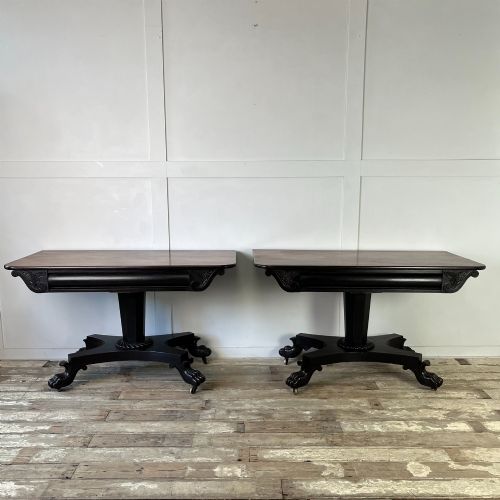
Mahogany Pier Tables Pair
These mahogany pier tables pair grandeur with symmetry, offering architectural presence and surface space against a wall.
Mahogany Pier Tables Pair
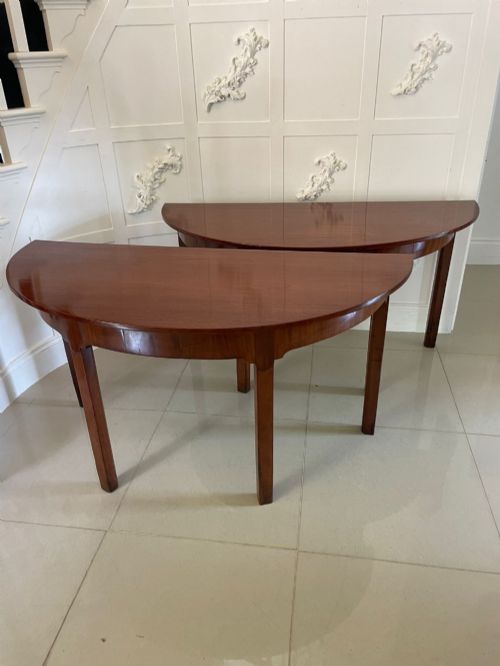
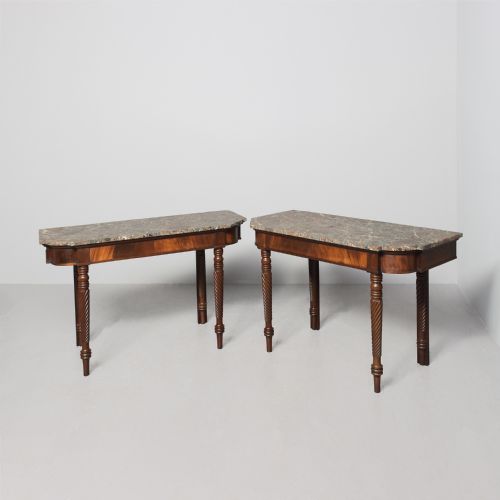
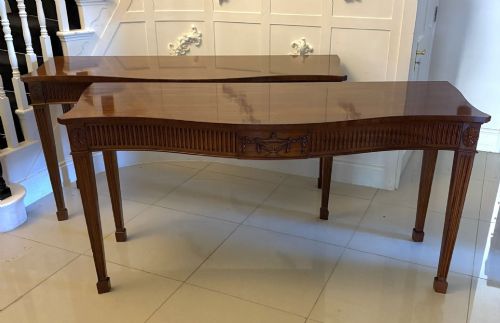
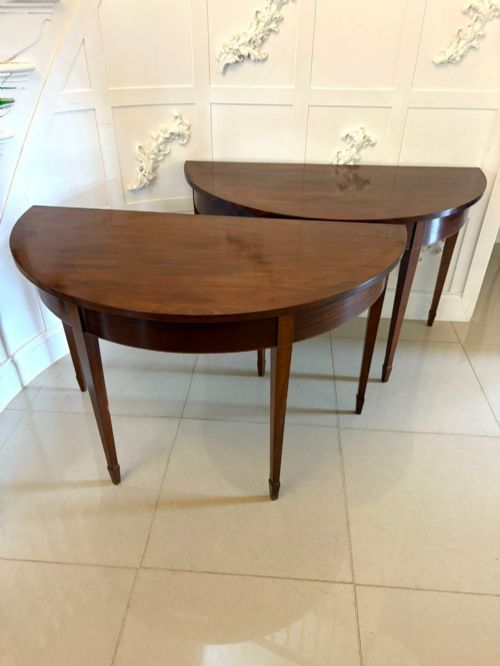
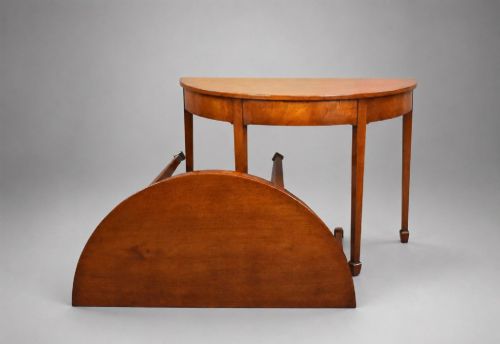
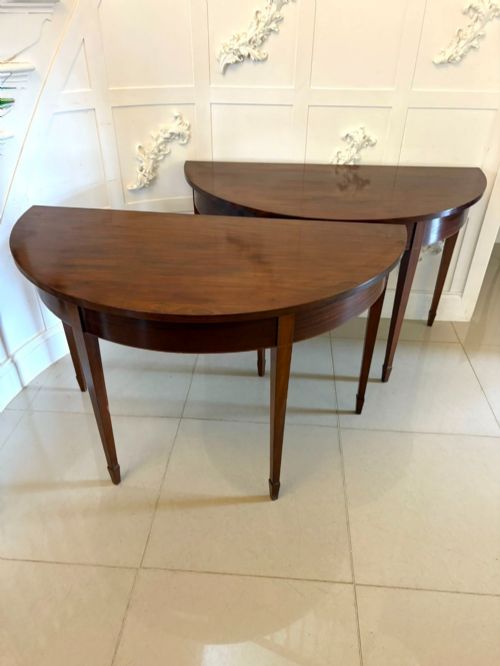
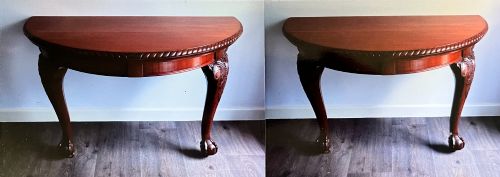
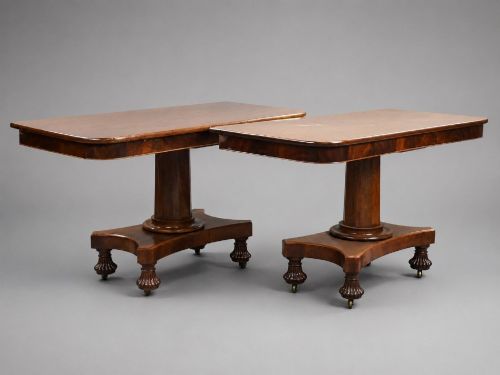
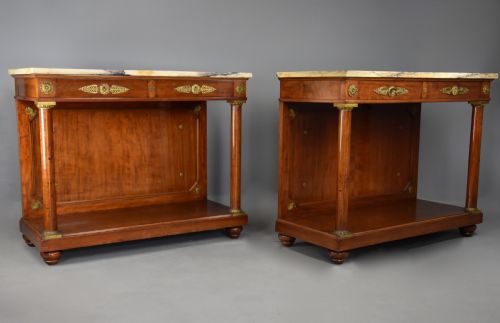
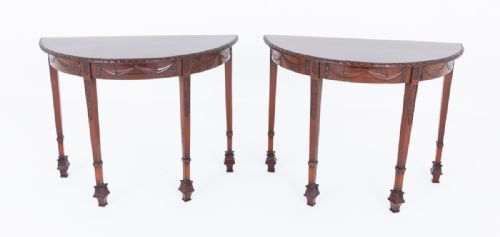
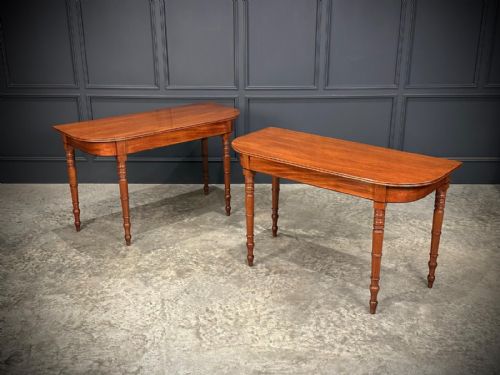
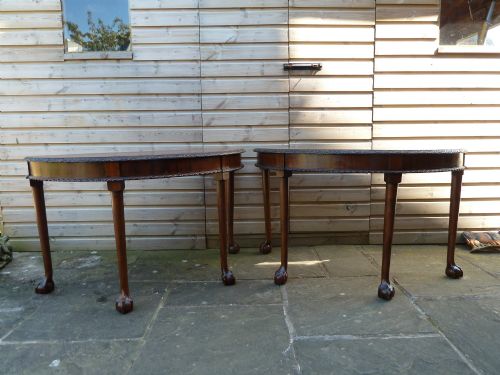
When a buyer searches for a mahogany pier tables pair, they look for matched sets of large architectural furniture designed to stand against a wall, frequently between windows or beneath a pier glass mirror. These symmetrical consoles provide a balanced focal point in a reception room or hallway. The pieces met most often on this page date from the Georgian, Regency, and Victorian eras, taking forms such as demi-lune console tables, serpentine serving tables, and marble-topped hall tables.
The architectural tradition of the pier table requires stable placement against a flat surface, often anchored to the wall. The timber choice relies heavily on figured mahogany, sometimes enhanced by boxwood inlay or supported by ebonised details. Many examples reflect formal design idioms including George III, William IV, French Empire, and Italian Neoclassical styles, matching the formal interiors for which they were originally commissioned.
How They Were Made
Cabinetmakers selected dense, figured mahogany timber, often cut to display rich grain patterns across wide demi-lune and rectangular tops. Workshops utilised solid timbers alongside stable veneers, framing the carcasses with careful joinery designed to withstand the stresses of large console forms. Decorative contrasts emerged through boxwood stringing and inlay work, setting light timber against the deep reddish-brown ground of the primary wood.
Many high-status examples incorporate heavy marble slabs inset into the wooden frames, providing a cool, durable surface that contrasts with the warm timber. Metal elements such as brass galleries, boxwood details, and ormolu mounts add structural crispness and visual weight. Carved wooden ornamentation, from neoclassical motifs to classical friezes, completes the construction vocabulary of these matched sets.
Several pairs preserve the exact scars of nineteenth-century butler service, bearing faint beverage rings from forgotten tea trays.
What Varies in Quality
Quality rests principally on the selection of the mahogany timber and the consistency achieved across both items in the pair. Exceptional pairs display evenly matched grain patterns and deeply figured surfaces across both tabletops, whereas lesser examples show mismatched timber selection or plain, uninteresting boards. The ambition of the carving and the crispness of inlaid boxwood separate standard cabinetwork from master-level production.
Structural integrity and the retention of original supporting elements define the upper tier of survivals. Pairs retaining their original marble tops, unblemished brass mounts, and stable structural frames command greater regard than those assembled from mismatched components or subjected to heavy structural intervention. The balance between architectural proportion and fine surface detail governs the standing of each matched set.
Krieger Paris·Gillows·Jean Joseph Chapuis
The Mahogany Pier Tables Pair Glossary
- Demi-lune
- Half-moon shape in furniture design. This semicircular form allows console tables to sit flush against a wall while projecting outward into the room.
- Pier table
- A side table designed to stand against a wall between architectural openings. These pieces frequently accompany large mirrors or windows.
- Ormolu
- Gilded bronze mountings applied to furniture. This decorative technique adds metallic contrast and enrichment to the wooden carcass.
- Serpentine
- A gently undulating curved line resembling a snake. This profile is often carved into the front edges of high-style console tables.
- Inlay
- Contrasting timber or material set into the surface of a primary wood. Craftspeople utilise this method to create geometric patterns and borders.
Mahogany Pier Tables Pair: Frequently Asked Questions
Where should I place a pier tables pair?
These matched consoles suit formal reception rooms, grand hallways, or dining spaces where symmetry is paramount. Position them flat against a wall, frequently beneath a large mirror or artwork.
Because they arrive as a pair, placing them flanking a doorway or fireplace creates a balanced and architectural interior scheme.
How do I distinguish Georgian from Victorian examples?
Georgian and Regency pieces tend to feature restrained neoclassical lines, lighter proportions, and crisp boxwood stringing. Timber selection focuses on figured mahogany with subtle carving.
Victorian versions often present heavier dimensions, deeper mouldings, and bolder carving styles. They frequently incorporate white or coloured marble tops within the broader console format.
Did these tables always have marble tops?
Not all examples feature stone surfaces, though marble tops appear frequently across the period styles listed here. Many surviving tables retain solid figured mahogany tops instead.
Tables with stone surfaces were often designed for heavy usage in entrance halls, while wooden tops suited drawing rooms and parlours.
How do I care for antique mahogany surfaces?
Protect the timber by avoiding direct sunlight and maintaining stable room humidity. Dust the carved details and flat surfaces regularly with a dry cloth.
Apply high-grade beeswax sparingly to nourish the polish, buffing gently to maintain the natural warmth of the figured mahogany.