



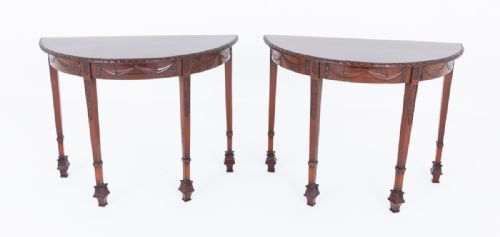
Pair Mahogany Console Tables
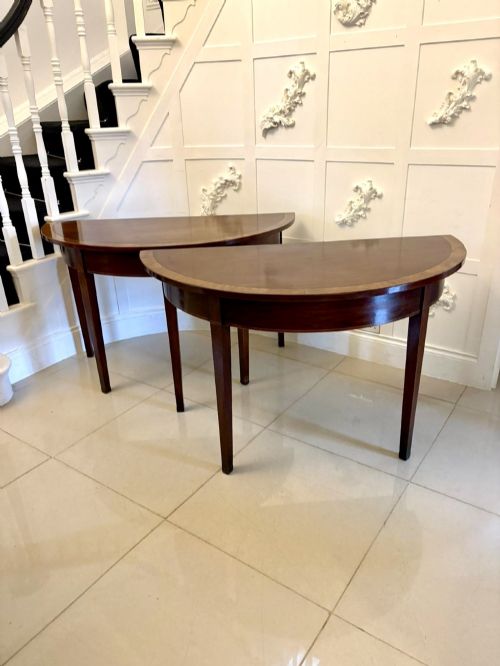
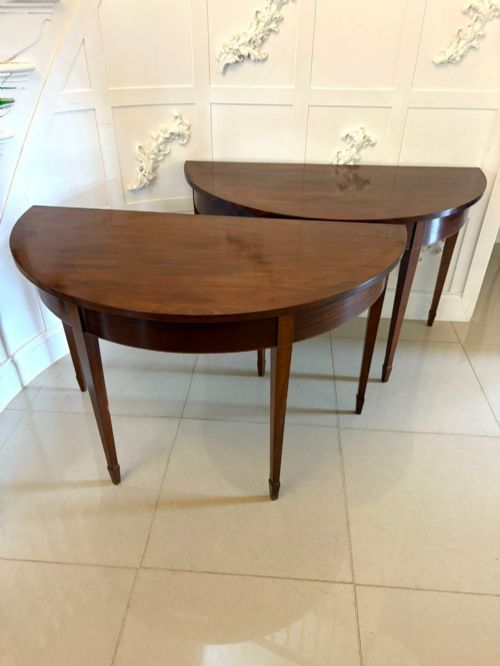
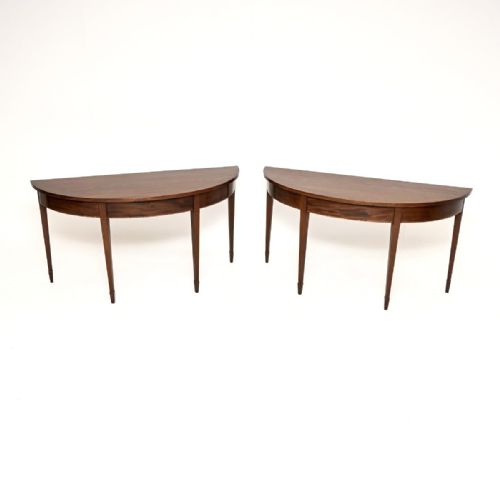
When you search for pair mahogany console tables, you discover matched dual furniture designed for symmetry against a wall.
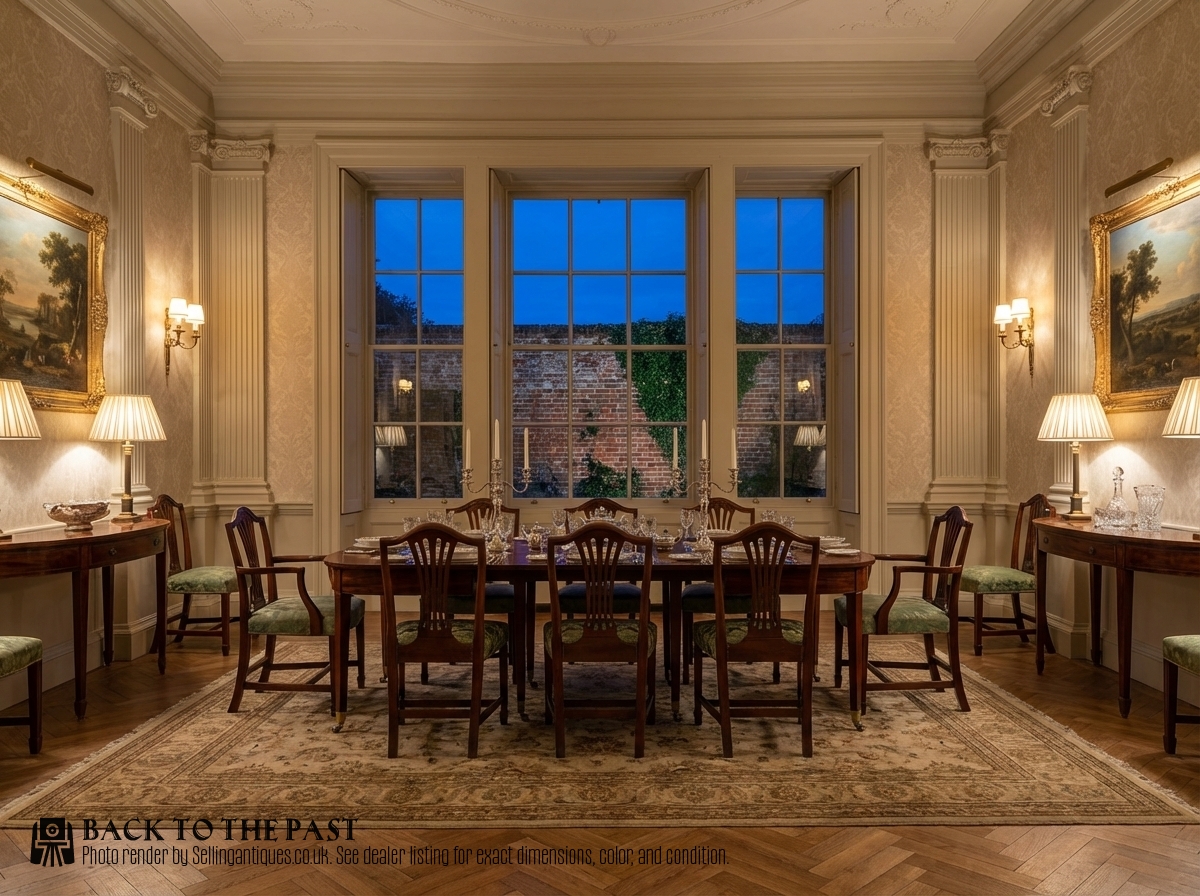
Pair Mahogany Console Tables
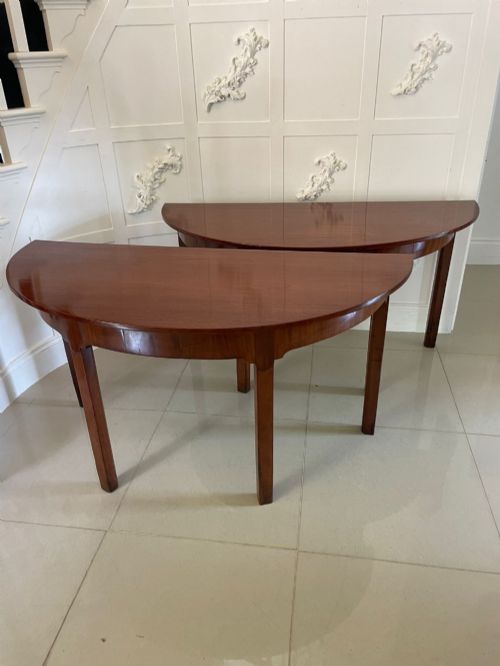
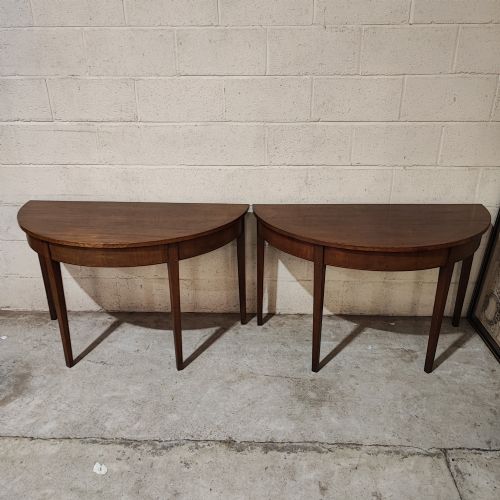
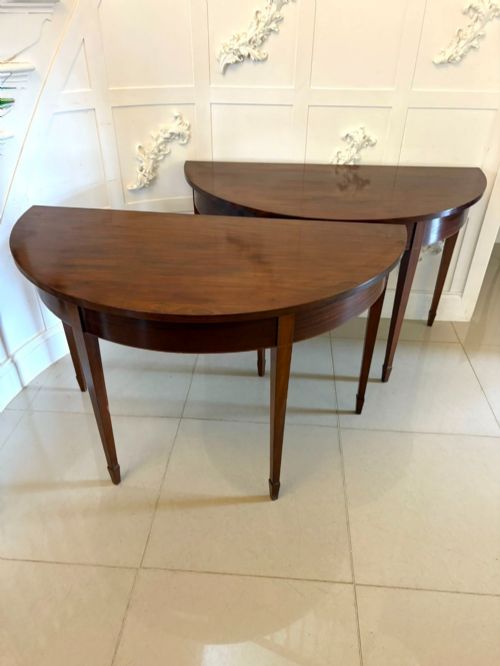
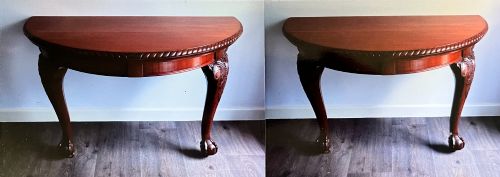
A pair mahogany console tables selection centres on matching dual furniture pieces designed to stand against a wall, frequently taking the form of demi-lune, serpentine, or D-end shapes.
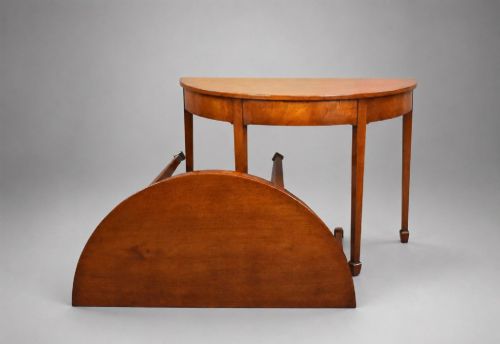
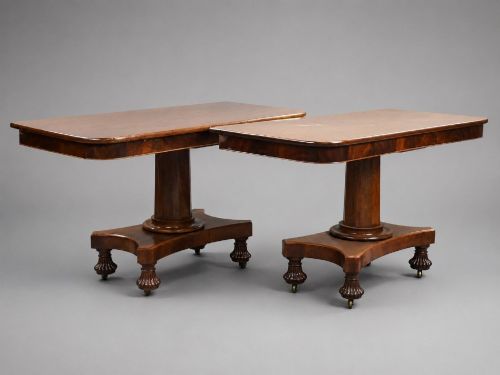
The pieces appearing most often date from the Georgian and George III periods through the Regency and William IV eras, featuring semicircular tops that often convert into card or dining tables.
Originating from English and continental workshops, these items served grand dining rooms and entrance halls as serving tables or decorative consoles.
How they were made
Cabinetmakers utilised dense tropical timber, applying figured mahogany veneers over secondary woods to create rich surface grains and deep natural colour.
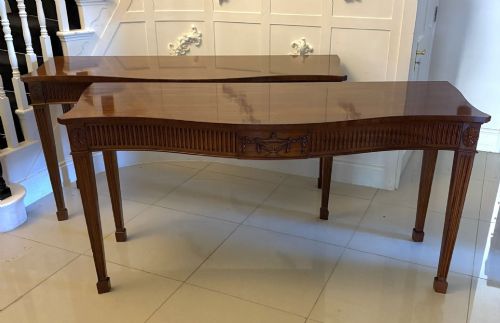
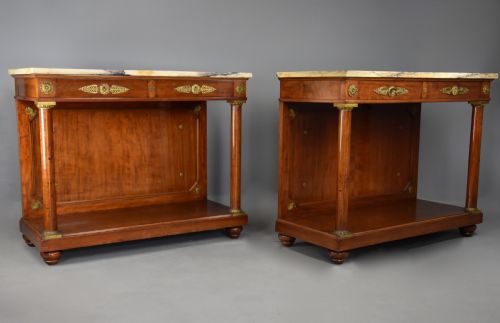
Master craftsmen incorporated brass inlay, boxwood stringing, and neoclassical carving to enrich the borders and friezes of the tables.
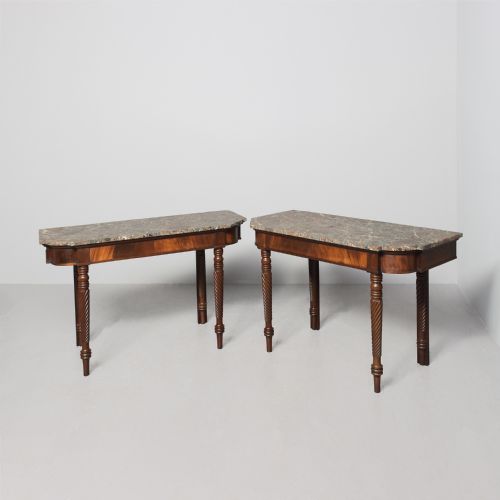
Selected examples integrate heavy white marble tops set into the wooden framing, providing a contrasting cold stone surface.
Listings span the George III, Regency, and Victorian periods, utilising mahogany, marble, brass, and satinwood.
What varies in quality
The selection of timber grain defines the visual impact, with highly figured mahogany veneers showing superior depth compared to plain boards.
The precision of cabinetmaking is evident in the execution of complex curves such as serpentine fronts and the tight fit of folding table leaves.
Carved neoclassical motifs and inlaid brass work display varying degrees of hand-carved crispness and artisan skill.
Krieger Paris·Jean Joseph Chapuis·James Shoolbred
The Pair Mahogany Console Tables Glossary
- Demi-lune
- Having the shape of a half-moon or semicircle. These tables fit flush against a wall.
- Serpentine
- A furniture front curving inward centrally and outward at the ends in a wavy line. This profile requires advanced woodworking skill.
- D-end
- A table end shaped like the letter D, allowing multiple sections to join together. Pairs often combine to form a long dining surface.
- Satinwood
- A durable yellowish wood used extensively for contrasting inlay and banding. It highlights the darker mahogany body.
- Frieze
- The broad horizontal band situated beneath the top surface of the table. Makers often decorate this area with carving or veneer panels.
Pair Mahogany Console Tables: Frequently Asked Questions
How were pair mahogany console tables used?
These matched tables stood against drawing room or hallway walls to display decorative objects, or served meals in dining spaces.
Many examples featured folding tops that opened into card or dining tables when guests arrived.
Can I separate the pair?
Separating the matching pieces disrupts the symmetrical balance intended by the original cabinetmaker.
Placement usually requires keeping both items together in the same room or matching architectural focal points.
How do I identify a George III piece?
George III items typically date from the late eighteenth or early nineteenth century, displaying restrained neoclassical carving and figured mahogany veneers.
Construction relies on traditional joinery methods without modern metal fasteners.
What is a marble top used for?
Marble inserts provided a cool, heat-resistant surface suitable for placing serving dishes or wet floral arrangements.
This heavier top style appears frequently on nineteenth-century continental and Regency designs.