

Mahogany Pier Console Table
A mahogany pier console table brings architectural presence to a hall or reception room through rich timber and disciplined proportions.
Mahogany Pier Console Table
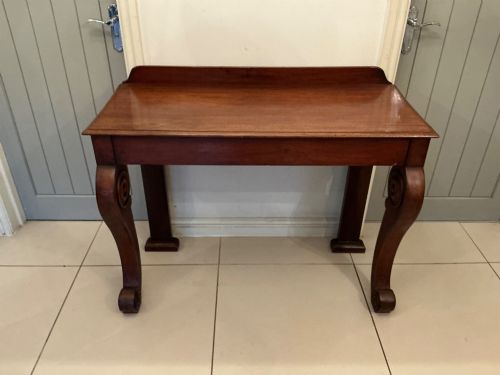
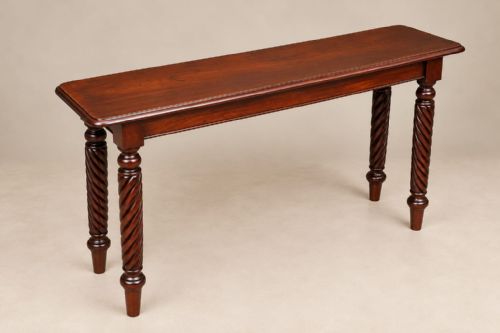
A mahogany pier console table is a heavy furniture form designed to stand against a wall, frequently positioned beneath a pier glass mirror. These pieces emerge in styles ranging from George III and Regency through to Victorian and Edwardian revivals.
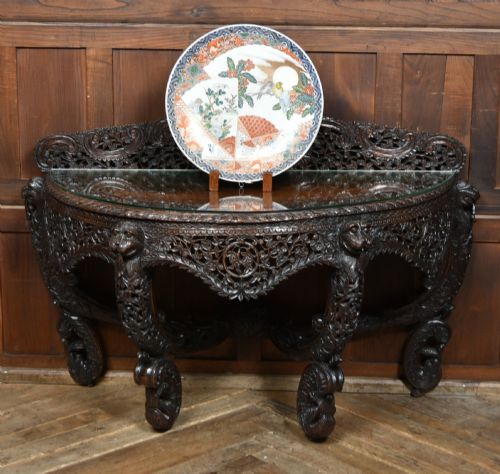
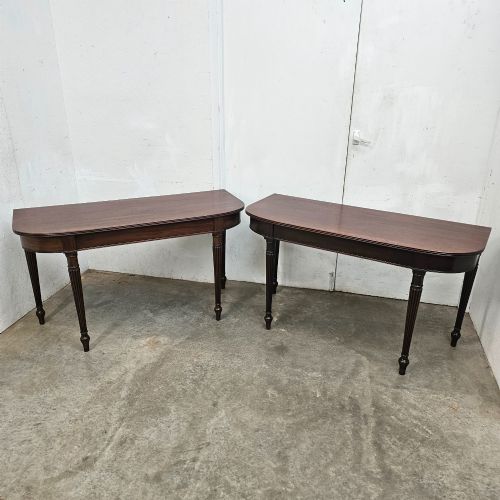
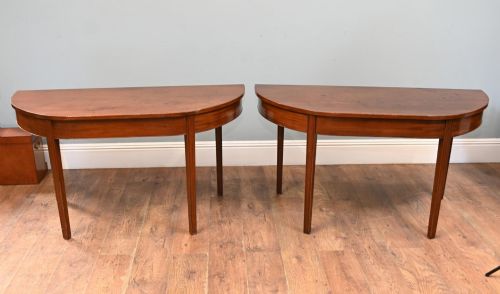
The demi-lune or half-round shape dominates the selection, alongside rectangular and break-front formats. Many examples survive as matched pairs, engineered to anchor symmetrical spaces within formal rooms.
Makers adapted the form across Britain, Ireland, and continental Europe, applying local vernaculars to the timber carcase. The listings show forms that double as side tables, serving sideboards, and wall-mounted cabinets.
How they were made
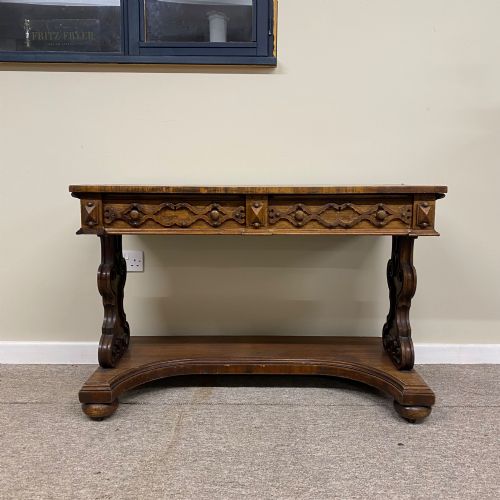
Cabinetmakers selected figured mahogany, flame mahogany, and occasionally Dutch marquetry for the visible surfaces, building internal carcases from secondary softwoods. Timber veneers were laid over solid foundations to create symmetrical grain patterns across the tops and friezes.
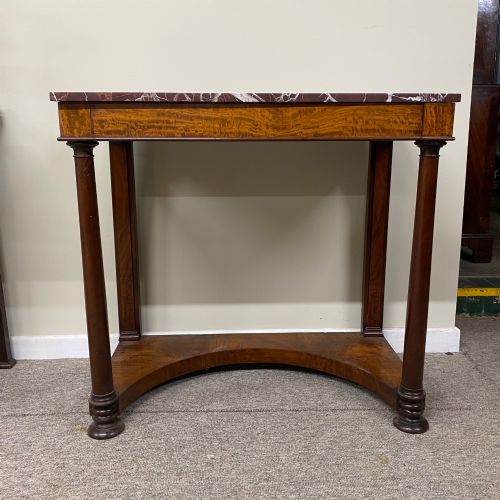
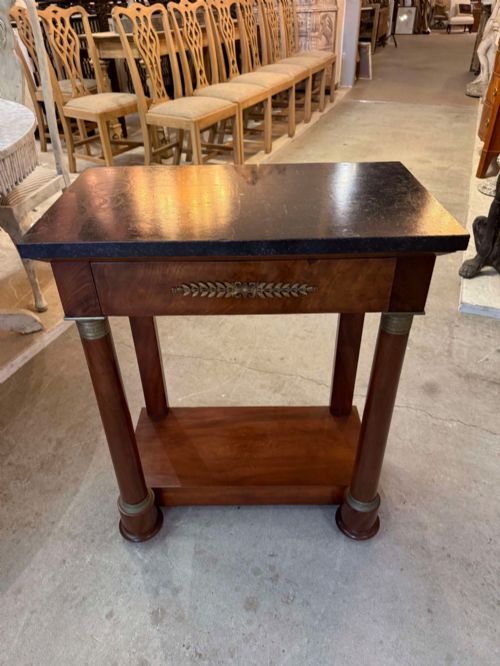
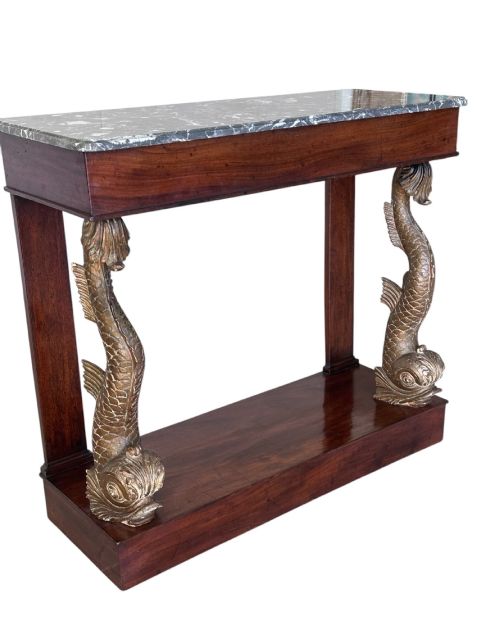
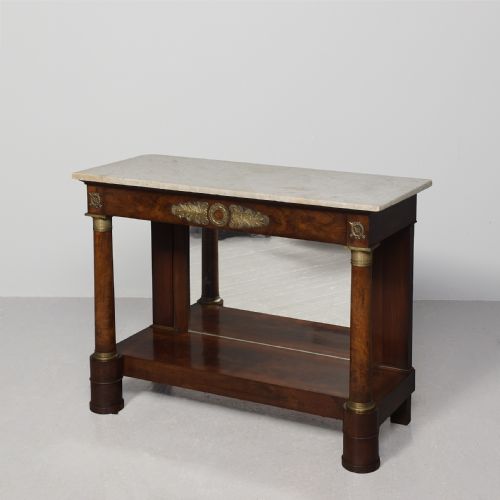
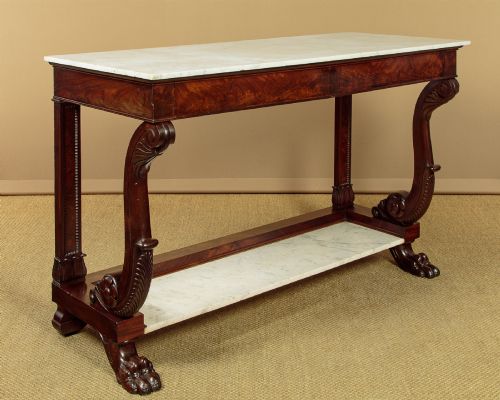
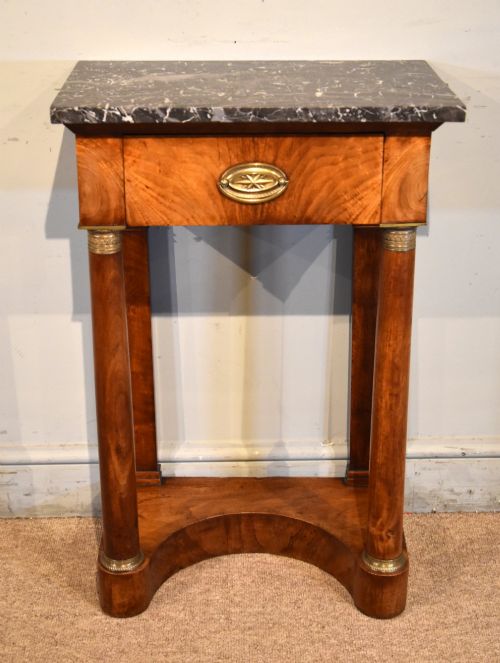
Heavy slabs of white or grey marble form the upper surface on many French and Victorian examples, supported directly by the timber framework. Ormolu mounts, brass galleries, and cast bronze details punctuate the dark timber.
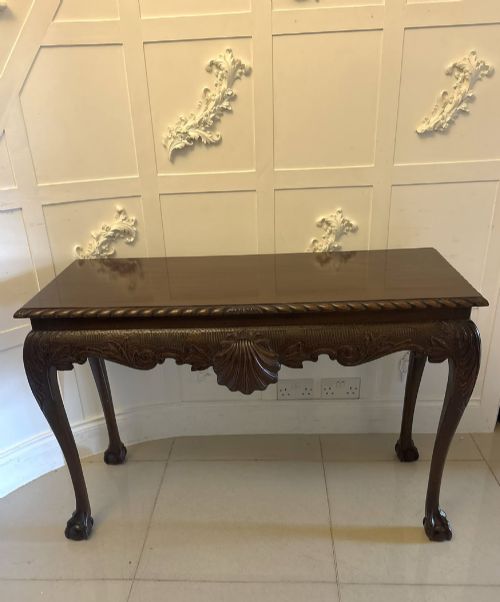
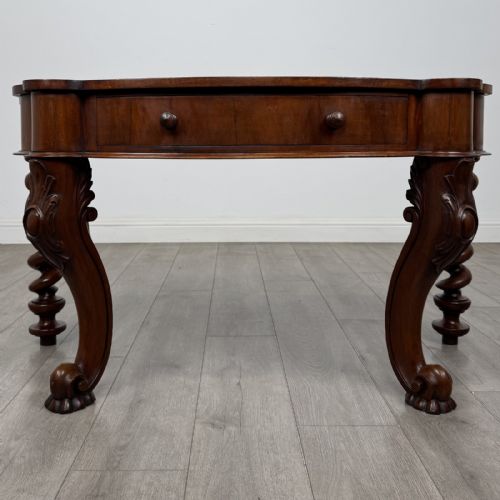
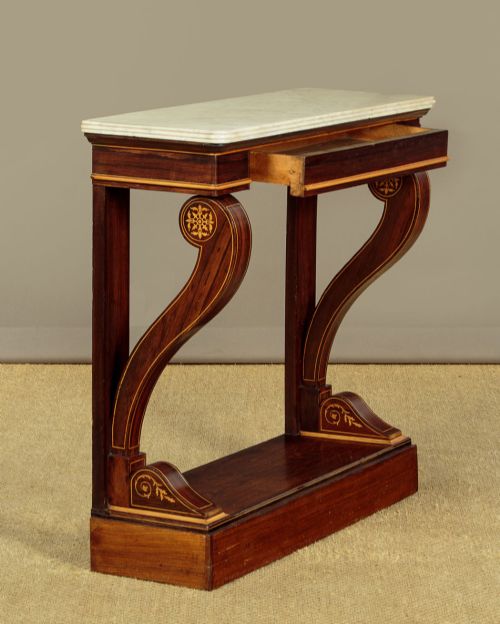
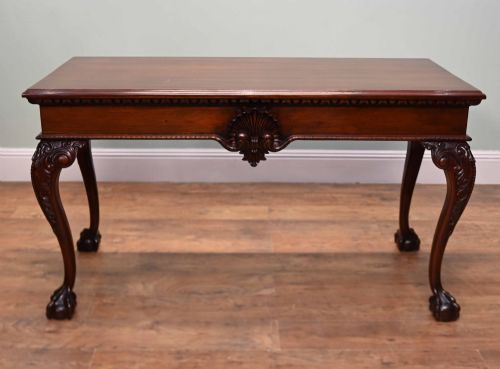
Inlays of boxwood and wood stringing define the edges of George III and Regency pieces, while carved cabriole legs or bold pillars provide structural support at the front corners.
Mahogany Pier Console Table Retail Price Guide 2026
Typical asking prices for mahogany pier console table among the pieces listed under this phrase on Sellingantiques today, from the lower quarter to the upper quarter. They describe what is for sale here now, not the wider market.
Listings span the eighteenth, nineteenth, and twentieth centuries, incorporating Georgian, Victorian, and French Empire styles.
What varies in quality
The distinction between standard commercial output and superior craftsmanship rests on the selection of the timber and the depth of the carving. Figured mahogany with strong natural grain commands attention, whereas plain stock indicates utility work.
Structural integrity depends on the joinery of the frieze and the stability of the legs under heavy marble slabs. Pieces retaining original mirror backs, fire-gilt ormolu mounts, and untouched surface patination represent the upper tier of the maker's art.
Druce and Co·Krieger Paris·Gillows·Gillingtons of Dublin
The Mahogany Pier Console Table Glossary
- Demi-lune
- A half-moon shape used for table tops and chests designed to sit flat against a wall. This profile became standard for console tables during the Georgian period.
- Pier glass
- A tall mirror designed to hang on the wall space between windows, frequently paired with a console table placed directly beneath it. The combination unifies the architectural elevation of a reception room.
- Ormolu
- Gilded bronze mounts applied to furniture surfaces for decorative contrast. This technique appears frequently on French Empire and nineteenth-century continental pieces.
- Marquetry
- Inlaid patterns of contrasting veneers assembled to form pictorial or geometric designs. Dutch workshops utilised this method extensively on walnut and mahogany carcases.
- Frieze
- The horizontal band of woodwork situated immediately beneath the top surface of a table. Makers often decorated this area with carved boxwood inlay or gilt mounts.
Mahogany Pier Console Table: Frequently Asked Questions
Where should I place a console table?
These tables belong flat against a wall in a hallway, dining room, or drawing room. They were historically designed for placement beneath a mirror or between windows.
Because of their shallow depth, they occupy minimal floor space while providing a surface for lamps or decorative objects.
Are marble tops original?
Many nineteenth-century French and English console tables incorporate heavy marble slabs as a functional, heat-resistant surface. These stones were fitted to the timber carcase during initial production.
Inspect the edges where the stone meets the mahogany moulding to understand how the top was seated.
How do I identify the period?
Dating relies on combining the leg style, timber treatment, and overall proportions. Straight tapered legs with stringing suggest the Georgian era, while heavy scrolled supports point to the William IV period.
Revival pieces from the later nineteenth century often blend stylistic cues from earlier reigns.
Did these tables come in pairs?
Cabinetmakers frequently built console tables in matching pairs to furnish grand symmetrical interiors. Surviving pairs remain sought after for balancing large spaces.
Single examples are equally common, having been separated over centuries of changing domestic layouts.