
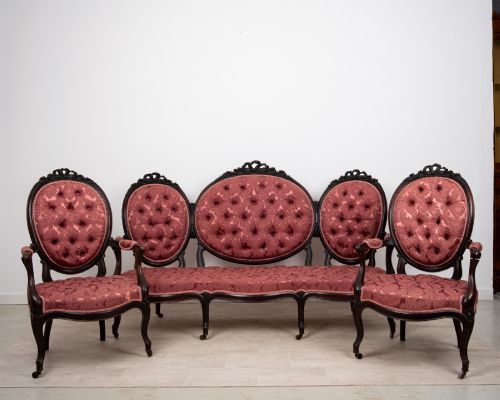


Mahogany Parlour Chairs
Mahogany parlour chairs are comfortable reception seating crafted from rich timber, offering a touch of period elegance to a room.
Mahogany Parlour Chairs
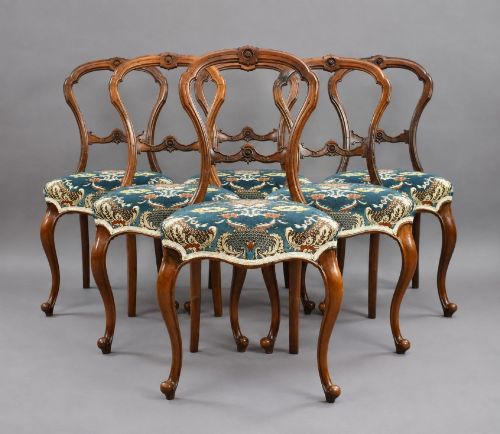
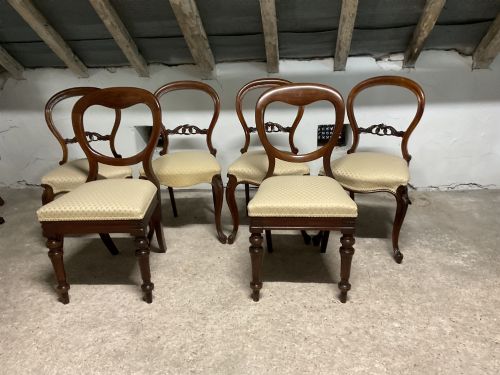
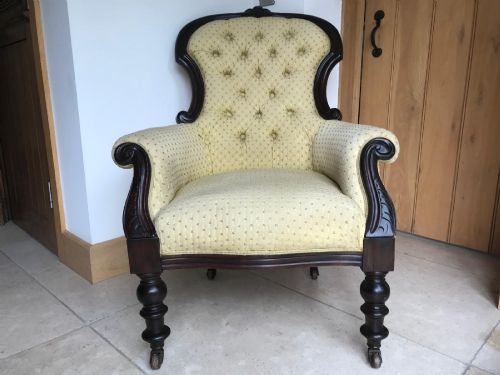
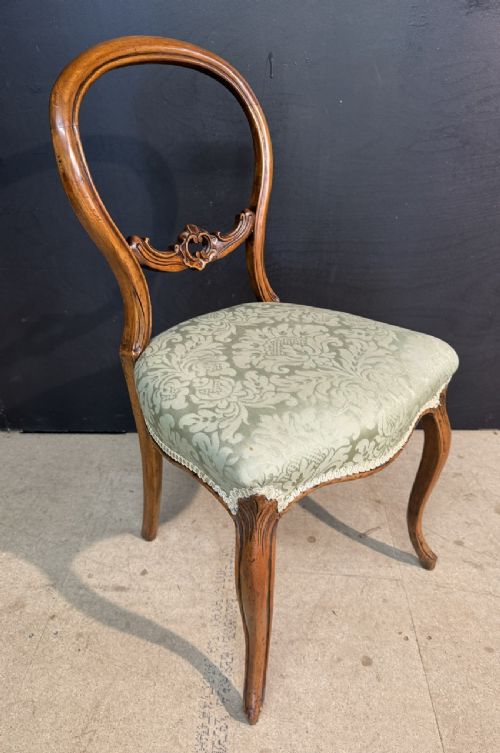
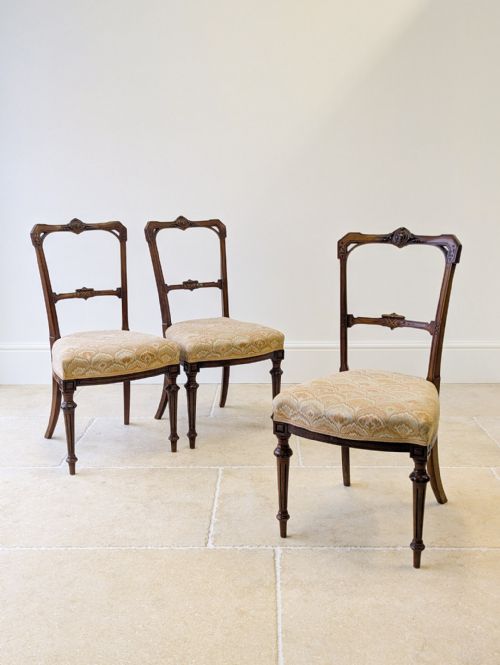
Mahogany parlour chairs are seating pieces designed for the formal reception rooms of nineteenth and early twentieth-century homes. The selections available span several distinct eras, stretching from Regency and William IV pieces through Victorian balloon-back designs to Edwardian Sheraton Revival examples.
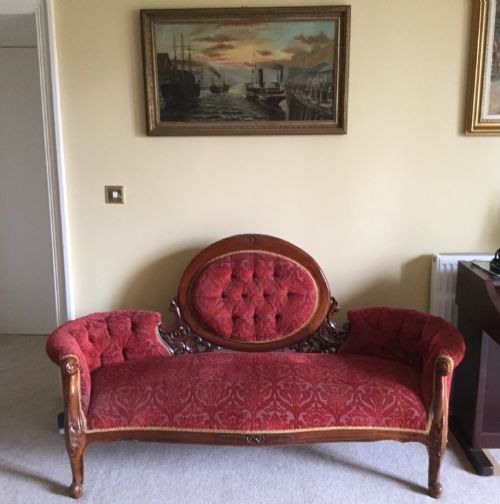
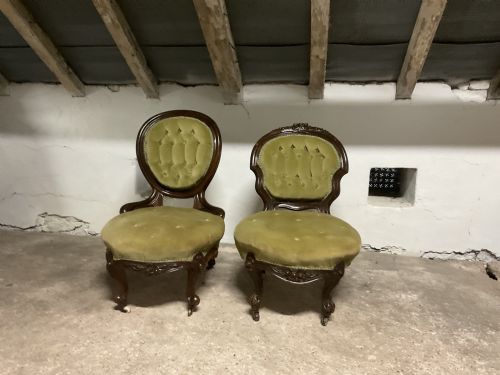
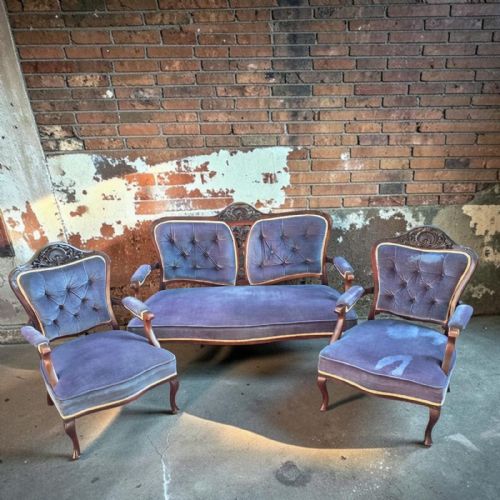
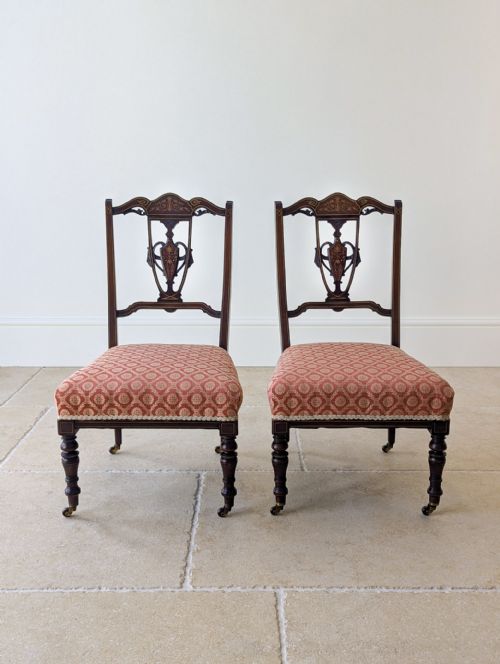
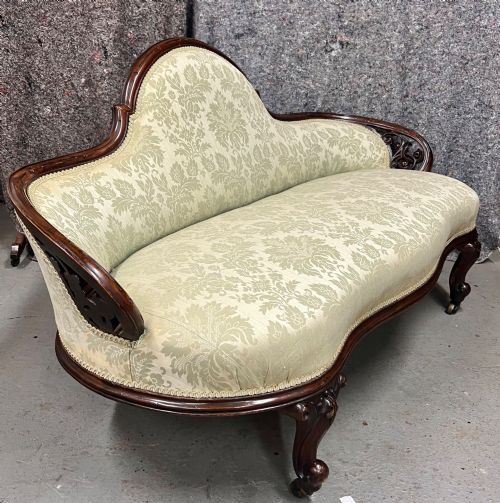
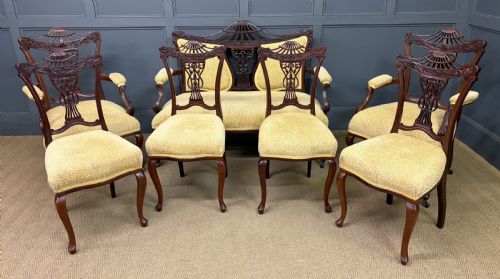
Buyers will encounter these seats in various configurations, ranging from pairs of side chairs and elbow chairs to larger dining sets and complete multi-piece salon suites. The forms include dedicated parlour seating, musician's chairs, and nursing chairs constructed from the same dense timber.
While many listings focus on dining chairs and salon seating, the core of this phrase centres on parlour chairs intended for domestic comfort and entertaining. These pieces reflect the evolving tastes of the nineteenth century, moving from heavy neoclassical lines to lighter inlaid Edwardian frameworks.
How they were made
Makers utilised solid mahogany for the structural frames, taking advantage of the timber's strength to shape slender cabriole legs, curved backs, and delicate scrollwork. Carved details and marquetry or string inlay often decorate the crest rails and splats of later Edwardian and Sheraton Revival examples.
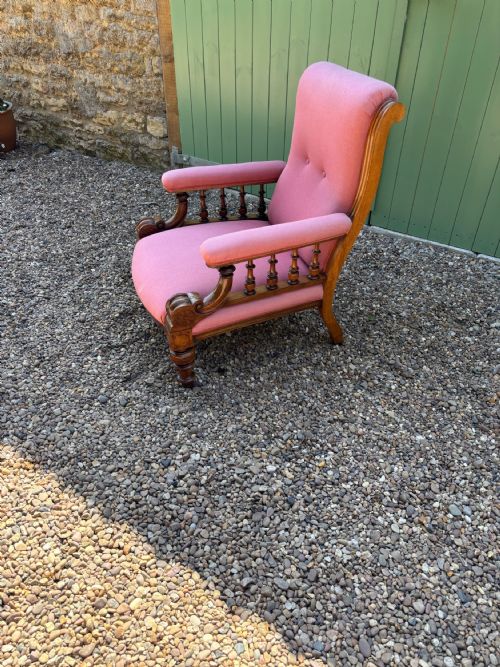
Upholstery forms an essential component of these seats, employing textiles such as damask, velvet, fabric, and deep-buttoned brocade over sprung or stuffed bases. Brass fittings and castors occasionally support the feet of heavier armchairs and settees.
Some chairs were built specifically for Victorian musicians to perch upon while playing the piano.
What varies in quality
The standard of craftsmanship depends heavily on the crispness of the timber carving and the architectural proportion of the frame. Superior examples display fluent lines in the balloon backs or cabriole legs without clumsy joints or heavy-handed repairs.
Upholstery choices and the preservation of original showwood surfaces dictate the overall finish. Pieces retaining well-executed hand-carved details or subtle marquetry inlay sit firmly at the upper end of the selection.
The Mahogany Parlour Chairs Glossary
- Balloon back
- A chair back shaped in an open, curved oval resembling a balloon. This design became popular during the Victorian period for dining and parlour seating.
- Cabriole leg
- A furniture leg that curves outward at the knee and tapers inward at the ankle, frequently ending in a pad or scroll foot. It draws inspiration from animal limbs.
- Marquetry
- Decorative veneer work arranged in pictorial patterns or geometric designs using various wood types. It often appears on Edwardian and late Victorian pieces.
- Showwood
- Polished wooden framing left exposed around the upholstered sections of a chair or sofa. It allows the grain and colour of the mahogany to remain visible.
- Sheraton Revival
- A late nineteenth and early twentieth-century design style emulating the neoclassical lightness of George Sheraton. These items often feature satinwood inlay and slender proportions.
Mahogany Parlour Chairs: Frequently Asked Questions
Where were parlour chairs placed?
Homeowners positioned these seats in drawing rooms, parlours, and reception spaces where guests were entertained. They served as movable seating that could be arranged easily for conversation or musical performances.
Unlike heavier dining furniture, parlour chairs prioritised decorative presence and relaxed posture alongside fireplace hearths or near windows.
How do I identify Victorian pieces?
Victorian examples often feature dark mahogany timber, sturdy balloon-back frames, and sometimes elaborate carved details along the crest rail. The proportions tend to be heavier than earlier Regency designs.
Later Victorian items may incorporate buttoned upholstery or cabriole legs, marking a transition towards more ornate salon suites by the end of the nineteenth century.
Are these chairs suitable for daily use?
Most antique parlour chairs function well for everyday seating provided the underlying frame remains sturdy and stable. Many surviving pieces retain strong joints and comfortable sprung or padded bases.
Buyers should consider the seat height and back support to ensure the chair suits modern seating preferences in a contemporary living space.
What is a salon suite?
A salon suite consists of matching seating furniture, usually comprising a settee or sofa alongside several armchairs and side chairs. These matched sets furnished formal Victorian and Edwardian reception rooms uniformly.
They offer a cohesive aesthetic through shared timber frames, matching upholstery fabric, and consistent decorative carving across all pieces.