


Mahogany Office Cupboard
Mahogany office cupboards combine serious workspace storage with the rich timber tones of Georgian, Victorian, and Edwardian professional interiors.
Mahogany Office Cupboard
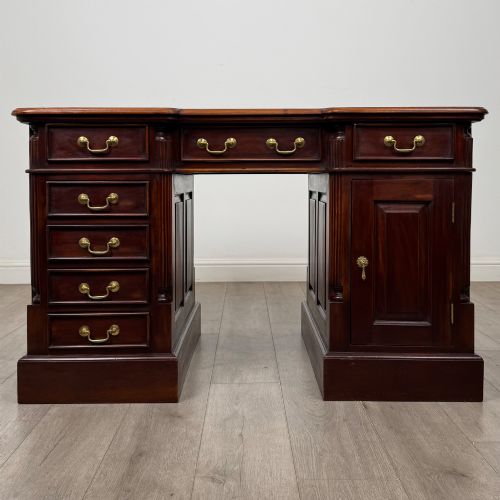
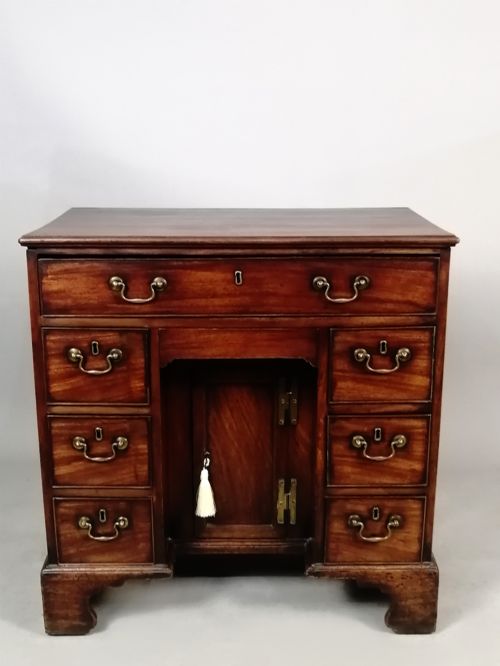
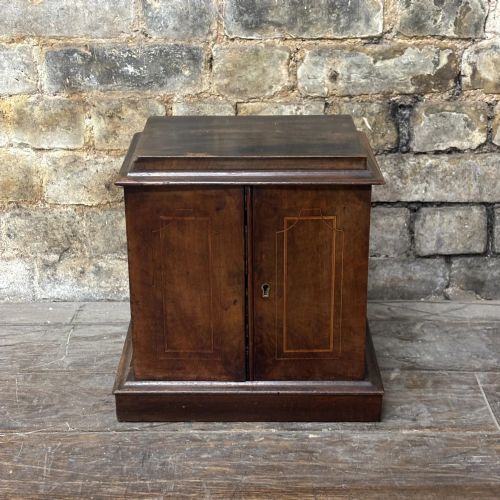
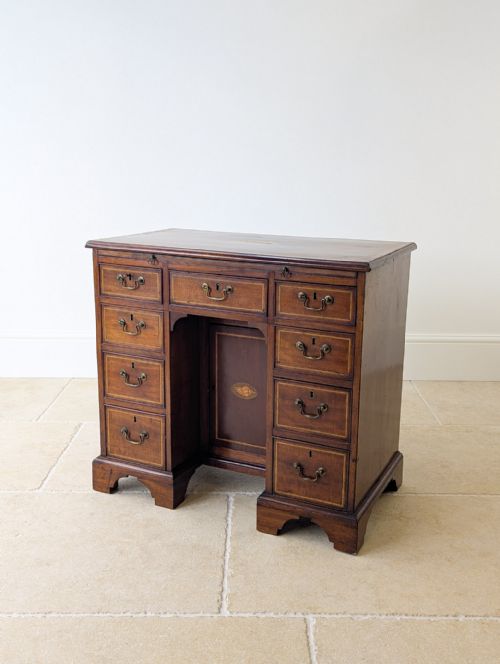
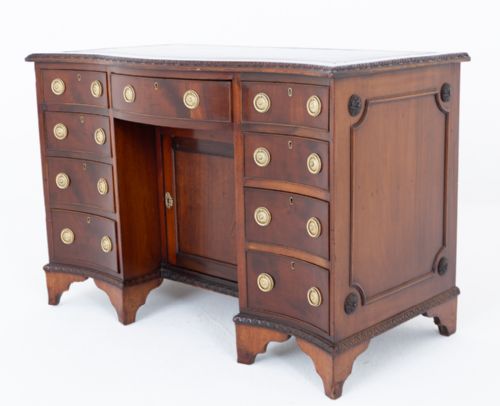
A mahogany office cupboard encompasses a wide array of functional workspace furniture, ranging from pedestal and kneehole desks to tall estate cabinets and filing drawers. The pieces span the Georgian, Victorian, and Edwardian eras, reflecting the changing clerical needs of British offices and country houses over two centuries.
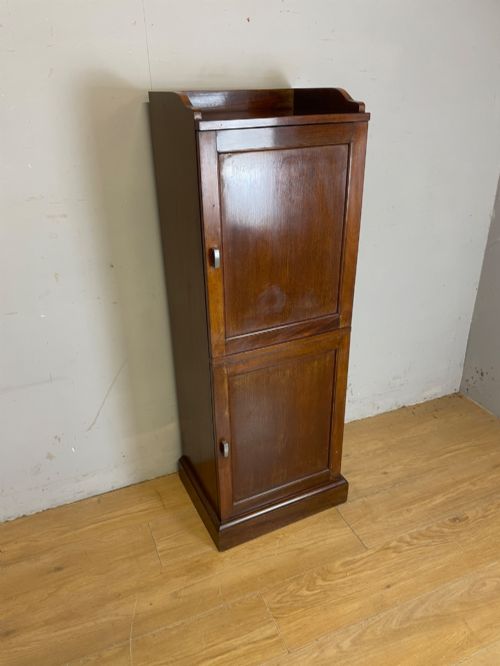
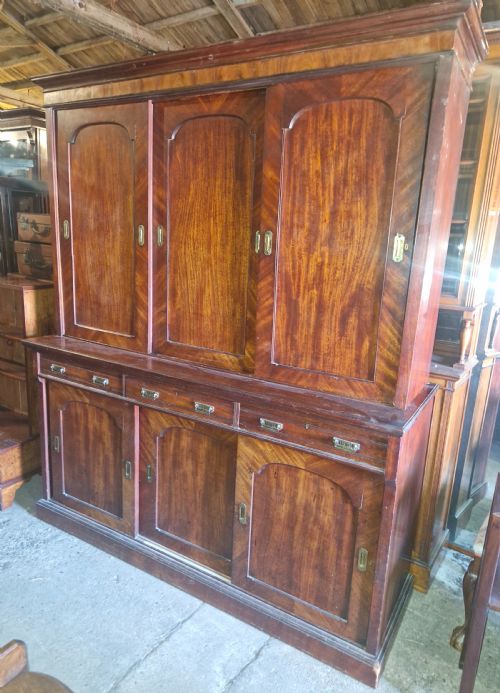
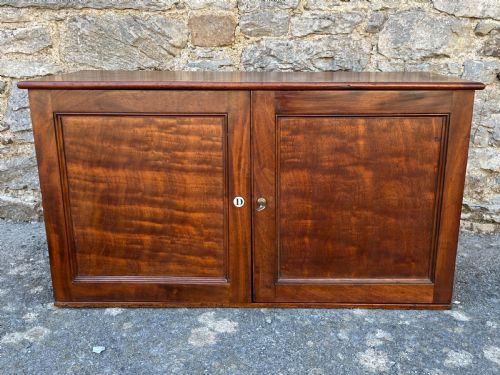
Buyers frequently encounter pedestal desks and kneehole desks equipped with multiple drawers alongside specialised stationery cabinets, folio cabinets, and modular letter files. Larger country house estate cabinets and library cupboards also appear, offering deep shelving and secure compartmental storage for documents.
Origins stretch from standard domestic workshops to specialised cabinet makers, taking in campaign pieces and industrial utility designs from the early twentieth century. This variety ensures that whether a study requires a compact writing table or a heavy banker's pedestal, the selection covers functional workspace demands.
Materials and construction
Makers utilised solid mahogany and striking flame mahogany veneers over secondary timbers, often accentuating drawer fronts and doors with boxwood stringing or marquetry inlay. Brass hardware, including drop handles, campaign flush mounts, and escutcheons, provides structural punctuation to the timber surfaces.
Interior fittings frequently incorporate leather writing surfaces, bone labels, and metal mechanisms such as patent letter filing systems. Carved details and moulded cornices appear on larger Victorian and Georgian estate pieces, while industrial and utility iterations favour robust solid construction with heavy metal handles.
Materials appearing across the inventory include solid mahogany, flame mahogany veneers, brass, leather, boxwood, marquetry inlay, bone, and iron.
Craftsmanship and materials
Quality rests upon the selection of timber grain, particularly the depth of flame mahogany figure, and the precision of dovetail joinery in the drawer construction. Finer examples display original brass hardware, intact leather inserts, and retained period finishes that exhibit a warm, deep patina over the mahogany surface.
Structural integrity differentiates standard utility pieces from exceptional country house cabinets, visible in the thickness of the drawer linings and the robustness of internal framing. The presence of maker stamps, patent mechanisms, or original gilded lettering adds a level of documented provenance that elevates certain items above anonymous commercial production.
Johnstone and Jeanes·Gillows·Amberg·S and H Jewell
The Mahogany Office Cupboard Glossary
- Kneehole desk
- A compact desk featuring a central recess for the user's legs, flanked by pedestals of small drawers. This form became popular during the Georgian period for domestic studies and private offices.
- Flame mahogany
- A veneer cut from the fork of the mahogany tree where the branch joins the trunk. The resulting timber exhibits a dramatic, flickering flame-like grain pattern.
- Pedestal desk
- A heavy freestanding desk supported by two banks of drawers or cupboards resting on the floor. Victorian and Edwardian examples often divide into modular sections for ease of movement.
- Secretaire sideboard
- A multipurpose cabinet combining sideboard storage with a pull-down writing flap revealing internal pigeonholes and small drawers. It served administrative functions in domestic and professional settings.
- Folio cabinet
- A tall piece of case furniture designed specifically to store large flat papers, maps, and unbound documents. These units feature wide, shallow internal shelves or sliding trays.
Mahogany Office Cupboard: Frequently Asked Questions
What is a kneehole desk?
A kneehole desk is a freestanding workspace featuring a central recess for the user, enclosed by two vertical stacks of drawers. Georgian and Victorian iterations often include a central shallow drawer directly beneath the writing surface.
These pieces were designed for private correspondence and estate management, offering compact storage within a manageable footprint for studies and offices.
How do I date a mahogany cupboard?
Dating relies on observing construction methods, timber choices, and hardware styles across the Georgian, Victorian, and Edwardian periods. Earlier eighteenth-century pieces often display hand-cut dovetails and solid timber carcases, while later nineteenth-century examples may incorporate mechanical filing systems or applied veneers.
Secondary woods, lock types, and the presence of maker stamps or patent labels further narrow down the decade of manufacture for office furniture.
Are these desks suitable for modern computers?
Many pedestal and kneehole desks provide adequate surface area and drawer space to accommodate laptops and modern writing equipment. Antique desks were originally built for paperwork, so users should check internal kneehole clearances and surface dimensions.
Larger estate cabinets and stationery cupboards offer alternative storage solutions for office supplies, printers, and files while concealing modern equipment behind period timber doors.
What is flame mahogany?
Flame mahogany is a highly decorative veneer harvested from the junction where a mahogany branch meets the main tree trunk. The cutting process reveals a rippled, highly figured grain that resembles flickering flames.
Cabinet makers used this striking timber on the primary display surfaces of high-status desks, library bookcases, and estate cupboards during the Georgian and Victorian eras.
How should I care for a mahogany finish?
Mahogany surfaces benefit from regular dusting with a soft, dry cloth and occasional application of traditional beeswax to nourish the timber. Direct sunlight and sudden changes in room temperature or humidity should be avoided to prevent the veneer from drying out.
Leather writing inserts require specialised leather cream rather than standard furniture polish to maintain suppleness and prevent cracking over time.