


Mahogany Office Storage
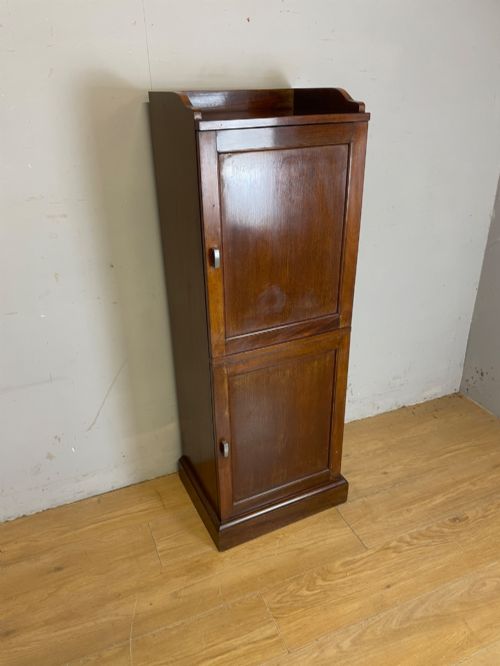
Mahogany office storage brings together period timber and practical workspace utility, offering robust filing cabinets, banks of drawers and estate cupboards for the modern study.
Mahogany Office Storage
Mahogany office storage comprises functional workplace furniture built from solid or flame mahogany, spanning filing cabinets, banks of drawers and estate cupboards. Buyers searching this phrase encounter practical items designed for paper organisation, ranging from Victorian military pieces to Edwardian music cabinets.
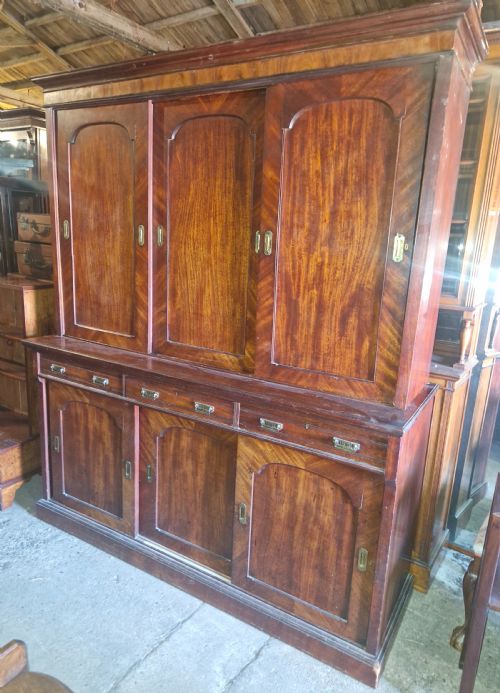
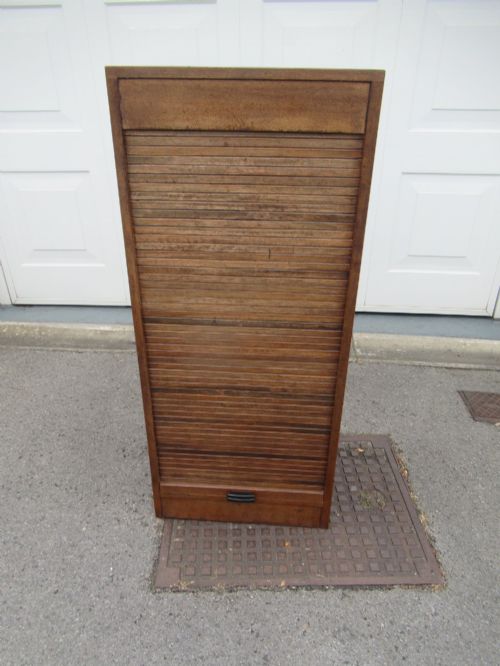
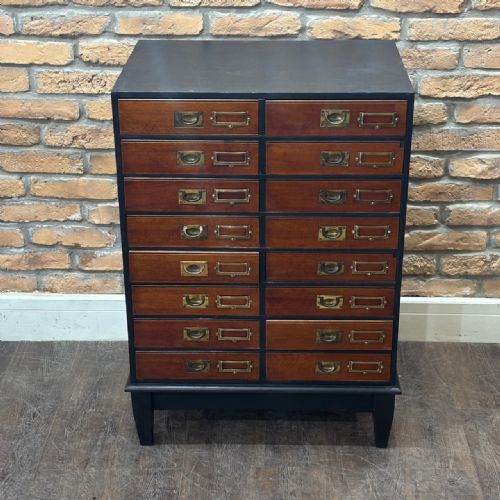
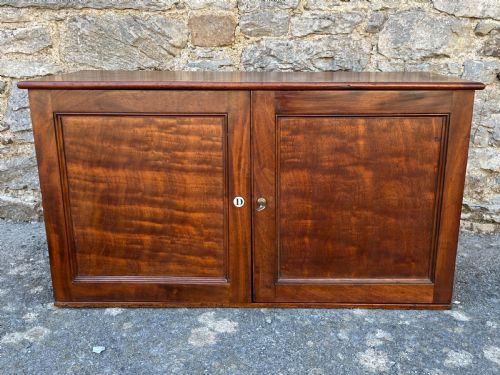
The pieces on this page most frequently take the form of multi-drawer filing cabinets, tambour front units and country house estate cabinets. Originating from periods such as the nineteenth century, Edwardian era and the 1920s, they combine utilitarian purpose with rich timber grains.
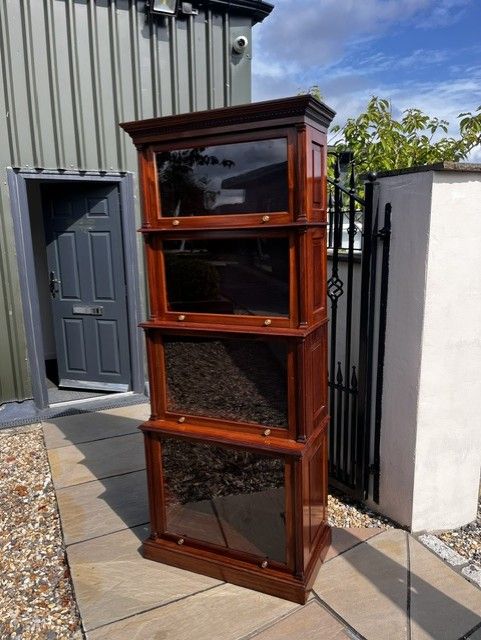
Forms include barrister stacking bookcases, haberdashery cabinets and industrial cupboards alongside specialist letter files and folio cabinets. Each object reflects the administrative demands of past offices, libraries and workshops through dedicated compartmentalisation.
How they were made
Construction relies heavily on solid mahogany and flame mahogany veneers, selected for durability and striking grain patterns. Cabinetmakers paired dense hardwoods with secondary timbers to build structural carcases capable of withstanding heavy daily clerical use.
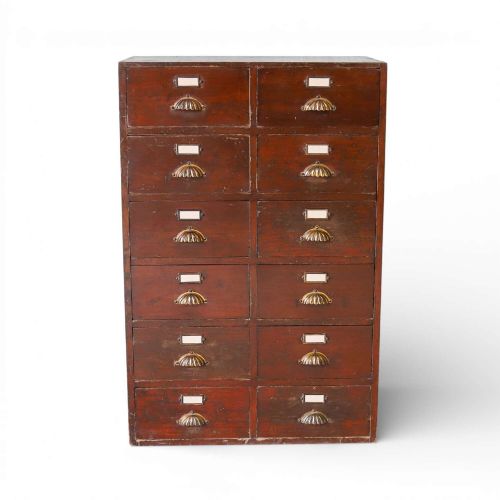
Metal and brass components feature prominently in the construction, providing structural reinforcement and operational hardware. Original shell pulls, label holders and gilded lettering appear alongside tambour mechanisms and leather inserts, marking the intersection of carpentry and early office engineering.
Listings feature mahogany office storage spanning the Georgian period, Victorian era, Edwardian years and the 1920s.
What varies in quality
Quality in mahogany office storage rests on the integrity of the timber selection and the retention of original operational fittings. Pieces featuring figured flame mahogany veneers and intact brass label holders demonstrate superior craftsmanship compared to heavily altered utilitarian alternatives.
The sophistication of the internal mechanism, whether a tambour shutter, stacking barrister action or patent letter filing system, dictates the refinement of the piece. Superior examples preserve their original surface patination and specialised internal partitioning without modern intervention.
Gillows·Amberg
The Mahogany Office Storage Glossary
- Flame mahogany
- A veneer cut from the fork of the mahogany tree where the branch meets the trunk, producing a distinctive fire-like ripple pattern. It was widely used on high-status cabinet fronts during the nineteenth century.
- Tambour front
- A flexible door constructed from narrow vertical strips of wood glued to a canvas backing, allowing it to slide smoothly around a curved track to conceal interior pigeonholes or shelves.
- Barrister stacking bookcase
- A modular bookcase featuring glass-fronted sections that lift and slide horizontally into the cabinet above, designed to be stacked vertically without permanent fixings.
- Cartonnier
- A piece of French furniture comprising a stack of pigeonholes or pull-out cases designed for sorting papers and documents, frequently incorporating leather accents.
- Bank of drawers
- A chest containing a high density of shallow drawers arranged in multiple vertical columns, historically utilised in offices and shops for organising small documents or items.
Mahogany Office Storage: Frequently Asked Questions
How do I date a mahogany filing cabinet?
Dating relies on construction methods, hardware styles and timber characteristics seen across different periods like the Victorian era or the 1920s. Drawer linings, dovetail joints and patent labels offer precise chronological clues.
Early twentieth-century units often incorporate industrial mechanisms or tambour fronts, whereas nineteenth-century pieces display hand-cut dovetails and traditional brass pulls.
Were these cabinets used in homes or offices?
These pieces served administrative roles in country house estates, professional offices, libraries and commercial workshops. Large estate cabinets managed estate records, while smaller pieces suited study desks.
Domestic spaces also accommodated music cabinets and compact bookshelves, reflecting the shift towards organised paperwork in both home and workplace environments.
How do I care for antique mahogany office furniture?
Maintenance involves keeping timber away from direct heat sources and sudden humidity changes to prevent veneer cracking. Regular dusting with a dry, soft cloth preserves the original wax polish and surface patination.
Leather writing surfaces or inserts benefit from occasional specialist conditioning to prevent drying, while brass hardware requires gentle cleaning without abrasive metal polishes.
What is a barrister bookcase?
A barrister bookcase is a modular shelving unit featuring glazed doors that lift and slide inside the top of each individual tier. This design protected law books from dust while allowing multiple sections to stack securely.
Originating for travelling legal professionals, these bookcases separate into individual modular tiers for ease of transport and rearrangement.