

Victorian Office Cabinet
A victorian office cabinet brings the substance of nineteenth-century administration into modern rooms through solid timbers and practical compartments.
Victorian Office Cabinet
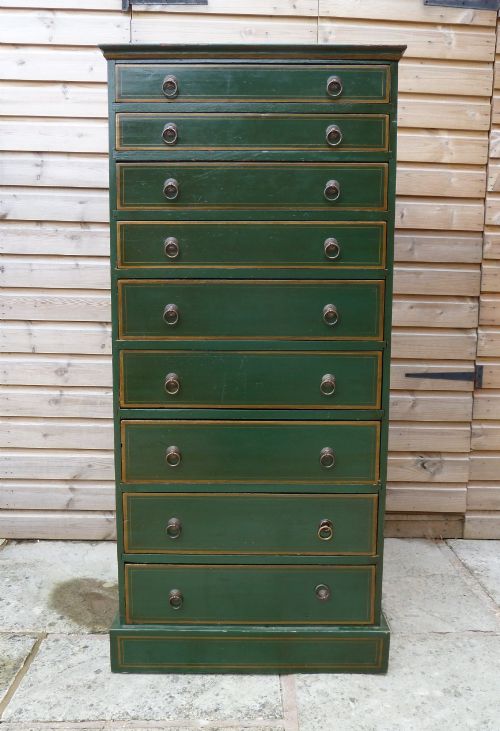
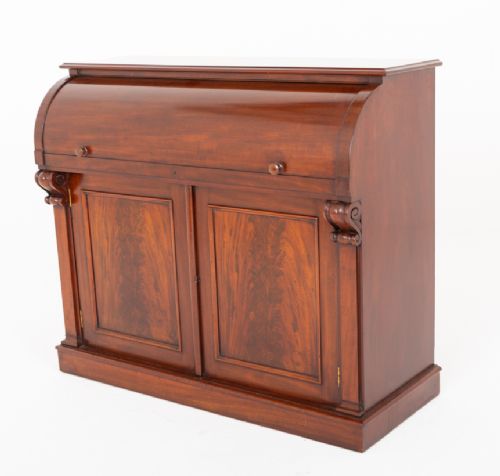
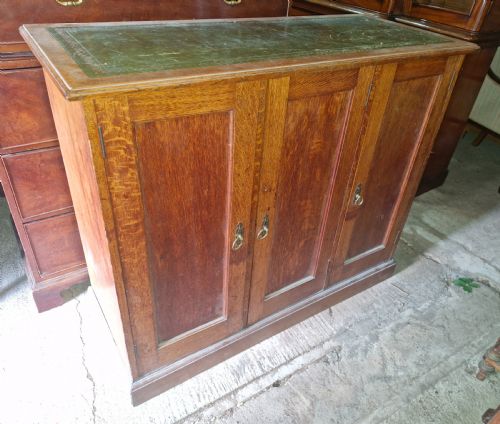
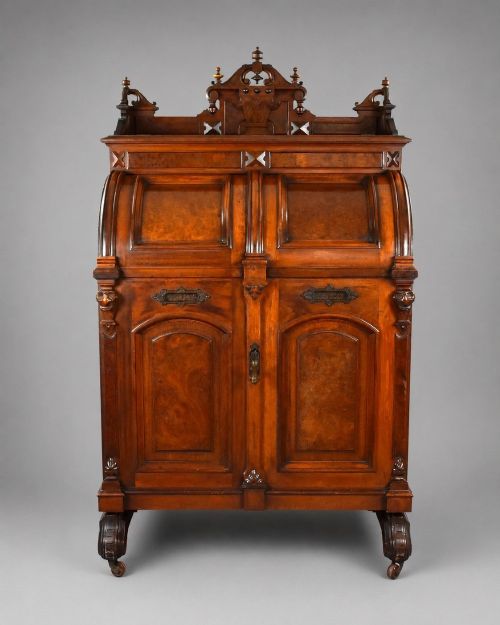
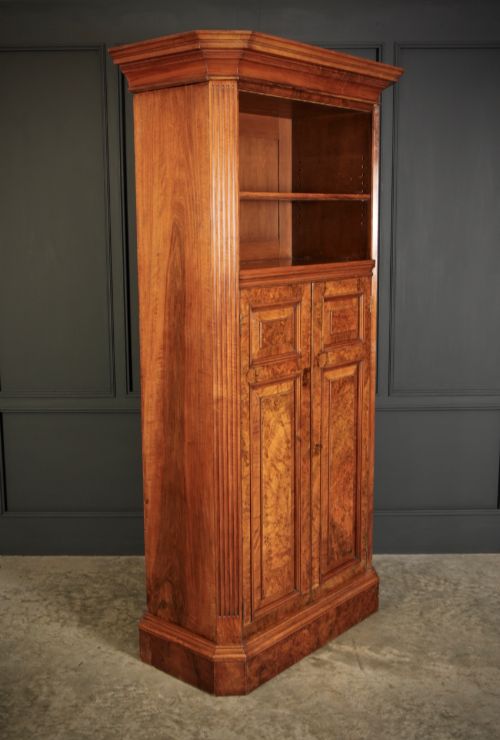
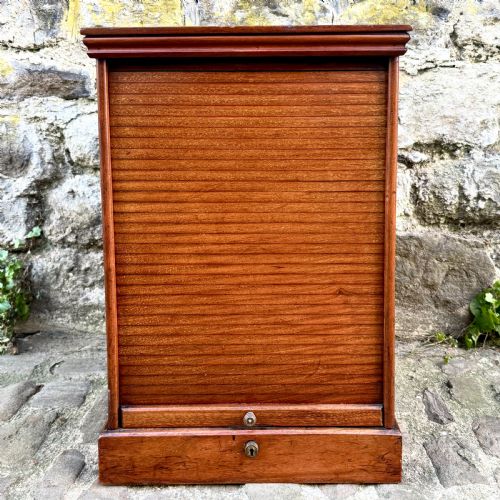
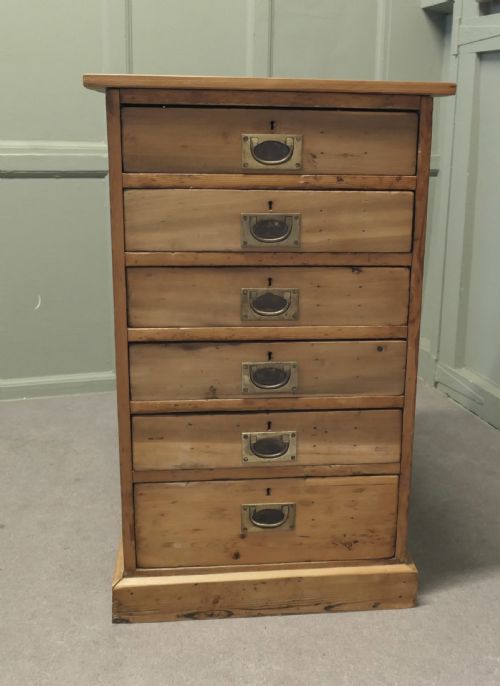
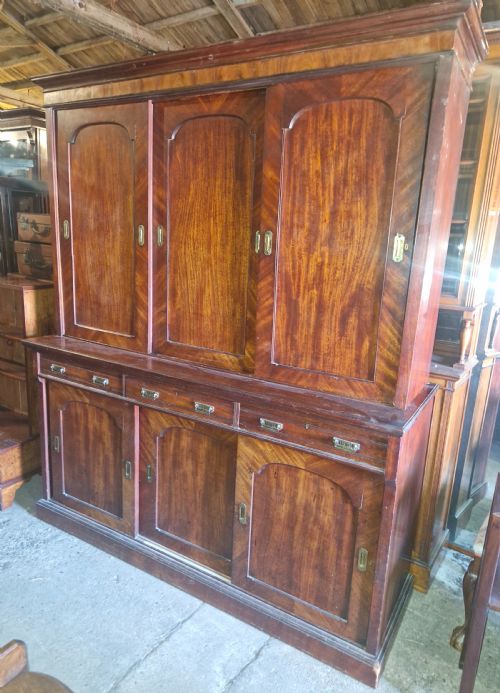
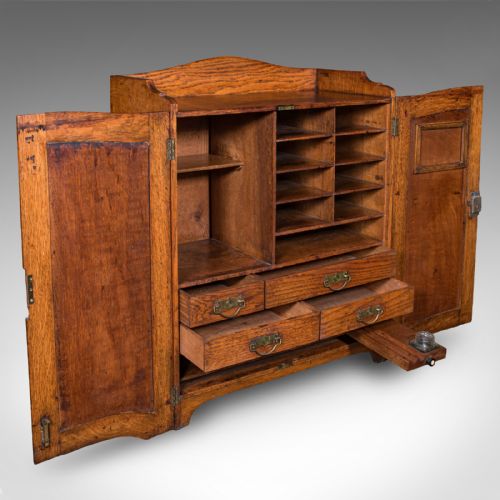
A victorian office cabinet covers a broad range of workspace furniture designed to organise documents, ledgers, and correspondence. Buyers frequently encounter forms such as pedestal filing cabinets, bureau desks, tall estate cupboards, and tabletop pigeon holes originating from the nineteenth and early twentieth centuries.
The selection on this page relies heavily on Victorian and Edwardian examples alongside related industrial and campaign pieces. These items range from compact Davenport writing desks to large estate cabinets built for country houses and institutional offices.
Materials and construction
Cabinet makers utilised dense hardwoods including mahogany, oak, walnut, and burr walnut, frequently pairing them with secondary pine linings and structural metal elements. Surfaces often display leather inserts for writing slopes, brass campaign handles, and detailed inlay work.
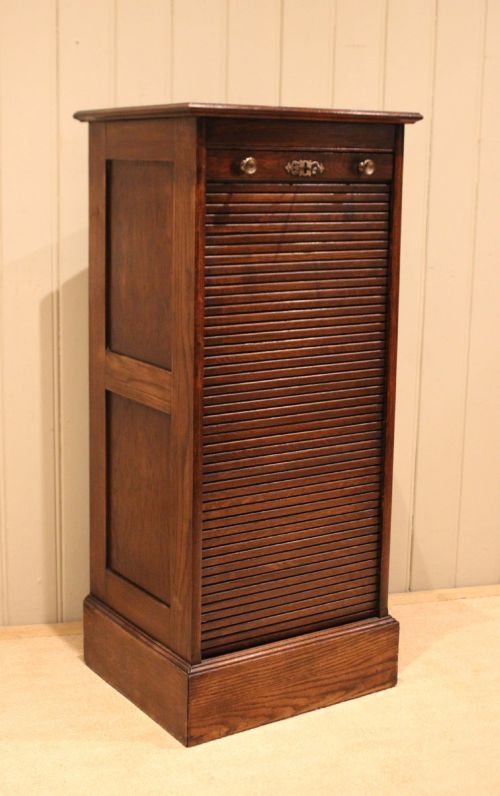
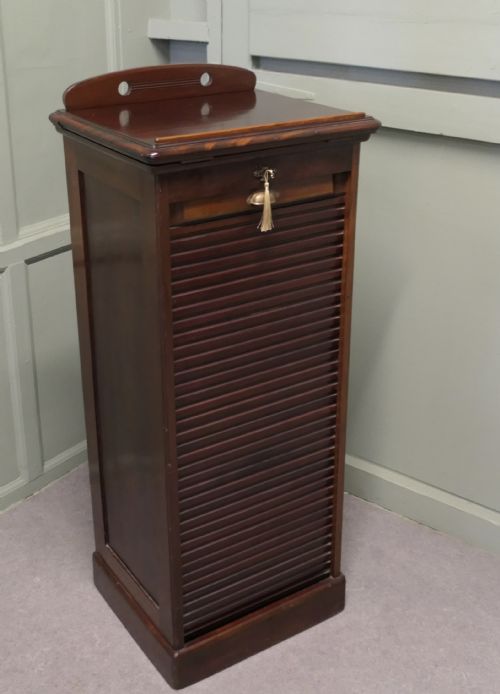
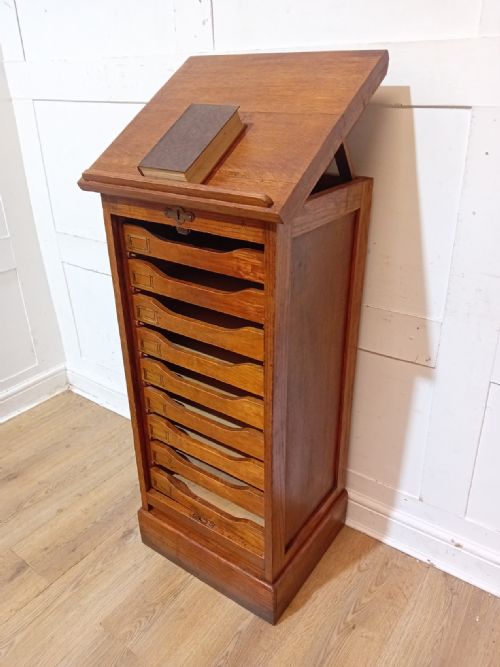
Joinery techniques prioritised durability to withstand daily clerical labour, incorporating panelled doors, dovetailed drawer construction, and specialised internal mechanisms such as tambour fronts and patent letter files.
Listings incorporate multiple wood species including mahogany, oak, burr walnut, and rosewood, alongside metal and pine variants.
Judging the standard
Standard of craftsmanship is visible in the selection of timber veneers, such as figured burr walnut or flame mahogany, and the precision of the internal fittings. Superior pieces exhibit well-balanced proportions, original brass hardware, and thoughtful integration of drawers and pigeon holes.
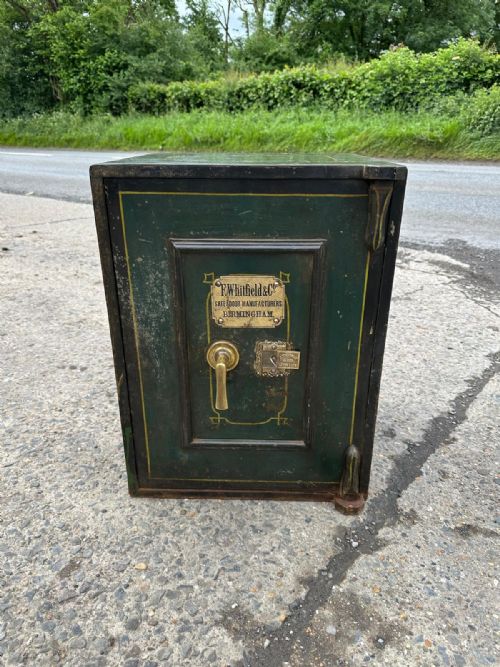
F. Whitfield and Co·Edwards and Roberts·Gillows
The Victorian Office Cabinet Glossary
- Davenport
- A small pedestal desk featuring a sloping desktop and drawers opening to the side. This form gained popularity during the Victorian era for domestic correspondence.
- Tambour
- A flexible shutter door constructed from narrow strips of wood glued to canvas, allowing smooth access to internal document compartments.
- Campaign
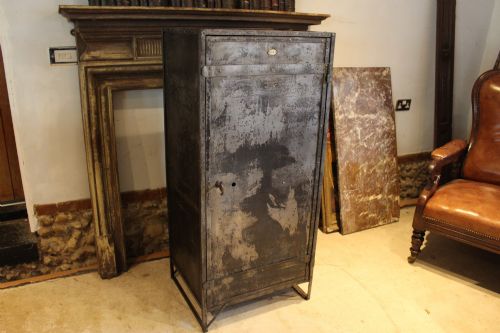
- Portable furniture built in sections with recessed brass handles and corner brackets designed for easy transport by military officers.
- Secretaire
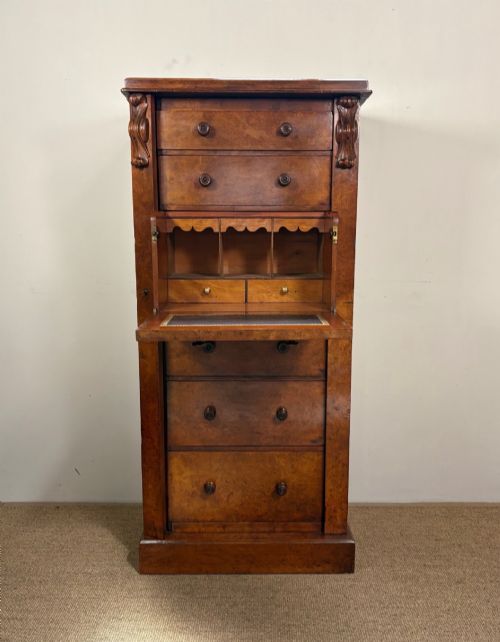
- A desk or cabinet containing a pull-down writing flap that conceals a fitted interior of small drawers and pigeon holes.
- Pigeon holes
- Small open compartments arranged in rows for sorting letters, papers, and incoming mail.
Victorian Office Cabinet: Frequently Asked Questions
What is a victorian office cabinet used for?
These cabinets served administrative functions in nineteenth-century businesses, estate offices, and private homes. They held ledgers, correspondence, and writing materials securely.
Today, modern owners repurpose these compartments for storing paperwork, stationery, or household collections while retaining period character.
How do I tell a campaign cabinet apart?
Campaign versions feature recessed brass hardware and sectional construction designed for dismantling during travel. These details protected the corners and handles from damage.
Standard office furniture remained fixed and heavy, lacking the portability and metal reinforcement characteristic of campaign pieces.
Where should I place an office cabinet?
These pieces suit studies, home offices, and living rooms where sturdy timber storage is useful. Their compact footprints often fit well against walls or beside desks.
Keep them away from direct heat sources and strong sunlight to protect the polished wood surfaces and leather inserts.
How do I identify the wood types?
Mahogany and walnut display deep brown tones, sometimes with highly figured grain patterns in burr variations. Oak offers a more visible grain and lighter straw colour.
Secondary woods like pine usually appear inside drawers or on unexposed backing panels.