




Mahogany Music Chair
A mahogany music chair provides the musician or pianist with adjustable comfort, combining solid timber with swivel or revolving mechanisms.
Mahogany Music Chair
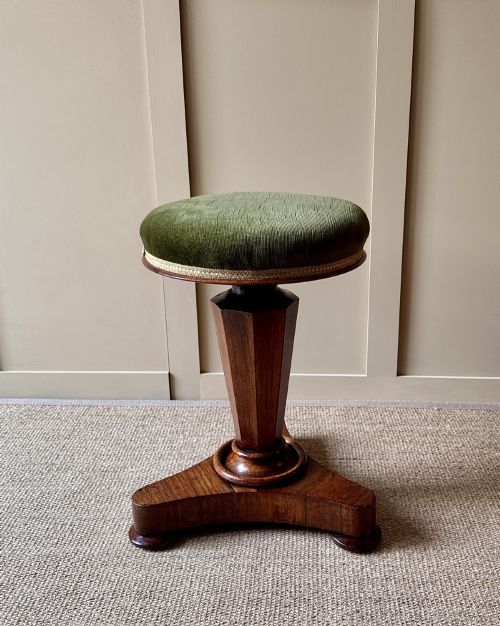
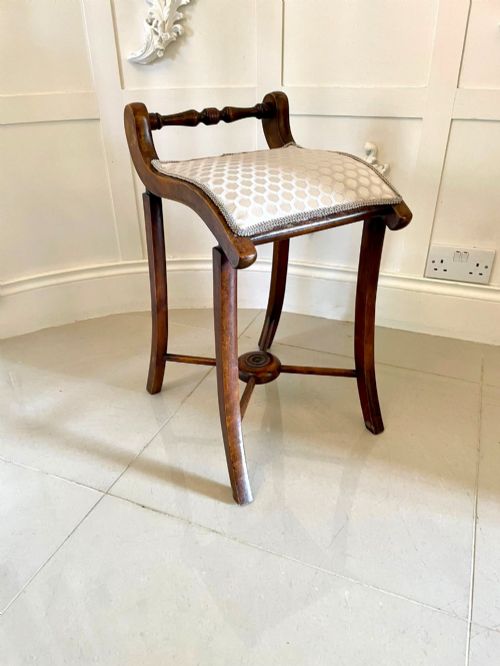
A mahogany music chair is a specialised seat designed for musicians, pianists, and cellists, often appearing alongside related forms such as piano stools and music stools. These pieces emerge primarily from the Victorian, Regency, and Edwardian periods, stretching from the early nineteenth century into the twentieth century.
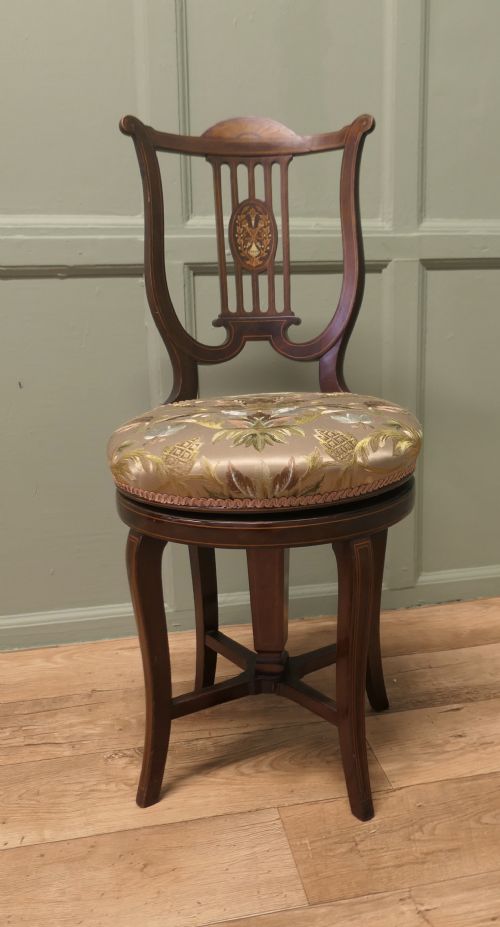
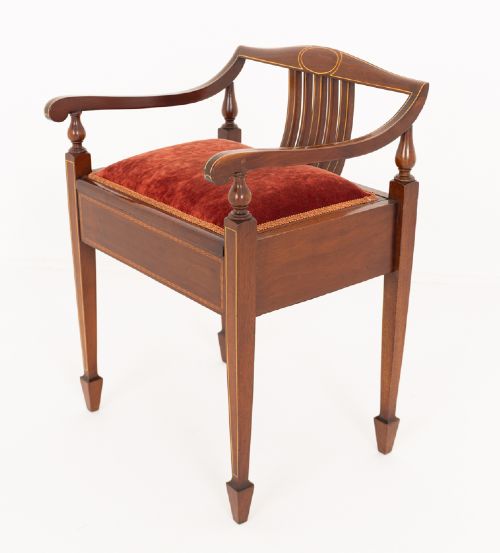
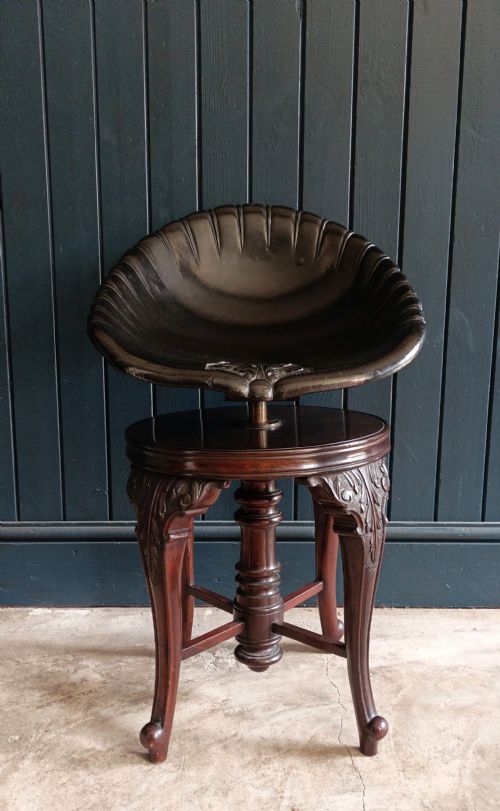
Buyers seeking this phrase frequently encounter revolving or height-adjustable designs, including specialised harpist and cellist chairs with low or shaped backs. The selection spans straightforward round tops to elaborate inlaid examples and armchairs originating from diverse makers and workshops.
How they were made
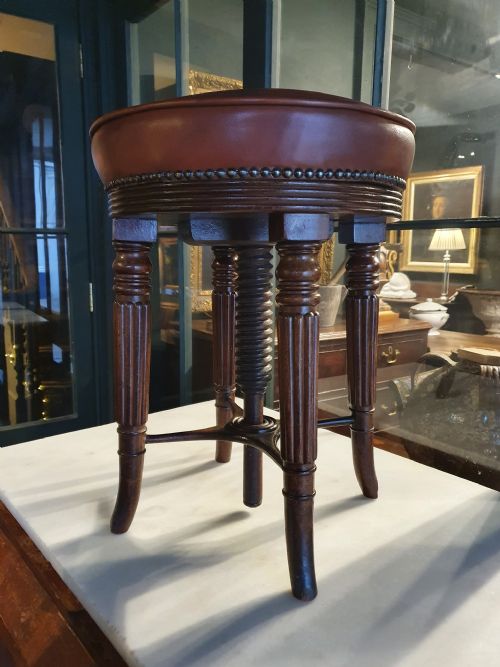
Craftsmen utilised solid mahogany for the structural frames, turning and carving the timber to form the legs, pillars, and revolving mechanisms. Brass components frequently appear in the adjustable screw mechanisms, castors, and inlay work, adding both function and decoration.
Seats are upholstered in various materials including velvet, leather, and woven fabric, sometimes mounted over papier-mâché or square and circular wooden bases. Inlaid decoration incorporating contrasting woods and musical motifs defines many of the later Edwardian and Sheraton Revival examples.
Mahogany Music Chair Retail Price Guide 2026
Typical asking prices for mahogany music chair among the pieces listed under this phrase on Sellingantiques today, from the lower quarter to the upper quarter. They describe what is for sale here now, not the wider market.
What varies in quality
The sophistication of the revolving mechanism and the smoothness of the height adjustment separate standard examples from finer pieces. Robust engineering in the central screw or swivel joint ensures the seat remains stable at various heights.
Carving definition, the presence of quality brass inlay, and the retention of original upholstery materials distinguish workshop pieces attributed to makers such as Gillows or Jennens and Bettridge from anonymous production.
Jennens and Bettridge·Gillows·James Shoolbred·Gane of Cardiff
The Mahogany Music Chair Glossary
- Mahogany
- A durable tropical hardwood prized for its rich reddish-brown colour and stable grain. It serves as the primary structural material for these seats.
- Revolving
- Describing a seat designed to turn full circle on a central pivot or threaded screw. This movement aids musicians in positioning themselves at the keyboard or music stand.
- Harpist chair
- A specialised seat featuring a low or absent backrest to accommodate the player's arms and instrument. These often include swivel and height-adjusting functions.
- Sheraton Revival
- A late nineteenth and early twentieth century design movement that reinterprets eighteenth-century neoclassical furniture forms. Pieces in this style often display delicate mahogany inlays.
- Papier-mâché
- A composite material made from paper pulp and binding agents, pressed and lacquered. It appears on specific Victorian chair bodies and stool tops.
Mahogany Music Chair: Frequently Asked Questions
How do you adjust the height?
Many examples feature a threaded central screw where turning the wooden seat raises or lowers the platform. Other variants rely on internal mechanical catches or simple swivel mechanisms.
Buyers should test the action gently to ensure the wooden thread or metal screw moves smoothly without binding or excessive lateral play.
Why are some seats carved low?
Low backs and shaped rails on harpist or cello chairs allow the player unhindered arm movement while performing. Musicians require freedom in their upper torso to manage large instruments effectively.
These specialised forms differentiate themselves from standard parlor chairs by prioritizing functional ergonomics for seated performance.
Can these be used daily?
Solid mahogany construction and sturdy joinery make these seats suitable for regular daily use at a desk or piano. The internal revolving mechanism requires occasional balanced weight distribution during use.
Placing the chair on a level surface protects the central pivot and prevents unnecessary strain on the adjustable screw thread.
How do I spot a Regency piece?
Regency items often display classical restraint, robust mahogany turning, and occasionally fine brass inlay or gilt bronze mounts. The proportions tend to reflect early nineteenth-century design canons.
Comparing the timber grain, patination, and hardware style helps distinguish these earlier pieces from later Edwardian revivals.