
Mahogany Hepplewhite Chairs
Mahogany hepplewhite chairs bring refined eighteenth-century lines to the dining room through balanced proportions and characteristic shield backs.
Mahogany Hepplewhite Chairs
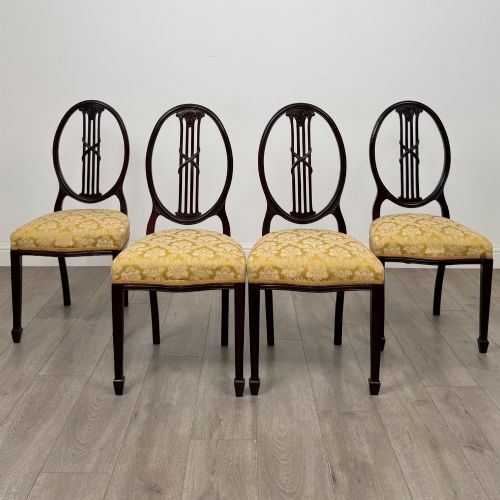
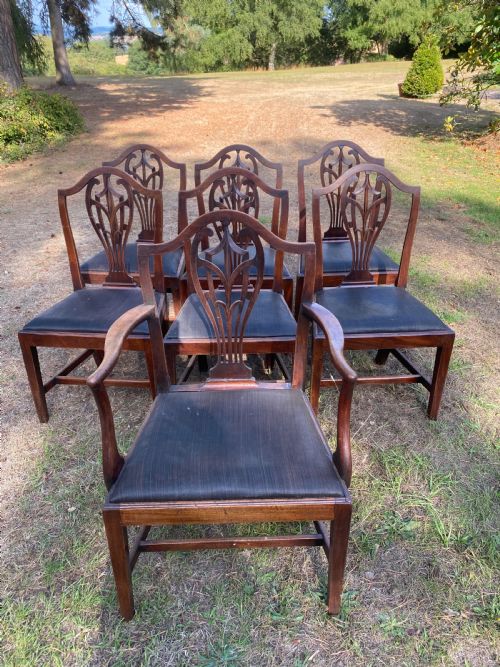
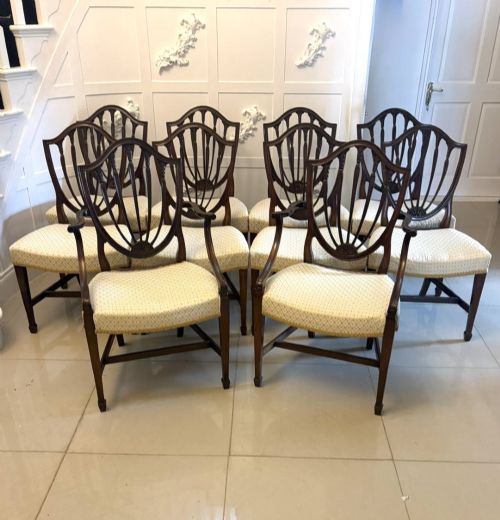
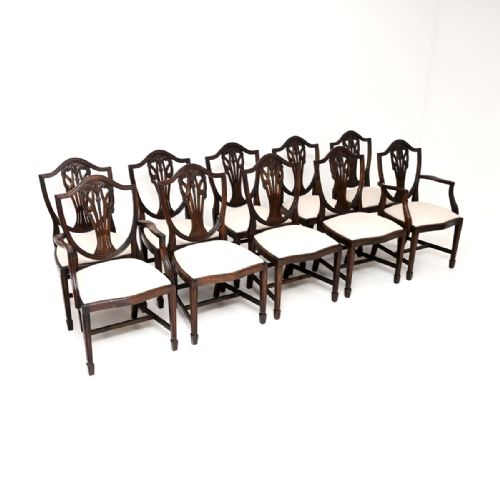
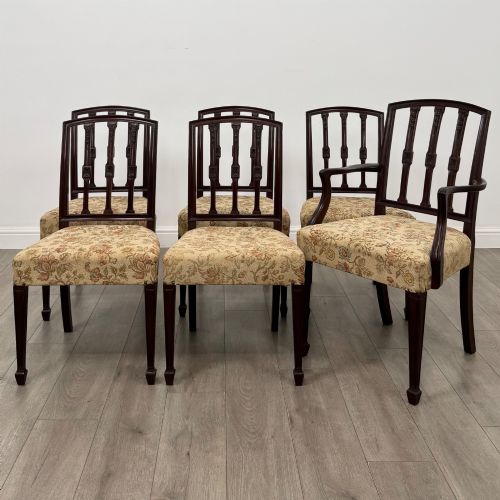
Mahogany hepplewhite chairs encompass dining chairs, side chairs, and armchairs produced across the eighteenth, nineteenth, and twentieth centuries. The form originates in the Georgian period, driven by the designs of George Hepplewhite and his contemporaries. A buyer frequently encounters nineteenth-century revivals and twentieth-century sets alongside period examples from the seventeen-eighties and seventeen-nineties.
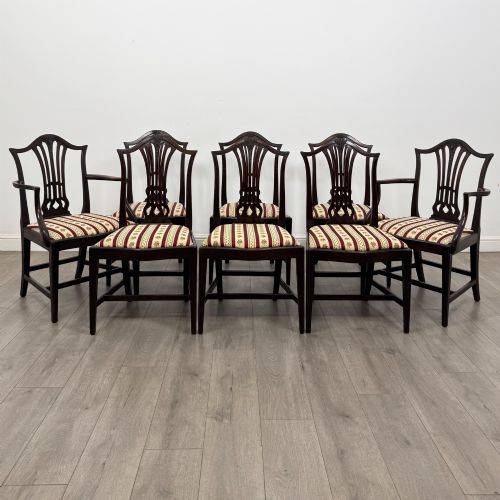
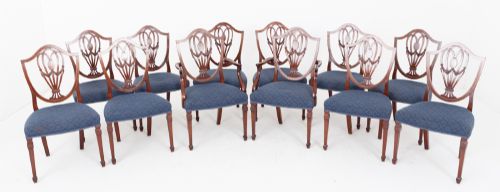
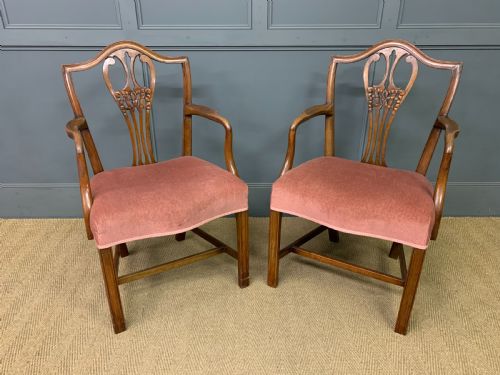
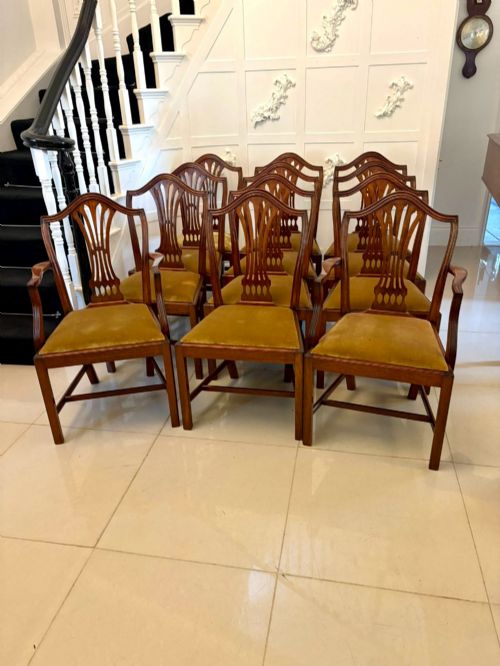
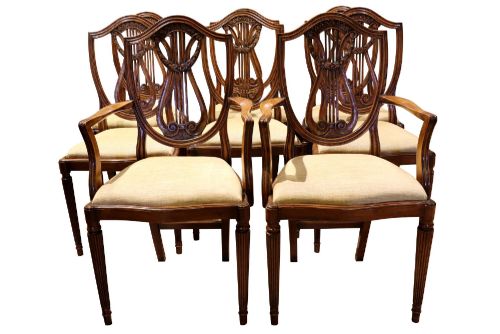
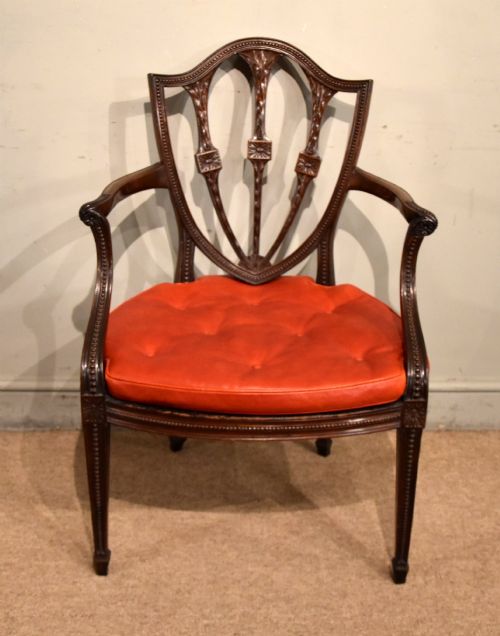
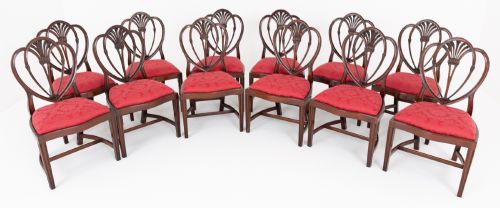
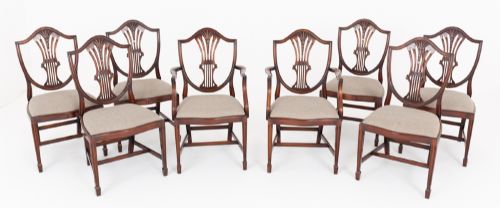
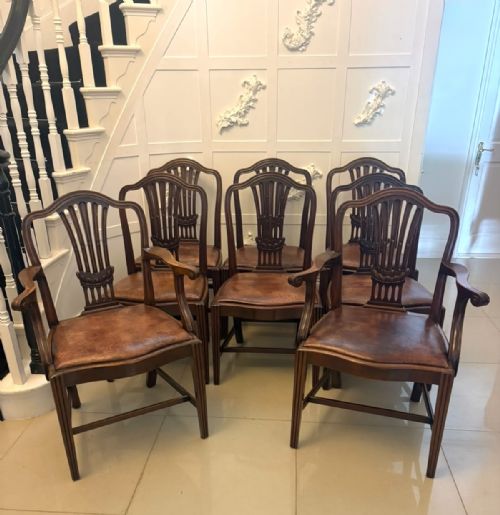
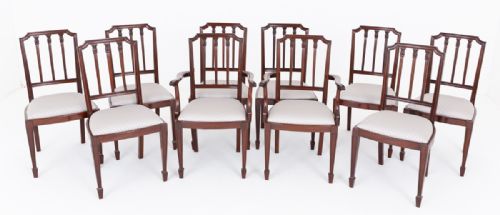
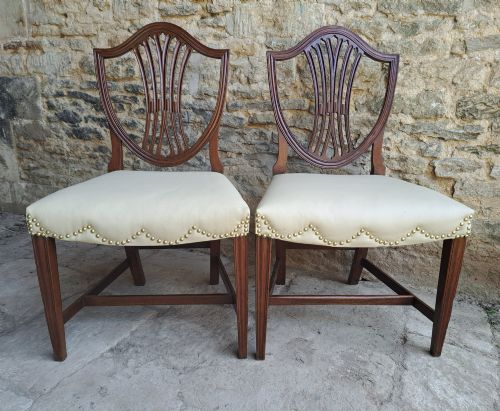
The defining characteristic of these seats is the shield-shaped back, often filled with carved splats, Prince of Wales feathers, or intersecting curves. Sets commonly include a combination of single dining chairs and matching armchairs, sometimes referred to as carvers or elbow chairs. Surviving examples appear in configurations ranging in size from pairs up to large sets of twelve or sixteen.
How they were made
Cabinetmakers constructed these frames using solid mahogany, selected for its strength and rich grain. Carving defines the ornament on the top rail, splats, and front legs, while joinery relies on traditional mortise and tenon methods. Woodwork is occasionally combined with secondary timbers for interior frame components.
Seats feature drop-in or upholstered pads finished in diverse materials. Upholstery historically incorporates fabric, horsehair, leather, velvet, tapestry, or brass tacks depending on the period of manufacture and subsequent re-covering.
Some dining sets quietly conceal centuries of dinner party debates behind remarkably rigid horsehair upholstery.
What varies in quality
The crispness and depth of the carved ornament dictate the visual success of the piece. Superior examples exhibit deliberate, sharp detailing in the shield back and splats, whereas lesser items show softer, shallower relief work.
Cohesion within a set determines its desirability. Large sets that retain matching timber grain, identical dimensions, and uniform wear across every single chair and carver command greater attention than assembled groups.
Maple and Co
The Mahogany Hepplewhite Chairs Glossary
- Shield Back
- A chair back shaped in the outline of a heraldic shield, characteristic of the Hepplewhite style. This silhouette provides the primary visual identifier for the design.
- Carver
- An armchair designed to sit at the head of a dining table or alongside a matching set of side chairs. These pieces incorporate open arms supported by curved or straight uprights.
- Prince of Wales Feathers
- A decorative carved motif representing three ostrich feathers tied with a ribbon. It frequently forms the central element within shield-back splats.
- Spade Foot
- A rectangular foot that tapers slightly toward the base, commonly terminating straight or square legs on Georgian seating. This detail grounds the slender proportions of the frame.
- Horsehair Fabric
- A woven textile produced from horsehair, utilised as a durable upholstery covering on period and revival dining seats. It offers a stiff, resilient surface with a subtle sheen.
Mahogany Hepplewhite Chairs: Frequently Asked Questions
How do I identify a period set?
Authentic eighteenth-century examples exhibit dry, oxidised mahogany surfaces beneath the finish, hand-cut joinery, and minor tool marks consistent with period bench work. Closer inspection reveals timber shrinkage and wear patterns unique to centuries of handling.
Revival sets from the Victorian, Edwardian, or later periods show machine precision in secondary components and standardised dimensions across larger groupings. Comparing the timber density and construction methods helps separate George III originals from nineteen-hundreds interpretations.
Are armchairs necessary with dining sets?
Armchairs, or carvers, historically sat at the head and foot of a formal dining table while side chairs filled the sides. Sets routinely pair ten side chairs with two carvers or six side chairs with two armchairs.
Buyers select sets based on available dining space and seating requirements. Mixing armchairs with side chairs creates a balanced arrangement around the table.
What is the difference between Hepplewhite and Sheraton styles?
Hepplewhite design relies on curved, flowing lines dominated by shield-shaped backs, sweeping arms, and tapered legs. The overall aesthetic leans toward graceful, undulating contours.
Sheraton geometry favours rectangular or square back frames with straight lines and rectilinear planning. Both styles emerge from the late eighteenth century but employ distinct geometric vocabularies.
How should I care for mahogany frames?
Mahogany requires stable room humidity and protection from direct sunlight to prevent timber splitting and fading of the rich reddish-brown colour. Regular dusting with a soft, dry cloth maintains the polish without chemical buildup.
Upholstery longevity depends on gentle vacuuming and professional cleaning when dealing with historical fabrics or leather. Avoiding excessive moisture preserves both the wood finish and the underlying frame joints.