

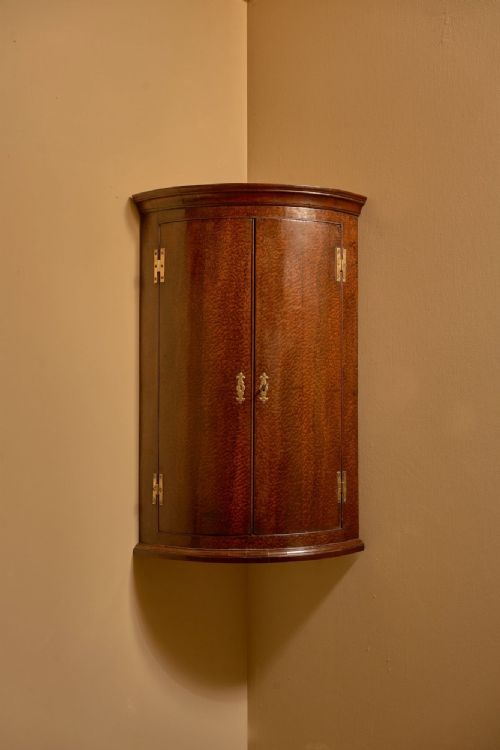
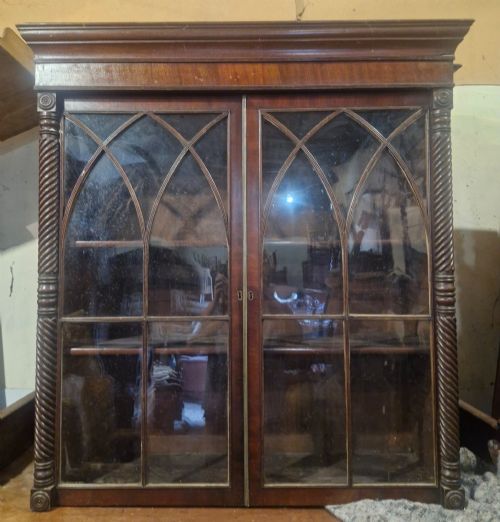
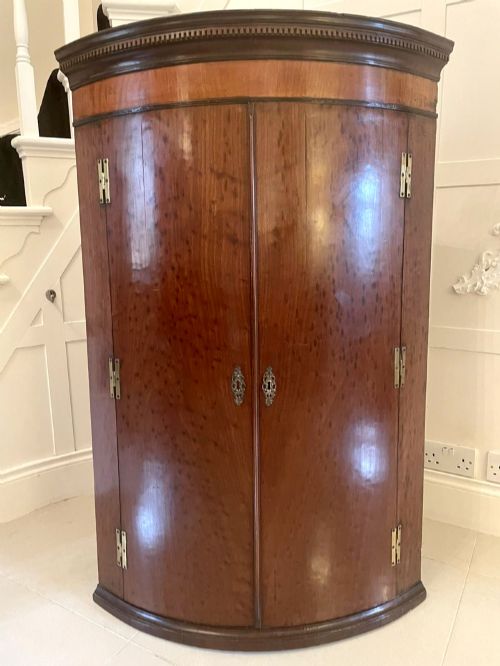
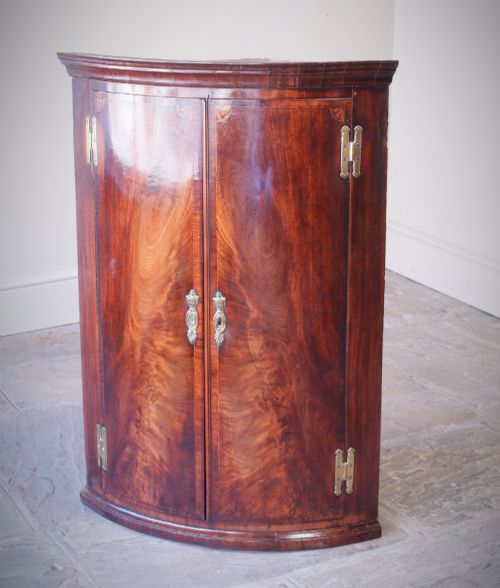
Mahogany Hanging Wall Cabinet
A mahogany hanging wall cabinet brings architectural timberwork to eye level, saving floor space while displaying prized possessions in an ingenious corner or flat-wall format.
Mahogany Hanging Wall Cabinet
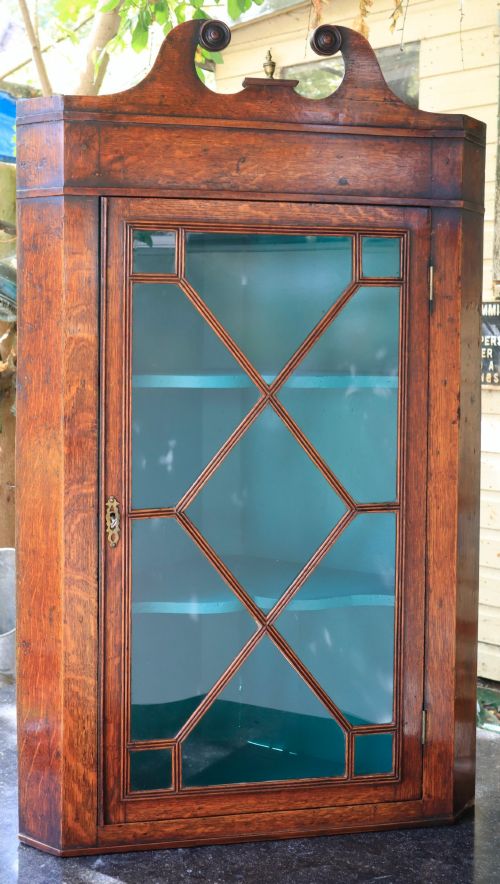
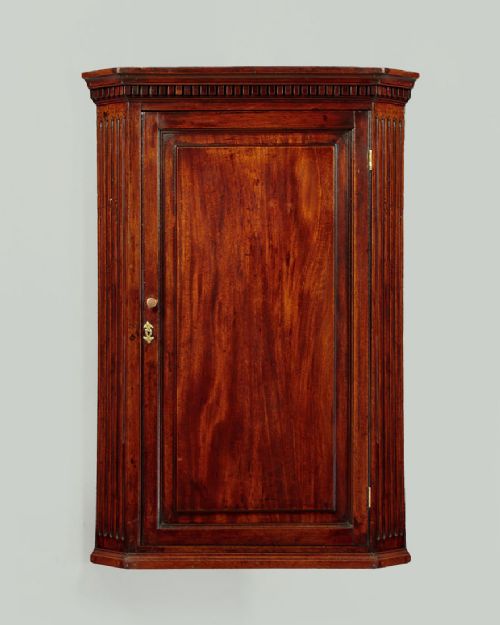
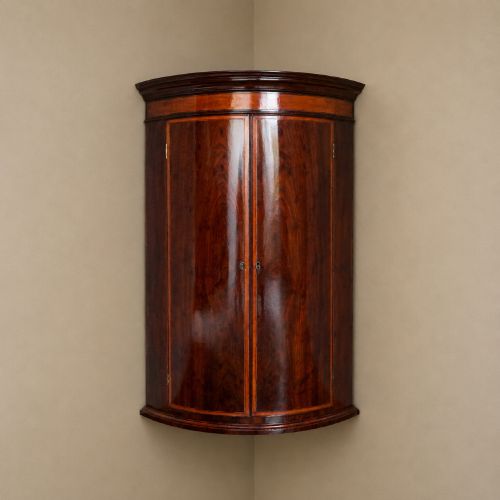
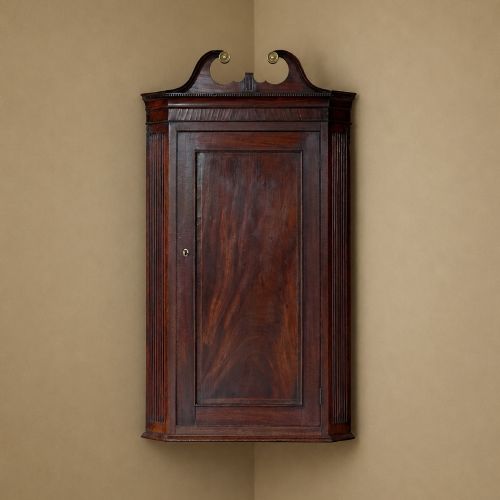
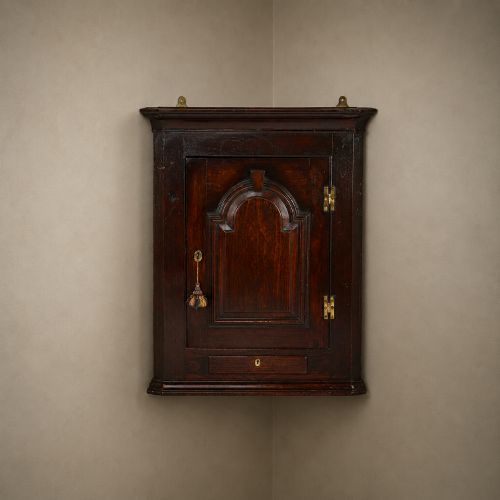
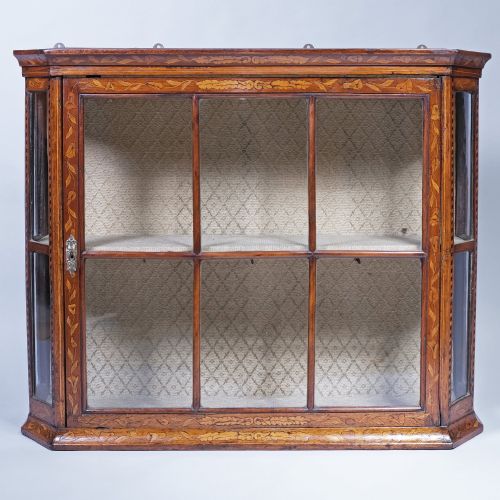
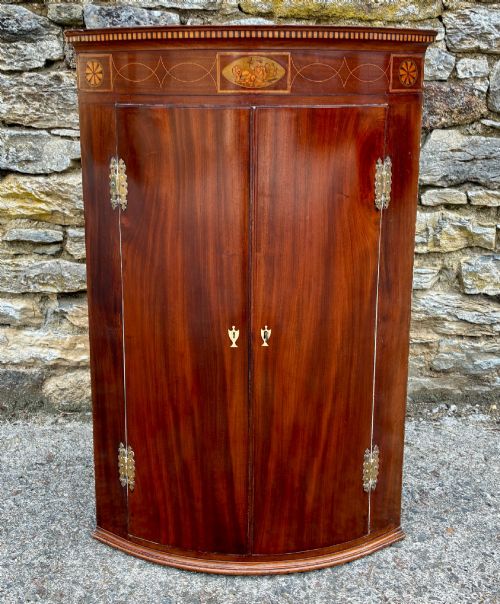
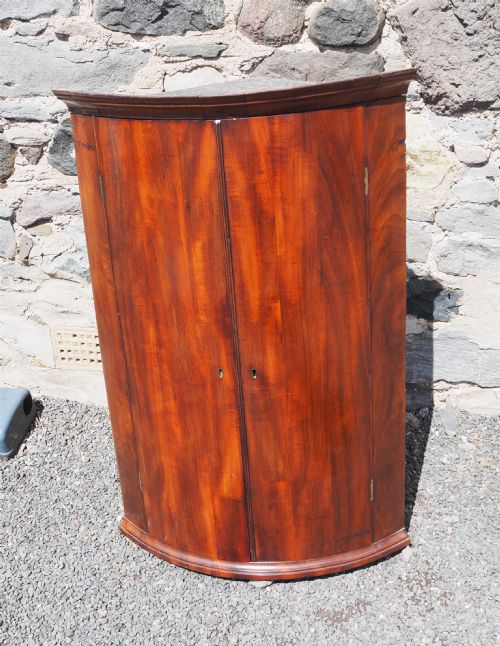
A mahogany hanging wall cabinet serves as a compact storage or display unit designed to mount directly onto a wall rather than rest upon the floor. When searching for a mahogany hanging wall cabinet, buyers encounter numerous corner configurations, bow front designs, and flat wall display units.
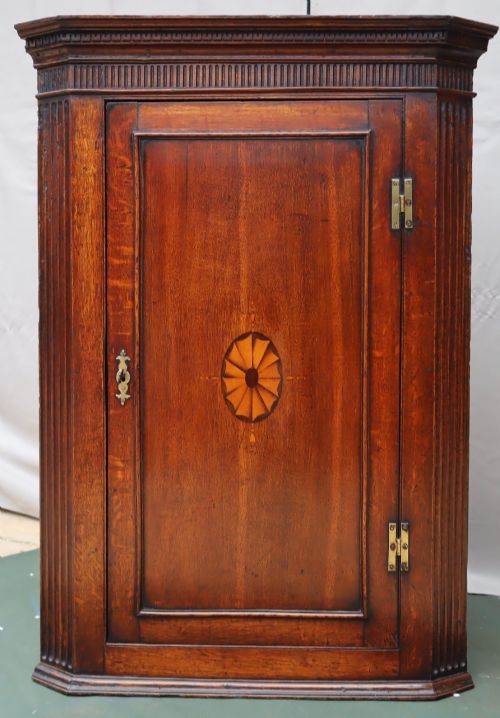
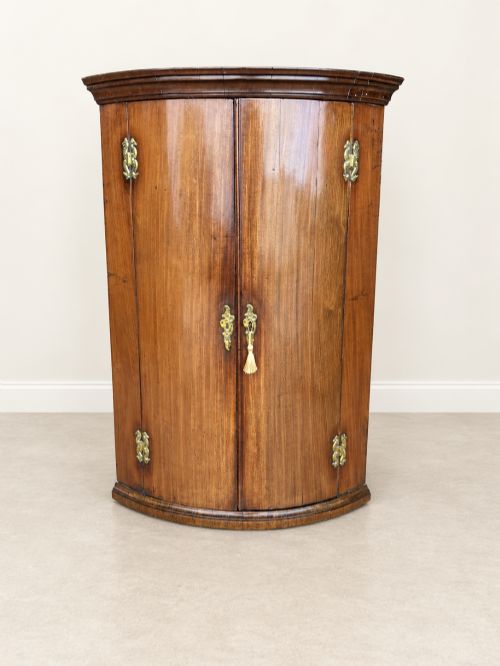
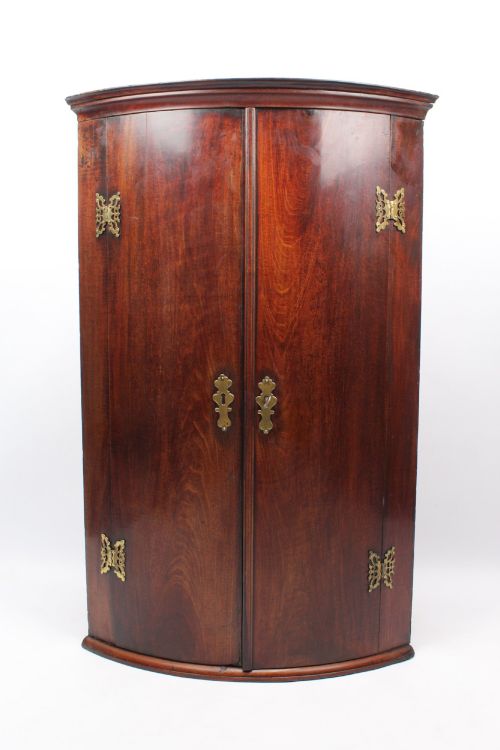
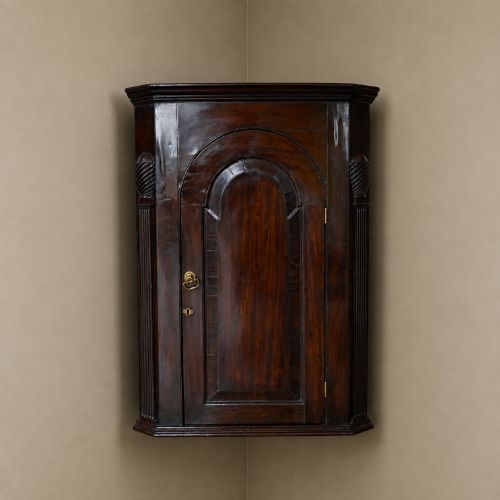
The selections span predominantly Georgian and 18th Century periods alongside later Edwardian interpretations. Corner cupboards and wall shelves dominate the forms, frequently featuring single or double doors that conceal interior shelving.
Makers from the 18th Century onward constructed these pieces primarily to maximise domestic space in smaller rooms. Surviving examples demonstrate how homeowners utilised vertical wall areas to store ceramics, glassware, or valuables safely out of the way.
How they were made
Cabinet makers utilised dense timbers such as mahogany, frequently incorporating secondary woods like oak for internal framing and carcass construction. Artisans shaped the primary surfaces using straight-grained boards and highly figured plum pudding veneers.
Decoration relied on contrasting natural materials rather than heavy paint, employing satinwood inlay, boxwood stringing, and elaborate marquetry inlay. Brass hardware, including key escutcheons and hinges, provided functional contrast against the dark timber.
Glazing techniques created panels for display cabinets, while specialised joinery ensured hanging wall units could bear the structural weight securely. Pediments, such as broken arch designs, crowned the most ambitious architectural compositions.
Mahogany Hanging Wall Cabinet Retail Price Guide 2026
Typical asking prices for mahogany hanging wall cabinet among the pieces listed under this phrase on Sellingantiques today, from the lower quarter to the upper quarter. They describe what is for sale here now, not the wider market.
Several compact units include specialised shaving mirror attachments, proving that 18th Century grooming took place wherever wall space allowed.
What varies in quality
The visual depth of the timber grain dictates much of the aesthetic standing, with highly figured plum pudding mahogany commanding greater attention than plain stock. Careful book-matching of veneers across curved bow fronts shows the skill invested by the original workshop.
Detailing in the stringing, inlay work, and pediment carving separates standard utility cupboards from high-status reception room pieces. The preservation of original brass hardware, working locks, and fitted keys adds considerable authority to an antique wall cabinet.
The Mahogany Hanging Wall Cabinet Glossary
- Bow front
- A convex curved cabinet face that projects outward from the corners. This rounded shape softens room geometry and increases internal capacity.
- Plum pudding mahogany
- A highly figured timber featuring dark circular markings resembling Christmas pudding ingredients. It comes from specific sections of the tree trunk prized for decorative veneer.
- Satinwood inlay
- Contrasting pale yellow wood inserted into recesses on the mahogany surface. It creates geometric or floral borders characteristic of fine cabinetwork.
- Broken arch pediment
- A triangular roof structure over the cabinet door with an open centre space often holding a finial. This classical architectural feature elevates the formality of a wall unit.
- Escutcheon
- A decorative brass plate surrounding a keyhole that protects the surrounding wood from wear. Early examples are hand-cast and secured with tiny pins.
Mahogany Hanging Wall Cabinet: Frequently Asked Questions
Where were these cabinets placed?
Cabinet makers built these units specifically to fit into room corners or flat wall spaces where floor area remained at a premium. Domestic interiors utilised them in dining rooms, hallways, and parlours to keep tableware and valuables secure yet accessible.
Hanging brackets and sturdy internal framing allowed homeowners to suspend heavy timber loads safely above foot traffic. Their elevated position protected contents from damp stone floors and everyday household activity.
How do I date a Georgian wall cabinet?
Dating relies on examining construction methods, timber choice, and decorative vocabulary visible across the piece. Georgian and 18th Century examples often show hand-cut dovetails, secondary oak linings, and subtle stringing rather than heavy Victorian mouldings.
Secondary indicators include the presence of original brass hinges, cut nails, and the specific curvature of bow fronts. Stylistic shifts toward Edwardian production introduce lighter framing and alternative glazing bars.
Can these cabinets hold heavy items?
Original internal shelving is built to support the porcelain, glassware, and small books for which these cabinets were intended. The structural integrity depends entirely upon secure wall fixings and the soundness of the original hanging brackets.
Modern installation requires anchoring directly into solid masonry or substantial wall studs rather than relying solely on plasterboard. Distributing weight evenly across the fixed wooden shelves prevents undue stress on antique joints.