

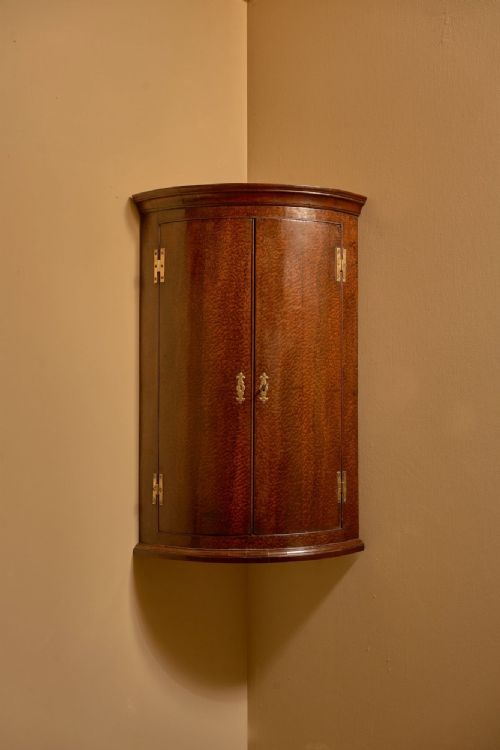
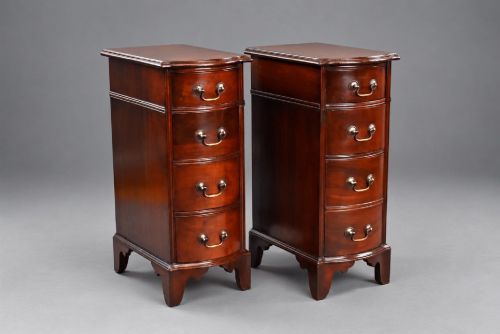
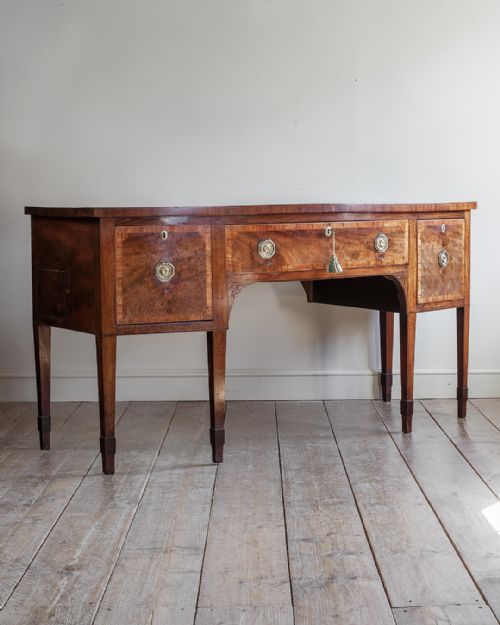
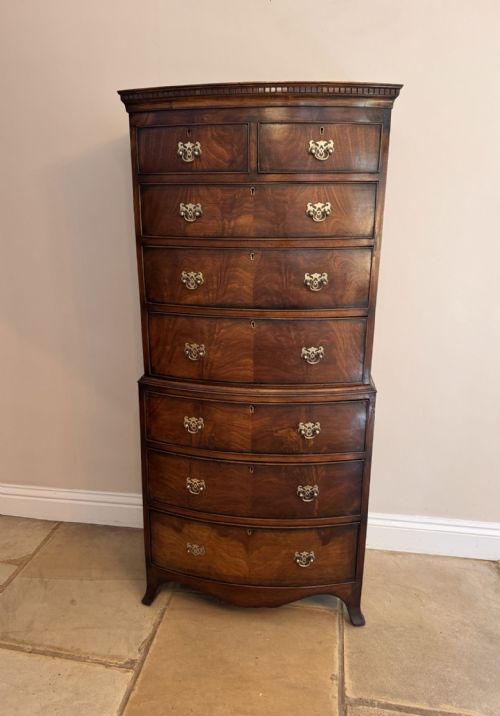
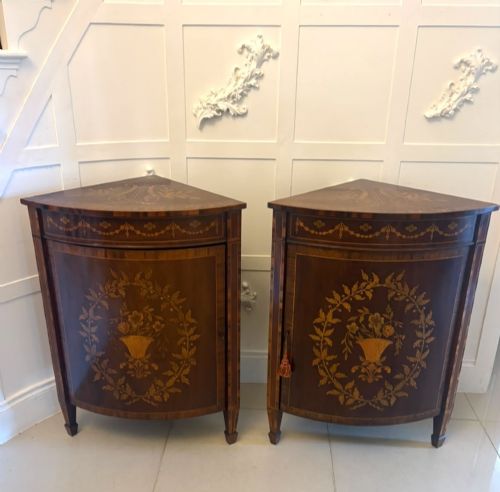
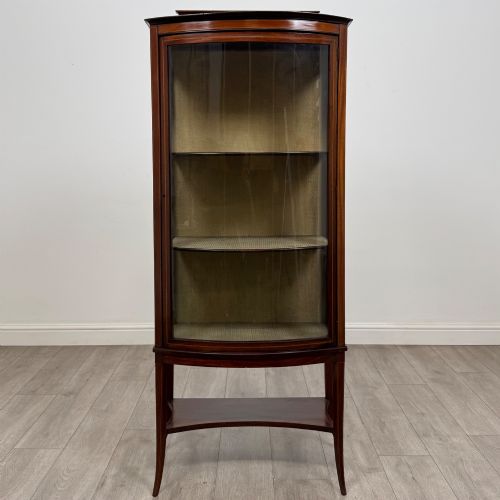
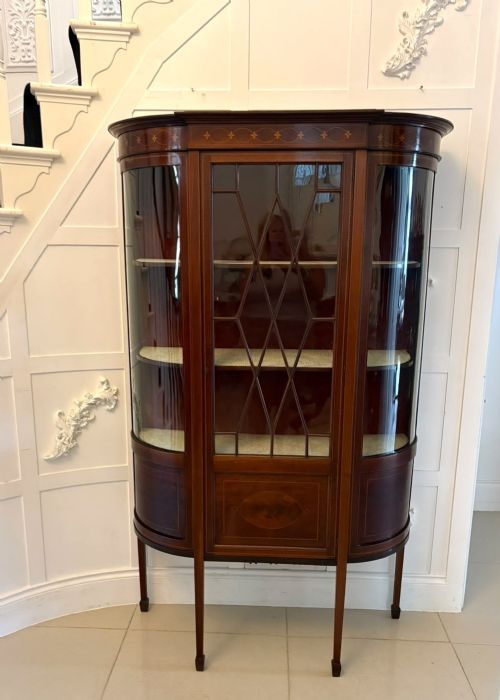
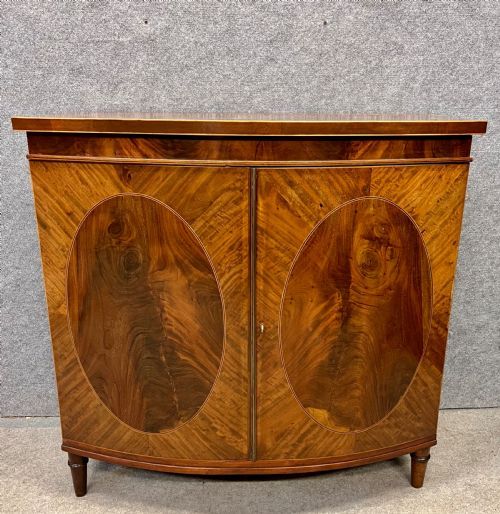
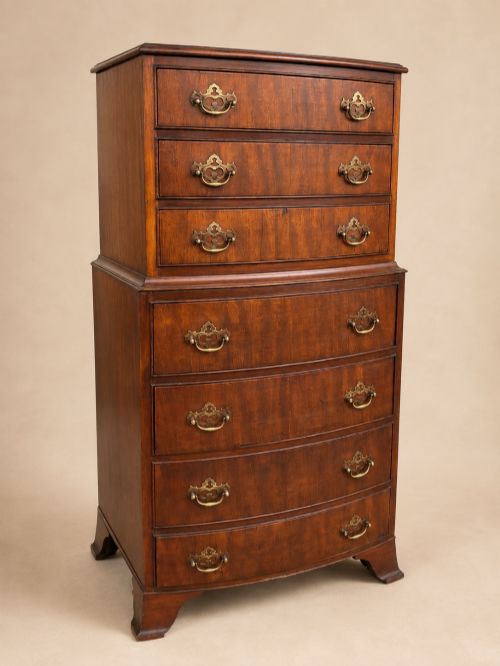
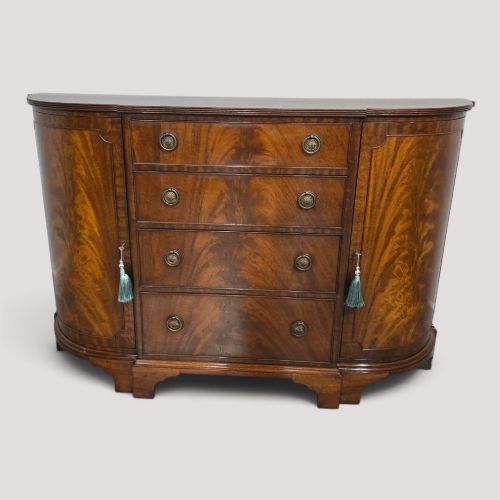
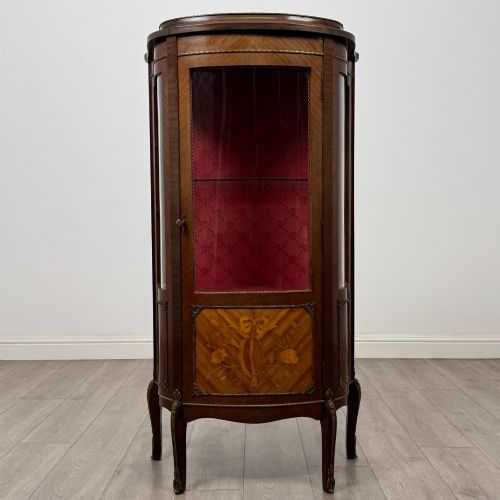
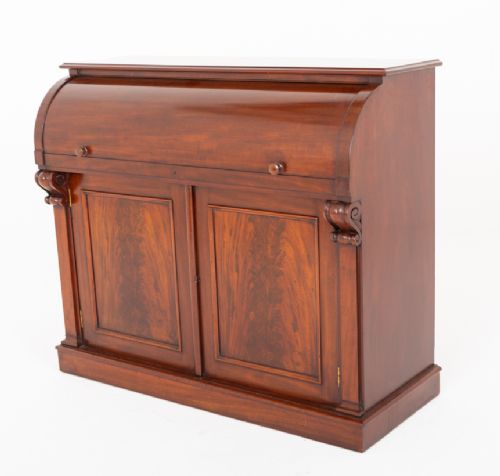
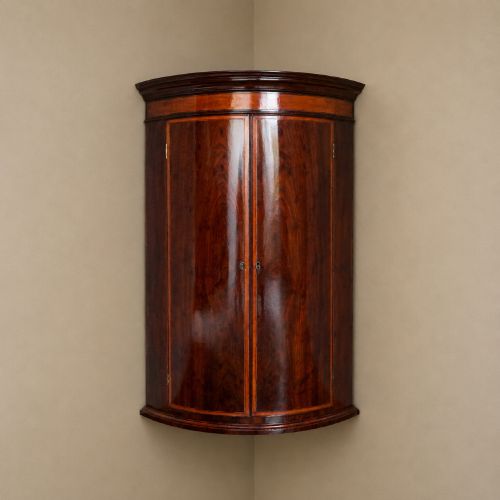
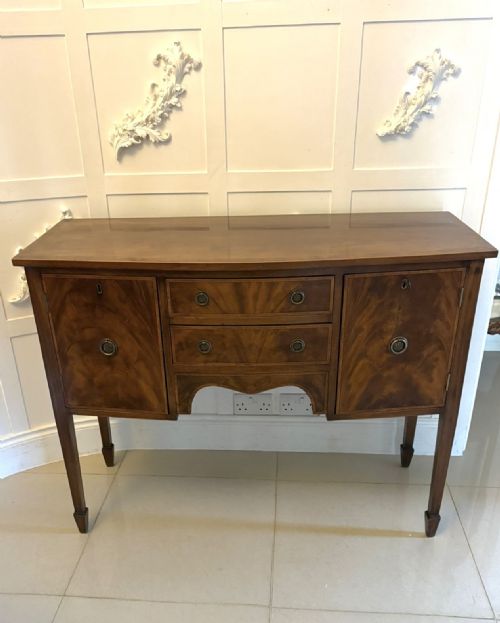
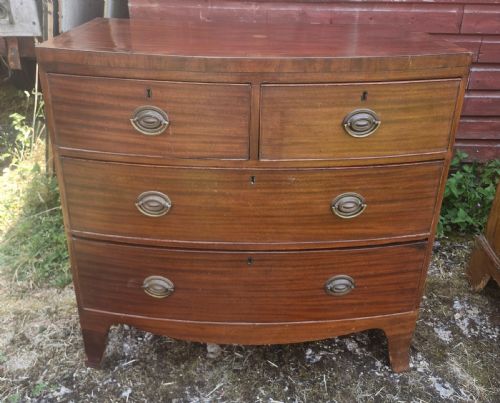
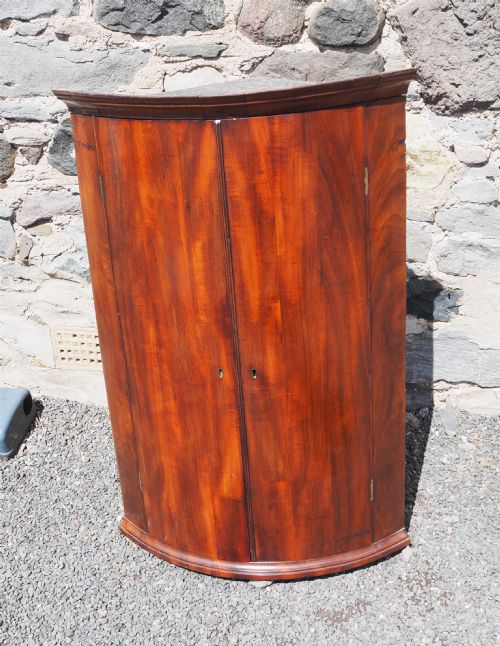
Curved Front Mahogany Cabinet
A curved front mahogany cabinet brings warmth and fluid line to a room, offering practical storage disguised in rich timber.
Curved Front Mahogany Cabinet
A curved front mahogany cabinet encompasses a variety of forms designed to soften room geometry through a rounded, bowed, or serpentine silhouette. When you search for a curved front mahogany cabinet, you encounter sideboards, display cabinets, corner cupboards, and chests of drawers spanning multiple eras.
The selections on this page lean heavily towards Georgian, Victorian, and Edwardian examples. Sideboards and corner cabinets dominate the earlier centuries, while display cabinets and bedside chests emerge frequently in the Edwardian period.
Makers utilised the natural grain of mahogany, often enhancing the curved surfaces with boxwood and satinwood inlay, marquetry panels, or glass doors. These items functioned primarily for dining room service, parlour display, or bedroom storage.
How they were made
Cabinet makers constructed these curved forms by laminating thin layers of mahogany or by bending solid timber over shaped wooden frames to achieve the characteristic bow or serpentine sweep. This requires immense skill to ensure the wood retains its tension and stability over centuries without splitting along the grain.
Surface decoration relies heavily on contrasting veneers, incorporating boxwood and satinwood inlay, delicate fruitwood marquetry, and parcel gilt highlights. Brass hardware, including drop handles and escutcheons, secures the doors and drawers while adding metallic contrast to the dark timber.
Curved Front Mahogany Cabinet Retail Price Guide 2026
Typical asking prices for curved front mahogany cabinet among the pieces listed under this phrase on Sellingantiques today, from the lower quarter to the upper quarter. They describe what is for sale here now, not the wider market.
Some nineteenth-century nightstands hid commode functions behind polite mahogany drawer fronts, proving Victorians valued discretion above all.
What varies in quality
The grade of mahogany and the ambition of the timber preparation dictate the baseline of excellence in these pieces. Plum pudding mahogany and flame mahogany veneers demand superior selection and matching across the curved expanse.
Execution of the inlay and marquetry separates standard workshop output from exceptional cabinet work. Crisp sightlines in the boxwood and satinwood detailing, alongside tight joinery on the complex curves of the front facade, denote superior execution.
Edwards And Roberts·Gillows
The Curved Front Mahogany Cabinet Glossary
- Bow front
- A convex, outwardly curved furniture front that projects forward from the corners. This shape softens the profile of sideboards and chests.
- Serpentine front
- A furniture front characterised by a central convex curve flanked by two concave curves. It creates a flowing, undulating outline.
- Marquetry
- The art of applying decorative pieces of veneer to a structure to form intricate patterns and pictures. It often incorporates fruitwood and various exotic timbers.
- Plum pudding mahogany
- A highly figured variety of mahogany marked by small, clustered circular markings resembling the fruit in a Christmas pudding. It results from growth patterns near the branch junctions.
- Demi-lune
- A half-moon or semicircular shape applied to tables and small cabinets designed to sit flush against a wall.
Curved Front Mahogany Cabinet: Frequently Asked Questions
Where should I place a curved front cabinet?
These cabinets suit dining rooms, hallways, and living spaces where a softened silhouette breaks up the harsh right angles of modern architecture. Their rounded profiles allow for smoother traffic flow in tighter circulation areas.
Corner cabinets specifically utilise dead space in a room, while sideboards and chests anchor larger wall sections with deep storage capacity.
How do I care for mahogany surfaces?
Maintain the timber by dusting regularly with a soft, dry cloth and applying natural beeswax periodically to nourish the grain. Avoid placing the cabinet in direct sunlight or near heat sources to prevent the wood from drying and cracking.
Keep humidity levels in the room stable to protect delicate veneers and inlay work from lifting.
How do I distinguish Georgian from Edwardian pieces?
Georgian examples generally rely on solid proportions, minimal structural embellishment, and rich, dark timber figuring such as plum pudding mahogany. Their construction reflects robust utility combined with restrained classical design.
Edwardian pieces often feature lighter satinwood and boxwood inlay, Sheraton Revival styling, and glass panels configured for display rather than concealed storage.
What is the difference between a bow front and a serpentine front?
A bow front curves outward in a single continuous convex arc from one side to the other. This creates a simple, swelling facade.
A serpentine front uses a more complex triple curve, pushing outward in the centre and curving inward near the edges. This design requires advanced woodworking techniques to shape the drawers and frame accurately.