


Mahogany Hall Side Table
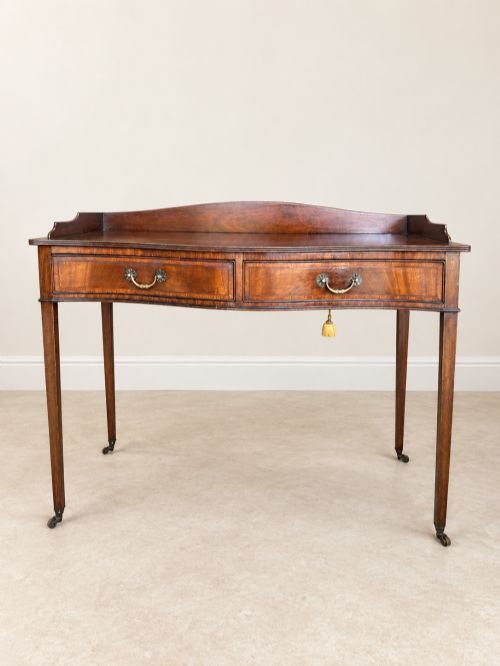
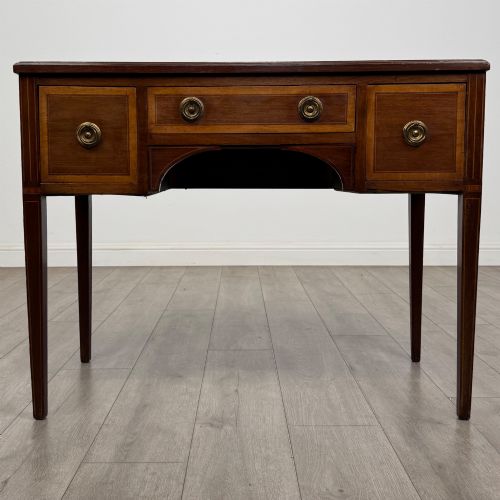
When you search for a mahogany hall side table, you encounter console tables, lowboys, and demi-lune pieces from the Georgian, Regency, and Victorian periods.
Mahogany Hall Side Table
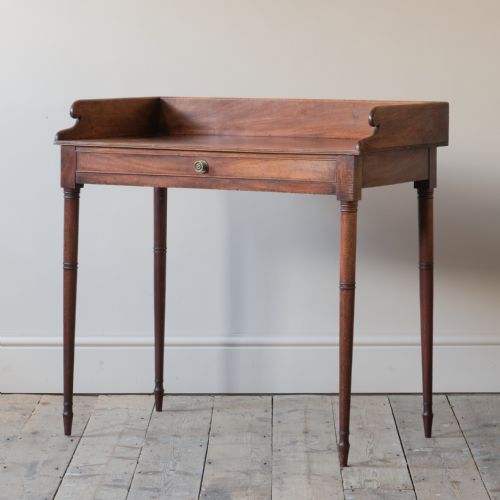
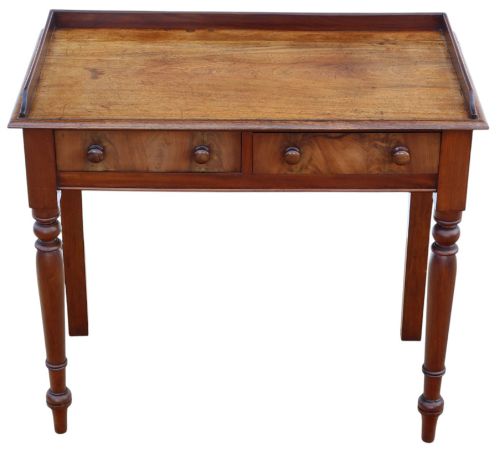
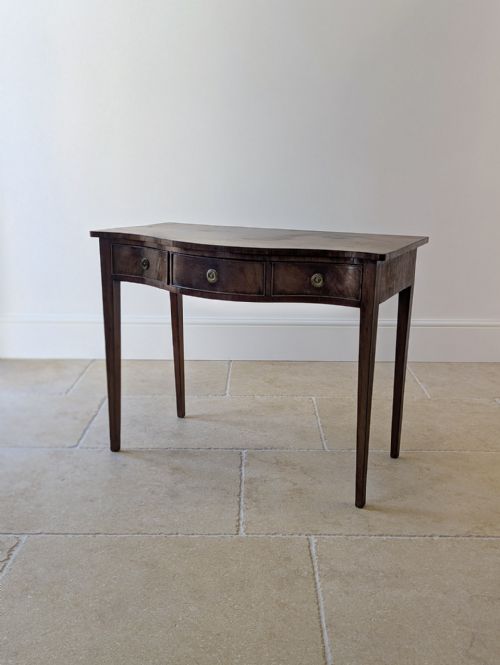
A mahogany hall side table serves narrow spaces in hallways, reception rooms, and landings, appearing as console tables, lowboys, and writing desks. The listings span George III, Regency, William IV, Victorian, and Edwardian periods.
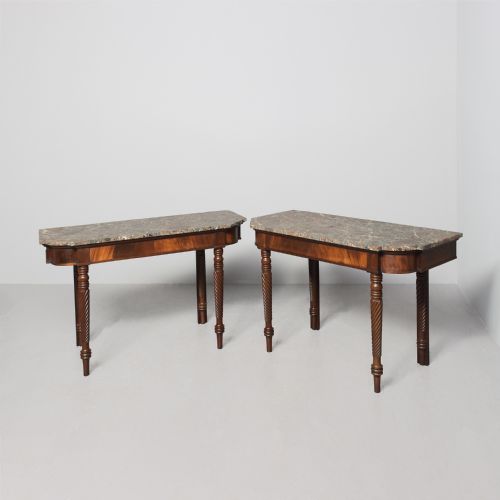
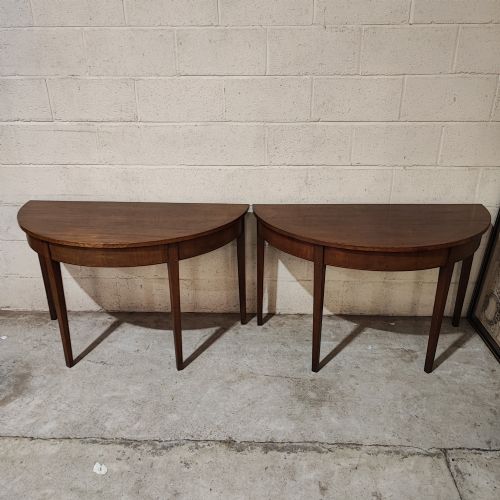
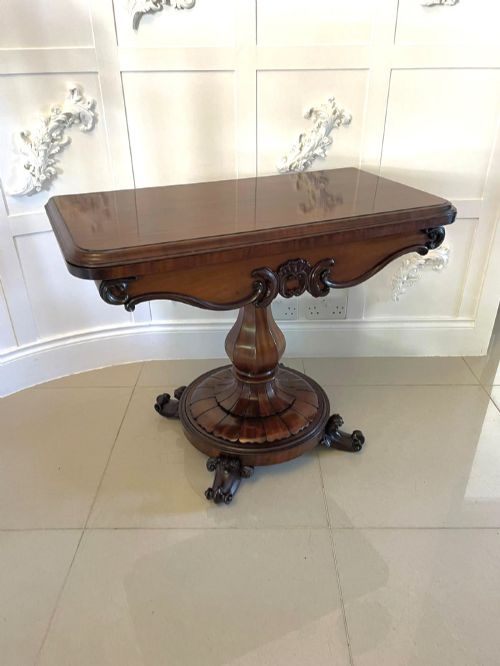
Georgian and Regency examples often take the demi-lune shape or feature straight fronts with single or multiple drawers. Victorian and Edwardian variations introduce heavier carving, satinwood inlay, and mirror backs.
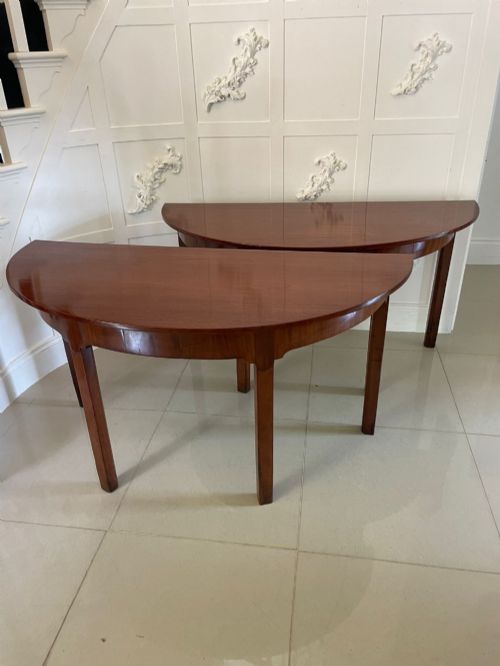
Makers and workshops constructed these tables to sit flush against walls, providing a surface for lamps, decorative objects, and correspondence. Pairs of demi-lune console tables recur frequently across the eighteenth and nineteenth century listings.
Materials and Construction
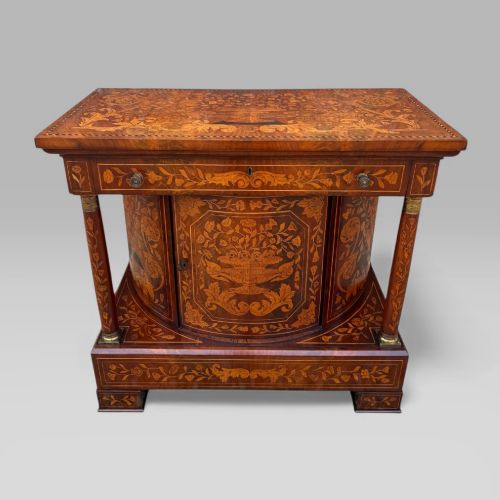
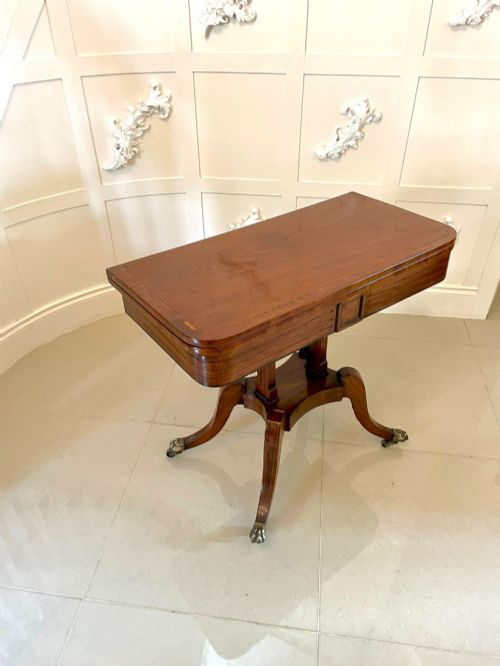
Cabinet makers utilised solid mahogany and flame mahogany veneer over secondary timbers, often accentuating the grain with figured timber selections. Brass hardware, marble tops, and satinwood stringing appear on select examples.
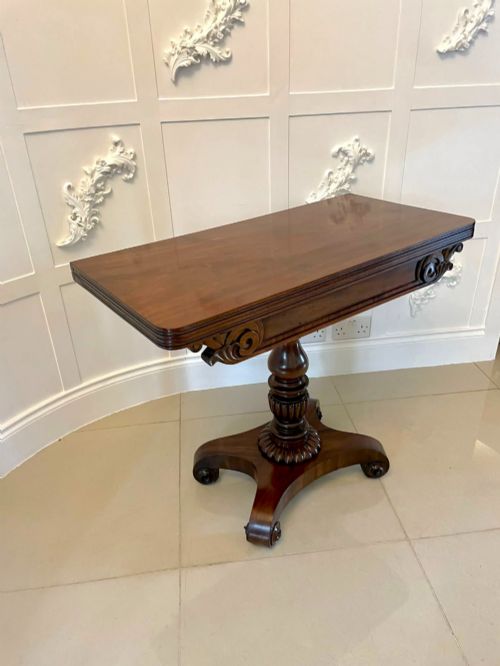
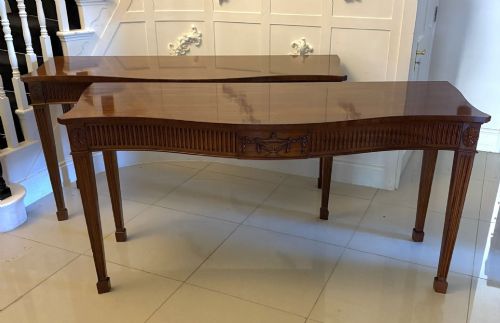
Joinery techniques include hand-cut dovetails for drawer construction and pegged mortise and tenon frames. Carved decoration manifests as neoclassical motifs, reeded legs, and scrollwork on later Victorian pieces.
Listings span the eighteenth to the twentieth centuries, featuring solid mahogany, flame mahogany veneer, marble, and brass.
Assessment of Standard
Quality rests upon the selection of timber, where highly figured flame mahogany or dense Cuban mahogany denotes superior manufacture. The crispness of hand-carved neoclassical details and the integration of original brass mounts further elevate a piece.
Proportion and structural integrity distinguish ordinary utility pieces from exhibition items. Refined pieces maintain balanced dimensions suitable for narrow hallways without sacrificing internal drawer depth or stability.
The Mahogany Hall Side Table Glossary
- Demi-lune
- A half-moon shape designed to stand flat against a wall. These tables function well in tight entrance halls.
- Lowboy
- A small table with one or more drawers and long legs, frequently used as a writing or side table in the eighteenth century.
- Console table
- A table supported by wall brackets or legs, intended to stand against a wall. They appear often in pairs within the evidence.
- Flame mahogany
- Timber cut from the fork of the mahogany tree to create a distinctive, flame-like grain pattern. Cabinet makers used veneer sheets of this wood for drawer fronts.
- Reeded
- Decorated with parallel convex mouldings carved directly into the wood. This technique appears commonly on table legs.
Mahogany Hall Side Table: Frequently Asked Questions
Where do mahogany hall side tables fit best?
These tables suit narrow entrance halls, corridors, and landings where floor space is restricted. Their shallow depth allows them to sit against walls without obstructing pathways.
They also function effectively in reception rooms as lamp tables or serving surfaces beneath mirrors.
How do I distinguish Georgian from Victorian tables?
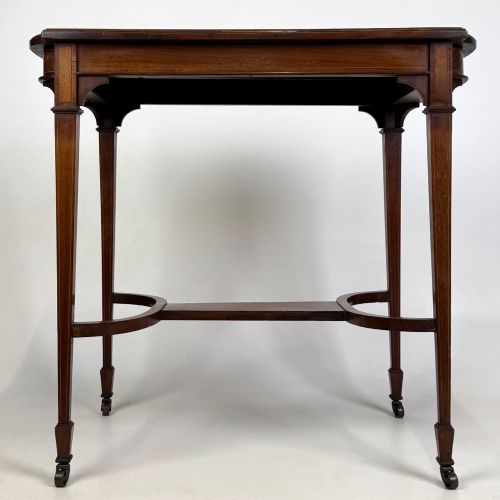
Georgian and Regency pieces lean towards restrained proportions, subtle stringing, and delicate tapered or reeded legs. Mahogany grain selection provides the primary visual interest on earlier examples.
Victorian pieces frequently display heavier proportions, deeper carving, mirror backs, and richer use of flame mahogany veneer or satinwood inlay.
What items were stored in these tables?
Tables equipped with drawers typically held household ledgers, writing materials, keys, and correspondence. Single drawer lowboys and side tables provided functional storage close to the front entrance.
Console variations without drawers served primarily as decorative display surfaces for lamps and ornamental objects.
Are these tables found in pairs?
Pairs of demi-lune and console tables appear frequently, particularly from the George III and Victorian eras. These matching pieces originally flanked fireplaces or architectural doorways in large reception rooms.
Finding a matched pair remains common among formal console and side table listings.