

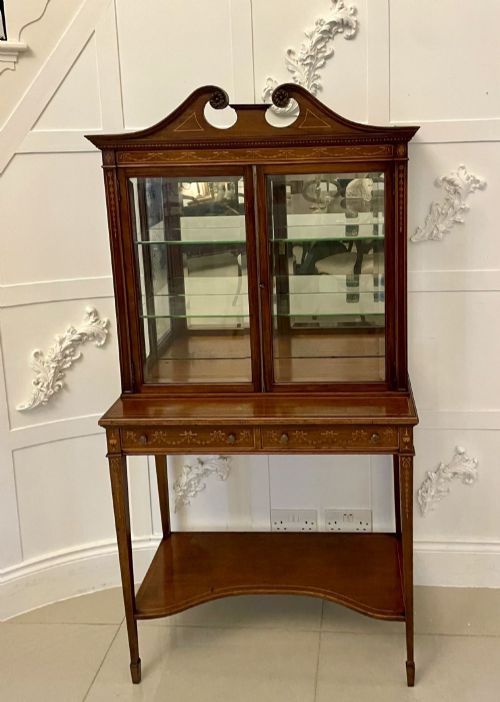
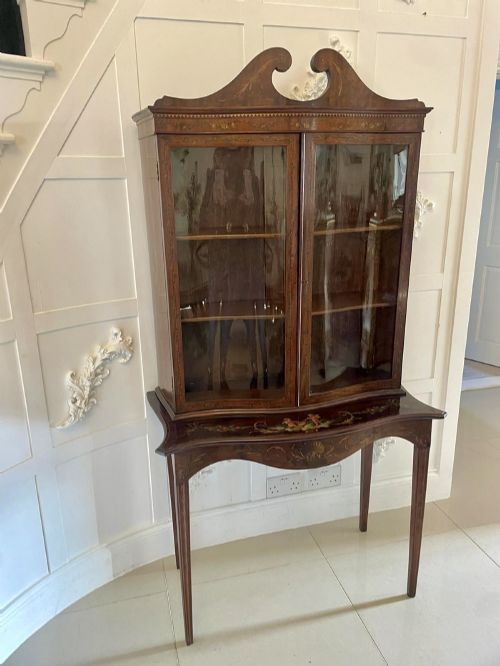
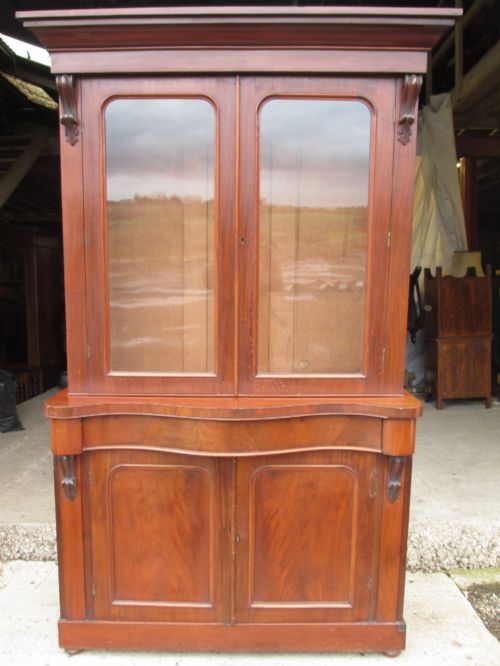
Mahogany Glass China Cabinet
These mahogany glass china cabinet selections bring together glazed display furniture and refined timber work from the nineteenth and early twentieth centuries to showcase precious belongings.
Mahogany Glass China Cabinet
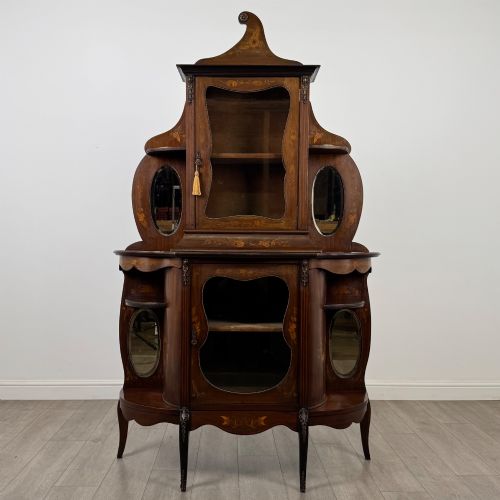
A mahogany glass china cabinet serves to house and exhibit fine ceramics, books, and glassware behind clear panes. The selections span the Victorian, Edwardian, and Georgian periods, capturing shifts from robust proportions to lighter, revival-inspired forms.
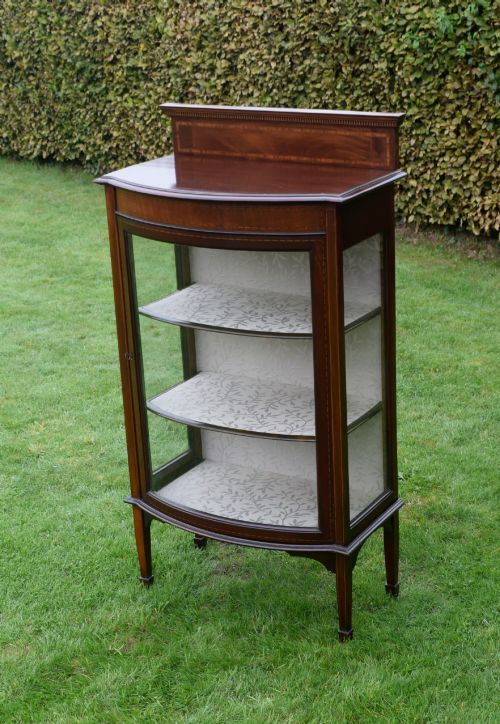
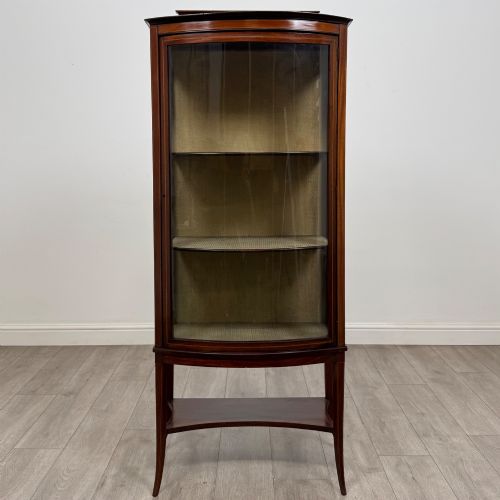
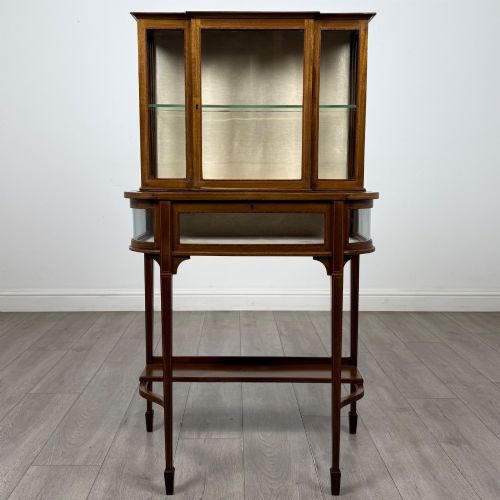
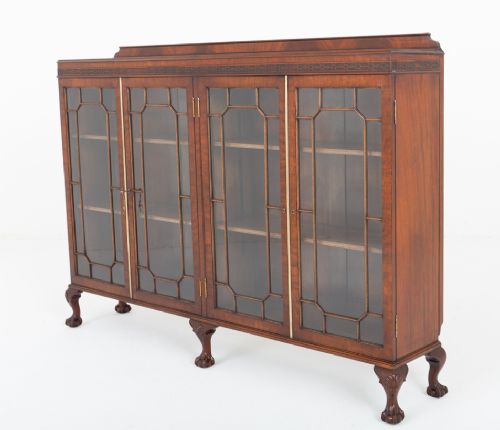
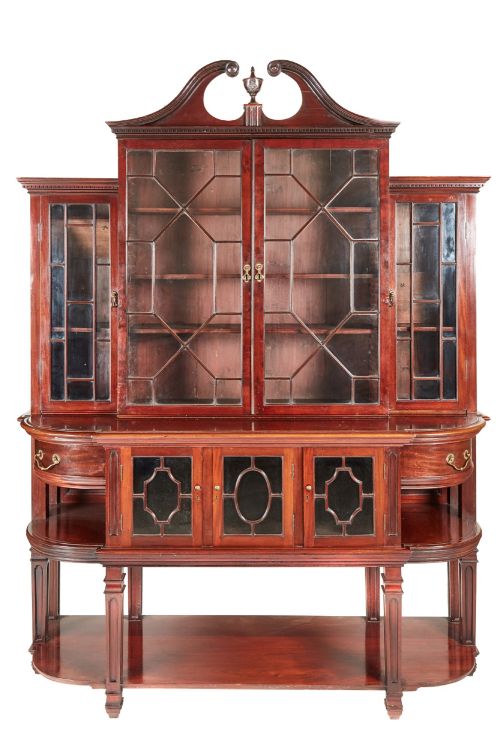
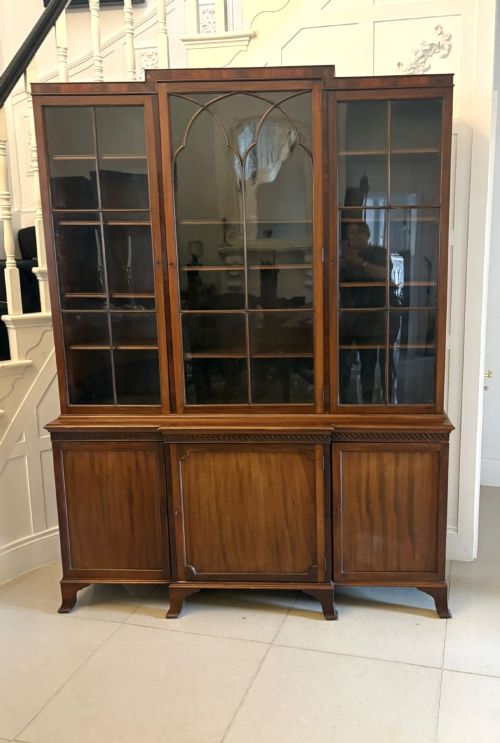
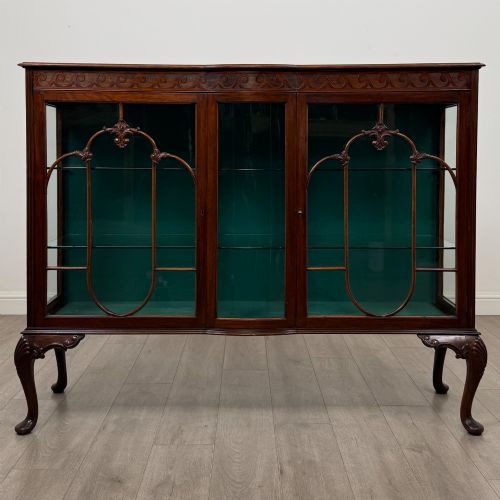
Buyers frequently encounter upright display cabinets, breakfront bookcases, and bow-ended vitrines originating from the late nineteenth and early twentieth centuries. These pieces combine timber framing with generous glazing to maximise light inside the display space.
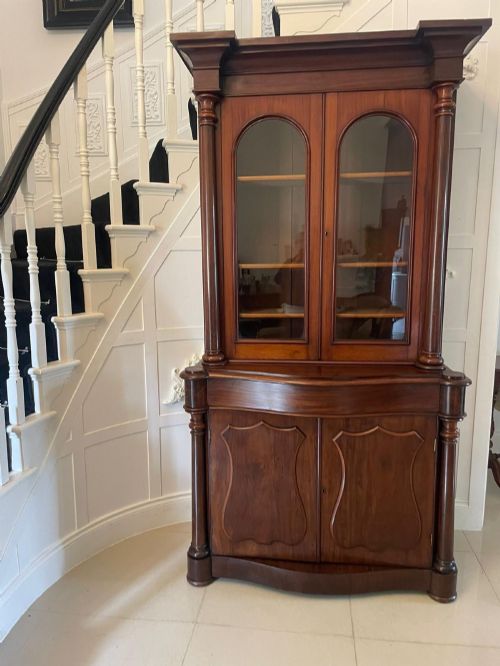
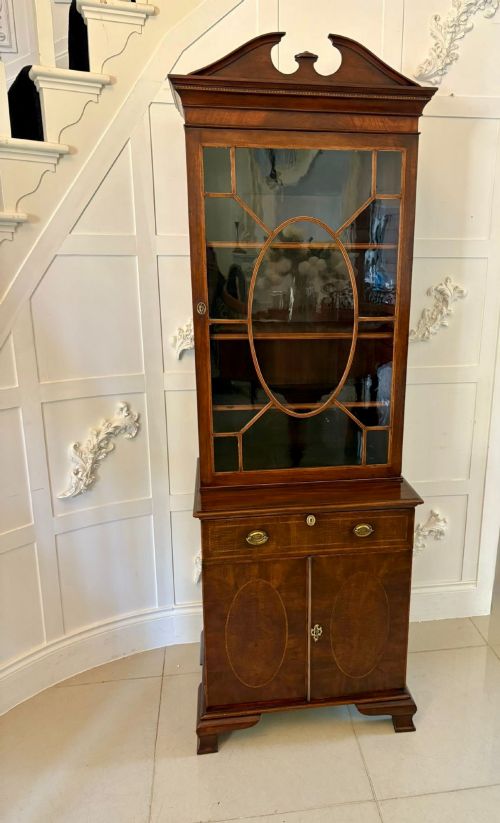
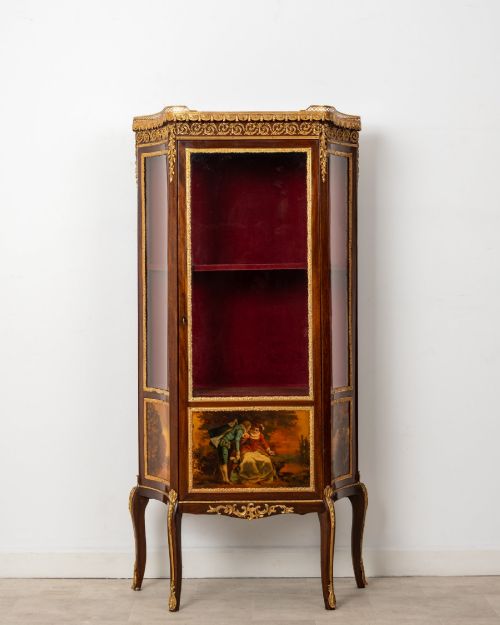
Regional variations and revival styles appear across the inventory, including Sheraton Revival satinwood inlay and French Rococo influenced pieces. Each variation alters the silhouette, ranging from simple upright glazed doors to serpentine fronts.
Materials and construction methods
Cabinetmakers utilised solid mahogany and mahogany veneers over secondary timbers, often incorporating satinwood inlay and marquetry for surface enrichment. Brass hardware secures doors and internal fittings, while mirrored backs and velvet linings enhance the illumination and presentation of stored objects.
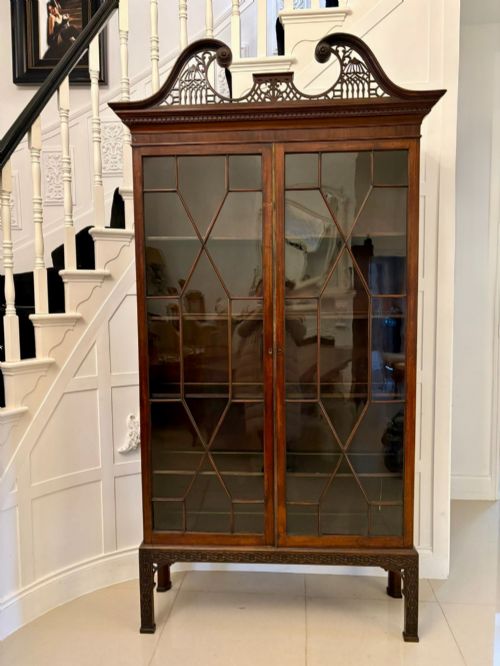
Glazing techniques rely on wooden astragal bars or metal leads to hold individual glass panes within doors and side panels. Joinery methods draw upon traditional mortise and tenon framing to support heavy glass doors and tiered internal shelving.
Some Edwardian cabinets hide delicate floral marquetry behind glass doors, waiting patiently for someone to peer past the china.
Factors determining the quality of execution
Quality rests upon the crispness of timber carving, the precision of inlaid stringing, and the integrity of the structural joinery. Finer examples display balanced proportions, select mahogany grains, and hand-painted or marquetry details that remain intact.
The sophistication of the glazing bars and the clarity of the original glass panes separate standard production from master workshops. Interior elements such as painted decoration, mirrored panels, and adjustable shelving further distinguish finer pieces.
Jas Shoolbred·Edwards & Roberts·Maple & Co.·Shapland and Petter
The Mahogany Glass China Cabinet Glossary
- Astragal glazed
- Descriptive of glass doors divided into smaller panes by narrow wooden mouldings called astragals. These bars form geometric patterns across the front.
- Breakfront
- A piece of furniture where the central section projects forward from the flanking sides. This layout adds architectural depth to large bookcases and display cabinets.
- Marquetry
- The art of applying pieces of veneer to a structure to form decorative patterns and pictures. Craftsmen use various tinted woods to achieve pictorial designs.
- Serpentine
- A curved furniture front shaped in a continuous wave, swelling outward at the centre and receding at the ends. This contour requires skilled woodworking.
Mahogany Glass China Cabinet: Frequently Asked Questions
How do I date a mahogany glass china cabinet?
Dating relies on stylistic clues, timber characteristics, and construction techniques visible in the cabinet framework. Victorian pieces tend to show heavier proportions and darker finishes, whereas Edwardian examples often incorporate lighter satinwood inlay and delicate revival styling.
Hardware examination provides further evidence of age, alongside the thickness of the glass panes and the backing materials used. Makers' stamps or paper labels inside drawers or on the backboards help confirm the exact period of manufacture.
Where should I place a display cabinet?
Positioning requires a stable interior environment away from direct sunlight and sudden temperature shifts to protect the timber and veneer. Placing the cabinet against an interior wall prevents excessive humidity fluctuations from affecting the glue and joinery.
Sufficient floor space must be available for doors to open fully without striking adjacent furniture. Adequate ambient room lighting helps illuminate the contents through the glass panels.
How do I clean mahogany furniture?
Dusting requires a soft, dry, lint-free cloth used regularly to prevent particle build-up on carved surfaces and glass panes. Avoid silicone-based sprays, which can penetrate old finishes and attract further dust over time.
Periodic application of appropriate furniture wax helps nourish the timber and maintain the lustre of the polish. Glass cleaner applied directly to a cloth rather than the glass protects surrounding wooden frames from moisture damage.
Can I adjust the internal shelves?
Many period display cabinets feature fixed wooden shelving integral to the internal structural support of the carcase. Later Edwardian and revival examples occasionally incorporate adjustable shelf supports set into the interior uprights.
For fixed shelves, altering the layout is generally not recommended as it compromises the historical integrity of the piece. Owners must measure tall ceramic or glass pieces carefully before placing them inside.