
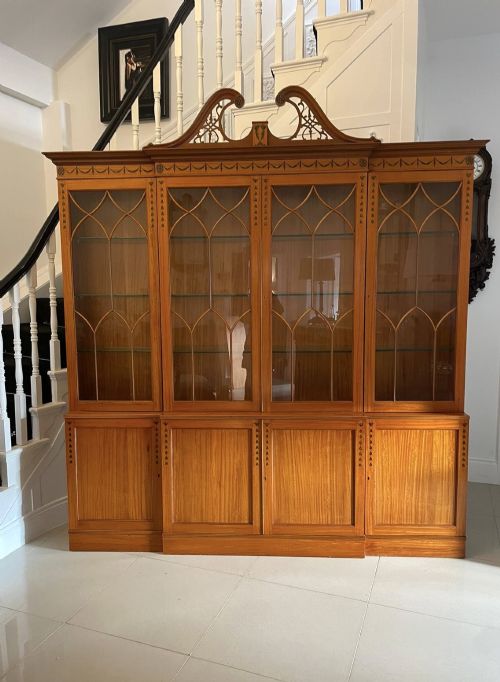
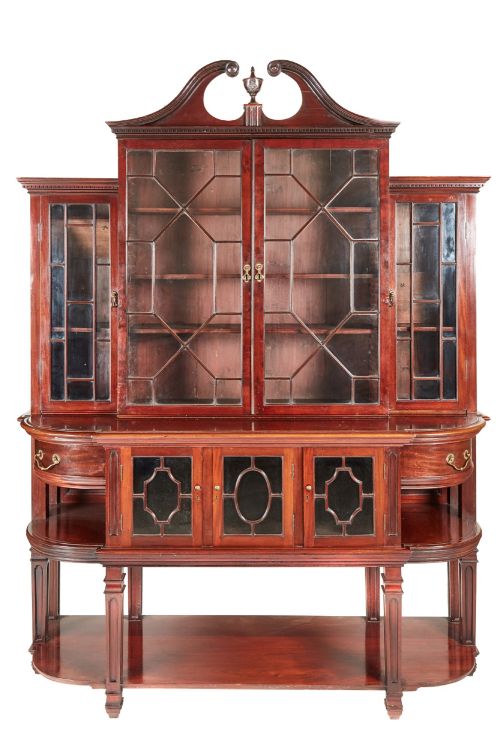
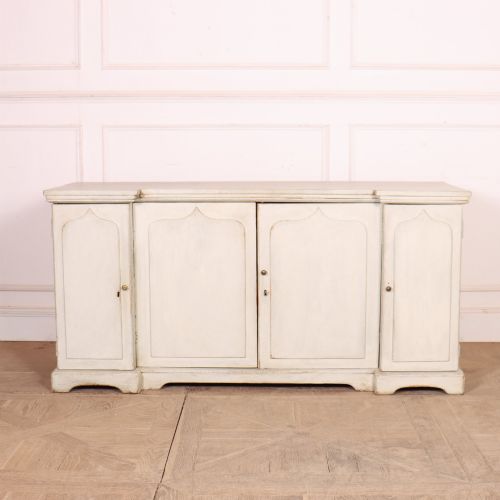
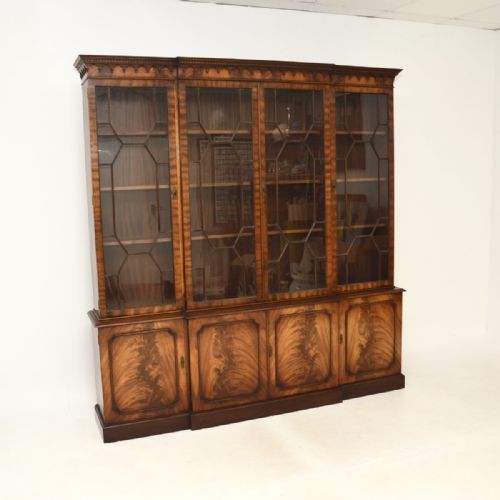
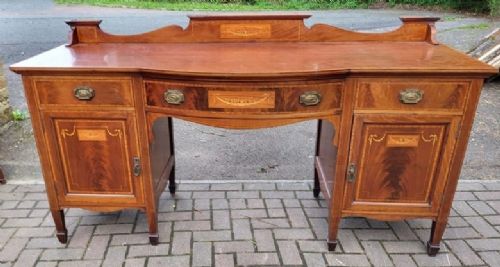
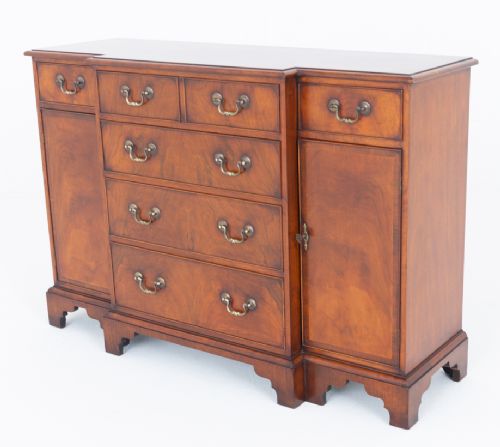


Georgian Style Breakfront Cabinet
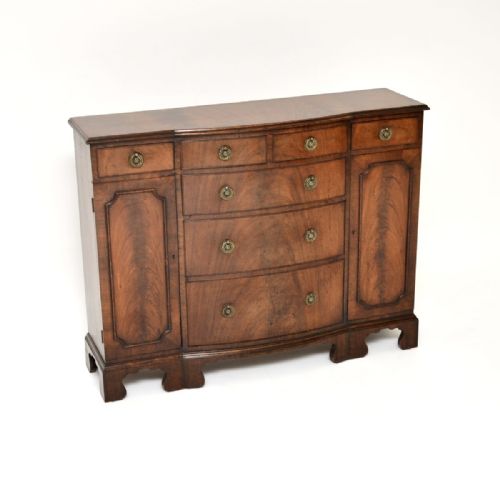
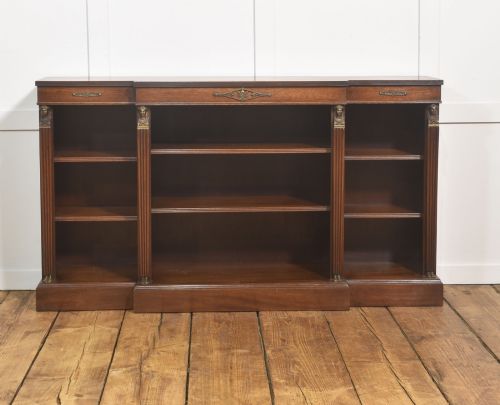
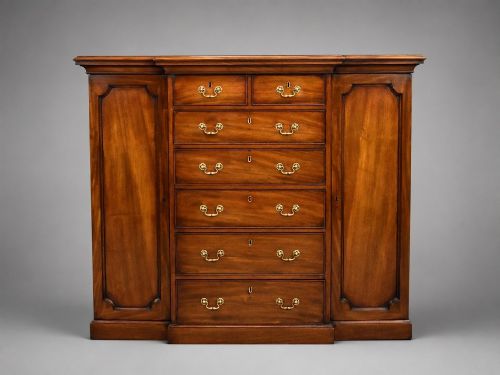
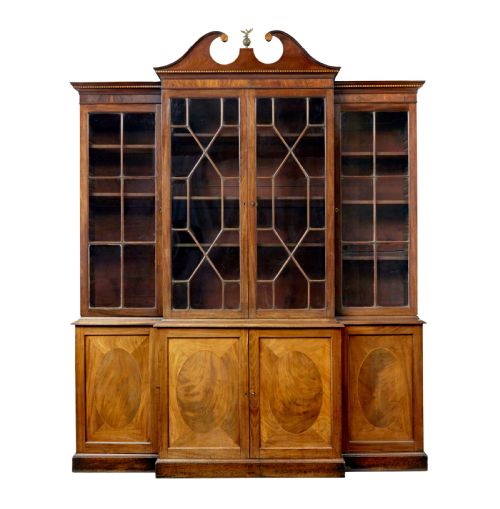
A georgian style breakfront cabinet brings architectural presence and generous storage to a room through its stepped forward central section.
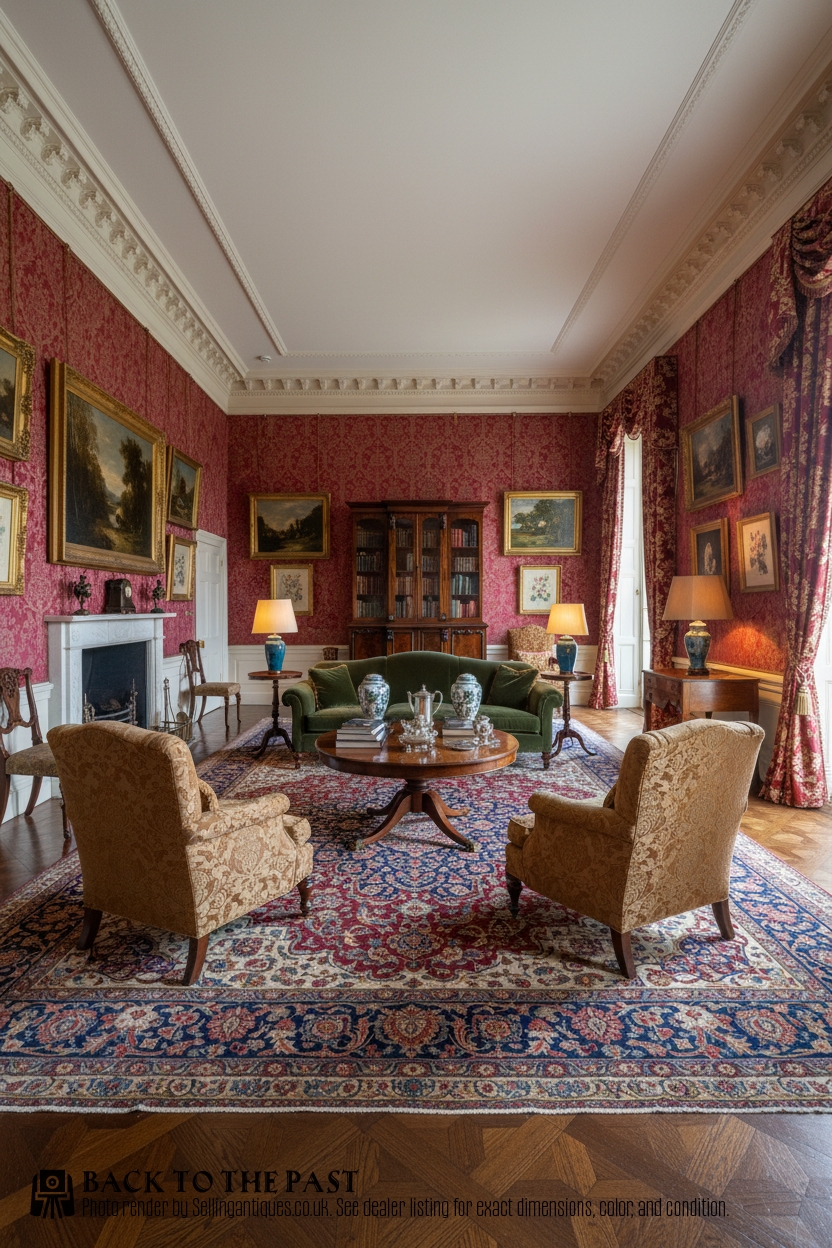
Georgian Style Breakfront Cabinet
A georgian style breakfront cabinet stands as a commanding storage piece, most frequently encountered as a tall bookcase or a lower sideboard originating from the nineteenth and early twentieth centuries.
The form is defined by a central section that projects forward from the flanking wings, creating a distinct visual rhythm seen across Victorian, Edwardian, and later revival examples.
Makers adapted this architectural layout into bookcases with glass doors, open display shelves, and sideboard bases intended for formal reception rooms and libraries.
How they were made
Cabinet makers relied primarily on solid timber frames faced with figured mahogany, flame mahogany veneer, and satinwood to build these large carcasses.
Glass doors frequently incorporate astragal glazing bars to divide the panes, whilst brass hardware and inlaid details complete the decorative scheme of the cabinetwork.
One exceptional Regency cabinet includes leather dummy books to conceal a secret compartment.
What varies in quality
The distinction between standard and superior pieces rests on the choice of timber and the handling of decorative details such as hand-painted ornamentation and fine inlay work.
Proportion and cabinet construction dictate the success of the piece, with finer examples displaying carefully matched grain patterns across the projecting central sections and doors.
Maple & Co.
The Georgian Style Breakfront Cabinet Glossary
- Breakfront
- A cabinet design where the central section projects forward relative to the flanking sides. This layout adds depth and visual interest to large storage furniture.
- Astragal
- A small convex moulding used to divide glass panes within a cabinet door framework. These wooden bars form geometric patterns across bookcase fronts.
- Satinwood
- A durable hardwood with a lustrous yellow sheen utilised for cabinet veneers and decorative panels. It appears frequently in Sheraton Revival pieces.
- Flame mahogany
- A veneer cut from the branch junction of the mahogany tree to produce a flickering flame pattern. Cabinet makers reserved this timber for principal doors and drawer fronts.
Georgian Style Breakfront Cabinet: Frequently Asked Questions
Where should I place a breakfront cabinet?
These large storage pieces require a substantial wall with enough clearance to accommodate their projecting central section and wide footprint.
They function best in principal reception rooms, dining spaces, or libraries where their height and glass doors can be fully appreciated.
How do I distinguish revival periods?
Revival pieces from the Edwardian and later periods often combine Georgian architectural proportions with lighter satinwood timbers and painted decorations.
Nineteenth-century examples tend to rely on heavier mahogany construction and deeper flame veneer panels.
What is the difference between a sideboard and a bookcase?
Sideboards provide lower storage surfaces with solid doors or drawers intended for dining room utility and display.
Bookcases extend upwards with tall glass or open shelving designed to house library collections.
Can these cabinets hold heavy books?
The internal wooden shelving is built to support standard volumes, though adjustable shelf systems vary by period.
Heavier folios require careful weight distribution across the deeper central compartments.