

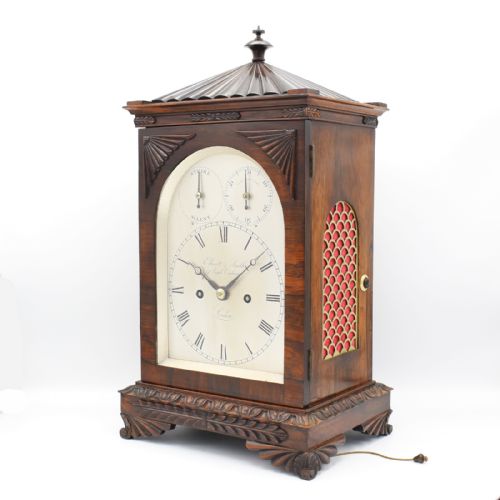
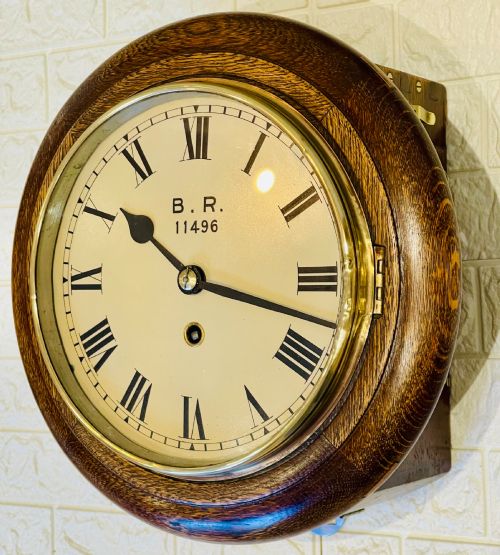
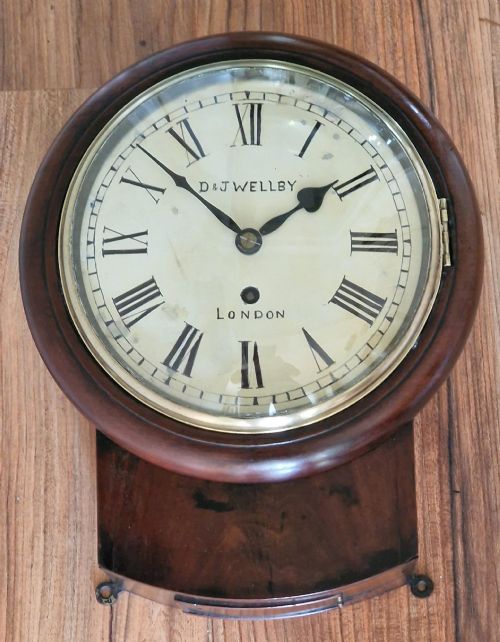
Mahogany Fusee Dial Clock
A mahogany fusee dial clock provides steady timekeeping housed in handsome timber built to hang upon a wall or sit in public spaces.
Mahogany Fusee Dial Clock
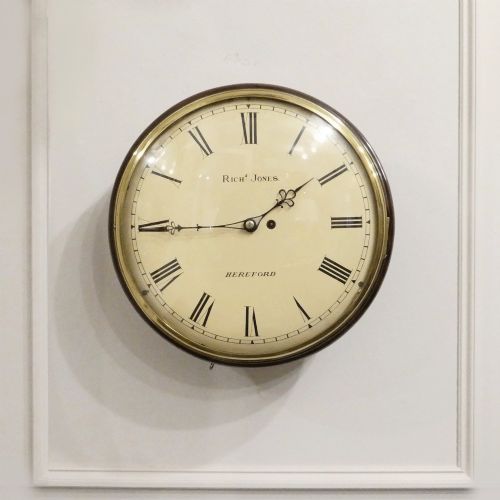
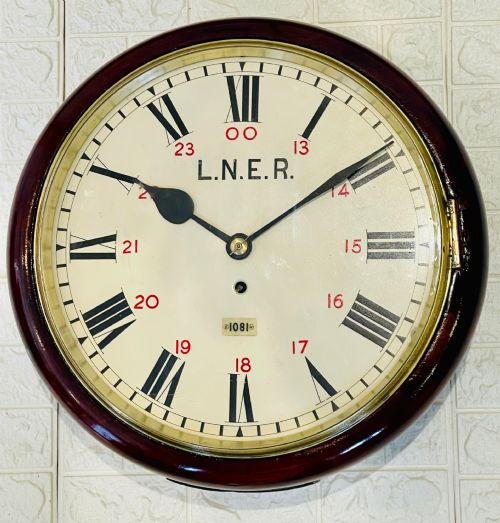
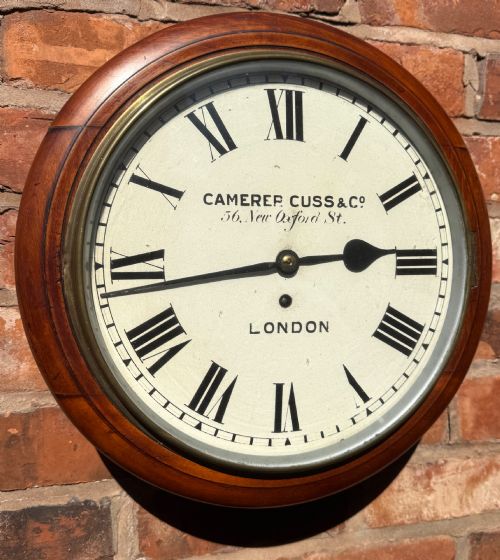
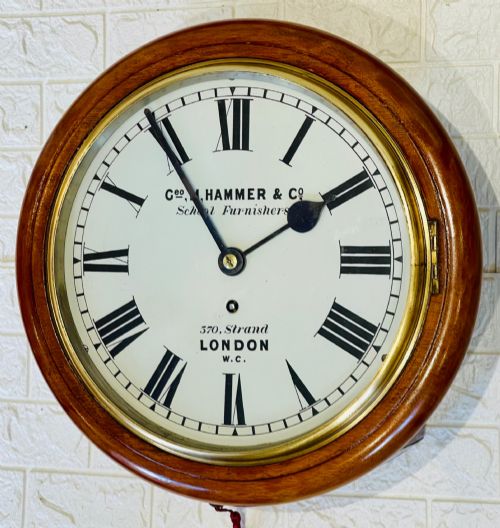
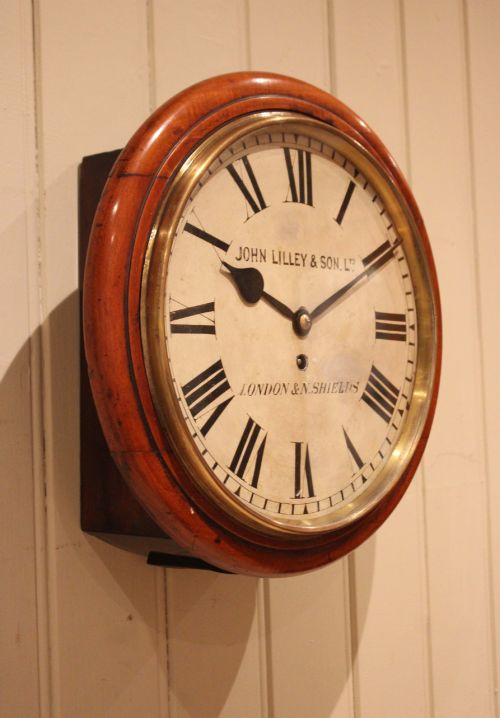
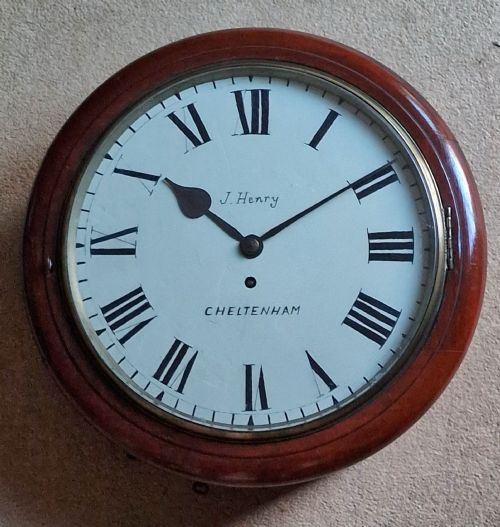
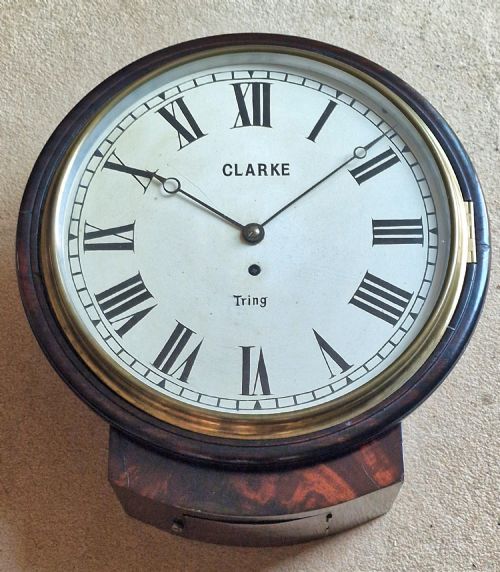
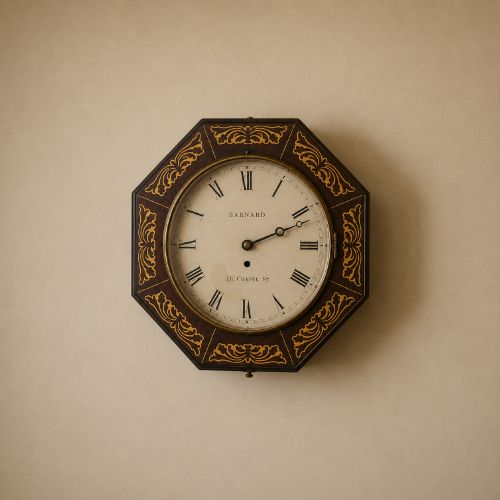
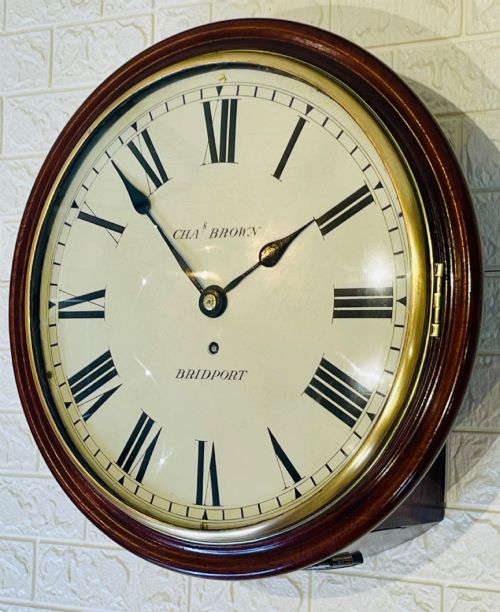
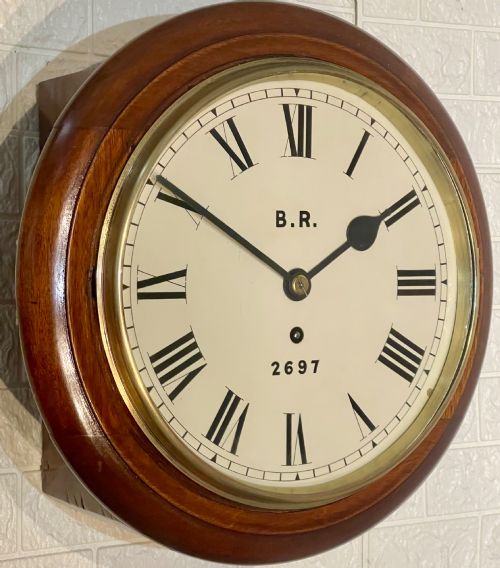
A mahogany fusee dial clock is a round-faced timepiece enclosed in timber designed primarily for wall mounting in offices, stations, and homes. The pieces appearing here span Georgian, Regency, and Victorian eras, alongside various regional and railway contexts.
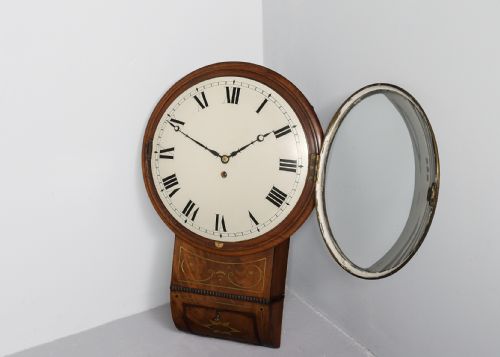
Most examples take the form of circular wall clocks with wooden bezels and hinged side doors, though drop-dial variations extending downwards into a small trunk also appear regularly. These objects originate from centuries of British clockmaking, ranging from provincial makers to major London retailers and railway companies.
How They Were Made
The internal mechanism relies on a fusee movement, utilising a conical pulley and a chain or cord to equalise the pull of the mainspring as it unwinds. This mechanical arrangement ensures even torque is delivered to the gear train throughout the winding cycle.
Railway clerks relied on these ticking guardians to keep trains moving across the nation while passengers rushed past oblivious.
What Varies in Quality
The standard of a mahogany fusee dial clock rests heavily on the crispness of the cabinet timber, the depth of the mahogany grain, and the precision of any brass inlay. Superior examples display clean dial lettering signed by known makers, alongside unpolished timber surfaces that retain their original colour and proportions.
Internal execution distinguishes finer items from standard utility pieces, seen in the finish of the movement plates and the fidelity of the fusee cutting. Heavy cast bezels and well-fitted locking access doors further separate workshop output.
Richard Jones of Hereford·Camerer Cuss and Co·Ellicott and Smith·Henry Harris·John Walker·Mappin and Webb
The Mahogany Fusee Dial Clock Glossary
- Fusee
- A conical pulley connected to the mainspring by a chain or cord. This clever component regulates the power delivery as the spring unwinds to maintain constant force on the escapement.
- Drop Dial
- A wall clock case featuring an extended lower section below the main dial. This drop trunk often houses a pendulum bob and accommodates a side access door.
- Verge
- An early type of escapement mechanism controlling the release of the wheel train. It works in conjunction with a balance or pendulum to regulate time.
- Bezel
- The ring that holds the glass protecting the dial face. In these clocks, it is commonly hinged in brass or mahogany to allow hand setting.
Mahogany Fusee Dial Clock: Frequently Asked Questions
How do I wind a fusee wall clock?
Use the appropriate key inserted into the dial hole to turn the movement clockwise until it meets resistance. Take care not to overwind the chain or cord.
Ensure you support the clock correctly on its wall bracket or mounting screw while performing maintenance to avoid disturbing the pendulum.
Why do some dials say railway names?
Many railway companies utilised these reliable timepieces to coordinate timetables across stations and offices. Operators stamped cases and painted dials with company initials.
These pieces were subsequently decommissioned when telegraph and electronic systems took over standard station operations.
What is the difference between a dial clock and a bracket clock?
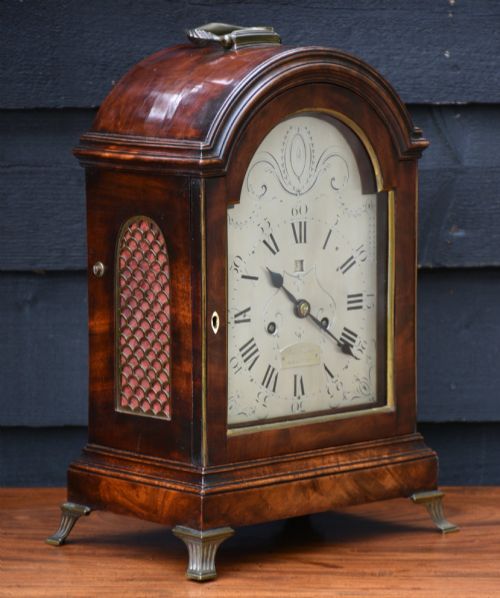
Dial clocks are designed primarily for wall hanging with a circular face dominating the front elevation. Bracket clocks sit upon furniture surfaces and feature carrying handles or flat bases.
Both systems frequently employ fusee movements, but their housing shapes reflect different placements within a room.