


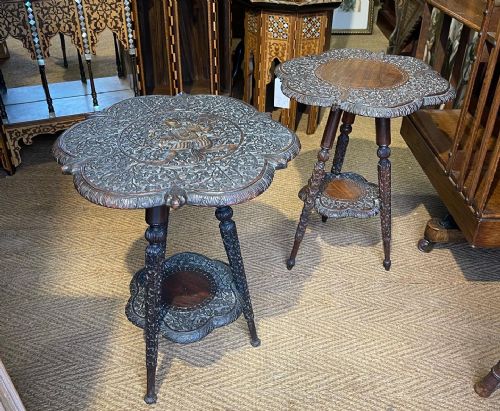


Mahogany Floral Pedestal
A mahogany floral pedestal brings a refined botanical stage to any interior, uniting rich timber with intricate marquetry and classical proportions.
Mahogany Floral Pedestal
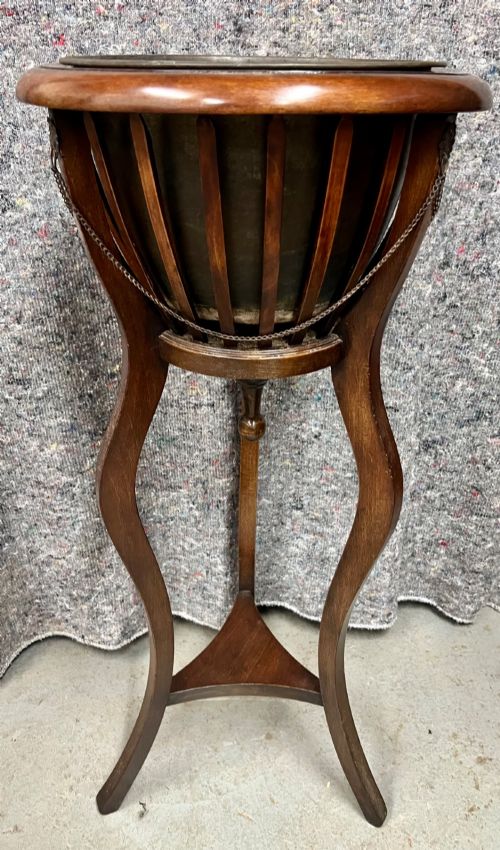
A mahogany floral pedestal typically manifests as a plant stand, jardinière or vase stand designed to elevate botanical displays within period interiors. These forms range from Edwardian and Victorian creations to Chinese export examples featuring marble inserts.
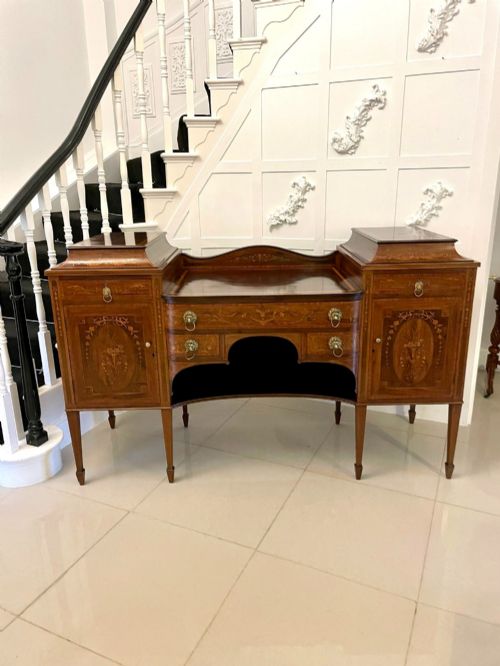
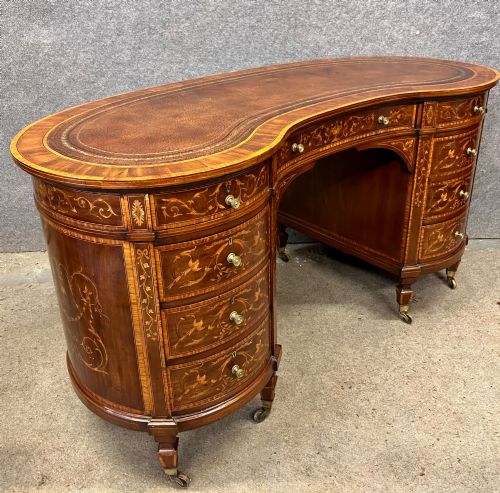
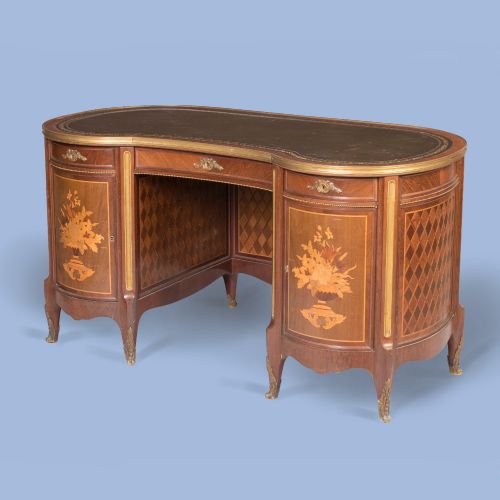
Buyers frequently encounter tripod plant stands and occasional tables alongside larger partner desks and sideboards bearing inlaid marquetry floral motifs. The selection spans the nineteenth century up to the Edwardian and Regency eras, reflecting diverse craftsmanship across English, continental and Chinese workshops.
The primary function remains the display of plants, vases or decorative objects, though many variations incorporate intricate floral inlay and brass or ormolu mounts. The combination of dense mahogany and botanical marquetry defines the visual character of the group available here.
How they were made
Makers utilised solid mahogany and rosewood as primary timbers, often enhanced by satinwood and marquetry inlay to depict floral and botanical patterns. Brass and ormolu mounts provide structural and decorative accents on desks, tables and stands.
Marquetry techniques involved cutting thin veneers of contrasting woods and fitting them together within the mahogany surface to form floral designs. Marble tops also appear on plant stands, providing a durable and cool surface for heavy jardinieres and vases.
Listings feature mahogany, rosewood, satinwood, and walnut alongside brass, marble, and ormolu across Victorian, Edwardian, and Regency periods.
What varies in quality
The precision of the marquetry inlay and the crispness of the floral details distinguish finer examples from simpler utilitarian pieces. Sharply rendered botanical motifs and tightly fitted veneers demonstrate superior cabinetmaking skill.
The choice of secondary woods and the integration of quality mounts, such as cast ormolu or heavy brass, separate standard production from exceptional workshop output. Proportional balance and the preservation of original timber patination further mark the upper tier of these pieces.
Hewetsons London
The Mahogany Floral Pedestal Glossary
- Marquetry
- Decorative veneer work arranged in pictorial patterns, often depicting floral motifs using various contrasting timbers. This technique requires immense precision to fit each piece of wood flush within the background.
- Jardiniere
- An ornamental stand or receptacle designed specifically for holding plants and flowers. These pieces often feature liners or waterproof tops to protect the surrounding timber.
- Gueridon
- A small round table supported by one or more columns, frequently utilised as a plant stand or occasional table in nineteenth-century interiors. The French style often incorporates detailed marquetry and ormolu mounts.
- Ormolu
- Gilded bronze used for decorative mounts, handles and feet on fine furniture. The technique involves applying a gold amalgam to a bronze base and firing it to achieve a rich metallic lustre.
- Tripod table
- A small occasional table or plant stand supported by three legs radiating from a central pillar. Many examples feature a tilt-top mechanism for convenient storage when not in use.
Mahogany Floral Pedestal: Frequently Asked Questions
What were mahogany floral pedestals used for?
These pieces served primarily as elevated stages for potted plants, botanical specimens and decorative vases within nineteenth-century drawing rooms and reception spaces. Their sturdy tops and elevated designs protected delicate flooring while displaying greenery at eye level.
Over time, owners also utilised them as occasional tables for holding books, lamps or small decorative objects. The incorporation of floral marquetry turned utilitarian plant stands into decorative focal points.
How do I care for mahogany and marquetry?
Maintain mahogany surfaces by dusting regularly with a soft, dry cloth and applying natural beeswax sparingly to preserve the timber patination. Avoid placing pieces in direct sunlight or near heat sources to prevent the wood from drying out and cracking.
Protect inlaid floral marquetry from moisture by using coasters and mats beneath any plants or vases placed upon the surface. Gentle handling ensures the delicate veneer remains secure within the mahogany ground.
How do I distinguish Victorian from Edwardian pieces?
Victorian pieces generally exhibit heavier proportions, darker finishes and dense, intricate carvings or rich marquetry reflecting revival styles. The construction often employs solid timber bases with robust brass or ormolu mounts suited to formal nineteenth-century interiors.
Edwardian examples tend to display lighter construction, brighter mahogany tones and more refined, delicate floral inlay work. The overall aesthetic shifts toward airier forms influenced by Sheraton Revival and neoclassical taste.
Are marble top plant stands original?
Many plant stands and vase stands incorporated inset marble tops to provide a practical, water-resistant surface for damp flower pots and heavy jardinieres. These stone inserts were fitted during the initial construction in nineteenth-century workshops.
Examining the underside of the top reveals how the marble sits within the mahogany framing, confirming its period origin. Such surfaces were standard for Chinese export and European stands designed for botanical display.