
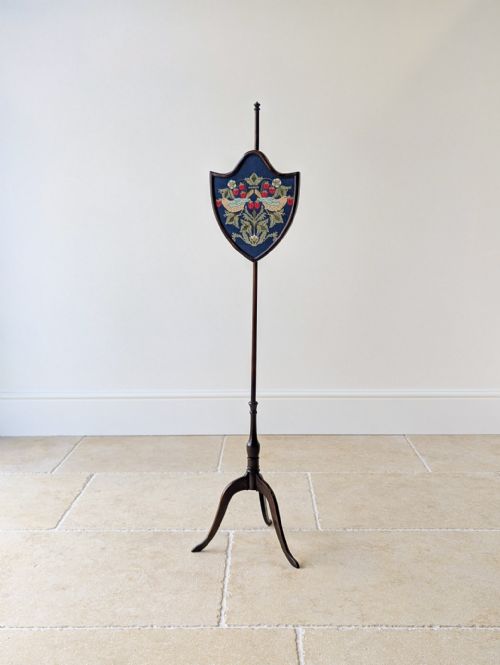
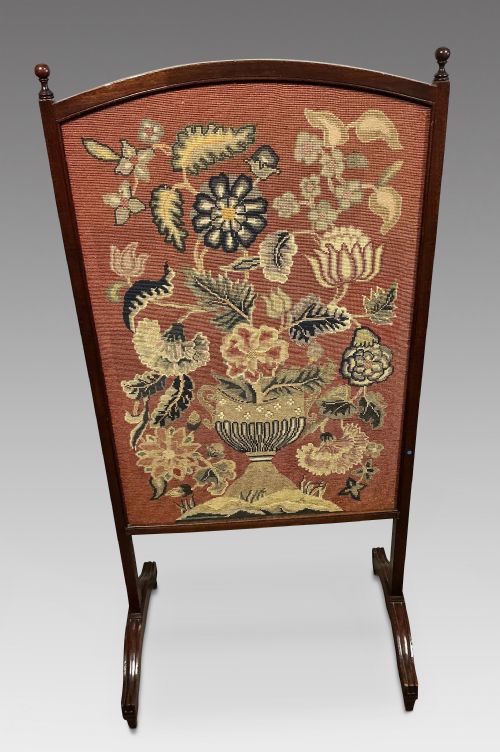


Mahogany Fireplace Screen
A mahogany fireplace screen is a practical domestic shield against open-hearth heat, combining polished timber frames with embroidered panels.
Mahogany Fireplace Screen
These items span multiple eras, appearing across Georgian, Regency, and Victorian periods. Alongside pole screens, buyers will find folding designs and standing frames originating from the eighteenth and nineteenth centuries.
The construction typically involves a solid mahogany support, often standing on a tripod or heavily carved base, paired with an inset textile panel. Workshops from various decades adapted the basic format into adjustable formats, needlework displays, and multi-leaf screens.
Materials and construction
Makers utilised dense mahogany for the structural frames, turning the timber into slender poles, sturdy legs, and intricate scrollwork. This wood provided the necessary weight and strength to hold tall standards and hinged leaves upright.
Textiles form the visual centrepiece of these objects, with silk, wool, canvas, and tapestry mounted securely within the mahogany surrounds. Embroidered needlework, beadwork, and poker work frequently decorate these panels.
Brass fittings appear as adjustable collars, screws, and hinges, allowing the panels to slide vertically on poles or fold outward across multiple leaves. Glass panels and silver or gold thread occasionally supplement the standard textile inserts.
One listed panel proudly displays the Clan Maclellan coat of arms, ready to ward off aggressive hearth embers with Scottish nobility.
Distinctions in quality
The standard of a mahogany fireplace screen rests heavily on the crispness of the timber carving and the stability of the base. Superior examples exhibit finely turned tripod legs, deep relief carving, and robust joints that prevent any wobble in the upright pole.
The artistry of the internal panel distinguishes finer pieces from simpler utilitarian items. Hand-woven tapestries, detailed needlework samplers, and intricate embroidery demonstrate a higher tier of domestic craft than plain fabric inserts.
Mechanisms also define the grade of the piece, where smoothly functioning brass adjusters and well-fitted sliding collars indicate careful workshop production. The integration of high-grade materials like Goncalo Alves or specialised needlework elevates the overall execution.
The Mahogany Fireplace Screen Glossary
- Pole screen
- A type of fireplace screen featuring an adjustable panel mounted on a vertical wooden shaft and supported by a freestanding base. This design allowed occupants to slide the screen up and down to block radiant heat from the fire.
- Tripod base
- A three-legged support structure commonly found beneath the upright poles of Georgian and Regency screens. It provided stable footing on uneven floorboards.
- Poker work
- A decorative technique using heated metal tools to burn designs into wood or leather panels. Examples occasionally appear on adjustable fireplace screen inserts.
- Needlework panel
- A textile insert stitched by hand using wool, silk, or canvas, often depicting floral motifs, coats of arms, or pastoral scenes. These textiles were framed tightly within the mahogany surrounds.
- Goncalo Alves
- A dense, highly figured exotic hardwood occasionally used for cabinet work and decorative screens during the Regency period. Its striking grain patterns marked items out for superior drawing rooms.
Mahogany Fireplace Screen: Frequently Asked Questions
What is a pole screen?
A pole screen is a vertical standing screen with a sliding panel mounted on a central wooden shaft. It allowed people to adjust the height of the shield to block radiant heat from their faces while sitting near a fire.
The design typically incorporates a heavy tripod base to keep the tall structure upright. These pieces served both a functional purpose and a decorative role in historic reception rooms.
How were fireplace screens used?
Historically, these screens were placed between seated guests and the open fireplace to protect complex cosmetics and delicate complexions from melting or excessive heat. As room heating improved, they remained useful for cutting off drafts and hiding unlit hearths.
Today, owners often place them in living rooms or studies as decorative furniture rather than active heat shields. The intricate needlework panels provide visual warmth and historical texture to an interior space.
How do I date a mahogany screen?
Dating relies on observing the prevailing style of the woodwork, such as Georgian tripod legs, Regency brass mounts, or Victorian bobbin turnings. The construction methods and the materials used in the inserted textiles also offer strong chronological clues.
Earlier pieces from the eighteenth century tend to feature restrained classical lines, whereas mid-nineteenth-century examples often display heavier carving and complex needlework. Examining the turning style of the central pole helps clarify the period of manufacture.
Can the panel height be adjusted?
Most traditional pole screens feature a sliding mechanism that allows the panel to move vertically along the central shaft. Brass collars or internal springs typically held the panel at the desired height.
Over time, these mechanisms can wear down, so gentle handling is recommended when adjusting historic textile panels. Folding screens use hinges instead to alter their configuration across multiple leaves.