

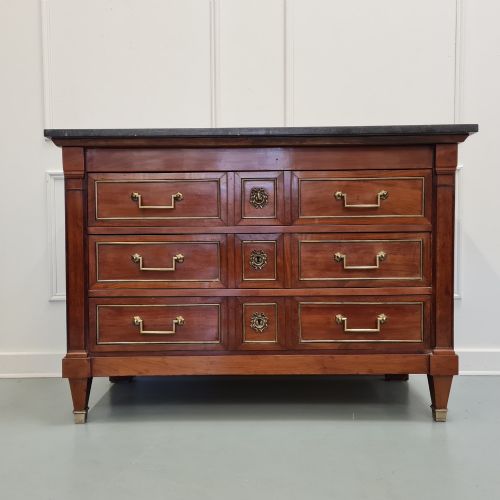
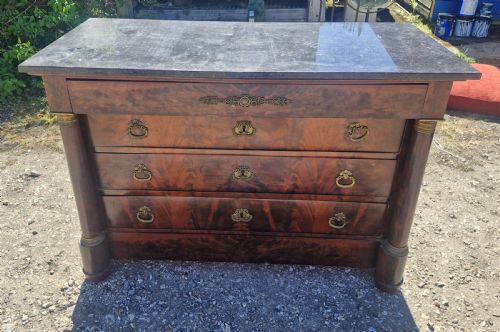


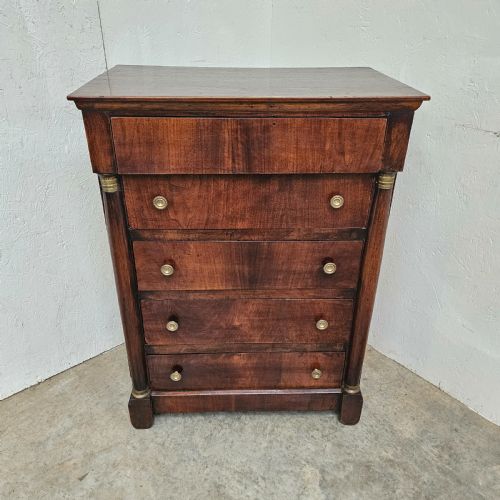


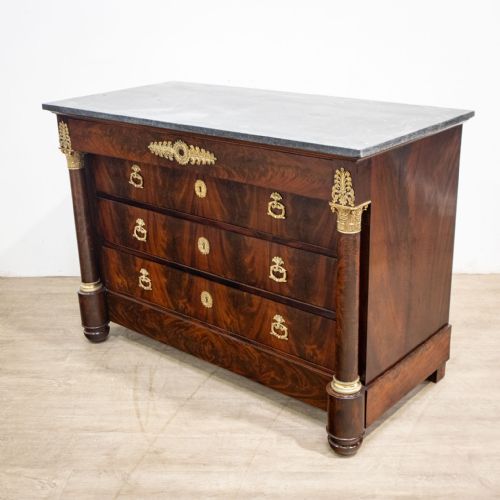

Mahogany Empire Commode
A mahogany empire commode brings architectural dignity and deep wood tones to a room, offering generous storage topped with cool stone.
Mahogany Empire Commode
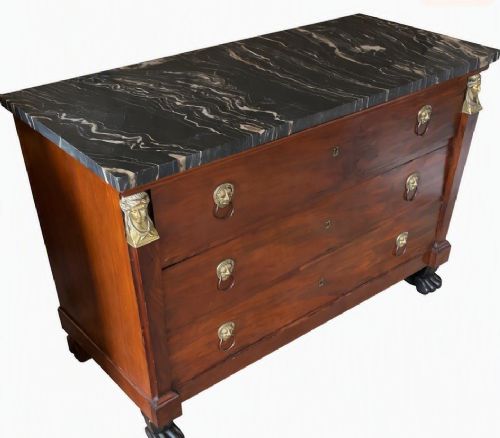
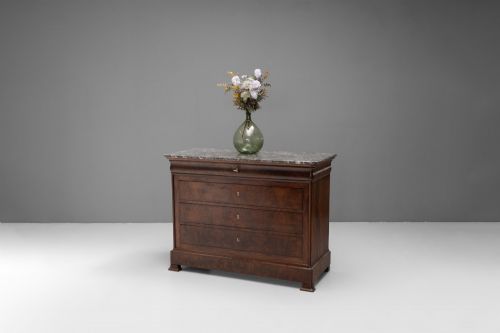
When you search for a mahogany empire commode, you encounter substantial case pieces designed primarily during the nineteenth century, including French Empire, Dutch Empire, and Swedish Biedermeier variants. These items function as formal chests of drawers or side cabinets, often paired with marble tops.
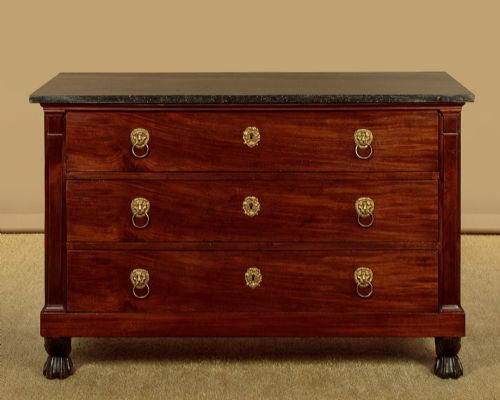
The version you are most likely to meet on this page is the nineteenth-century French Empire commode, typically constructed with deep mahogany veneers and rectangular proportions. Alongside these standard chests, the selection includes related forms such as dressing chests, sideboards, and secretaire commodes.
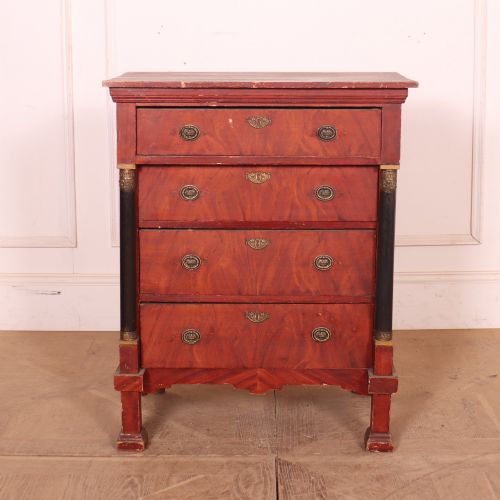
Regional styles introduce subtle variations in form, ranging from French monumental designs to neat Dutch marquetry pieces and Italian parcel gilt cabinets. Empire revival pieces from later decades also appear, echoing the earlier classical lines.
Materials and construction methods
Cabinet makers utilised solid mahogany and rich mahogany veneers, frequently selecting flame mahogany or plum pudding figures to create striking visual patterns across the drawer fronts. This timber provides a dark, warm foundation for the architectural silhouettes characteristic of the period.
Heavy mounts in cast ormolu and brass accent the corners, keyhole escutcheons, and drawer pulls, introducing sharp contrast against the polished wood surfaces. Heavy marble slabs, including fossilised Belgian marble, complete the tops of these substantial storage units.
Materials recorded across the inventory include solid mahogany, mahogany veneer, ebonised wood, giltwood, glass, brass, marble, and ormolu.
Separating the ordinary from the exceptional
The standard of a piece rests heavily on the selection of timber veneers and how seamlessly grain patterns match across the drawer tiers. Exceptional examples display highly figured flame or plum pudding mahogany that commands visual attention without interruption.
Finishing details on the metal mounts define the upper tier of quality, distinguishing crisp, fire-gilded ormolu castings from simpler brass work. The integration of thick, unblemished marble tops further separates standard production pieces from finer workshop outputs.
The Mahogany Empire Commode Glossary
- Commode
- A low chest of drawers or cabinet originating in France, designed for domestic storage and display. These pieces usually stand at waist height and feature multiple deep drawers.
- Ormolu
- Gilded bronze mounts applied to furniture edges and mounts, adding metallic lustre to the design. This technique was widely employed during the Empire period to highlight structural lines.
- Marquetry
- The art of applying pieces of veneer to a structure to form decorative patterns and pictures. Dutch and Italian makers utilised this method extensively on cabinet surfaces.
- Veneer
- A thin layer of superior wood adhered to a secondary timber base to create decorative exterior surfaces. Flame and plum pudding varieties provide the distinctive figuring seen on these pieces.
Mahogany Empire Commode: Frequently Asked Questions
How do I style a mahogany empire commode?
Position the piece against a plain wall in a hallway, bedroom, or living room to let its architectural lines stand out. Avoid overcrowding the heavy marble top with small objects.
Place a single large mirror or a piece of art above the commode to balance its substantial visual weight. Keep decorative items on the surface restrained and purposeful.
What is the difference between Empire and Biedermeier commodes?
French Empire pieces rely on classical symmetry, dark mahogany, and prominent ormolu mounts to project imperial grandeur. They often feature austere columns and polished stone surfaces.
Swedish Biedermeier commodes soften these monumental forms with lighter wood tones and more domestic, streamlined profiles. They emphasise warm wood grains rather than heavy metallic ornamentation.
Are these commodes practical for daily storage?
The deep drawers provide substantial capacity for linens, clothing, or tableware in a modern home. Their sturdy construction ensures they withstand routine opening and closing.
Because the surfaces are finished with polished wood or delicate marble, use coasters and mats to prevent moisture rings. Regular dusting keeps the mahogany and metal mounts in good condition.
How can I identify a nineteenth-century piece?
Examine the construction methods inside the drawer boxes and the backboards for hand-cut joints and timber ageing. Nineteenth-century pieces typically employ dense mahogany framing alongside traditional joinery.
Compare the proportions and mount styles against documented examples from the Regency and Second Empire periods. The presence of fossilised marble and fire-gilded bronze points directly to manufacturing standards of that era.