

Mahogany Drawers on Legs
Mahogany drawers on legs bring practical storage and rich timber warmth to any room through centuries of refined design.
Mahogany Drawers on Legs
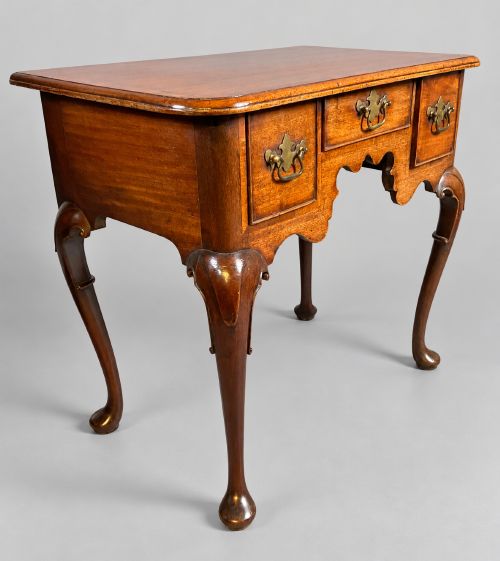
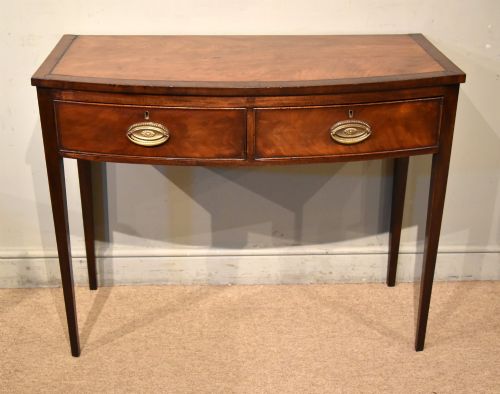
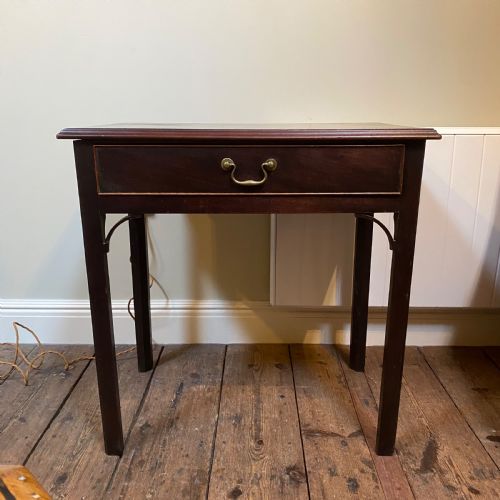
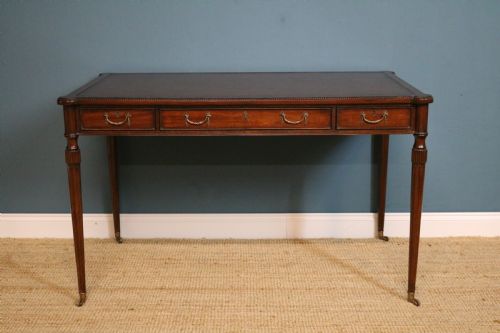
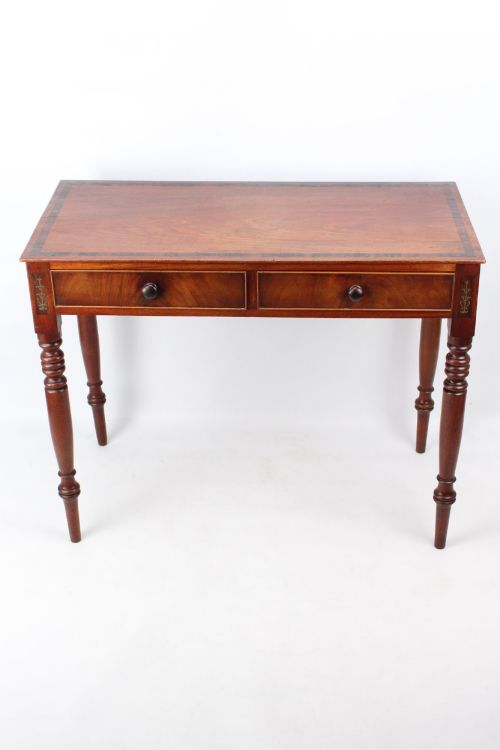
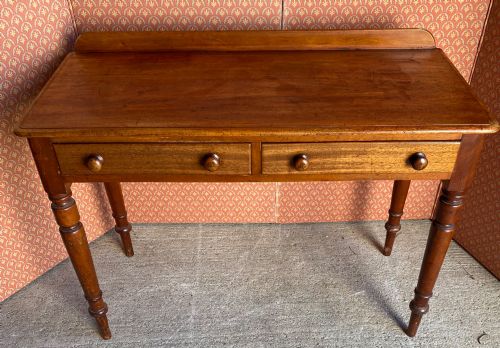
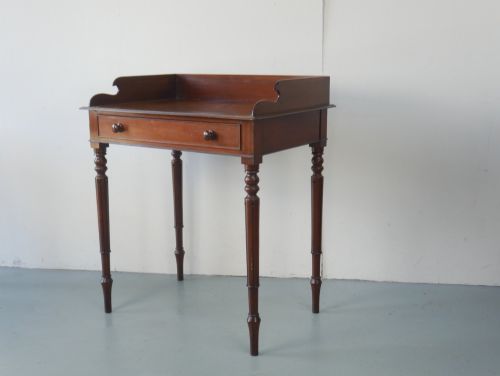
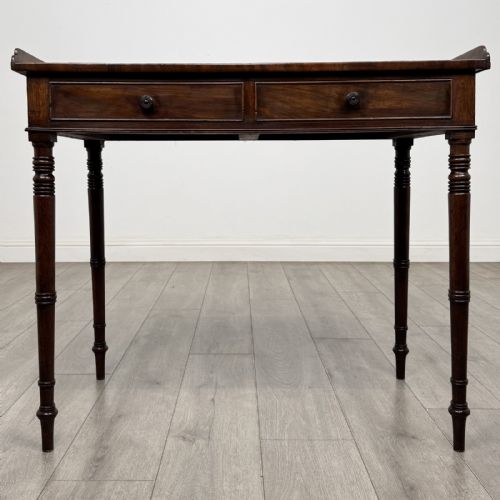
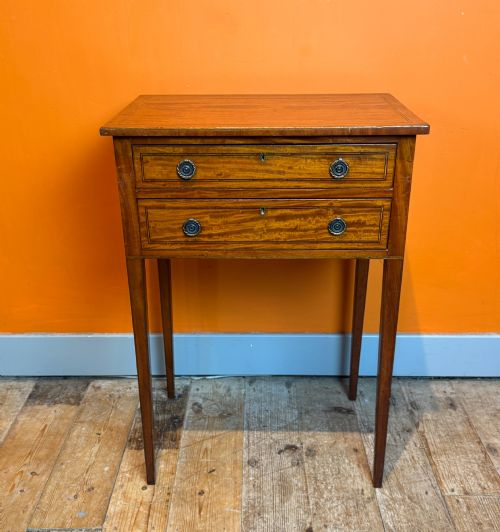
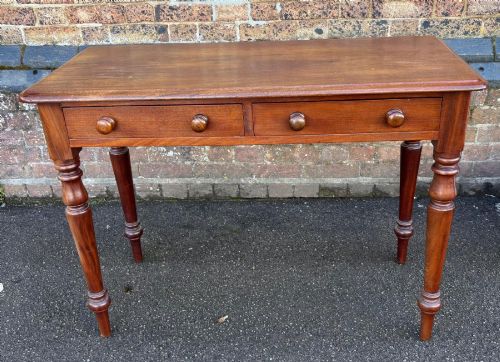
When you search for mahogany drawers on legs, you encounter a wide variety of furniture types spanning the Georgian, Regency, Victorian, and Edwardian eras. These pieces range from compact side tables and lowboys to writing desks, dressing tables, and chests of drawers raised on legs or stands.
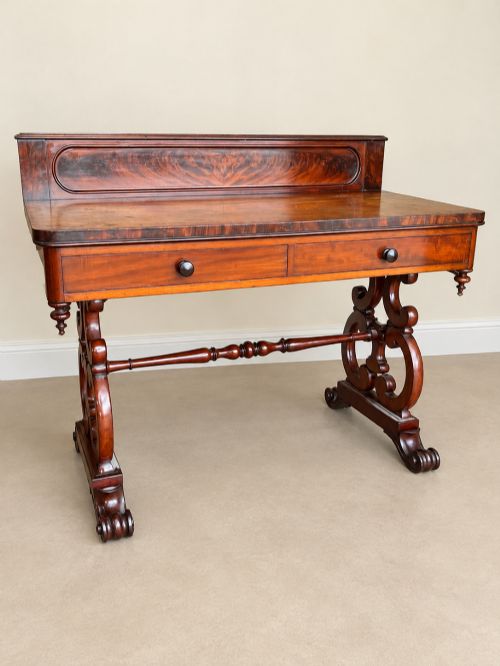
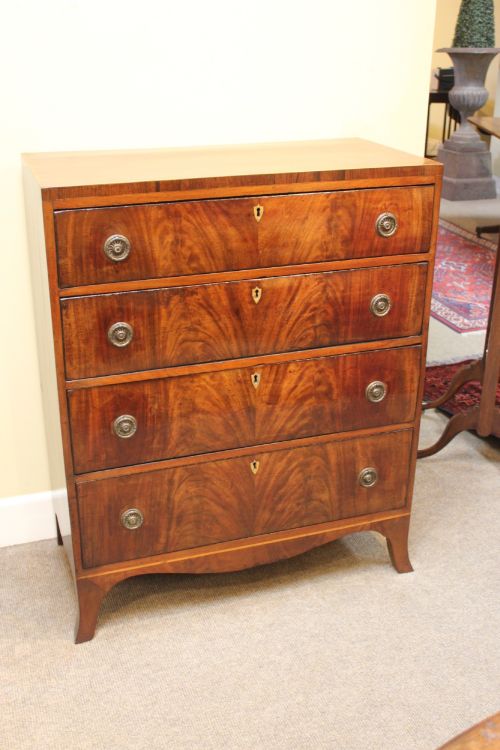
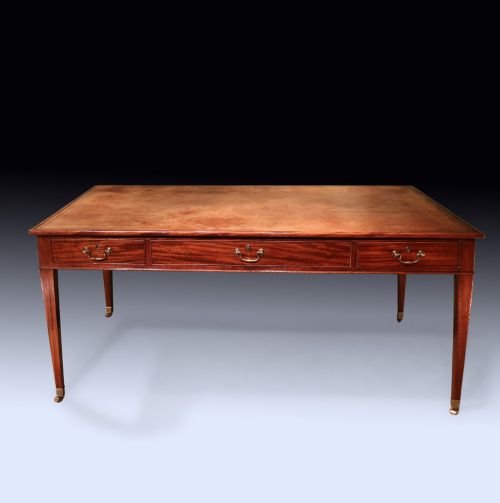
The most common items on this page are writing tables and side tables featuring fitted drawers, alongside chests of drawers raised on cabriole or tapered legs. Surviving examples date from the early eighteenth century through to the early twentieth century, showing shifting tastes in domestic storage and writing furniture.
Makers and workshops produced these forms in numerous regional styles, incorporating drop leaves, raised galleries, or shaped serpentine fronts. Every piece unites timber framework with functional compartments supported clear of the floor.
Materials and construction methods
Makers relied primarily on solid and veneered mahogany, often pairing the main timber with secondary woods for drawer linings and internal framing. Brass handles, escutcheons, and castors appeared frequently across Georgian and Victorian examples.
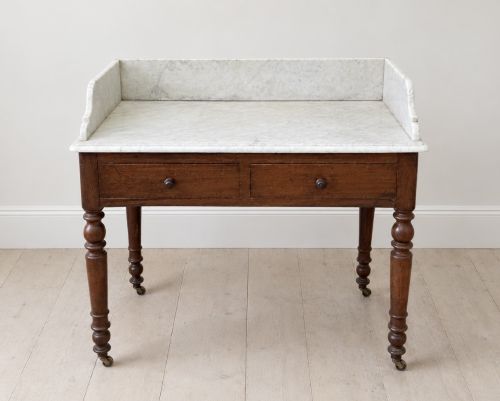
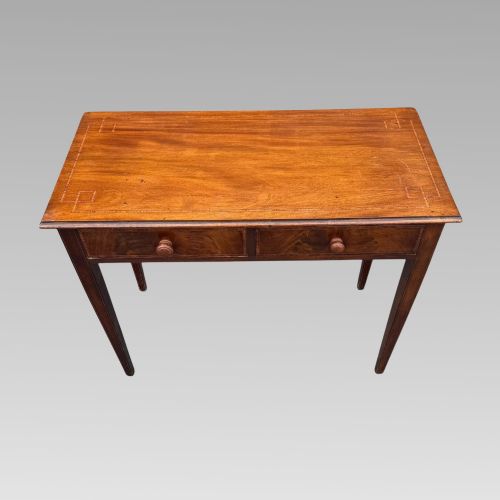
Craftsmen utilised decorative elements such as boxwood and satinwood inlay to accent drawer fronts and table edges on pieces from the nineteenth and twentieth centuries. Some specialised tables integrated leather writing surfaces or marble tops into the mahogany framework.
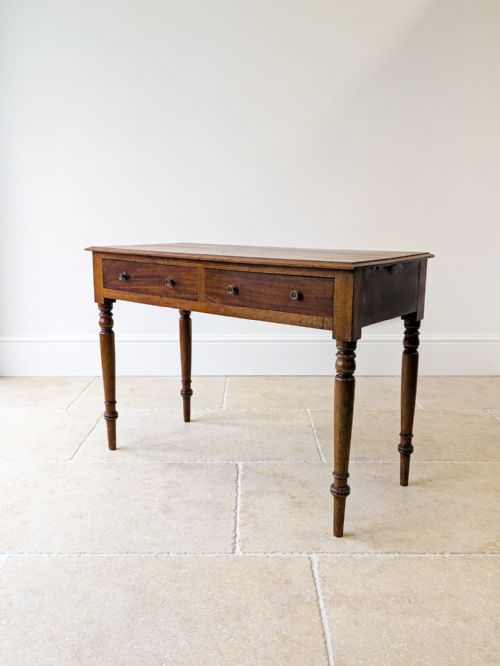
Joinery techniques included hand-cut dovetails for drawer construction and sturdy mortise and tenon joints for the legs and underframes. Cabinetmakers shaped legs into tapering square forms, slender cabriole profiles, or turned supports depending on the prevailing style.
Mahogany Drawers on Legs Retail Price Guide 2026
Typical asking prices for mahogany drawers on legs among the pieces listed under this phrase on Sellingantiques today, from the lower quarter to the upper quarter. They describe what is for sale here now, not the wider market.
Listings feature mahogany drawers on legs spanning the Georgian, Regency, Victorian, and Edwardian periods, utilising satinwood, boxwood, and brass.
Distinctions in craftsmanship and materials
The grading of these pieces depends upon the selection of timber figures, where heavily figured or book-matched mahogany veneers distinguish superior chests and tables from plain stock. Finer items exhibit precise matching of grain patterns across multiple drawer fronts and tabletops.
Construction detail reveals the hand of the master cabinetmaker through tightly fitted drawer sides, clean dovetailing, and original brass hardware. Subtly shaped serpentine fronts and delicate stringing demand higher skill than standard flat-fronted carcases.
Proportion and structural integrity define the most desirable examples, ensuring that legs and stands bear the weight of the drawers with elegance and balance. Retaining original surfaces, patination, and secondary woods preserves the historical integrity that collectors value.
W. Walker and Sons London·Heal and Son
The Mahogany Drawers on Legs Glossary
- Lowboy
- A small oak or mahogany side table with one or more rows of drawers, standing on four legs and popular during the eighteenth century.
- Pembroke table
- A small, rectangular table with hinged drop leaves on either side, often featuring a single drawer and tapering legs.
- Serpentine
- A curved front or edge shaped in a concave-convex-concave wave, demanding high skill in cabinetmaking.
- Gallery
- A raised wooden or brass railing fitted around the top edge of a table, desk, or cabinet to prevent items from sliding off.
- Dovetail
- A joint formed by interlocking wedge-shaped fingers, used extensively to join drawer sides securely without metal fasteners.
- Satinwood
- A pale, yellow-brown exotic timber utilised primarily for contrasting inlay, banding, and stringing on mahogany furniture.
Mahogany Drawers on Legs: Frequently Asked Questions
What is a lowboy table?
A lowboy is a small table featuring one or more rows of drawers raised on four legs, commonly used as a dressing or side table in eighteenth-century homes.
These compact items offer subtle surface space and concealed storage without dominating a room.
How do I identify a Georgian piece?
Georgian furniture often displays rich mahogany timber, restrained proportions, and fine details like hand-cut dovetails and brass drop handles.
Look for architectural influences and tapered or cabriole leg forms that characterise eighteenth-century cabinetmaking.
Where were writing tables placed?
Writing tables stood in libraries, drawing rooms, and home offices to serve correspondence and administrative tasks.
Freestanding versions were designed to sit away from walls, displaying finished mahogany backs and detailing on all sides.