

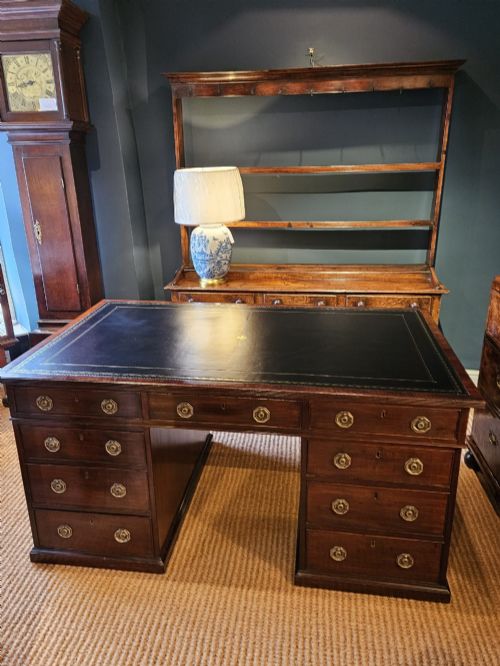
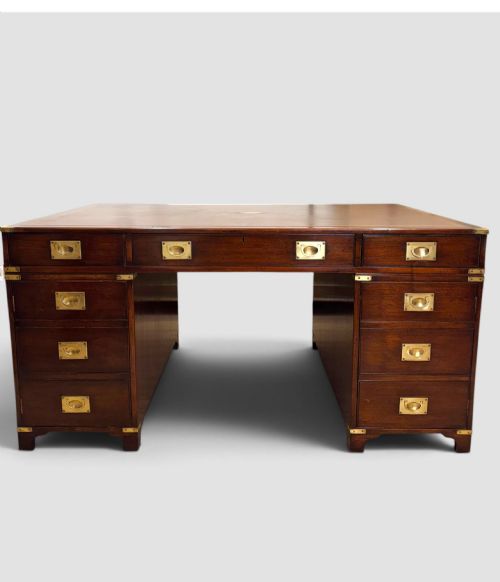
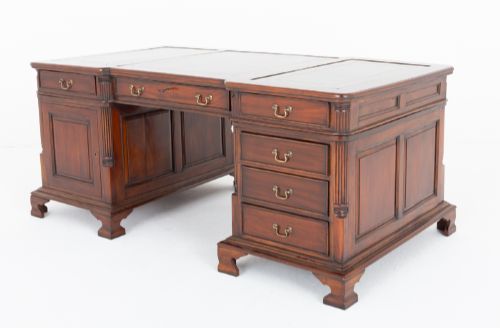
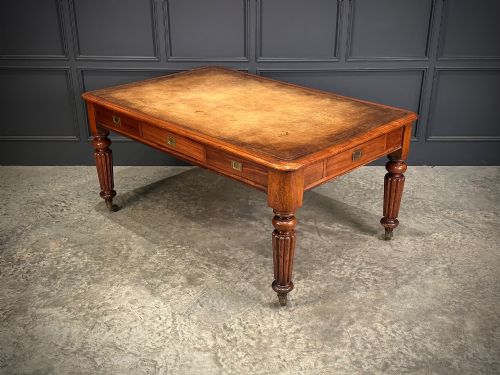


Mahogany Double Pedestal Desk
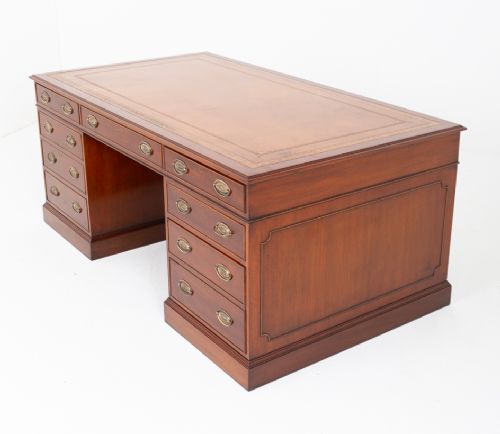
A mahogany double pedestal desk provides two working sides and ample drawer space, making it a functional centrepiece for a study.
Mahogany Double Pedestal Desk
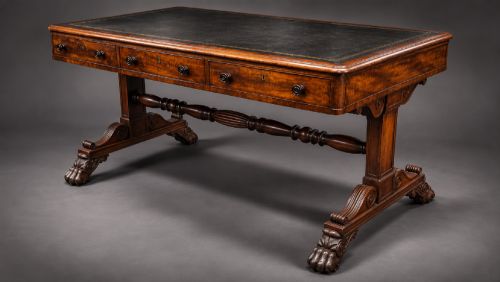
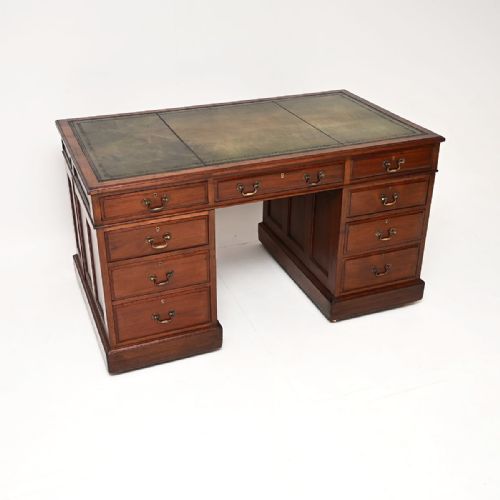
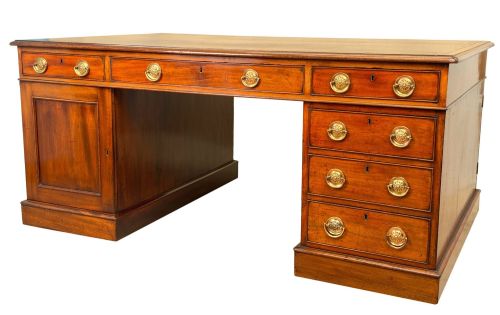
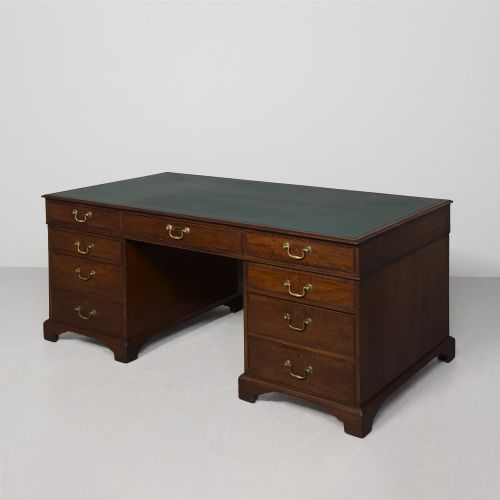
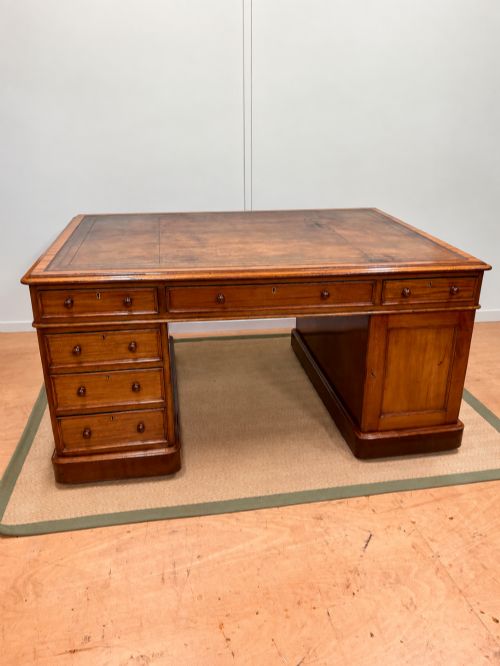
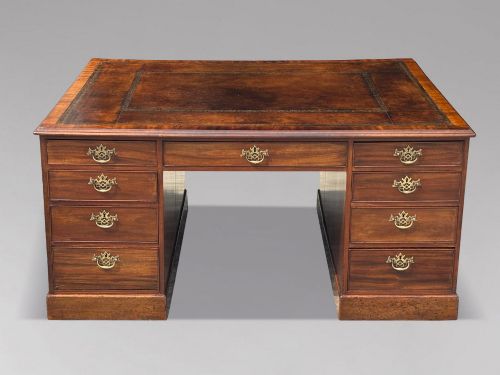
A mahogany double pedestal desk is built with two supporting banks of drawers that hold a large working surface, often designated as a partners desk. These pieces emerge predominantly in the nineteenth century, with Victorian examples appearing frequently alongside earlier Georgian forms.
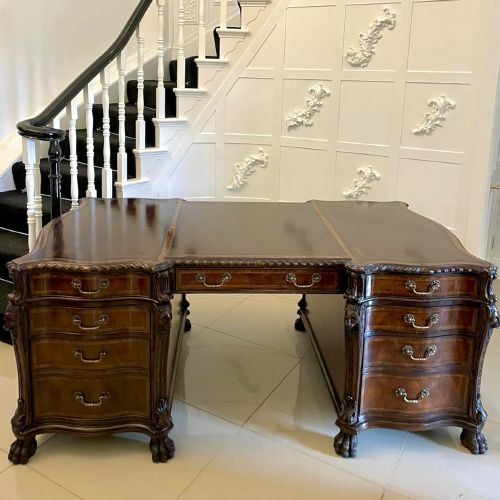
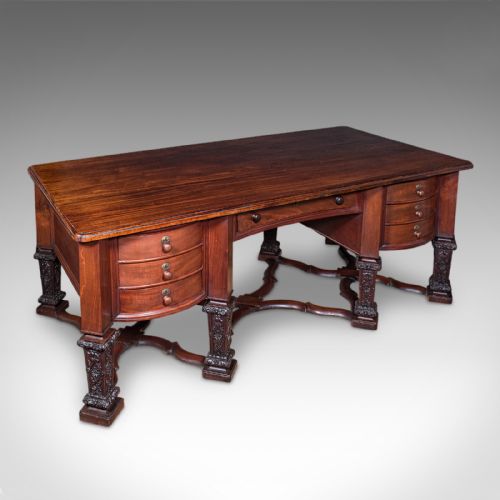
The layout generally comprises a top section with inset leather writing surfaces sitting upon twin pedestals fitted with multiple drawers. Variations span from standard pedestal formats to large serpentine partners desks designed for two users sitting opposite one another.
Materials and construction
Cabinet makers utilised solid mahogany and figured veneers such as flame mahogany or curl mahogany over secondary woods. Tops frequently incorporate tooled leather writing surfaces complemented by brass hardware.
Pedestals were constructed as separate modules to support the heavy timber top and numerous internal drawers. Carved details such as lion heads or fretted galleries appear on specific revival pieces.
Mahogany Double Pedestal Desk Retail Price Guide 2026
Typical asking prices for mahogany double pedestal desk among the pieces listed under this phrase on Sellingantiques today, from the lower quarter to the upper quarter. They describe what is for sale here now, not the wider market.
Some country house desks feature numbered drawers, ensuring documents stayed strictly in their designated slot.
Factors affecting quality
The choice of timber grain determines visual appeal, with figured and flame mahogany veneers sitting above plain timber surfaces. Finely executed carvings and original brass fittings indicate higher workshop standards.
Proportion and structural integrity separate standard utility pieces from grander country house examples. The number of drawers and the presence of fully finished back panels for dual use affect the stature of the desk.
James Shoolbred·Holland and Sons·Gillows
The Mahogany Double Pedestal Desk Glossary
- Partners desk
- A large double pedestal desk designed with drawers and cupboards on both sides so two people can work facing each other.
- Flame mahogany
- A veneer cut from timber fork joints that produces a distinctive flame-like pattern across the surface of the wood.
- Pedestal
- A structural support column containing banks of drawers that holds up one side of the desktop.
- Serpentine
- A curved desk front featuring a central concave section flanked by convex ends, or vice versa.
- Kneehole
- The central recess beneath the desk top that provides space for the user's legs when seated.
Mahogany Double Pedestal Desk: Frequently Asked Questions
What is a partners desk?
A partners desk is a large double pedestal writing table built with drawers and storage cupboards accessible from both sides. This layout allows two people to sit opposite each other and work simultaneously.
These pieces typically date from the Georgian and Victorian periods, often found in libraries and large estate offices where administrators shared a workspace.
How do I care for a leather desk top?
To maintain a tooled leather writing surface, keep it away from direct sunlight and excessive heat sources that dry out the hide. Gentle dusting and occasional specialist leather balm applications help preserve the material.
Avoid using household cleaning sprays or excessive water, which can damage both the leather and the surrounding mahogany timber.
Are all these desks double sided?
While many examples on this page are partners desks with drawers on both sides, single-sided pedestal desks also appear within the selection. Checking the description confirms whether storage is accessible from the front only.
Single-sided versions are typically placed against a wall, whereas true partners desks are meant to stand free in the middle of a room.
How can I date a mahogany desk?
Dating relies on examining the construction methods, timber choice, and stylistic details such as brass handles and leg shapes. Georgian pieces often display simpler architectural lines, while Victorian examples introduce heavier proportions and elaborate carving.
Secondary woods inside the drawer construction and the type of mahogany veneer provide further clues regarding the exact period of manufacture.