


Mahogany Dining Seats
Mahogany dining seats bring enduring British craftsmanship to the table, offering sturdy frames and rich timber tones for everyday dining.
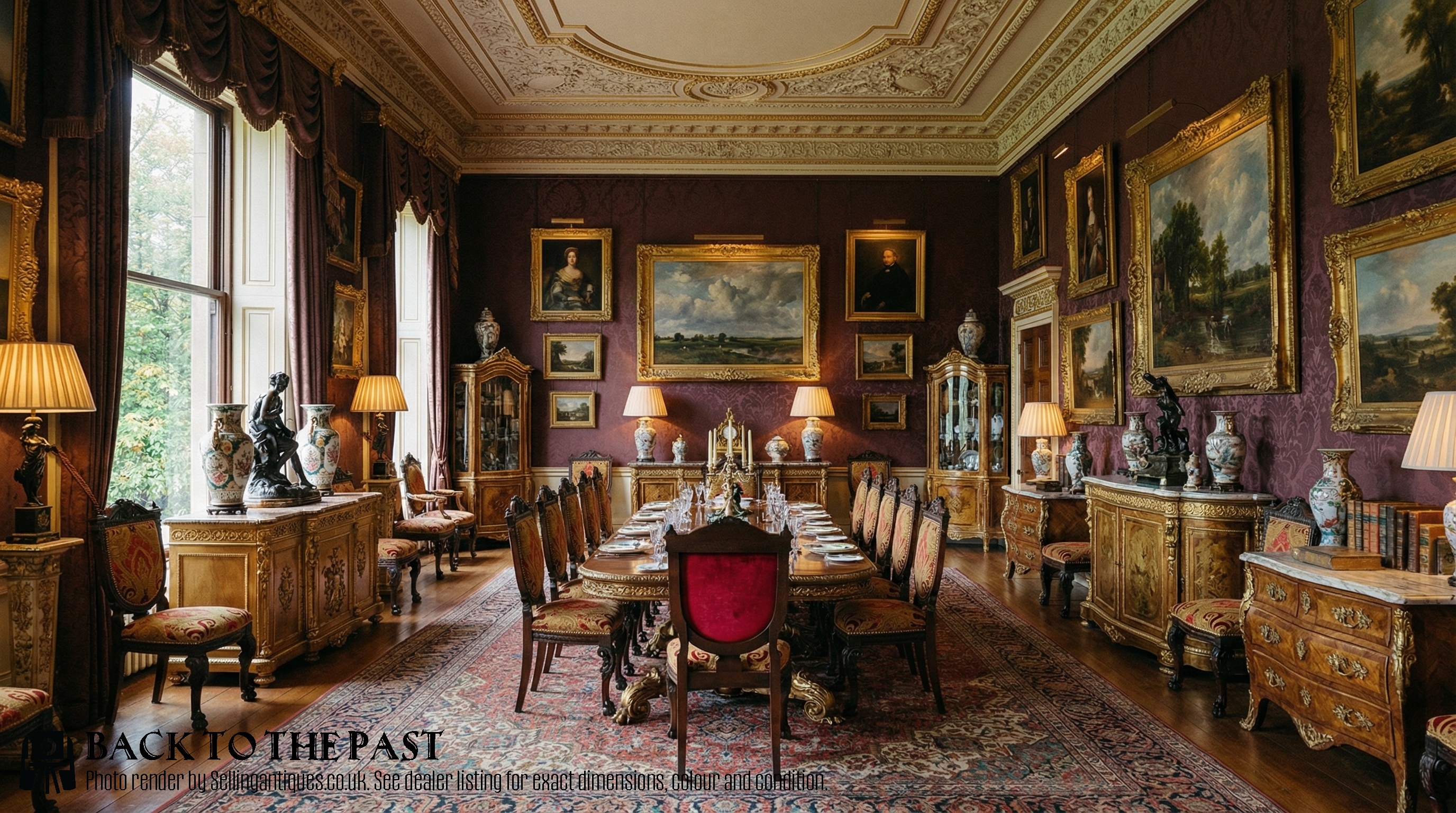
Mahogany Dining Seats
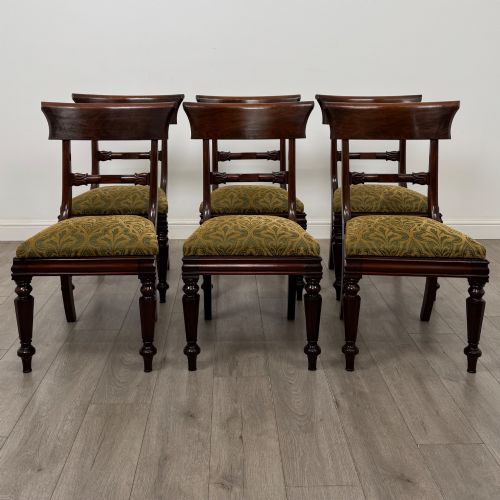
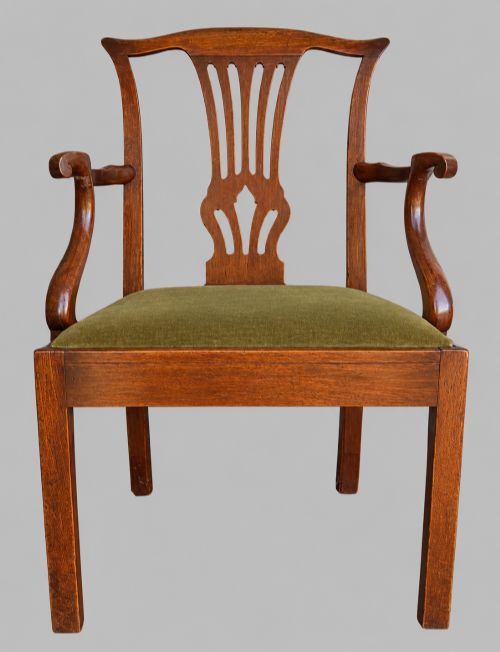
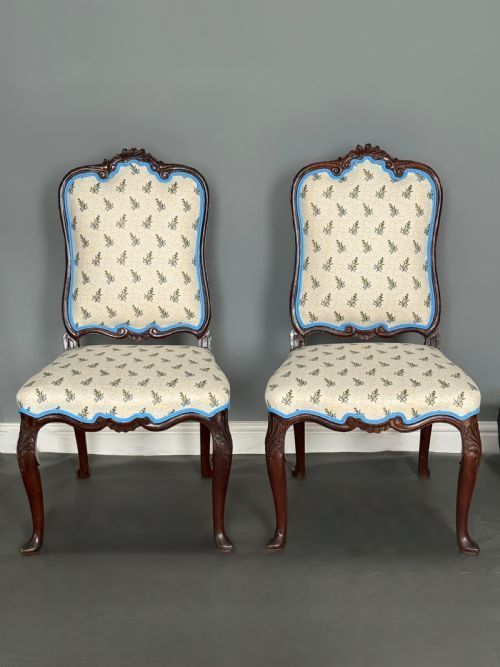
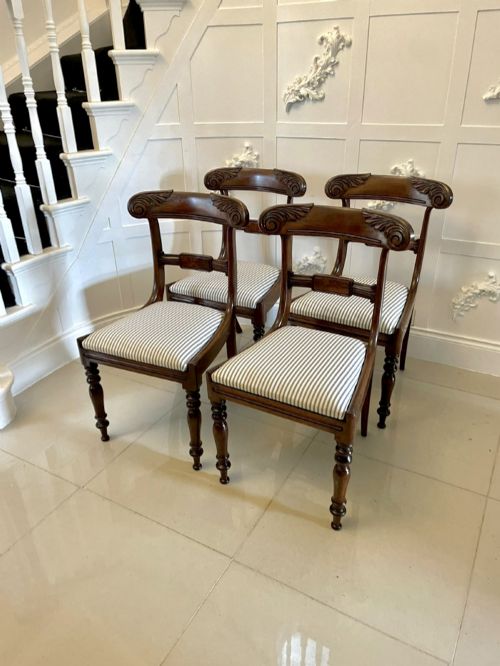
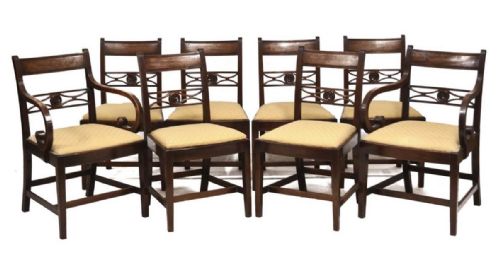
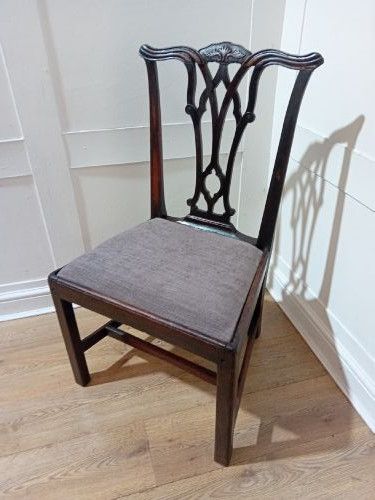
Originating predominantly from the Georgian, Victorian, and Edwardian periods, these timber seats incorporate historical design influences like Chippendale, Sheraton, and Regency styles. Alongside individual chairs, the category occasionally encompasses related furnishings such as extending dining tables and hall chairs.
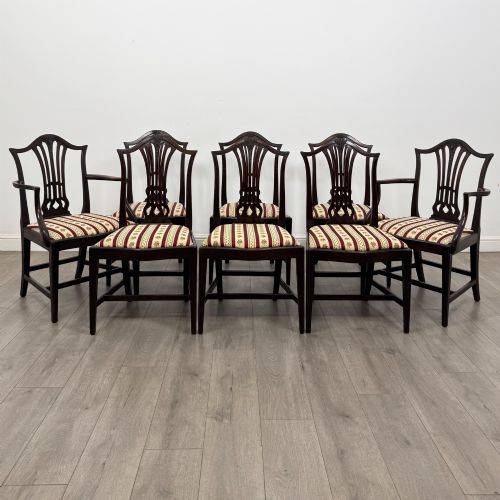
The inventory bridges centuries of woodworking tradition, running from eighteenth-century origins through nineteenth-century revivals. Buyers find both single carver armchairs and large sets suited for historic or contemporary dining spaces.
How they were made
Cabinet makers utilised dense, durable mahogany timbers, frequently selected for rich grain patterns including flame mahogany figures. Workshops shaped these hardwoods using traditional joinery methods to build stable chair frames capable of withstanding daily use.
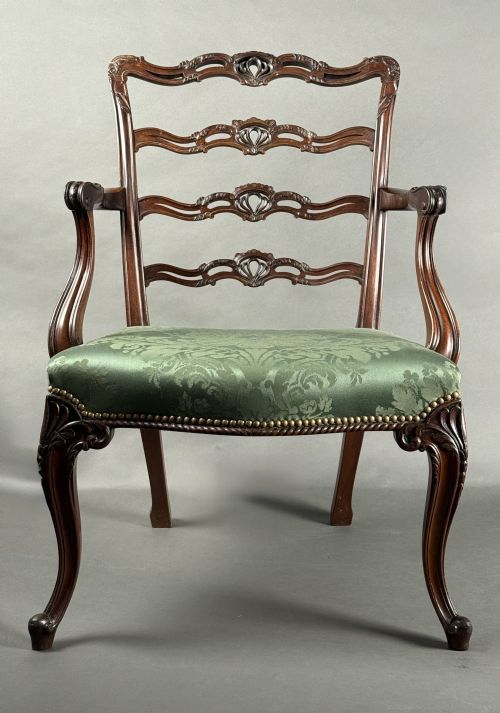
Upholstery techniques applied to these seats incorporated materials like leather, horsehair stuffing, velvet, and woven cane inserts. Artisans embellished select pieces with brass inlay, carved ladderbacks, or shield back designs.
Construction methods evolved across periods, moving from eighteenth-century hand-carving to nineteenth-century production techniques while maintaining structural integrity through mortise and tenon joints.
Mahogany Dining Seats Retail Price Guide 2026
Typical asking prices for mahogany dining seats among the pieces listed under this phrase on Sellingantiques today, from the lower quarter to the upper quarter. They describe what is for sale here now, not the wider market.
Some nineteenth-century diners enjoyed their meals perched upon cane-bottomed seats with built-in brass highlights.
What varies in quality
The calibre of timber selection dictates much of the value, with dense Cuban mahogany and figured grain commanding greater appreciation than plain stock. Carving precision separates standard production from exhibition pieces, where crisp details on splats and legs show master craftsmanship.
Originality of components and upholstery foundations influence the standing of any set. Matched sets featuring both armchairs and single chairs retain higher integrity than assembled groups collected over time.
Structural stability depends upon the tightness of original joints and the preservation of the timber substrate. Pieces retaining untouched patination score differently from heavily restored examples.
Warings·Gillows·Maple And Co
The Mahogany Dining Seats Glossary
- Carver
- An armchair, usually larger with elbow supports, designed for the head of a dining table.
- Shield Back
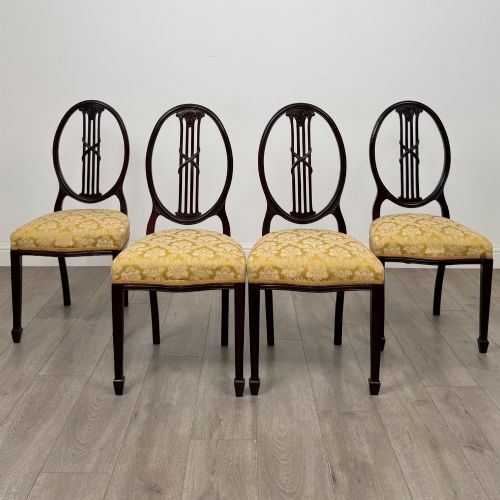
- A chair back shaped like a heraldic shield, popularised during the Georgian era.
- Bar Back
- A horizontal wooden splat shaped like a curved bar across the upper back of a dining chair.
- Sabre Leg
- A chair leg curved outward in a concave sweep resembling a cavalry sabre, common in the Regency period.
- Cane
- Woven rattan material utilised for lightweight, flexible seat inserts within wooden frames.
Mahogany Dining Seats: Frequently Asked Questions
How many chairs come in a typical set?
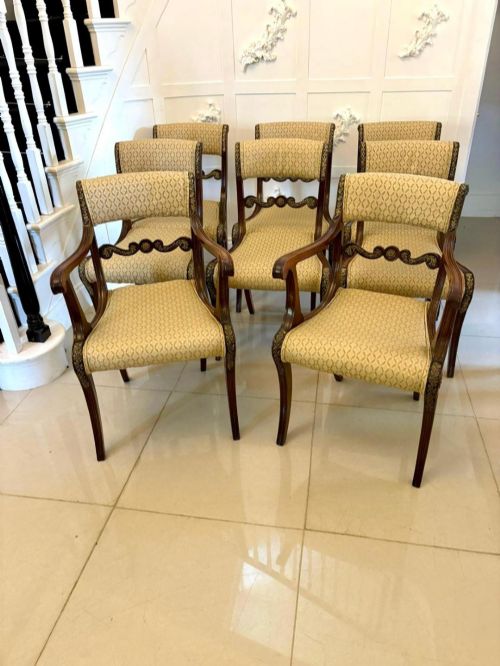
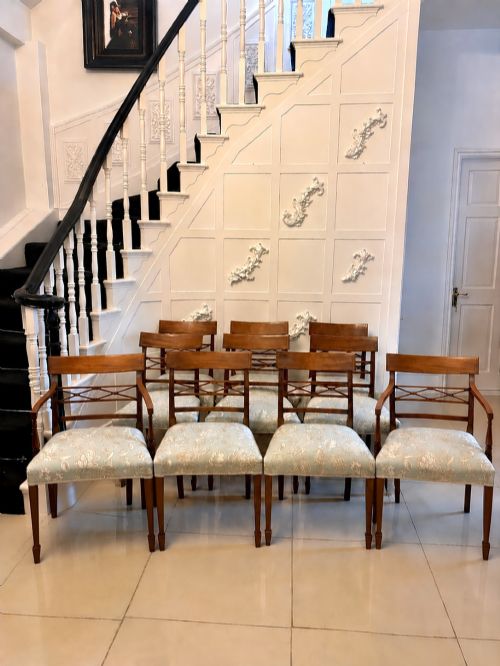
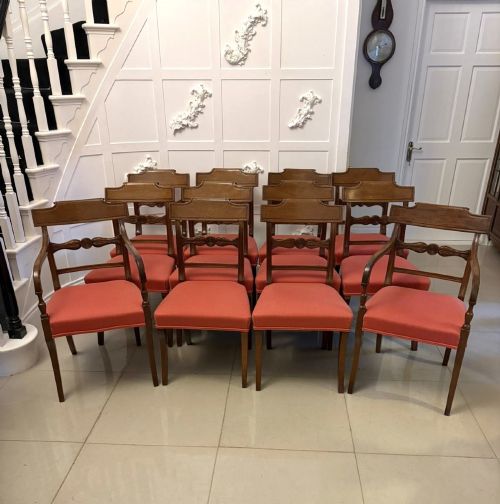
Sets vary widely from small groups of four up to grand collections of twelve or more pieces. Many large dining sets combine single side chairs with a pair of matching carver armchairs for the table ends.
Buyers should check individual listings to confirm the exact ratio of single chairs to carvers within any given set.
What is the difference between Georgian and Victorian chairs?
Georgian chairs, dating from the eighteenth and early nineteenth centuries, generally display lighter proportions and refined hand-carved details like Chippendale splats. Victorian examples from the mid-to-late nineteenth century often feature heavier frames and balloon back or bar back designs.
Cabinet makers in the Victorian era also produced numerous revival styles paying homage to earlier Georgian aesthetics.
Are these seats suitable for daily use?
Solid mahogany construction provides exceptional structural strength, making these antique chairs well-suited for regular dining room service. Careful attention to the joinery and seat upholstery ensures they withstand everyday seating demands.
Owners typically maintain them with appropriate timber balms and professional upholstery care to preserve their condition.
What upholstery materials are common?
Original and restored seats frequently utilise leather, woven cane, or various textile coverings including velvet and heavy upholstery fabrics. Button upholstery also appears on nineteenth-century padded seat pads.
Many antique chairs have been re-covered over time to suit modern domestic interiors while keeping historic frames intact.