




Red Upholstered Dining Seats
Red upholstered dining seats bring colour and substance to a table, spanning centuries of timber framing from walnut to rosewood.
Red Upholstered Dining Seats
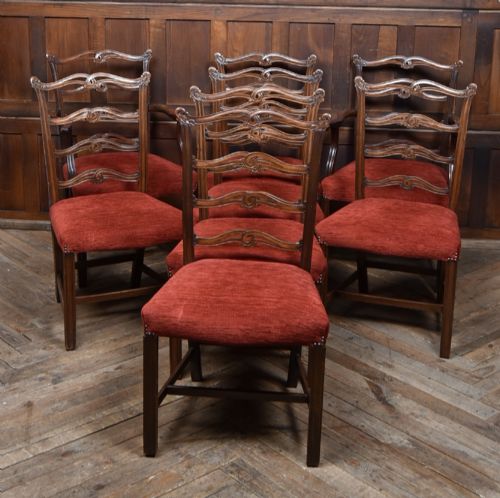
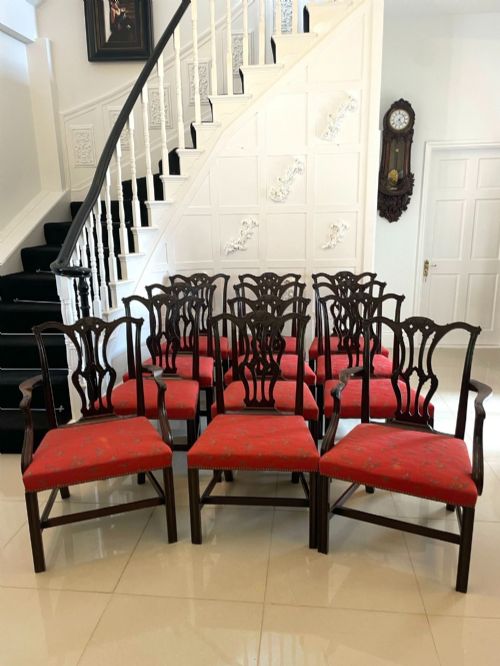
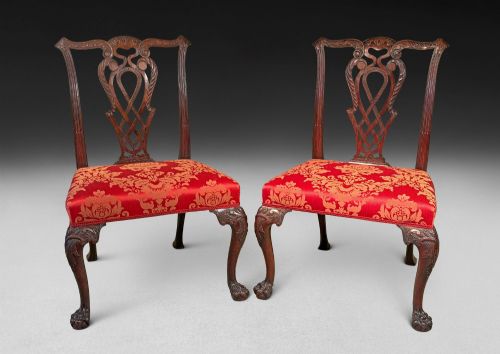
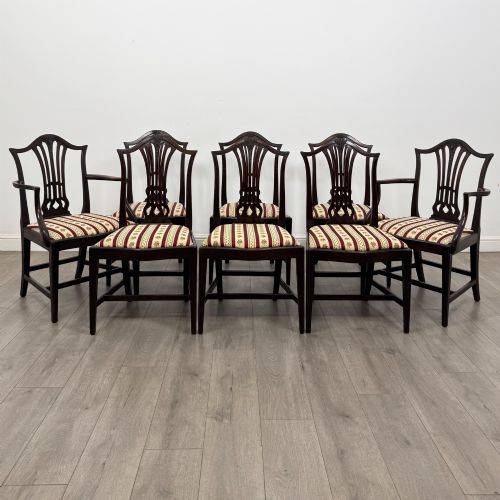
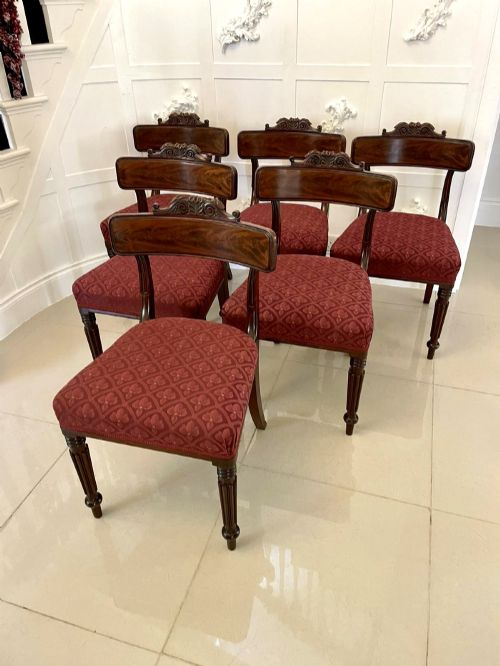
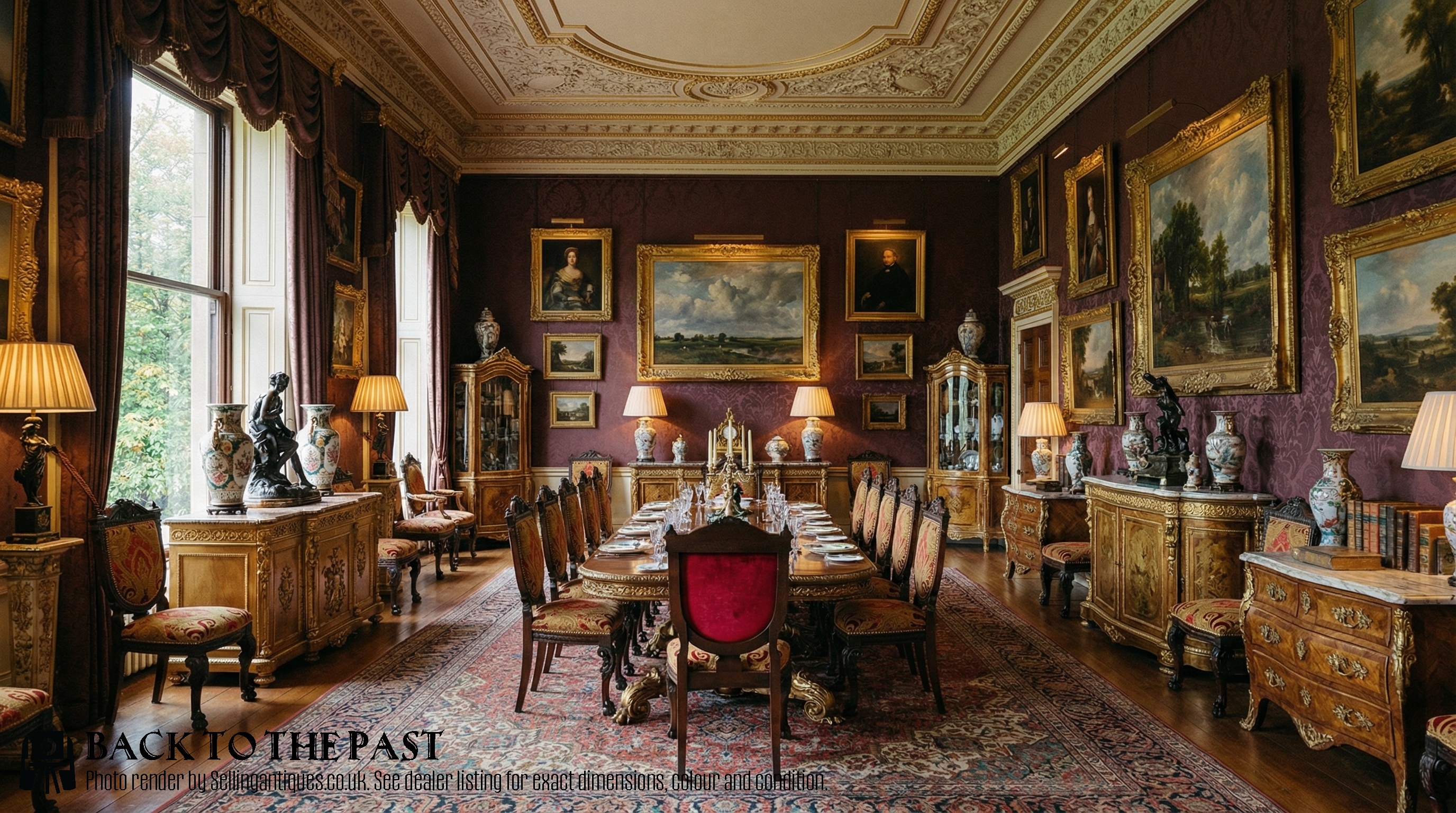
Red upholstered dining seats span several centuries of British and continental design, appearing as dining chairs, side chairs, and armchairs across periods from the seventeenth century through to the Edwardian era and the nineteen-twenties. Buyers searching this phrase encounter substantial timber frames paired with textile covers in various shades of red, supporting formal dining arrangements or single placement needs.
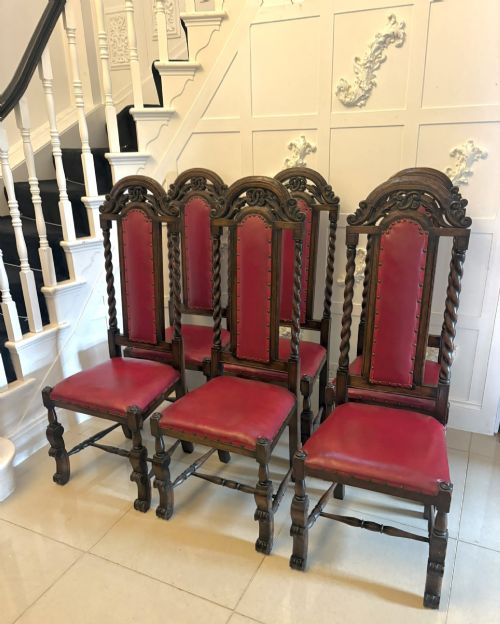
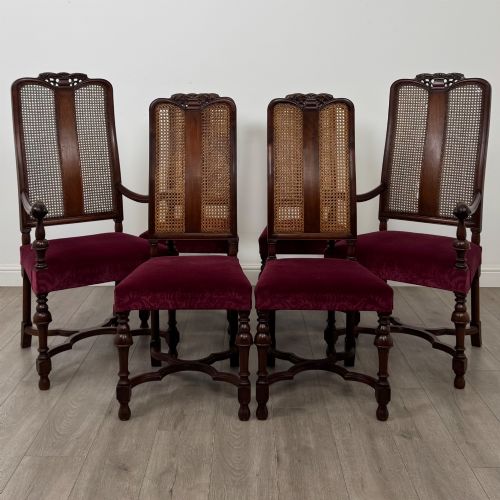
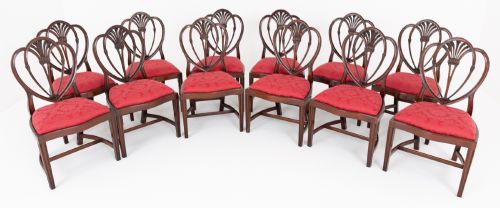
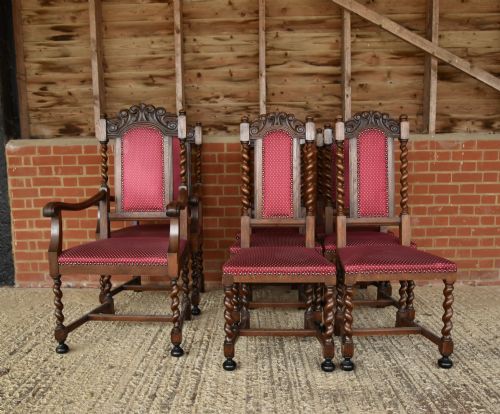
The most common iterations on this page are nineteenth-century Victorian and Edwardian sets constructed from mahogany, walnut, or oak, often following Georgian, Regency, or Chippendale revival patterns. These include shield-back, balloon-back, and bar-back configurations alongside barley-twist supports and cross-frame armchairs, reflecting domestic habits of the past two hundred years.
How they were made
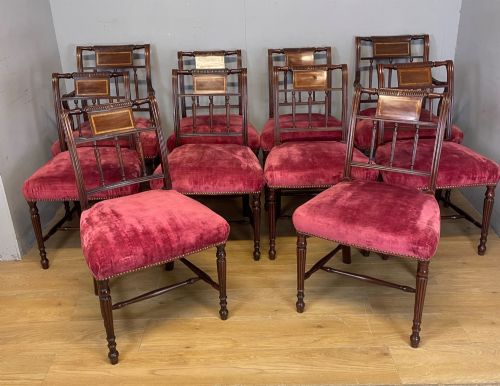
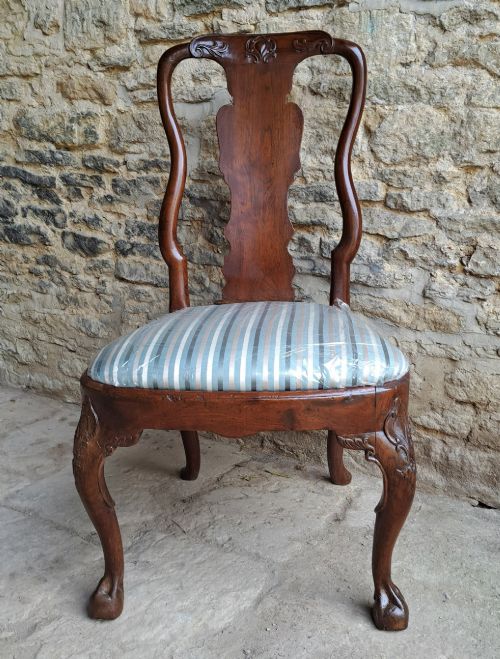
Makers shaped these frames from dense hardwoods such as mahogany, walnut, oak, and rosewood, frequently employing turned, reeded, or carved details on the legs and back splats. Brass inlay also appears on select Regency examples, integrating metalwork directly into the wooden structure.
Upholstery relies on fabric, velvet, textile, and tapestry coverings secured over padded seats, sometimes extending to button-tufted or overstuffed formats. These textiles are fastened to the underlying wooden framework using traditional tacking methods appropriate to each period.
Red Upholstered Dining Seats Retail Price Guide 2026
Typical asking prices for red upholstered dining seats among the pieces listed under this phrase on Sellingantiques today, from the lower quarter to the upper quarter. They describe what is for sale here now, not the wider market.
Mahogany and oak dominate the timber selections across these listings, accompanied by walnut and rosewood in select Victorian and Georgian examples.
What varies in quality
Construction integrity separates standard utility seating from high workshop production, observable in the tightness of the timber joints and the depth of hand-carving on the splats and stiles. Substantial framing timbers and robust joinery ensure the structural resilience of chairs subjected to regular dining use.
The refinement of the timber grain and the choice of covering material dictate the visual standing of each piece. Finely figured mahogany or rosewood paired with dense velvet or woven textile denotes a higher tier of historic manufacture.
Gillows·Holland And Sons
The Red Upholstered Dining Seats Glossary
- Balloon-back
- A rounded, oval-shaped chair back introduced during the Victorian period. The continuous curved wooden rail provides distinct ergonomic support.
- Barley-twist
- A decorative turning technique resembling a spiral rope. This woodwork pattern appears frequently on the legs and stretchers of seventeenth-century revival and later oak chairs.
- Overstuffed
- An upholstery style where the padding covers the wooden seat frame entirely. The textile is brought down to the lower edge, concealing the structural rails from view.
- Splat
- The vertical wooden strip positioned down the centre of a chair back. Makers shaped and pierced these elements to define specific stylistic periods like Chippendale or Hepplewhite.
Red Upholstered Dining Seats: Frequently Asked Questions
How do I date a dining chair?
Dating relies on identifying the prevailing timber species, tool marks left by manufacture, and specific stylistic traits such as shield backs or barley twists. Comparing the structural joinery to documented period examples clarifies the era of production.
Secondary indicators include the upholstery technique and the wear patterns on the foot surfaces. Combining these physical clues with historical design shifts establishes a reliable timeframe.
Are these chairs suitable for daily use?
Most antique wooden chairs are built from durable hardwoods like mahogany and oak, making them structurally capable of everyday seating. Checking the stability of the leg joints ensures they withstand regular dining routines.
Periodic maintenance of the wooden frame and careful handling preserve their integrity over time. Placing felt pads on the feet prevents undue friction against modern flooring.
Can upholstery be replaced?
Upholstery on antique chairs is regularly updated to suit modern interiors while protecting the underlying frame. Traditional materials can be matched or substituted depending on conservation priorities.
Working with sympathetic textiles maintains the historic character of the piece without compromising comfort. Professional re-webbing also restores proper tension to sagging seat foundations.