



Mahogany Dining Room Furniture
Mahogany dining room furniture brings together rich timbers and formal seating, offering the timeless utility of Georgian tables, Regency dumb waiters, and Victorian sideboards for hosting.
Mahogany Dining Room Furniture
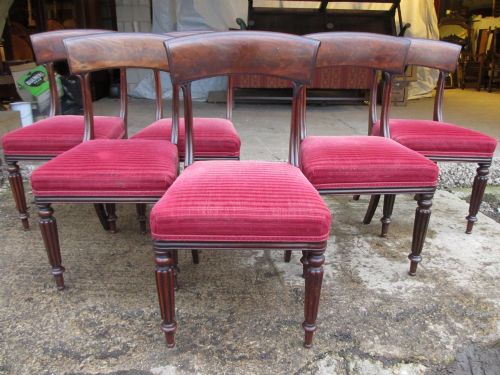
Mahogany dining room furniture encompasses the large tables, matching chair sets, sideboards, and serving pieces needed for a formal dining space. The items span the Georgian, Regency, William IV, Victorian, and Edwardian periods.
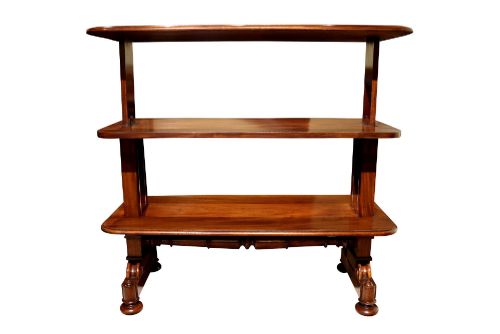
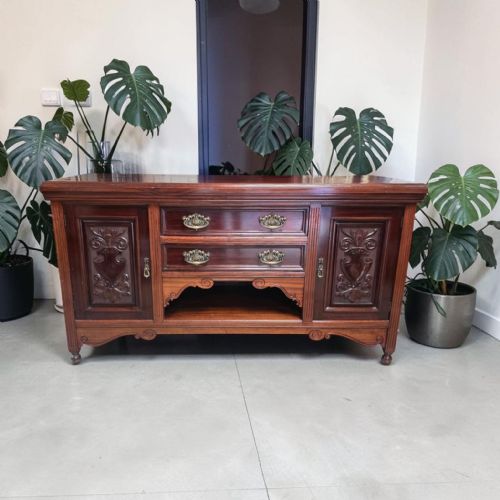
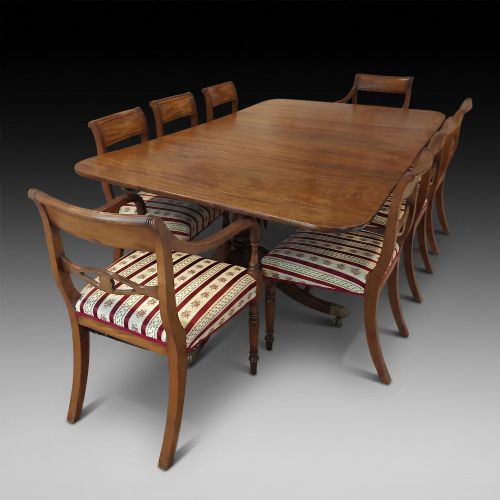
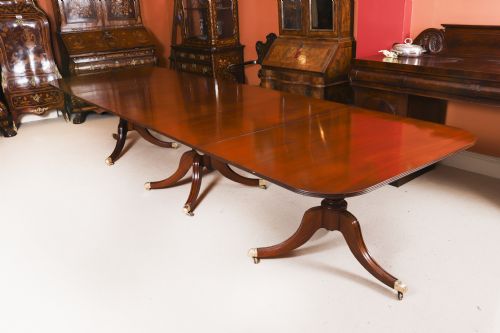
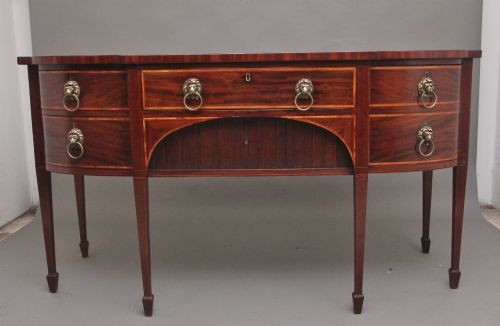
On this page, sideboards, dining chairs, and extendable dining tables form the core of the selection. Pieces such as cellarettes, wine coolers, and three-tier dumb waiters appear alongside them to complete the dining room interior.
How they were made
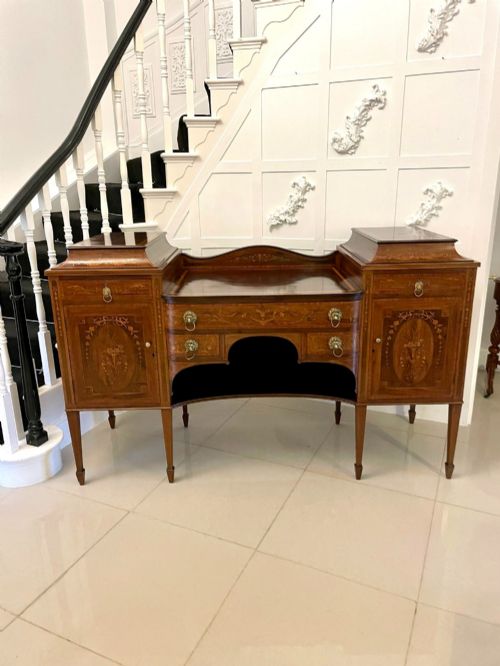
Makers utilised solid mahogany and rich veneers, often accented with contrasting boxwood, satinwood, and burr elm inlays. Brass hardware, leather upholstery, and glass panels frequently complete the construction of these tables and sideboards.
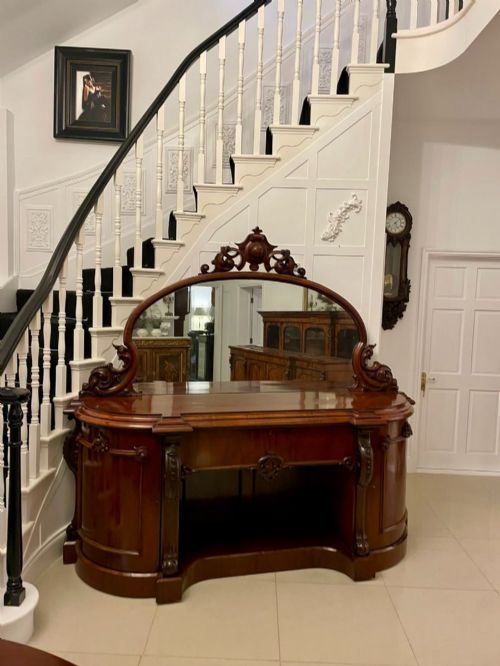
Cabinetmakers applied meticulous joinery and marquetry techniques to achieve the carved mirror backs, serpentine fronts, and pillar supports seen across the Georgian and Victorian eras.
Listings feature mahogany dining room pieces spanning the Georgian, Regency, William IV, Victorian, and Edwardian eras, constructed with brass, satinwood, and leather.
What varies in quality
The standard of timber selection and depth of natural grain figure set the finer examples apart from standard production. Rich fiddleback mahogany and crisply executed hand-carving indicate superior workshop output.
Attribution to documented firms or makers elevates a piece, as does the survival of original leather upholstery, brass fittings, and matching chair suites rather than assembled sets.
Hewetsons London·Maple and Co·M D Miller and Sons·Whytock and Reid·Holland and Sons·Mack Williams and Gibton
The Mahogany Dining Room Furniture Glossary
- Cellarette
- A lockable freestanding cabinet or bin designed to hold bottles of wine beneath the dining table or sideboard. These containers often feature lead lining and heavy brass carrying handles.
- Dumb waiter
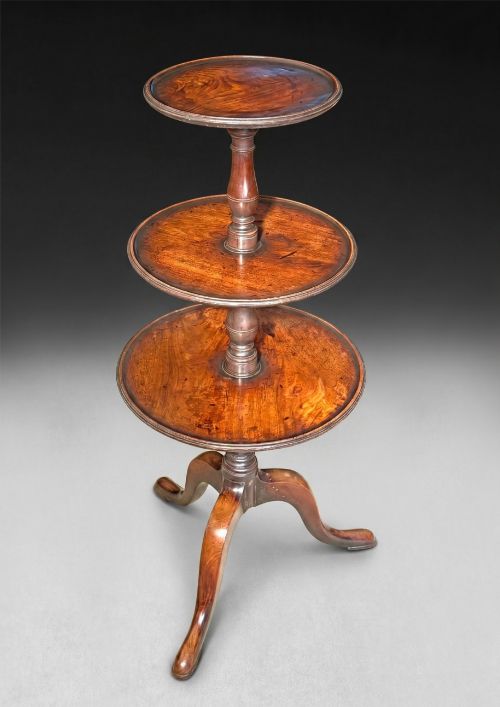
- A tiered revolving stand placed beside the dining table to hold dishes and wine without servant attendance. These pieces typically feature two or three circular graduating trays on a central pillar.
- Marquetry
- Decorative veneer work forming pictorial or geometric patterns using various coloured woods. Craftsmen applied these contrasting timbers to drawer fronts and sideboard surfaces.
- Serpentine
- A gently curved furniture front featuring a convex centre flanked by concave ends. This fluid shape required advanced woodworking skill to shape from solid mahogany.
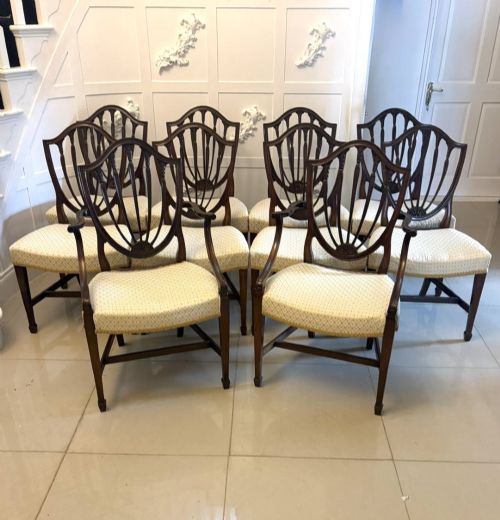
- Shield back
- A chair design featuring a backrest shaped like an upturned heraldic shield, popularised in the late eighteenth century. Carved wheatears or drapery often decorate the internal splats.
Mahogany Dining Room Furniture: Frequently Asked Questions
How do I care for mahogany surfaces?
Keep wooden surfaces away from direct sunlight and heat sources to prevent the timber from drying out or fading.
Apply natural beeswax periodically and buff gently with a soft cloth to maintain a deep, protective shine.
Were dining chairs sold in sets originally?
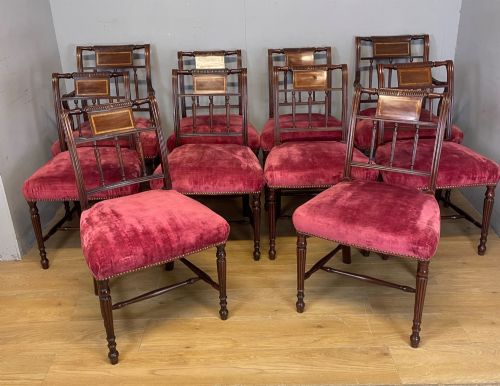
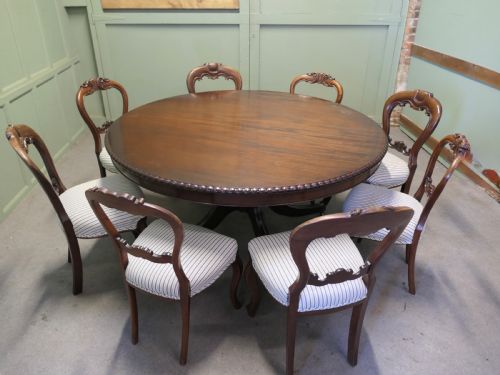
Many formal dining chairs were produced in large matching sets of six, eight, or ten to accommodate guests.
Sets featuring both carver chairs and slipper chairs indicate proper Georgian and Victorian dining arrangements.
What is a dumb waiter used for?
These tiered revolving stands held spare plates, glasses, and wine bottles within reach during long meals.
Guests served themselves from the rotating trays when dining without servants present in the room.
How do I distinguish Regency from Victorian styles?
Regency pieces lean toward classical restraint, drawing inspiration from ancient Roman and Greek forms with clean lines and subtle brass inlay.
Victorian furniture displays heavier proportions, deeper carving, and elaborate mirror backs on sideboards.