



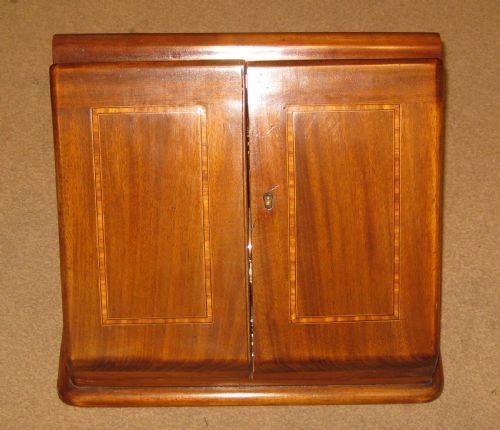

Mahogany Desktop Organiser
A mahogany desktop organiser keeps your letters and papers in order while bringing rich timber tone to your workspace.
Mahogany Desktop Organiser
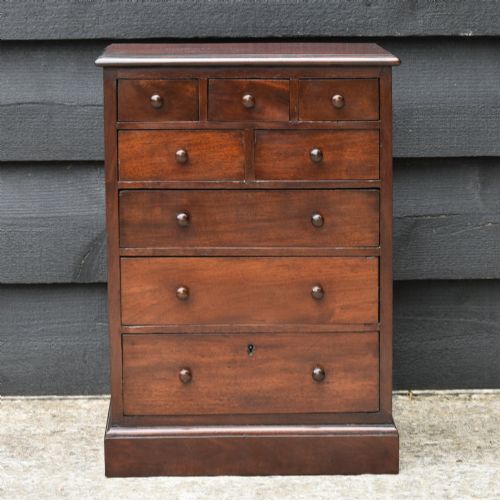
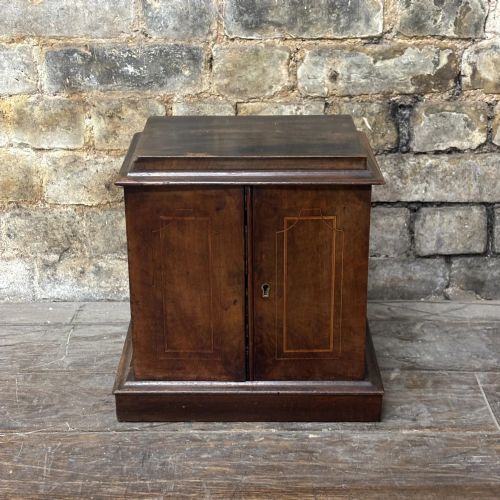
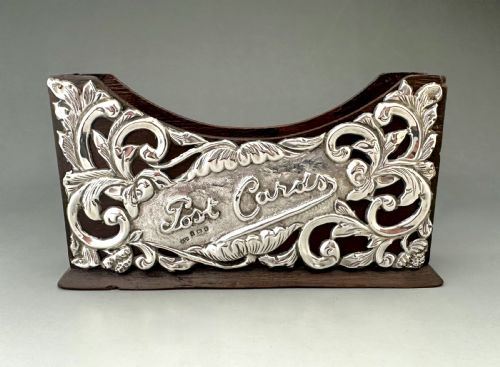
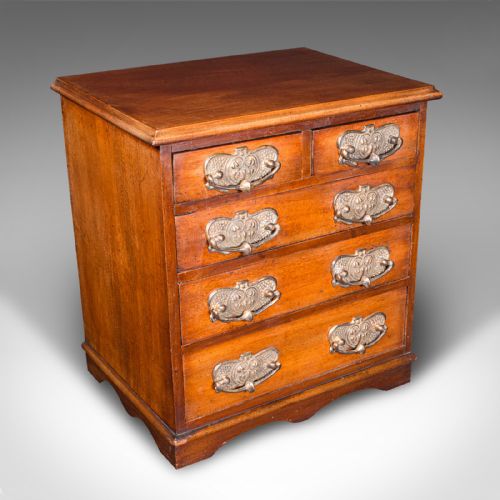
A mahogany desktop organiser encompasses miniature chests of drawers, stationery cabinets, letter holders, and book carriers designed to keep papers tidy on a writing surface. These items serve as functional desk furniture intended for everyday organisation.
The pieces you encounter span several eras, predominantly featuring 19th Century, Victorian, Edwardian, and Georgian periods. Formats range from simple desktop pigeon holes and book troughs to multi-drawer collectors cabinets and slope-front stationery boxes.
Makers adapted these wooden accessories to suit domestic and professional studies alike, utilising compact forms that sat easily upon a table. They represent the practical requirements of correspondence in past centuries.
How they were made
Construction relies heavily on mahogany, often supported by secondary timbers like oak and pine, paired with brass handles, hinges, and mounts. Some examples incorporate silver mounts or boxwood stringing for decorative contrast.
Joinery techniques reflect traditional cabinet making, producing stable carcases for stationery boxes, miniature chests, and revolving bookcases. Wood surfaces received polish or wax finishes to highlight the grain and colour of the mahogany.
Some stationary boxes carry the label answered and unanswered, leaving no excuse for delayed replies to Victorian mail.
What varies in quality
Quality rests on the crispness of the cabinet work, the choice of timber figurations, and the integrity of brass or silver hardware. Superior examples display refined proportions and careful attention to internal divisions like pigeon holes or small drawers.
Condition and originality separate standard items from finer survivals, particularly where fitted interiors, patination, and working locks remain intact. The degree of decorative detail, such as inlay or Gothic revival carving, also distinguishes individual pieces.
Betjemanns
The Mahogany Desktop Organiser Glossary
- Apprentice piece
- A small-scale item demonstrating a craftsman's skill to gain professional qualification. These miniature chests of drawers often replicate full-sized furniture.
- Stationery box
- A tabletop cabinet designed to hold writing paper and envelopes upright. They frequently feature sloped or hinged lids.
- Book carrier
- A portable stand or trough used to transport or display a small selection of volumes on a desk. They often incorporate carrying handles or ends.
- Pigeon holes
- A series of small recessed compartments within a desk organiser used for sorting letters. They provide structured filing for daily correspondence.
Mahogany Desktop Organiser: Frequently Asked Questions
What is a desktop organiser used for?
These pieces provided a dedicated place for letters, envelopes, and small writing supplies on a study table. They kept correspondence sorted and close to hand.
Cabinet makers designed them with slots, drawers, and compartments to manage the paper demands of a household or office before modern filing systems existed.
How do I date a mahogany desktop organiser?
Dating relies on the stylistic markers of periods such as the Georgian, Victorian, or Edwardian eras. Details like brass handles, dovetail joints, and overall form provide clear clues.
Cabinet construction methods shifted over the decades, helping to distinguish an 18th-century book carrier from a late 19th-century stationery cabinet.
How do I care for mahogany desktop wood?
Mahogany benefits from occasional light waxing and polishing to maintain its rich colour and protect the timber surface. Avoid placing wooden pieces in direct sunlight or near heat sources.
Gentle dusting with a soft, dry cloth preserves the finish and keeps the brass hardware bright over years of daily use.