
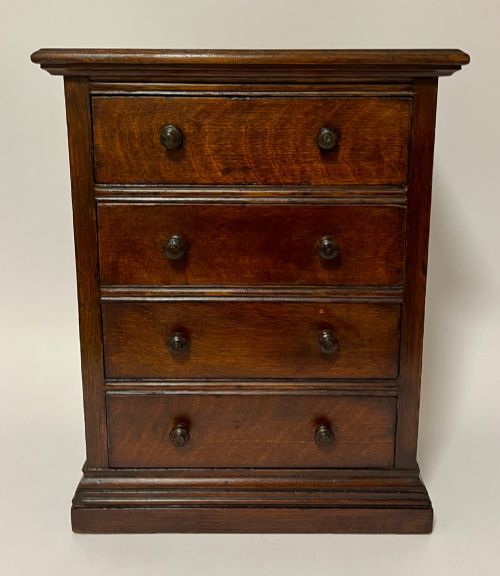
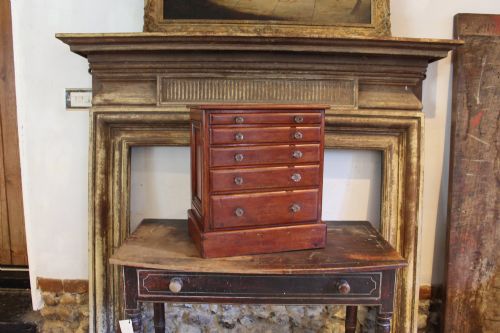
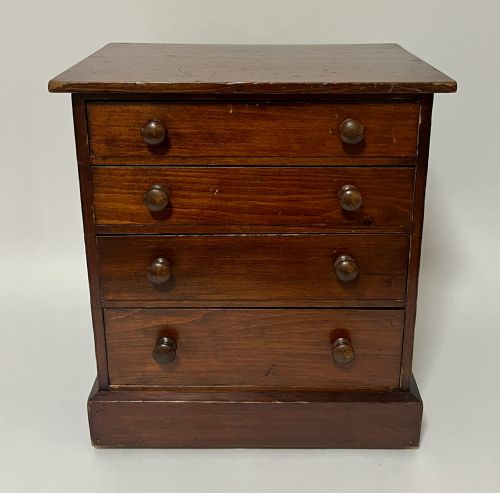
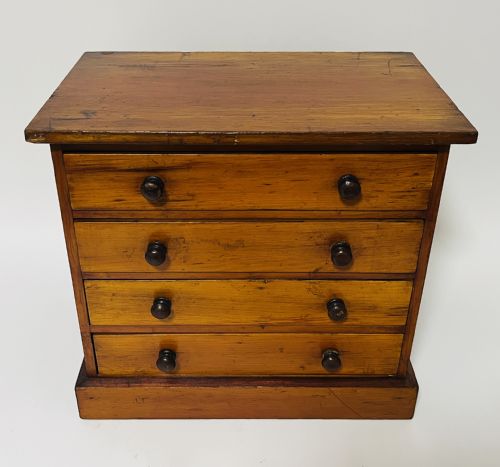


Victorian Miniature Collector Chest
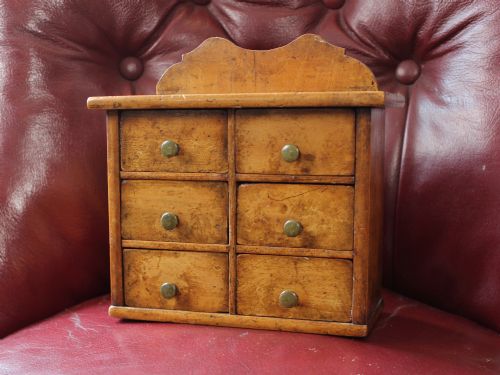
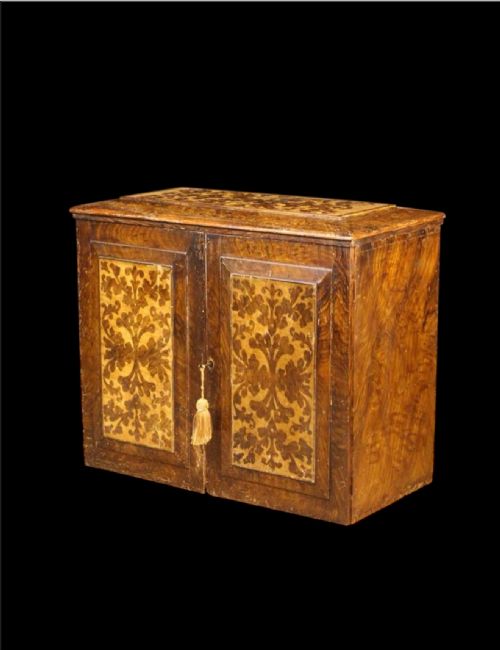
These victorian miniature collector chest pieces are compact tabletop cabinets built to hold small treasures or specimens, offering distinct craftsmanship in miniature form.
Victorian Miniature Collector Chest
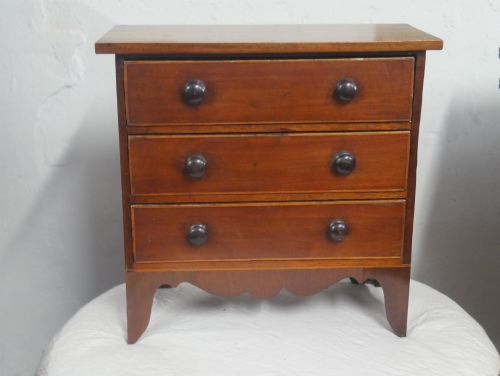
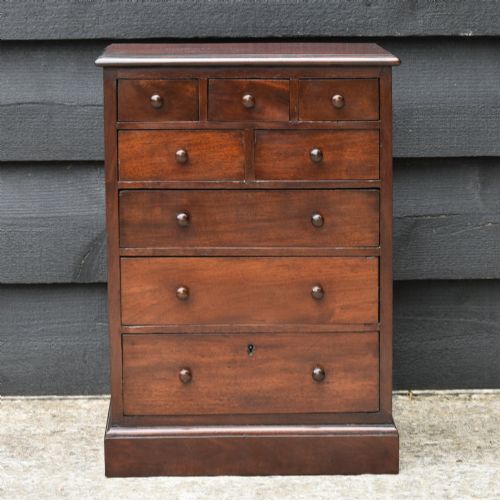
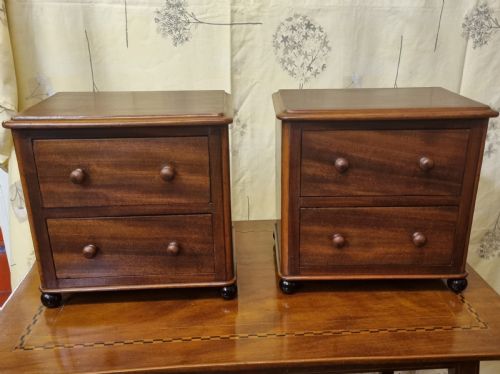
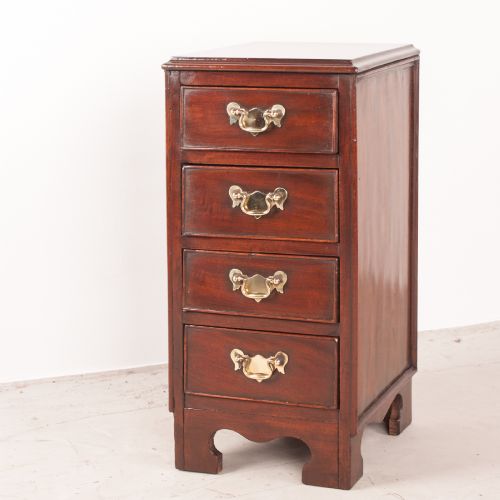
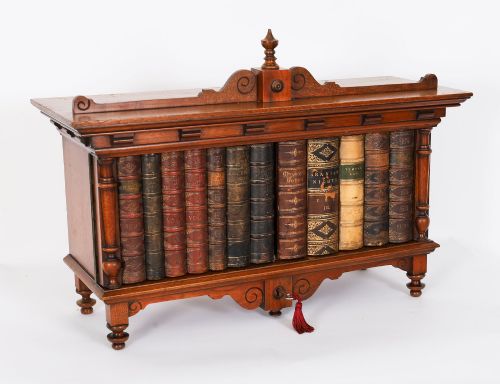
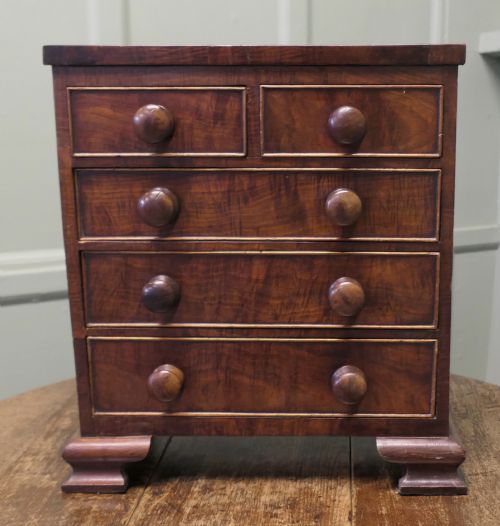
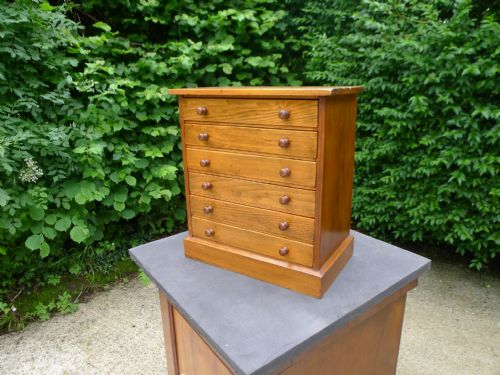
A victorian miniature collector chest takes many forms, functioning as a diminutive chest of drawers, apprentice piece, or tabletop specimen cabinet. These small items were designed for desktop use, providing compartmentalised storage for natural history specimens, coins, or trinkets.
The majority of pieces encountered here date from the nineteenth century, spanning Victorian production alongside related Georgian revival and Edwardian examples. Cabinet makers scaled down full-size furniture designs into portable formats for domestic display and specialised storage.
Makers utilised various configurations, including bowfront chests, Wellington chests with locking stiles, and multi-drawer cabinets fitted with glass or wood panels. Such variety reflects both skilled joinery practice and the specific demands of serious collectors.
Materials and Construction
Makers constructed these cabinets using dense hardwoods such as mahogany, walnut, and burr walnut, alongside secondary timbers like pine and oak. Finer examples incorporated decorative veneers, fruitwood, amboyna, or mother of pearl inlay to enhance the visible surfaces.
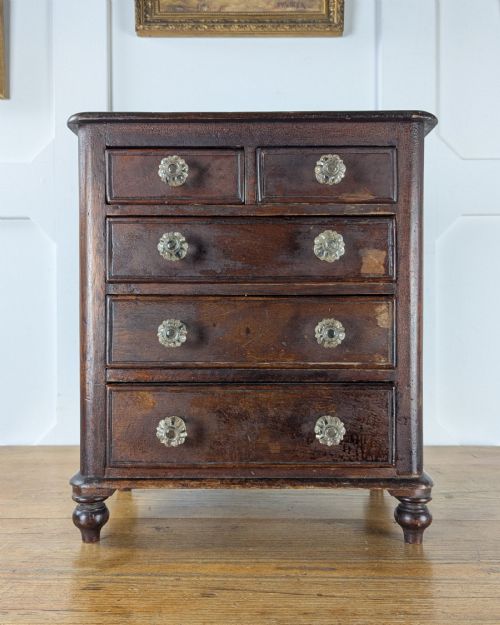
Joinery standards matched those of full-scale furniture, featuring hand-cut dovetails on drawer boxes and precise mortise and tenon framing. Small brass handles, turned feet, and ebonised mouldings completed the detailing on individual chests.
Secret drawers tucked away inside these miniature chests remind us that Victorian cabinet makers loved a hidden compartment.
Judging Quality
Quality in a miniature chest depends on the integrity of the timber selection and the precision of the scaling. Finer pieces demonstrate careful grain matching across drawer fronts and tight, flush drawer joints without excessive gap tolerance.
The sophistication of the interior layout also distinguishes standard examples from exceptional work. Cabinets featuring numerous drawers, specialised slide trays, secret compartments, or original locking mechanisms represent higher tiers of period craftsmanship.
The Victorian Miniature Collector Chest Glossary
- Apprentice piece
- A small-scale item demonstrating a craftsman's skill to gain trade qualification. These pieces replicate full-sized furniture designs with identical joinery.
- Specimen cabinet
- A specialised storage unit containing multiple shallow drawers for housing natural history collections such as insects, minerals, or botanical samples.
- Wellington chest
- A tall, narrow chest of drawers secured by a hinged locking side stile that fastens over the drawer edges. This form appears frequently in nineteenth-century miniature furniture.
- Bowfront
- A curved convex front profile found on certain chests of drawers and cabinets. The shaping requires advanced woodworking skill to fit drawers accurately into a curved carcase.
- Parquetry
- Geometric mosaic woodwork formed by small pieces of contrasting timber veneer arranged in patterns. This technique decorates the exterior surfaces of select collectors chests.
Victorian Miniature Collector Chest: Frequently Asked Questions
What were miniature chests used for?
These cabinets served multiple purposes, functioning as desktop storage for trinkets, jewellery, or personal items. Many were specifically built as specimen cases or watchmaker cabinets to organise small tools and delicate objects.
Some smaller chests originated as apprentice pieces created to demonstrate mastery of woodworking techniques. Their portable size made them practical for tabletop use in studies and parlours.
How do I identify a Victorian piece?
Victorian examples typically display characteristic nineteenth-century timber choices such as mahogany, walnut, and pitch pine. Construction details like hand-cut dovetails and turned wooden feet point directly to this manufacturing era.
Stylistic cues also help determine age, including ebonised mouldings and brass hardware consistent with nineteenth-century cabinet making practices. Comparing the construction methods to dated regional pieces confirms the period.
Are apprentice pieces genuine?
Apprentice pieces are historical items made by tradesmen learning their craft or showcasing advanced skills to a guild. Genuine examples exhibit the exact joinery and structural integrity expected of full-sized furniture from the same decade.
Makers scaled down proportion and detail intentionally rather than casually. This adherence to proper furniture construction distinguishes period miniatures from modern decorative reproductions.
How should I care for timber cabinets?
Keep wooden cabinets away from direct sunlight and steady heat sources to prevent the timber and veneers from drying out. Maintaining stable room humidity protects fragile joints and keeps drawer actions smooth.
Apply a light microcrystalline wax occasionally to nourish antique wood surfaces without building up heavy residues. Avoid harsh chemical cleaners that can strip original polishes and patinas.