
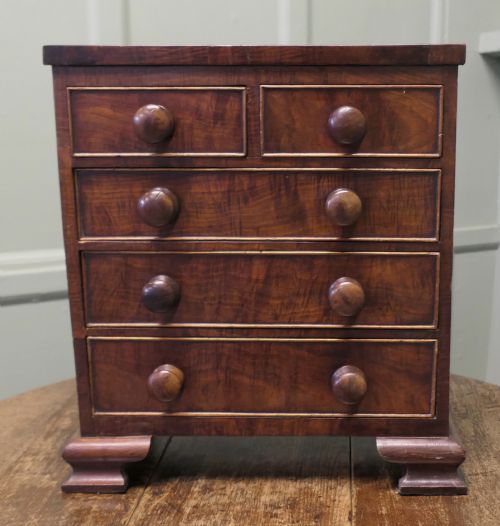
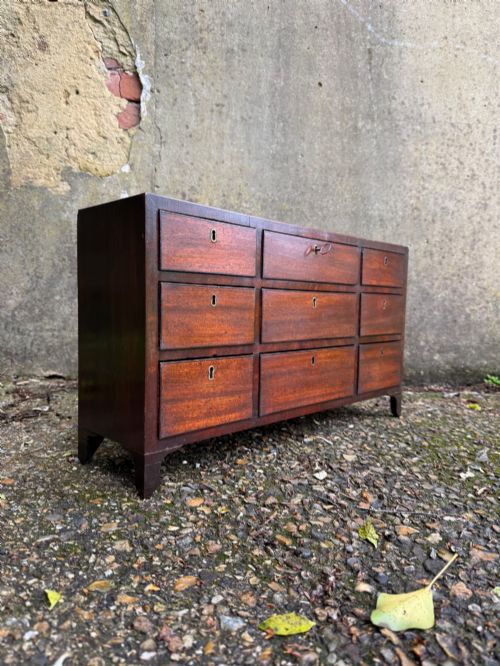


Dark Mahogany Trinket Chest
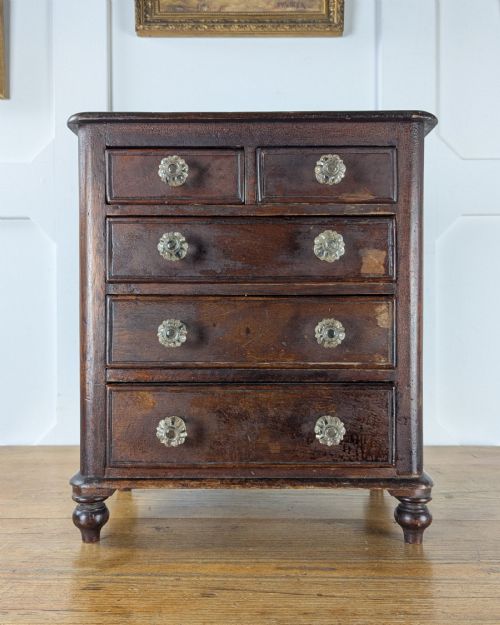
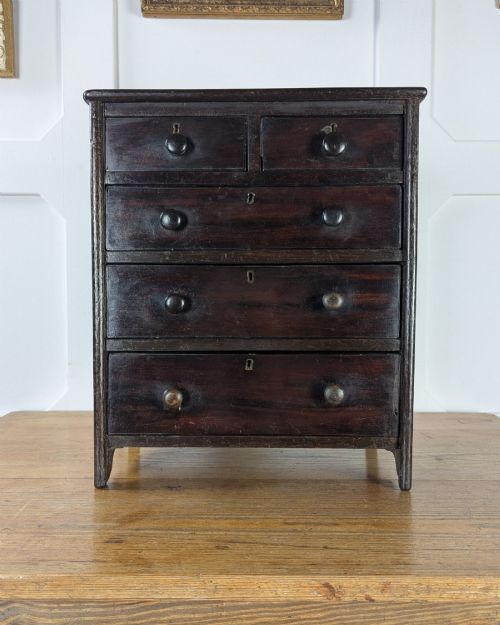
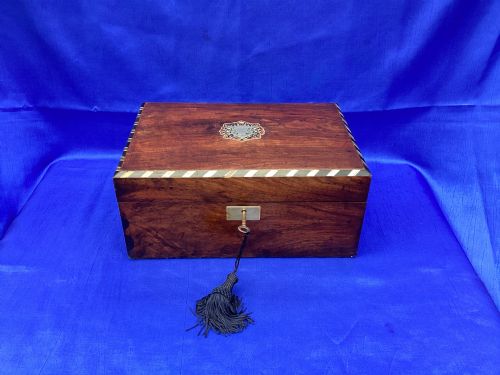
These dark mahogany trinket chests are small timber boxes fashioned to hold jewellery and keepsakes, offering compact storage with period character.
Dark Mahogany Trinket Chest
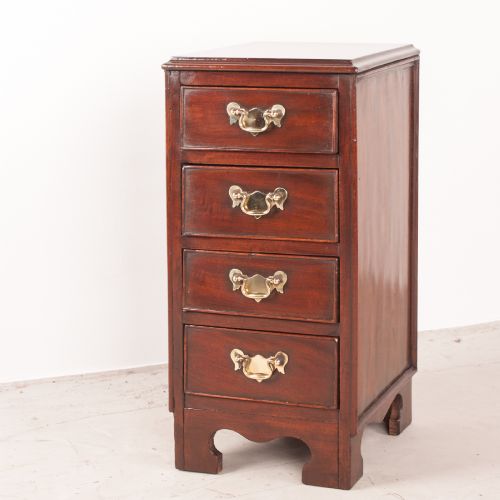
A dark mahogany trinket chest combines the practical function of a small storage box with the refined proportions of miniature furniture. When you search for a dark mahogany trinket chest, you encounter pieces that span the Georgian, Victorian, and Edwardian periods.
How they were made
Cabinet makers utilised dense mahogany for the primary carcass, often selecting boxwood and mother-of-pearl for contrasting inlay and decorative stringing. Brass fixtures such as escutcheons and drop handles provide functional detail against the dark timber.
Internal compartments frequently feature glass or simple wooden divisions designed to hold small valuables and jewellery securely.
One recorded box once belonged to Princess Helena Victoria of Schleswig Holstein, proving even royalty needed somewhere small for a tiara.
What varies in quality
Quality rests heavily on the depth of the timber's patina and the precision of the small-scale dovetail joints. Superior examples show careful attention to proportions, particularly on bow-front models where shaping the drawers requires considerable skill.
Lesser pieces may exhibit replacement hardware or simpler secondary woods like oak within the drawer linings.
The Dark Mahogany Trinket Chest Glossary
- Apprentice piece
- A small item of furniture made by a trainee craftsman to demonstrate mastery of specific woodworking techniques. These often mirror full-size chests of drawers.
- Bow front
- A convex curved front facade seen on several miniature chests. This shaping demands advanced joinery skills from the maker.
- Escutcheon
- A small protective plate surrounding a keyhole. They are commonly cast from brass on these mahogany chests.
- Patina
- The surface sheen and deep colour developed by aged mahogany over decades of handling and polishing. A rich patina indicates age and careful maintenance.
Dark Mahogany Trinket Chest: Frequently Asked Questions
What were apprentice pieces used for?
Apprentice pieces served as test pieces for young craftsmen seeking to prove their skills to a guild. They allowed makers to demonstrate competence in miniature scale.
Today, these small chests function well as desktop storage for modern trinkets and jewellery.
How do I date a mahogany chest?
Dating relies on observing construction methods, drawer linings, and hardware styles across periods like the Georgian and Victorian eras. Secondary timbers and handle designs change noticeably over time.
Examining the dovetails inside the drawers provides clear clues to the manufacturing decade.
Are these chests suitable for jewellery?
Most miniature chests and jewellery boxes contain fitted compartments or open drawer space suited for small accessories. Their lined interiors protect delicate pieces from scratches.
Ensure the drawers move smoothly before storing items regularly.
What is George III style?
George III style refers to design characteristics from the later eighteenth century, emphasising classical proportions and fine mahogany veneers. Pieces from this era often feature restrained decoration.
Cabinet makers during this time focused on clean lines and quality timber selection.