
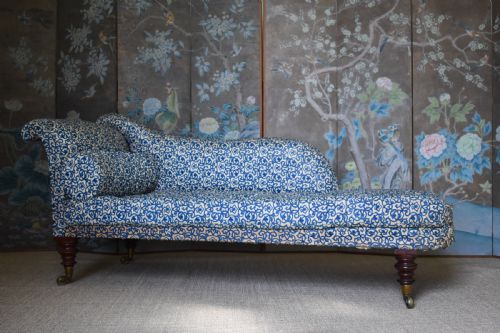


Mahogany Daybed Frame
A mahogany daybed frame offers a sturdy structural foundation for long lounging, combining rich warm timber with enduring nineteenth-century design.

Mahogany Daybed Frame
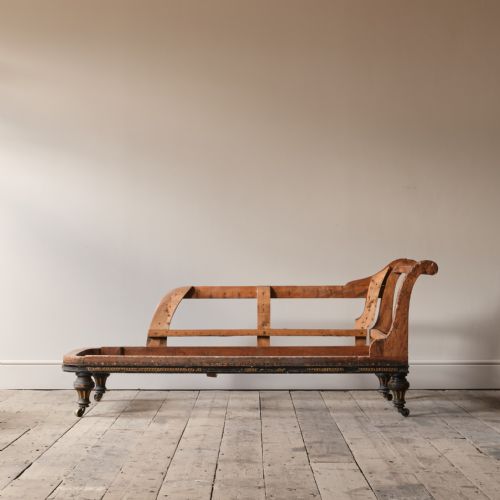
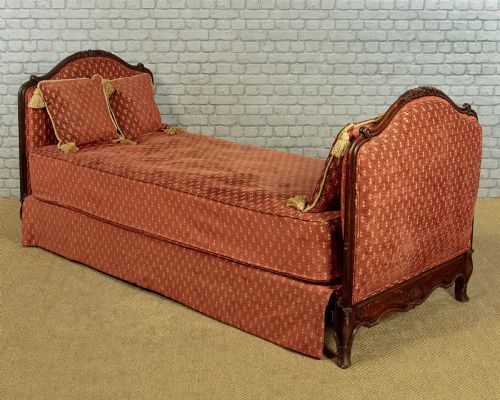
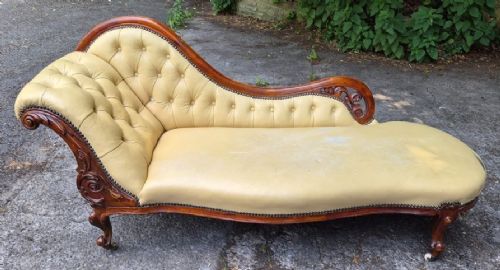
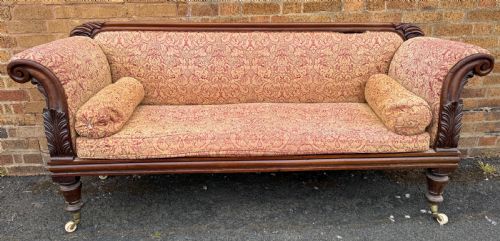
A mahogany daybed frame brings together substantial seating and reclining pieces from the nineteenth century, including daybeds, chaises longues, and scroll-end sofas. Buyers seeking a mahogany daybed frame will encounter examples spanning the Regency, William IV, and Victorian periods, often presenting double scroll ends or carved wooden frames.
The selection here encompasses variations from simple nineteenth-century single beds and hall seat sofas to ornate adjustable campaign pieces and attributed works. These items bridge the gap between daytime seating and resting furniture, reflecting the diverse domestic requirements of their original eras.
Most entries originate from the nineteenth century, with specific representations from the Regency era through to late Victorian production. The forms vary from French-influenced provincial styles to grand British scroll-end settees, each built around a solid mahogany structural framework.
Materials and construction
The structural framework relies heavily on solid mahogany and ebonised wood, providing both durability and a deep, polished grain. Brass hardware often appears in functional components such as castors or adjustable campaign mechanisms, while secondary supports utilise plain timber.
Upholstery materials range from exposed wooden framing to surfaces prepared with calico, velvet, leather, and assorted fabrics. Artisans employed detailed carving techniques on the mahogany to shape scroll ends, armrests, and decorative rails.
Nineteenth-century officers clearly refused to sacrifice daytime posture, inventing campaign beds with detachable legs for effortless field-marshal napping.
Assessing quality in frames
Quality reveals itself in the crispness of the timber carving and the architectural balance of the scroll ends. Finer examples display deeply figured mahogany grain and precise joinery that holds the structural weight without sagging.
Attribution to notable workshops or makers elevates the standing of a piece, particularly when combined with original brass castors or working adjustable mechanisms. Simpler vernacular pieces contrast with elaborately carved Victorian and Regency models through their restraint and lack of ornamentation.
Holland & Sons
The Mahogany Daybed Frame Glossary
- Scroll-end
- A wooden furniture arm or frame terminal curved gracefully outward in a continuous volute. This shape defines many Regency and William IV daybeds and sofas.
- Campaign bed
- A portable piece of furniture designed for military officers, featuring detachable legs and folding elements. These items prioritise sturdy construction and practical disassembly.
- Ebonised wood
- Timber treated with a dark stain or finish to imitate ebony. This dark surface treatment provides a sharp visual contrast to lighter brass details.
- Calico
- A plain-woven cotton fabric traditionally utilised as an underlying layer for upholstery. It serves as a neutral base before decorative velvet or leather is applied.
- William IV period
- The British design era spanning the 1830s, characterised by robust classical proportions and heavy carved mahogany woodwork. Pieces from this time often feature bold scroll ends.
Mahogany Daybed Frame: Frequently Asked Questions
What is a mahogany daybed frame?
A mahogany daybed frame is a structural timber base designed for reclining or day seating, typically originating from nineteenth-century British workshops. These pieces combine exposed mahogany woodwork with upholstered surfaces or open slatted designs.
Buyers select them to anchor a room with period character, utilising the sturdy timber frame as either a functional day bed or a decorative chaise longue.
How do I date a mahogany daybed frame?
Dating relies on stylistic markers such as Regency scroll arms, William IV proportions, or Victorian ornamentation. The transition from early nineteenth-century neoclassical lines to heavier late-century carving helps narrow the decade of manufacture.
Examining the secondary timbers, fixing methods, and any associated maker attributions further clarifies the historical period of the piece.
Were these frames originally upholstered?
Most nineteenth-century frames accommodated drop-in cushions, squabs, or fully upholstered surfaces upholstered in fabrics like velvet, calico, or leather. Some pieces were constructed to highlight heavily carved mahogany show-wood while retaining padded elements for comfort.
Surviving examples frequently show evidence of re-upholstery over time to suit changing domestic tastes and modern interior standards.
How do I care for antique mahogany timber?
Maintaining mahogany requires consistent dusting with a soft, dry cloth and avoiding placement near direct heat sources or strong sunlight. Natural waxes help nourish the timber and preserve the depth of the polished grain without sealing the wood permanently.
Checking structural joints and brass castors periodically ensures the frame remains stable and capable of supporting regular weight.