

Mahogany Cylinder Bureau
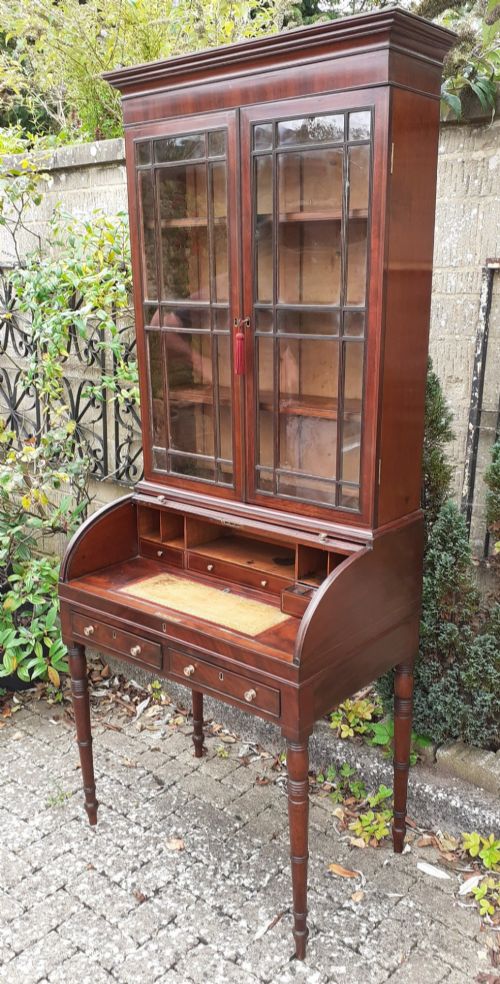
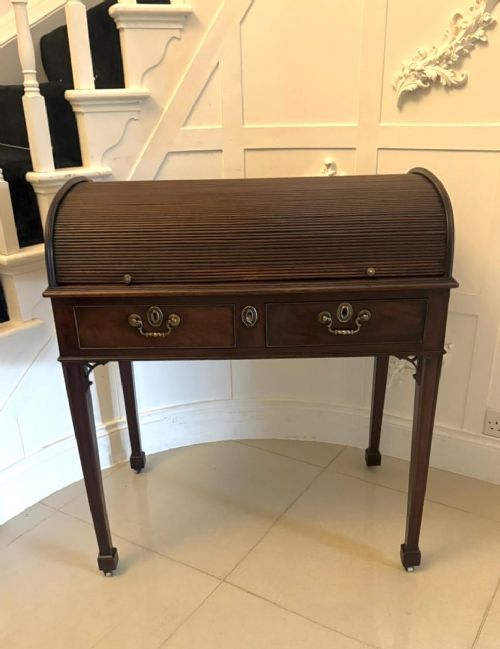
A mahogany cylinder bureau conceals a fitted writing slide beneath a curved, rolling lid, offering a refined workspace for letters and accounts.
Mahogany Cylinder Bureau
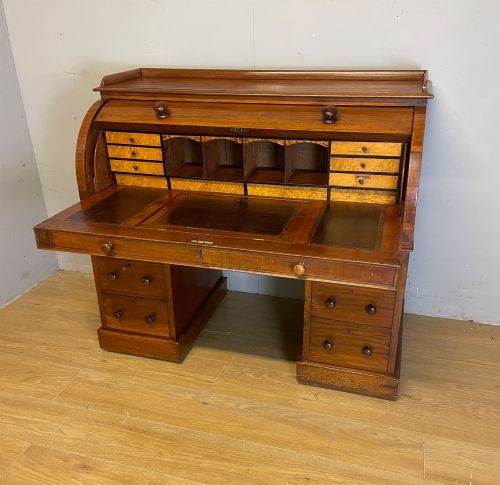
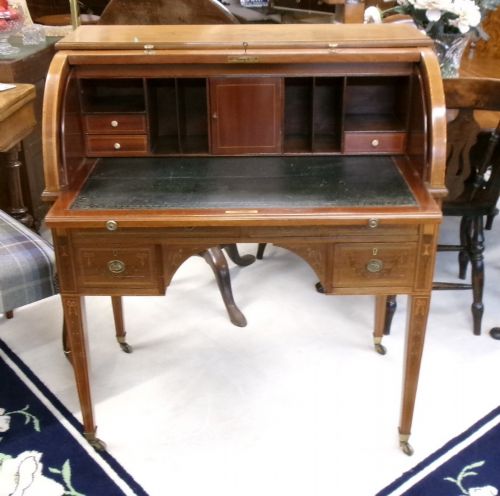
A mahogany cylinder bureau is a desk featuring a rounded, rolling wooden shutter that encloses an inner compartment of small drawers and pigeonholes when closed. When the cylinder is pushed back, a leather-lined writing surface usually pulls forward to provide a practical writing ledge.
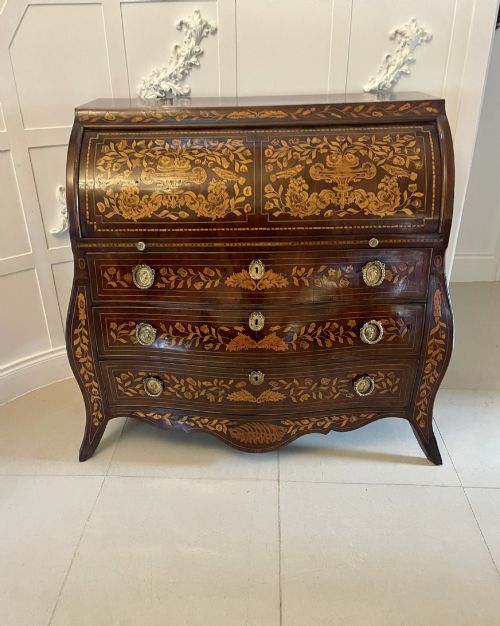
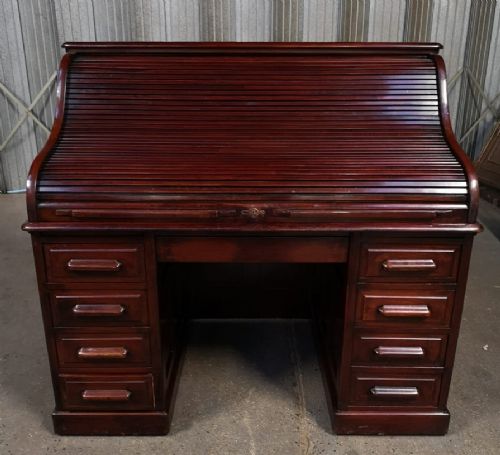
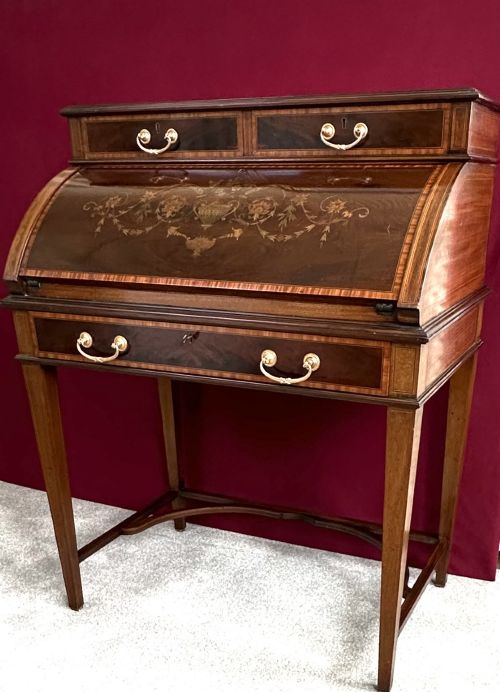
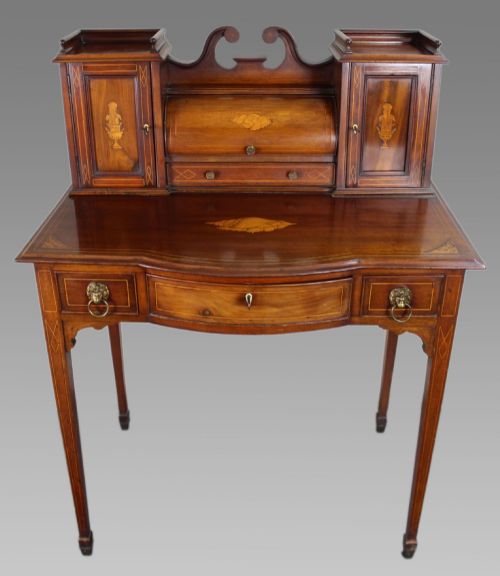
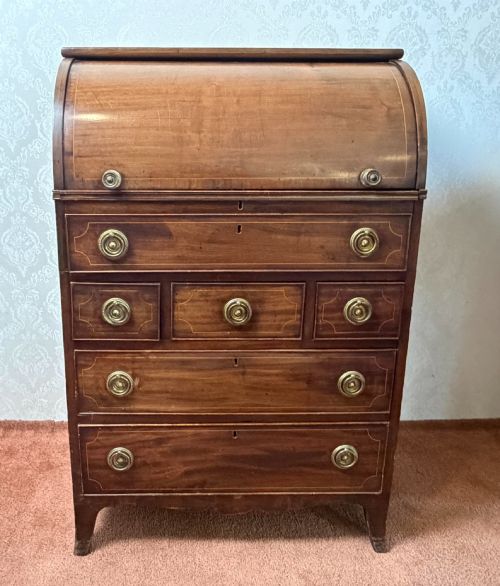
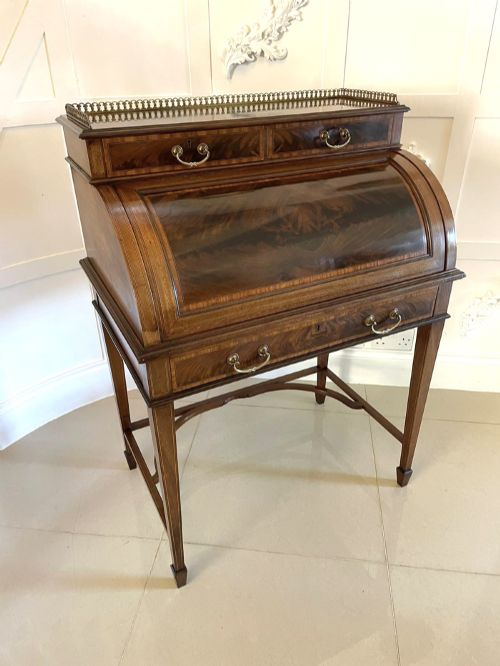
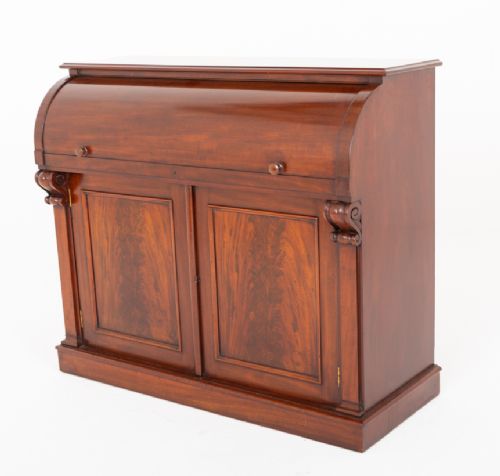
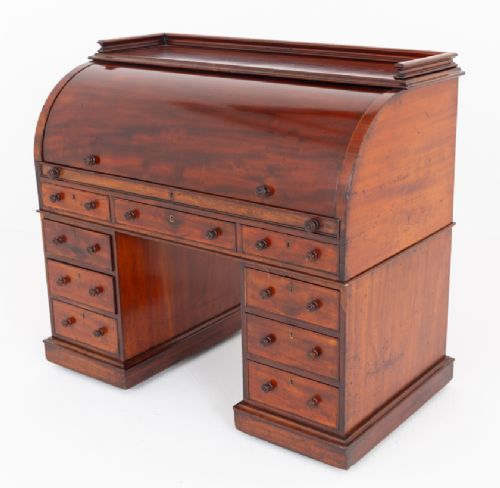
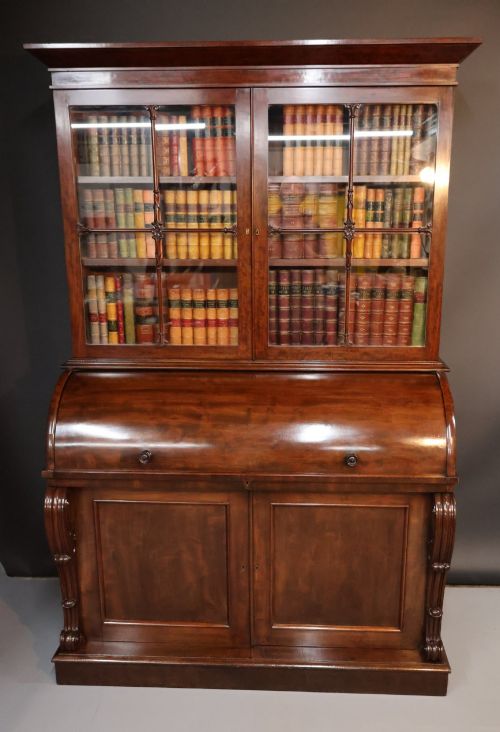
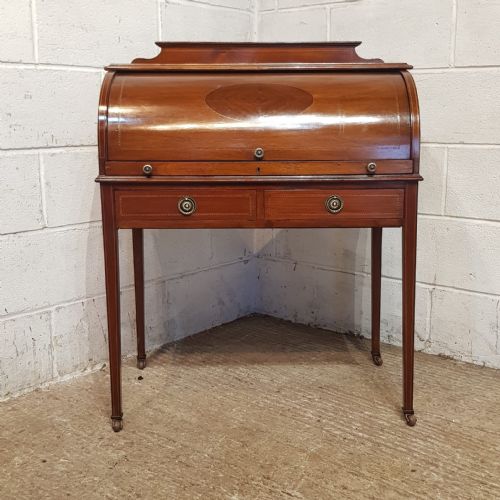
Most examples encountered on this page span the Georgian, Victorian, and Edwardian periods, constructed primarily from solid mahogany and flame mahogany veneers. Buyers often find variations ranging from compact ladies writing desks to large pedestal forms and bookcase combinations.
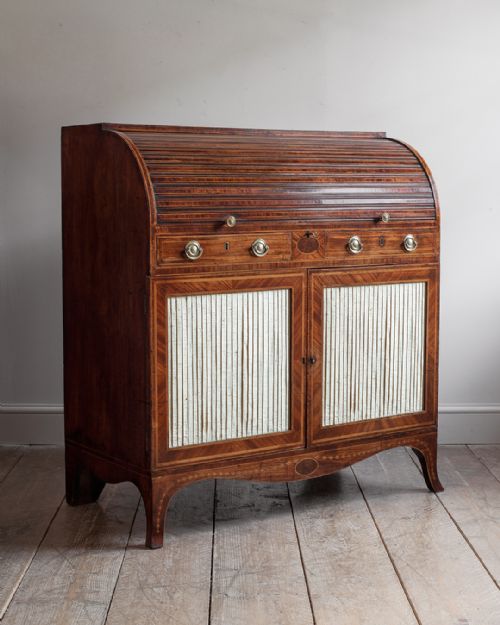
Early Georgian and George III pieces showcase meticulous cabinetmaking with subtle tambour slats or solid curved shells, while later Edwardian versions frequently incorporate delicate satinwood stringing and floral marquetry.
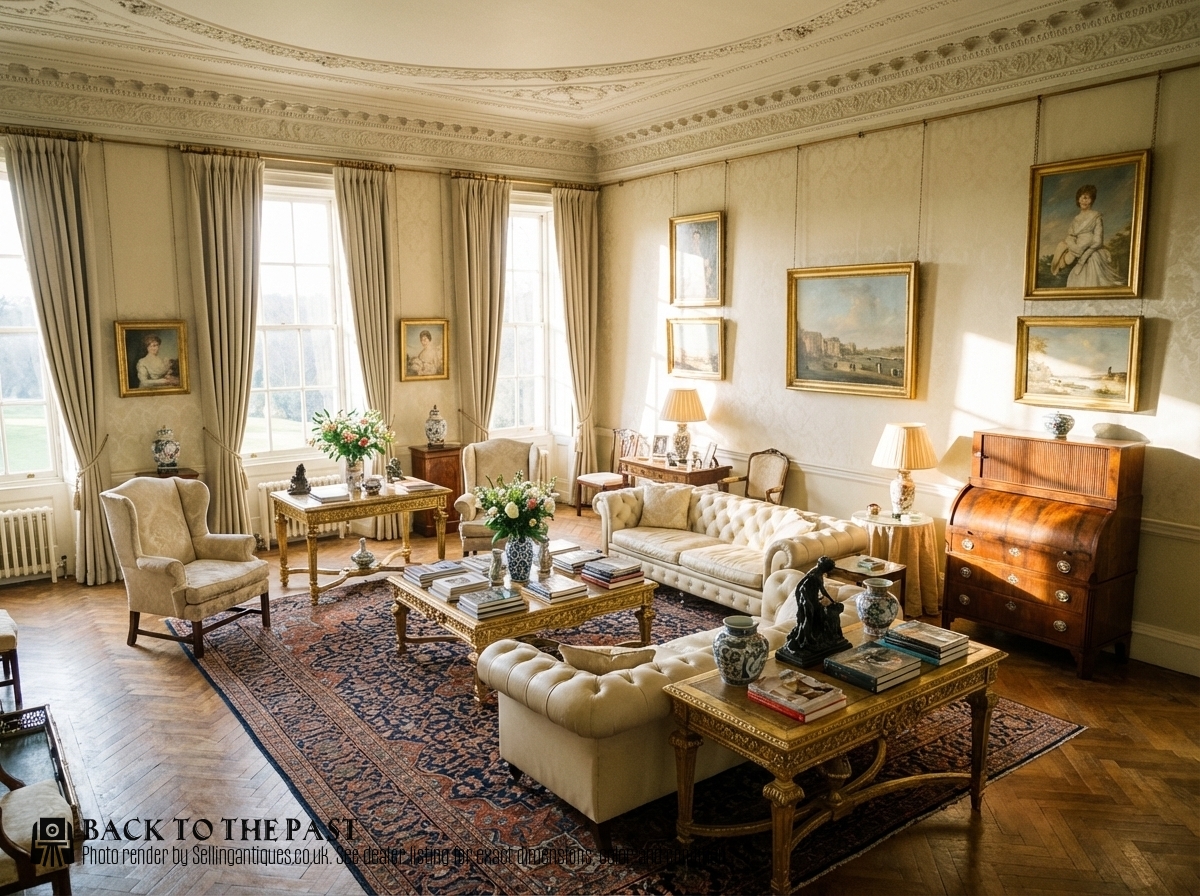
How They Were Made
Cabinetmakers constructed the rolling cylinder either from narrow vertical slats glued to a flexible canvas backing, known as a tambour, or from a solid curve of timber carefully channelled to run smoothly within side grooves. These curved elements required exceptional precision to prevent warping in changing household temperatures.
Solid mahogany and rich flame mahogany veneers were laid over secondary timbers, often accented with contrasting satinwood stringing, ebony, and floral marquetry. Brass handles, ring pulls, and occasionally ormolu mounts completed the exterior decoration.
Interior compartments relied on secret drawers, miniature pigeonholes, and inset leather writing surfaces tooled with gilt borders. Drawers utilised hand-cut dovetails and oak or pine linings, reflecting traditional workshop practices of the eighteenth and nineteenth centuries.
Mahogany Cylinder Bureau Retail Price Guide 2026
Typical asking prices for mahogany cylinder bureau among the pieces listed under this phrase on Sellingantiques today, from the lower quarter to the upper quarter. They describe what is for sale here now, not the wider market.
Several compact examples measure a mere eighteen inches in width, proving that historical letter-writers possessed tiny handwriting and clever spatial economy.
What Varies in Quality
The sophistication of the internal mechanism and the smoothness of the rolling cylinder set exceptional pieces apart from standard workshop production. Superior examples ensure the pull-out writing slide extends automatically as the cylinder rolls back, operating through a linked track of internal brass levers and wooden arms.
Timber selection dictates visual depth, where master cabinetmakers matched symmetrical flame mahogany veneers across the fall front and drawer fronts to create continuous grain patterns. Lesser examples rely on plain mahogany boards with minimal attention to veneer alignment.
Hand-cut marquetry, finely cast brass hardware, and secondary timbers like oak rather than soft deal indicate superior workshop origins. Maker signatures from established firms such as Maple & Co provide further distinction regarding build integrity.
Maple & Co·Jas Shoolbred·Tudor & Burrey·Gillows
The Mahogany Cylinder Bureau Glossary
- Cylinder
- A curved wooden shutter that rolls back into the body of a desk to reveal the writing surface and interior drawers. This mechanism protects the desk contents from dust while concealing paperwork.
- Tambour
- A flexible shutter formed from narrow vertical strips of wood glued to canvas or leather backing. It allows a curved wooden surface to slide smoothly around a tight track.
- Marquetry
- Decorative patterns created by fitting different veneers together onto a structural surface. Craftsmen used contrasting woods like satinwood and mahogany to form floral or geometric motifs.
- Pedestal
- A structural support comprising a set of drawers resting directly on the floor. Desks with two pedestals offer substantial storage flanking the central sitting space.
- Satinwood
- A pale, lustrous timber native to India and the West Indies. Cabinetmakers utilised it for contrasting stringing, banding, and inlay work on dark mahogany furniture.
Mahogany Cylinder Bureau: Frequently Asked Questions
How does a cylinder bureau work?
The curved wooden shutter rolls backward into the body of the desk along recessed side tracks to open the writing area. Many designs link this movement to the pull-out leather writing slide so both elements adjust simultaneously.
Inside, the user finds an arrangement of small drawers, pigeonholes, and concealed compartments for stationery. Lower drawers beneath the writing surface provide additional storage for larger volumes and papers.
What is the difference between a bureau and a roll top?
A traditional bureau typically uses a slanted hinged flap that folds down to form a writing slope. A cylinder bureau or roll top utilises a curved wooden shutter that slides completely out of sight.
Cylinder desks usually date from the Georgian and Victorian eras with refined mahogany and veneer work, whereas heavy roll top desks are often later commercial office furniture.
Where were cylinder desks placed in a historic home?
These desks served as private writing tables for managing household accounts, correspondence, and personal journals. Wealthy households positioned them in libraries, withdrawing rooms, or private boudoirs.
Freestanding models allowed placement away from walls, while smaller ladies desks suited narrower drawing rooms and personal chambers.
How do I identify a Georgian cylinder bureau?
Georgian and George III pieces display understated proportions, solid mahogany construction, and minimal, elegant stringing or tambour mechanisms. Cabinetmakers focused on fine timber selection and traditional bracket feet or tapered legs.
Later Victorian and Edwardian iterations often introduced heavier proportions, extensive marquetry, and broader pedestal configurations.