
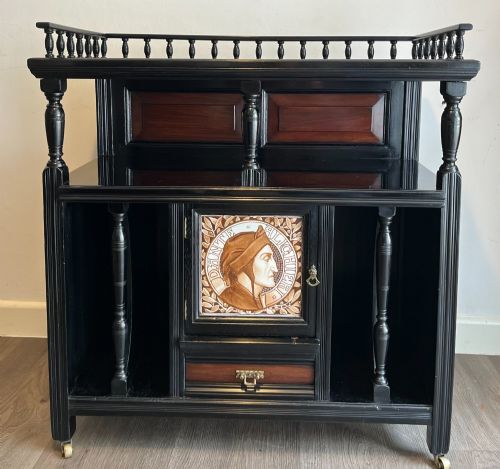
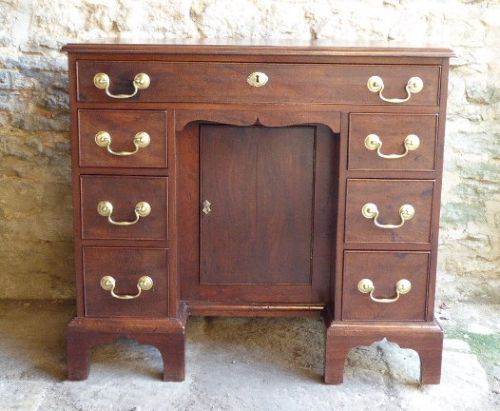
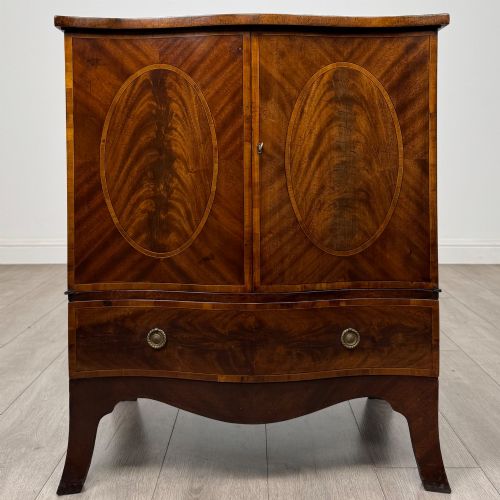

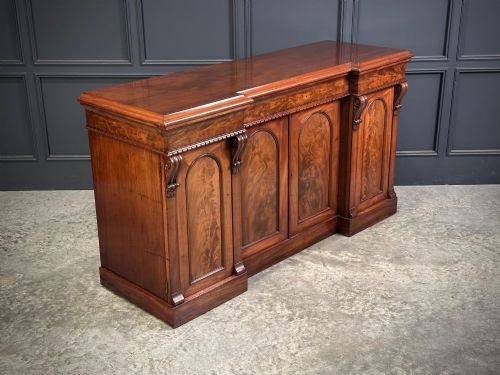
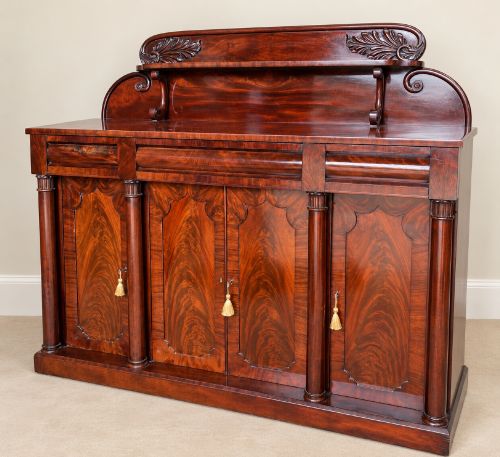
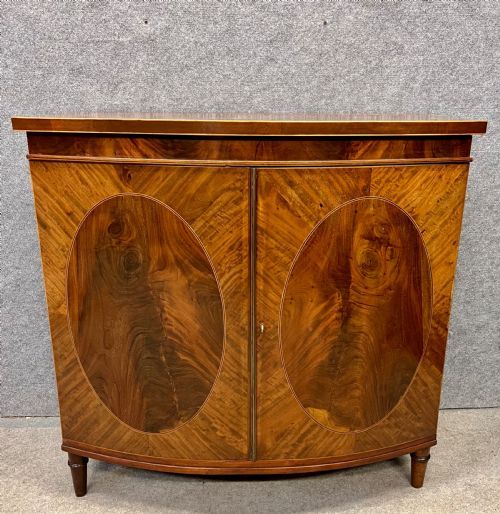
Mahogany Cupboard Sideboard
Mahogany cupboard sideboards combine robust storage with refined timbers, offering a practical centrepiece for dining rooms and hallways.
Mahogany Cupboard Sideboard
A mahogany cupboard sideboard serves as a substantial storage item that merges enclosed cupboard space with the surface utility of a traditional sideboard. Pieces span Georgian, Regency, William IV, Victorian and Edwardian periods, displaying regional cabinet-making traditions from simple two-door units to elaborate breakfront designs.
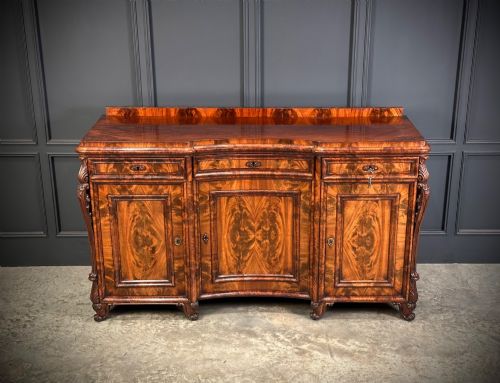
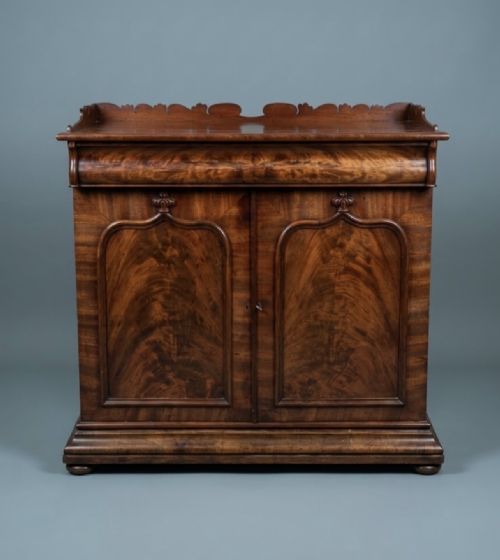
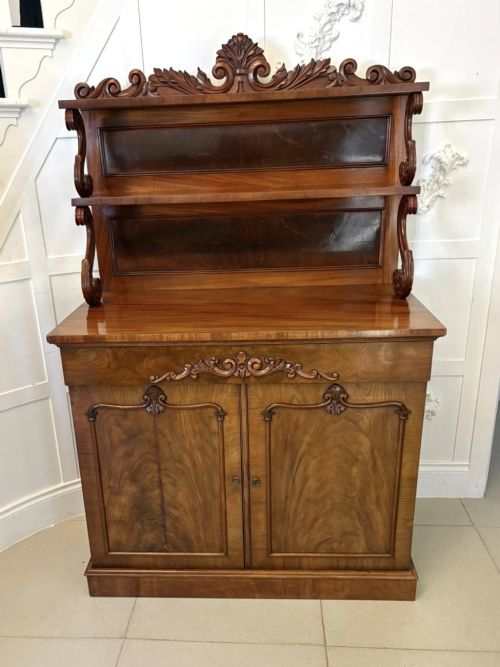
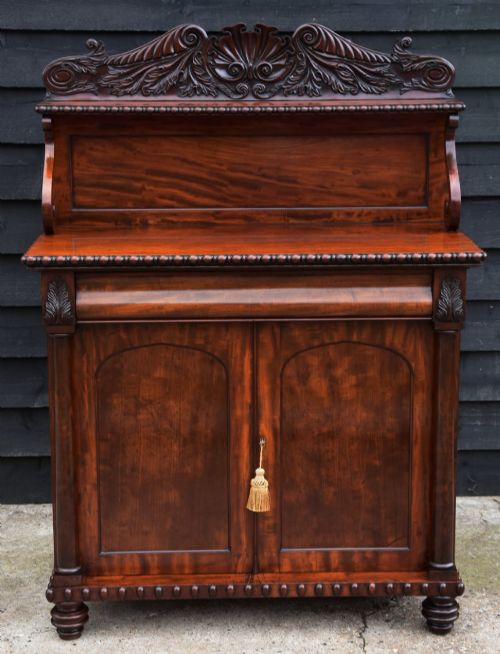
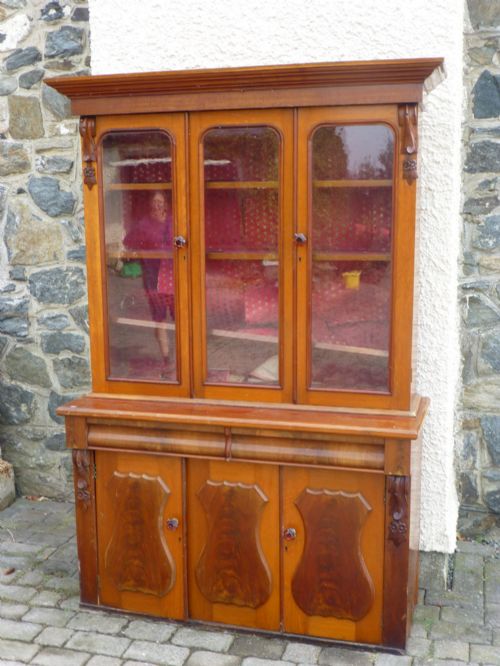
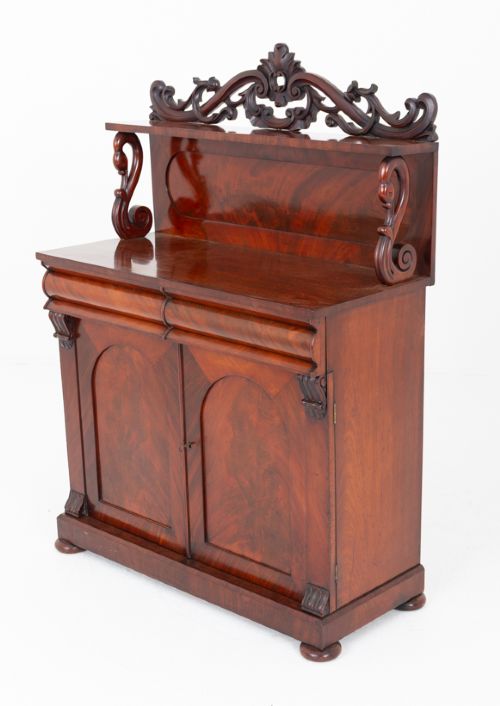
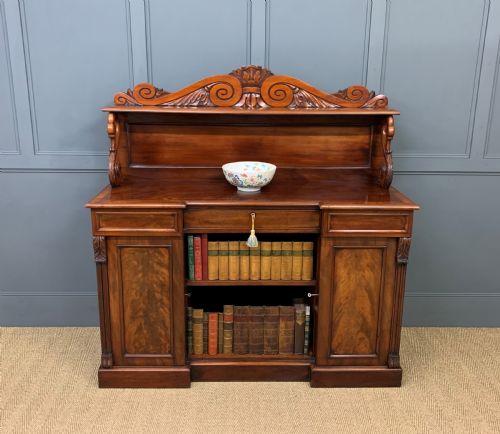
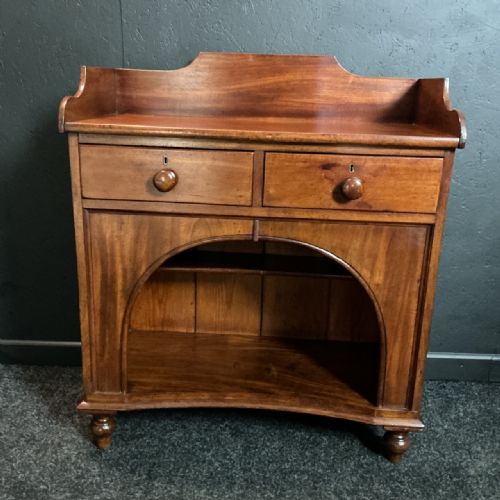
The most common examples on this page are Victorian and Edwardian iterations featuring flame mahogany veneers, enclosed lower cupboards, and occasional superstructure additions like mirrors or upper bookshelves. Buyers encounter formats ranging from low dwarf cabinets and bow-fronted servers to taller chiffoniers and display combinations.
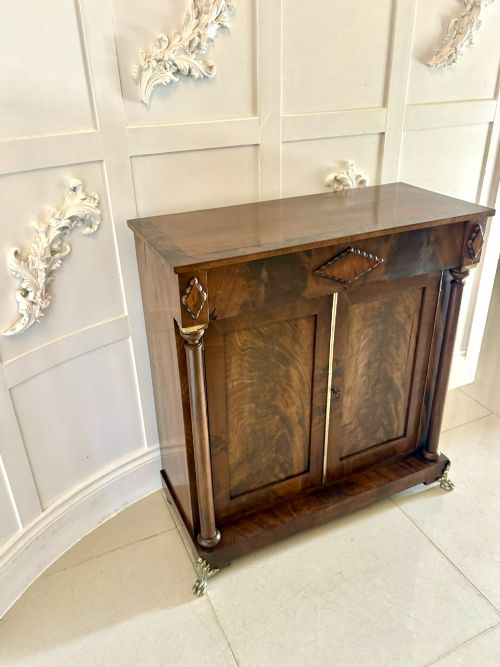
Earlier Georgian and Regency examples prioritise clean architectural lines, figured timber grains, and fitted interiors with drawers or secretaire compartments. Later Edwardian interpretations often incorporate delicate satinwood inlay, marquetry, and Sheraton revival influences into the traditional sideboard footprint.
How they were made
Cabinet-makers constructed these pieces primarily using solid mahogany and mahogany veneers, frequently selecting figured or flame mahogany for primary display surfaces to create a rippled, highly reflective grain pattern. Secondary structural timbers such as oak appear internally in drawers and backing boards.
Decorative embellishments rely on contrasting wood types like satinwood for inlay, alongside carved mahogany details and cast brass hardware including handles, backplates, and campaign mounts. Construction techniques involve dovetailed drawer boxes, mortise and tenon frames, and carefully applied timber veneers over stable pine or mahogany carcases.
Several Victorian pieces include built-in cellarette drawers designed to keep wine bottles cool beneath the serving surface.
What varies in quality
The grade of timber selection dictates visual depth, with premium pieces utilising heavily figured flame mahogany that is book-matched across doors and drawer fronts for symmetry. Lesser examples employ plainer straight-grain timber or standard mahogany veneers with less pronounced natural movement.
Construction refinement separates standard utility furniture from high-end cabinet work, visible in the precision of inlaid stringing, the weight and finish of cast brass mounts, and the hand-cut joinery of internal components. Maker attribution also influences standing, as workshops known for bespoke output maintain distinct joinery standards.
Gillows·Edwards & Roberts
The Mahogany Cupboard Sideboard Glossary
- Flame mahogany veneer
- A thin slice of timber cut from the point where branches join the main trunk, producing a distinctive, flame-like rippled figure. Cabinet-makers matched these veneers symmetrically across large cupboard doors.
- Chiffonier
- A compact sideboard variant featuring a lower enclosed cupboard, often surmounted by a shelf with a mirror or small tier. Originating in the Regency period, these pieces served dining rooms and parlours.
- Bow-front
- A convex curved furniture front that projects outward in a smooth arc. This profile gained popularity during the late Georgian and Regency eras.
- Secretaire
- A desk feature incorporated into a cabinet or sideboard, comprising a fitted drop-front drawer with small pigeonholes and writing surfaces. It allowed dual function without altering the exterior profile of a sideboard.
- Marquetry
- The art of applying decorative veneer pieces of different woods and materials to form pictorial or geometric designs. Edwardian revival pieces frequently employed this technique on cupboard doors.
Mahogany Cupboard Sideboard: Frequently Asked Questions
How do I date a mahogany cupboard sideboard?
Dating relies on architectural proportions, timber selection, and construction methods. Georgian and Regency pieces show cleaner neoclassical lines and hand-cut dovetails, while Victorian items often feature heavier figured flame veneers and bolder mouldings.
Later Edwardian versions frequently display lighter construction, satinwood stringing, or revival styles such as Sheraton or Georgian influences. Interior linings and hardware styles further help confirm the manufacturing era.
What is the difference between a chiffonier and a sideboard?
A chiffonier is generally a smaller, more compact cabinet developed in the Regency and Victorian periods, often combining a lower cupboard with an upper shelf tier or mirror. Traditional sideboards are longer, designed primarily for serving food and storing dining silver.
While both share mahogany construction and enclosed cupboard space, chiffoniers suit smaller reception rooms and parlours. Sideboards remain scaled for larger dining rooms and hospitality use.
Where should I place a mahogany sideboard in my home?
These pieces suit dining rooms, living spaces, and wide entrance hallways where their surface depth and interior storage can be utilised daily. Dining rooms allow them to function as traditional servers for dishware, linens, and bottles.
In hallways or living areas, low cabinets and bow-front cupboards provide a surface for lamps and decorative items while concealing household clutter inside the lower doors.
How do I care for antique mahogany furniture?
Maintenance involves keeping the timber away from direct heat sources and strong sunlight to prevent veneer lifting and timber drying out. Regular dusting with a soft, dry cloth preserves the polished finish.
Occasional application of traditional beeswax feeds the mahogany and enhances the depth of the grain without building up synthetic residues. Avoid liquid spills and silicone-based sprays.