

Mahogany Corner Display
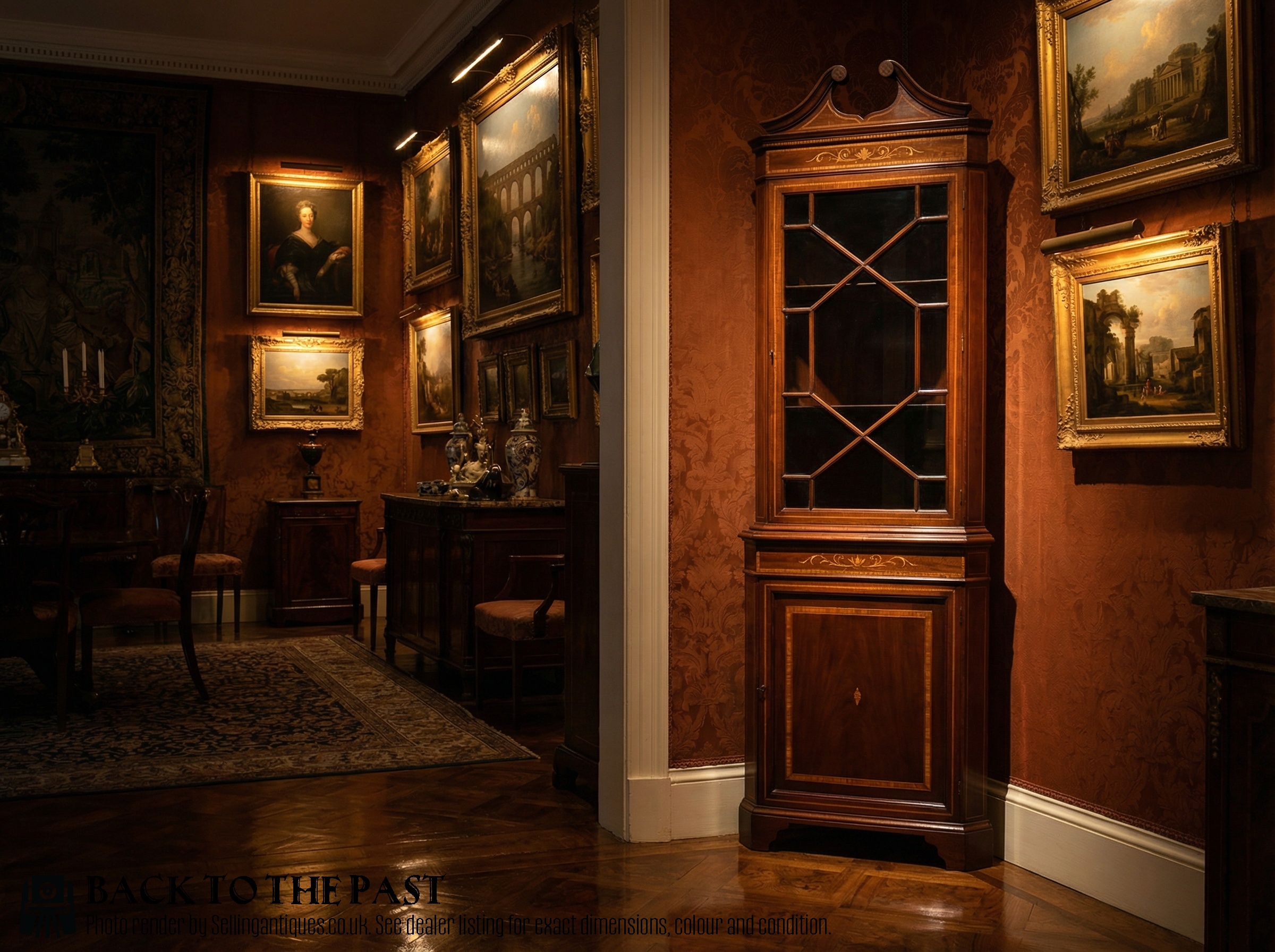
A mahogany corner display turns an empty angle of a room into a showcase for cherished objects using rich timber and glass.
Mahogany Corner Display
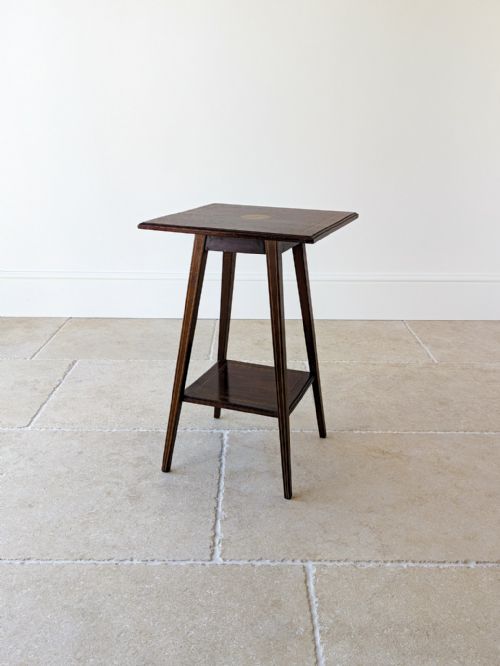
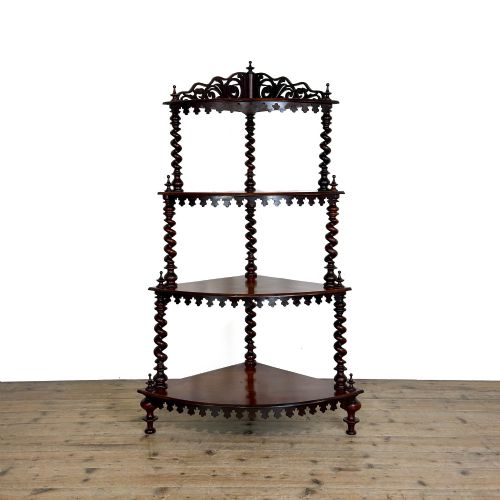
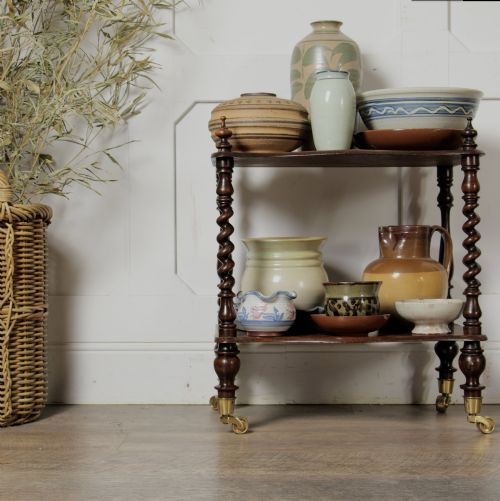
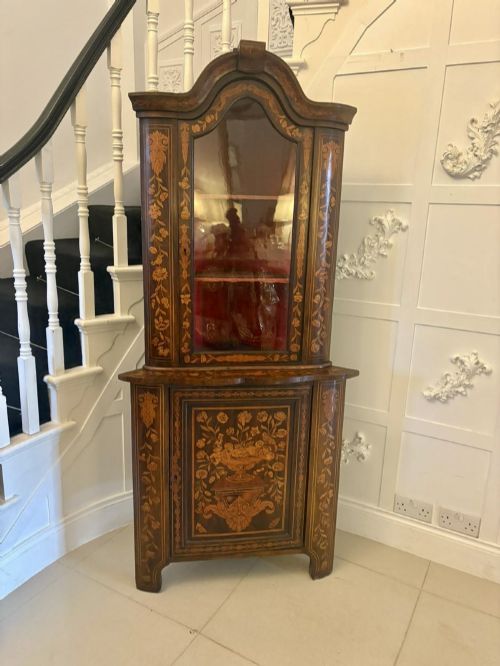
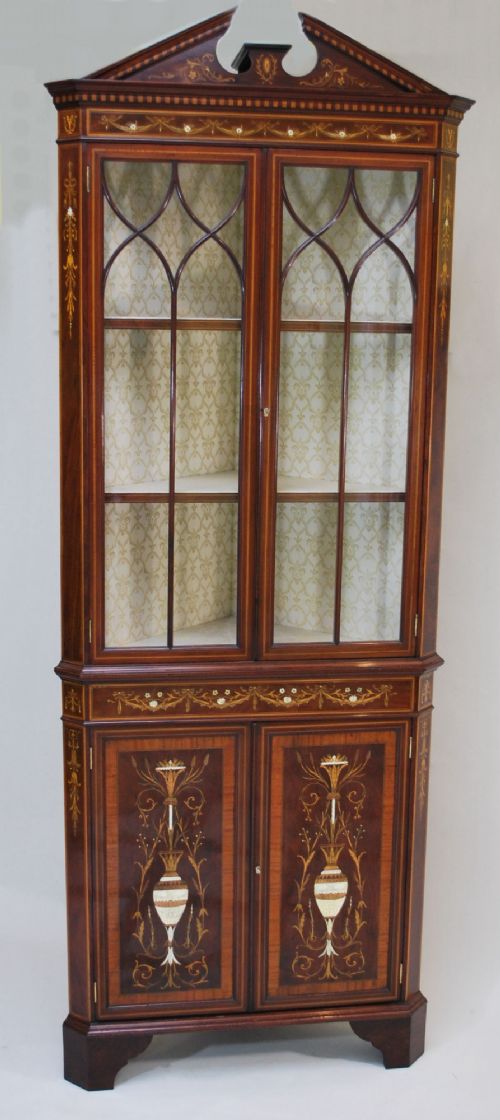
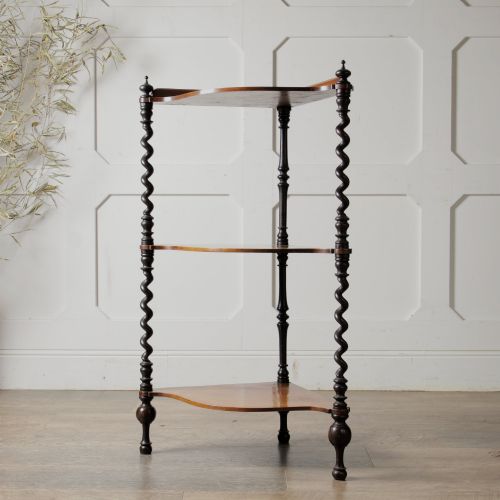
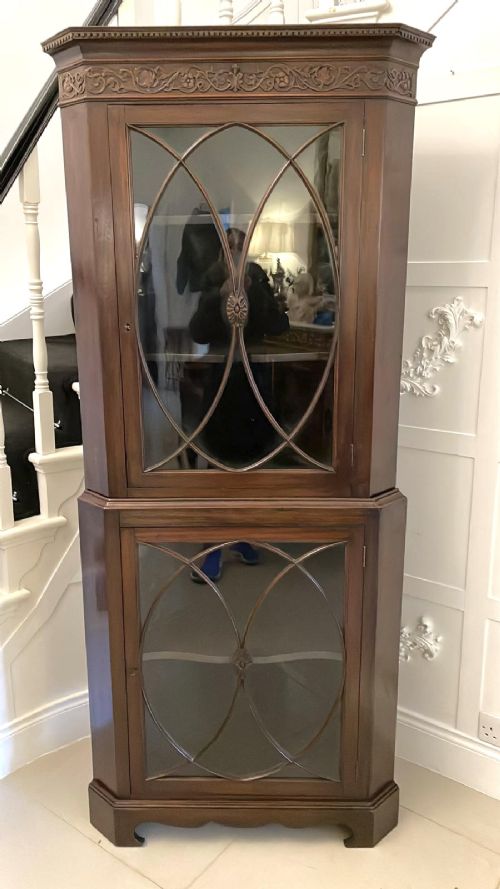
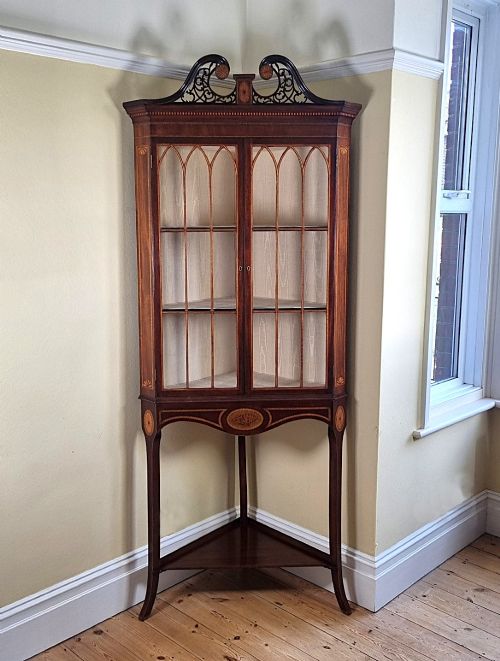
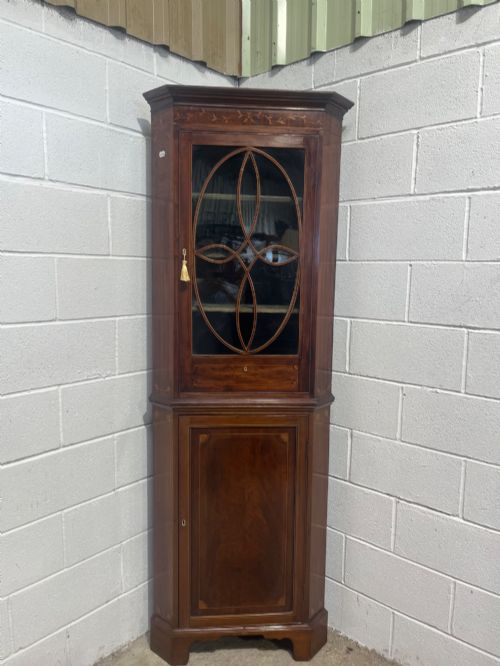
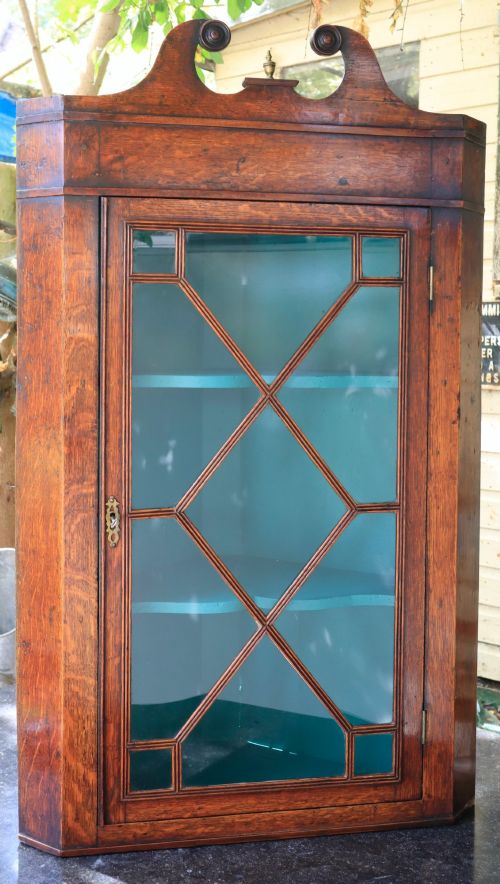
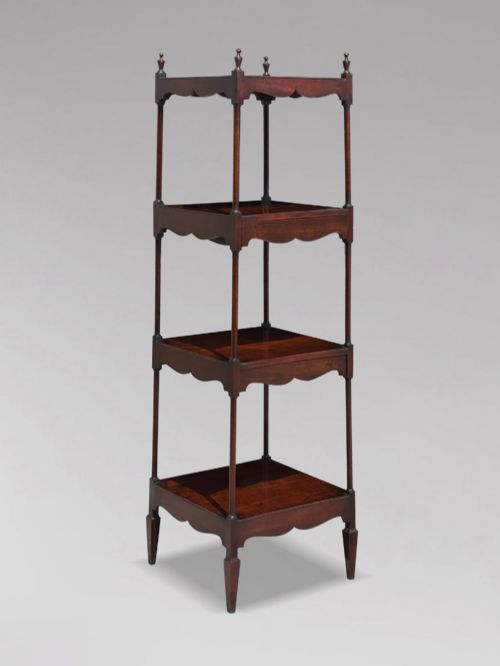
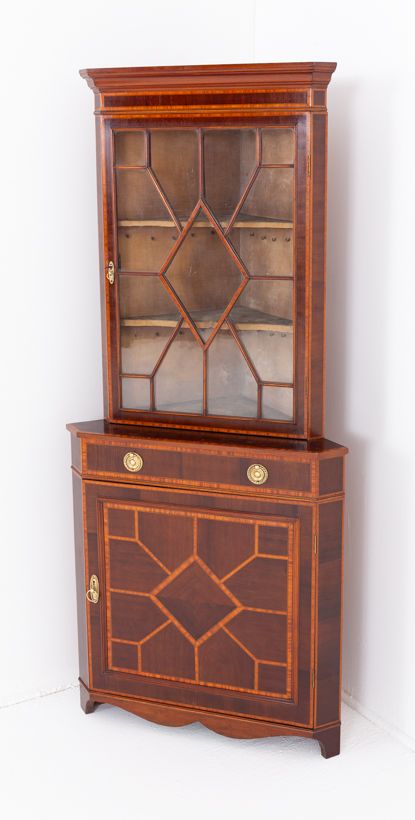
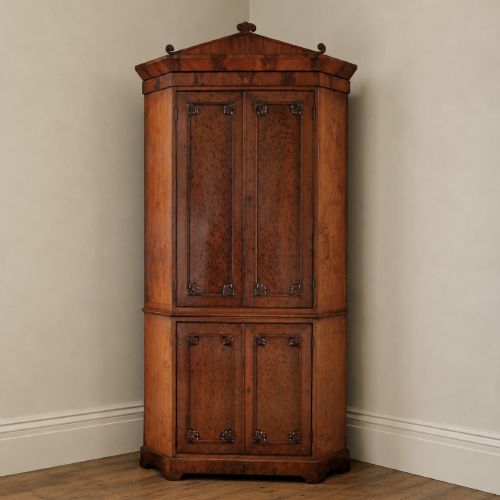
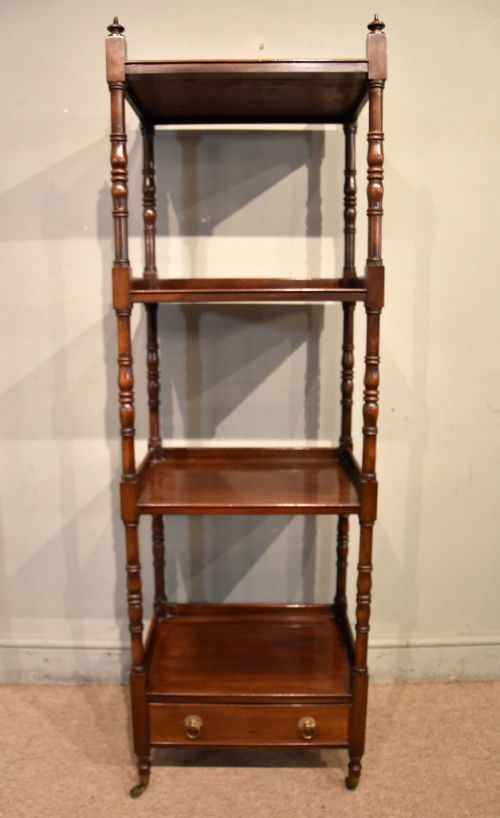
A mahogany corner display uses the dead space of a room efficiently, taking the form of wall-mounted cupboards, floor-standing cabinets, and multi-tiered whatnots.
The pieces appearing most frequently range from Georgian and Victorian glazed cupboards to Edwardian inlaid display cabinets built to exhibit porcelain and glassware.
Makers utilised dense timbers such as Cuban mahogany alongside lighter decorative veneers like satinwood and boxwood to create functional architecture for the corner of a room.
How they were made
Cabinet makers built the carcase of each mahogany corner display using solid timbers for structural integrity, often applying contrasting veneers of satinwood and boxwood for decorative banding.
Glazing bars divided the glass doors into geometric patterns such as astragal designs, while brass hardware secured doors and housed original locking mechanisms.
Materials recorded across the inventory include mahogany, glass, brass, satinwood, walnut, fabric, boxwood, and satinwood inlay.
What varies in quality
The refinement of the timber figure dictates much of the visual weight, with straight-grained panels contrasting against richly patterned plum pudding mahogany or Dutch marquetry.
Carved architectural details, delicate stringing, and well-proportioned astragal glazing bars separate standard utility cupboards from pieces commissioned to showcase fine craftsmanship.
Gillows·Edwards & Roberts
The Mahogany Corner Display Glossary
- Astragal
- Glazing bars that divide a glass door into smaller panes, commonly formed in slender wooden mouldings.
- Whatnot
- An open shelved piece of furniture designed for displaying ornaments, featuring multiple tiers supported by slender uprights.
- Marquetry
- Decorative veneer work arranged in pictorial or geometric patterns using various coloured woods.
- Bow front
- A convex curved cabinet front that projects outward from the corner angles.
- Inlay
- Contrasting wood such as satinwood or boxwood set flush into the mahogany surface to form decorative borders.
Mahogany Corner Display: Frequently Asked Questions
How do I choose between a wall-mounted and a floor-standing cabinet?
Wall-mounted cupboards lift off the floor to save ground space while housing smaller collections of porcelain behind glass doors.
Floor-standing versions offer greater height and presence, often incorporating lower storage cupboards beneath the primary display area.
What is the difference between a corner cupboard and a whatnot?
A corner cupboard encloses your collection behind doors to protect items from dust while using glass panes to maintain visibility.
A whatnot provides open shelving across multiple tiers, designed purely for accessible display rather than secure storage.
How can I tell a Georgian piece from an Edwardian revival?
Georgian pieces rely on architectural proportions, solid mahogany construction, and understated mouldings typical of eighteenth-century cabinet making.
Edwardian revival items often feature lighter satinwood stringing, Sheraton revival motifs, and brighter finishes associated with early twentieth-century production.
Where should I place a corner display in my room?
These cabinets fit precisely into ninety-degree wall angles, turning neglected junctions into architectural focal points without obstructing walkways.
Position them where natural light from windows can strike the glass panels and illuminate the interior shelves.