
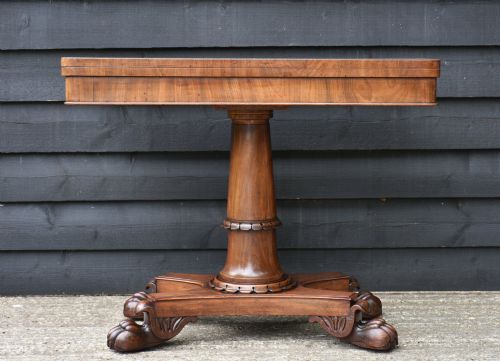
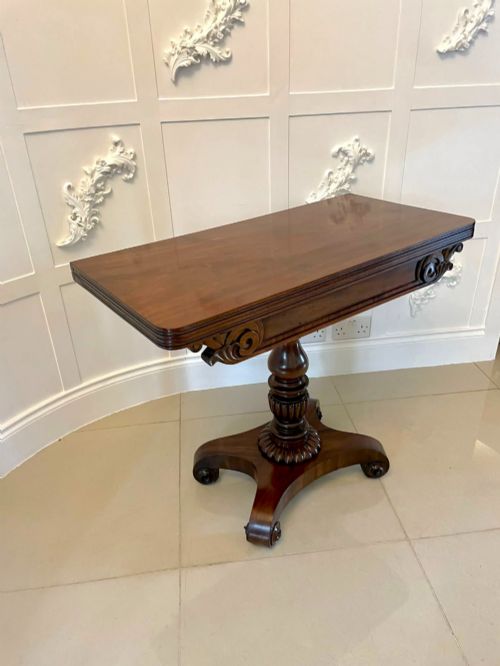
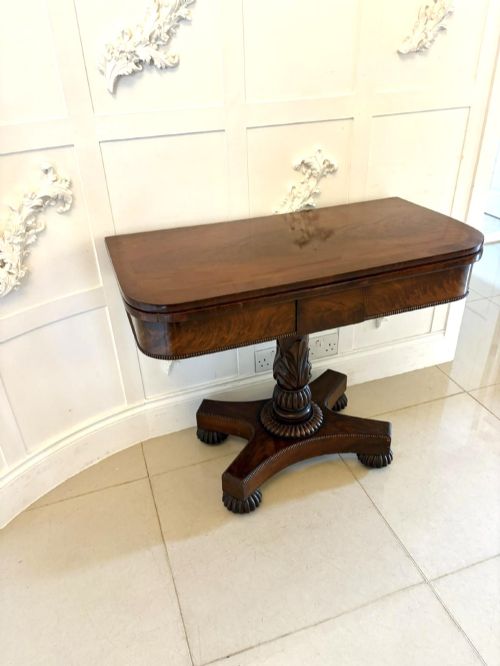
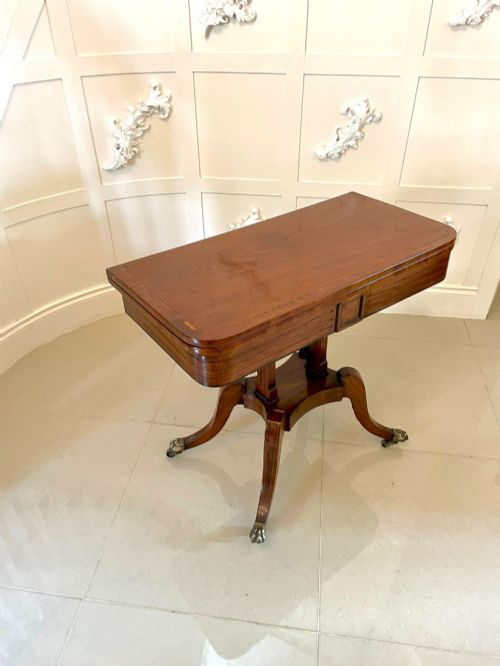

Mahogany Console Games Table
When you select a mahogany console games table, you acquire a versatile folding surface designed for entertainment and display.
Mahogany Console Games Table
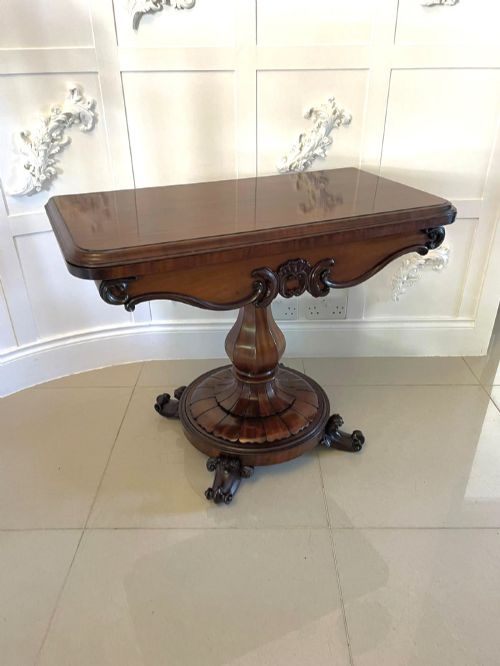
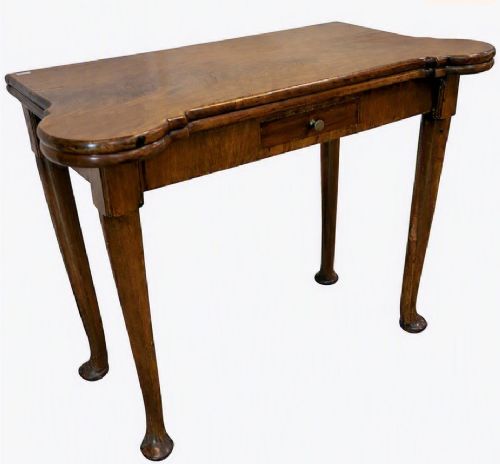
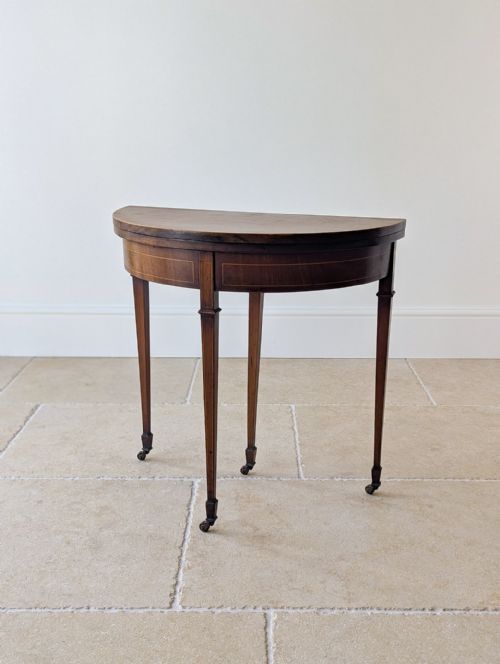
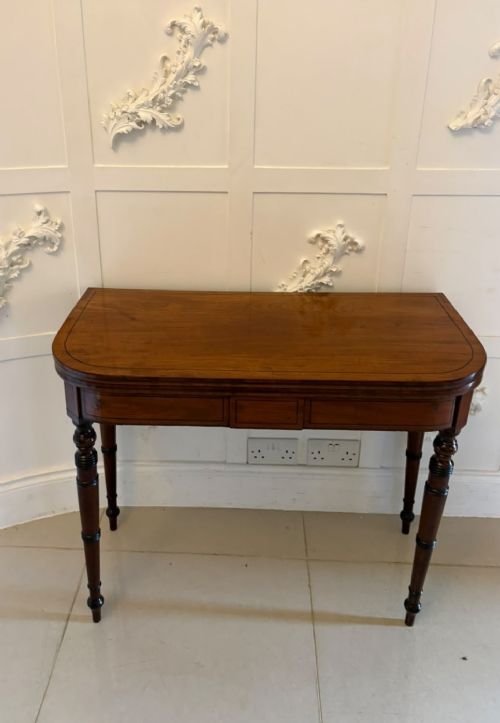
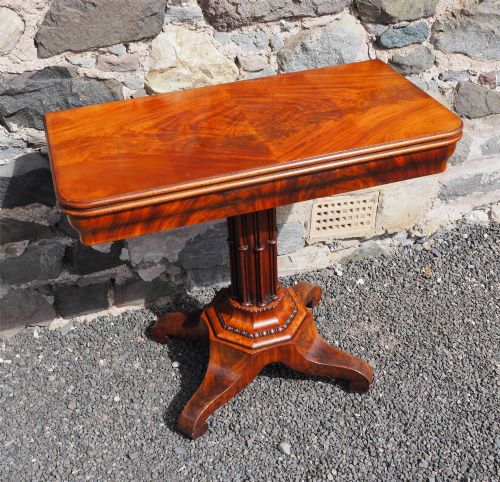
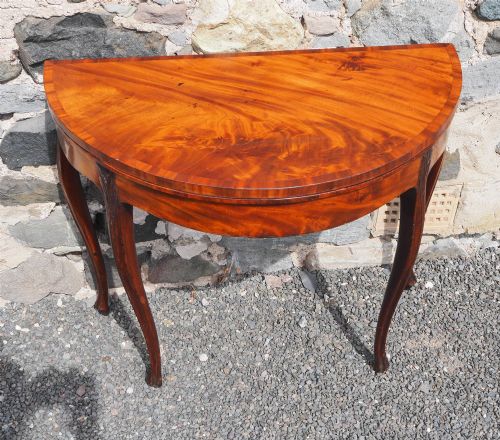
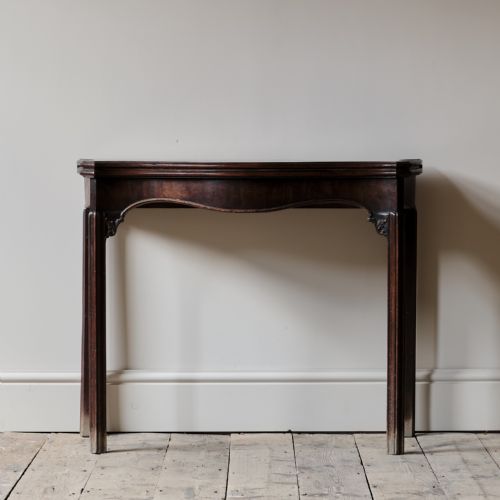
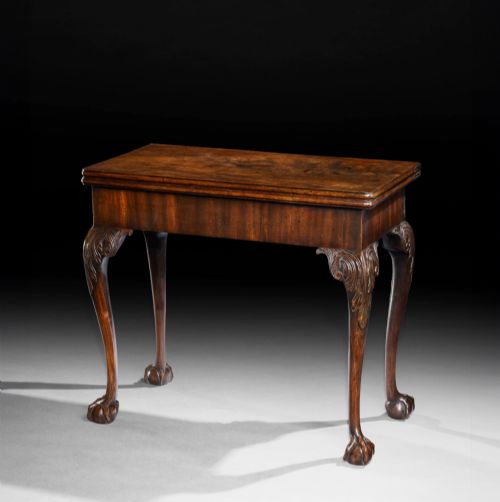
A mahogany console games table serves as a dual-purpose item, functioning as a slim side console when closed and opening to reveal a baize-lined playing surface. These pieces span the eighteenth and nineteenth centuries, including Georgian, Regency, William IV, and Victorian periods.
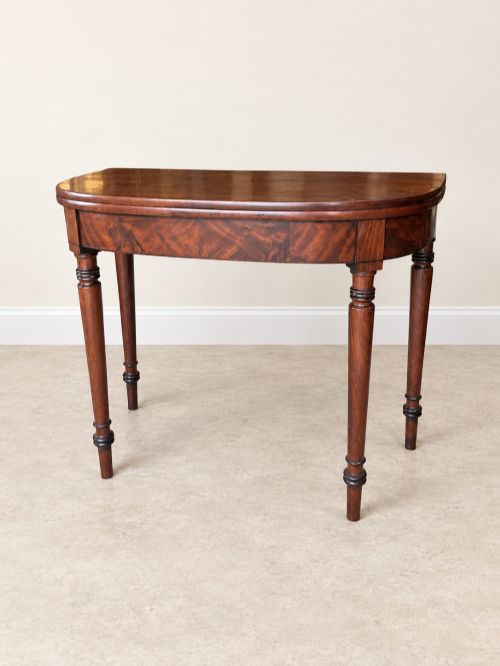
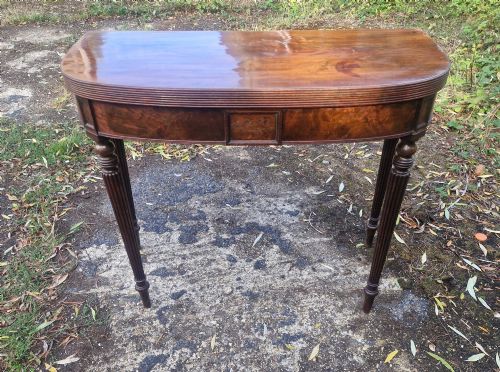
The common configurations appearing in the collection include fold-over card tables, D-shape and demi-lune designs, and serpentine tea tables. Makers from these eras constructed them to stand against a parlour wall until needed for cards or social gatherings.
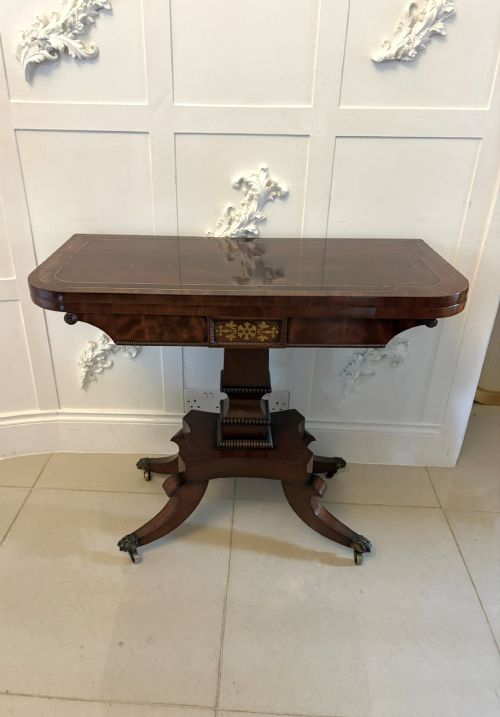
Originating largely from British workshops, pieces range from simple late Georgian examples to elaborate Regency models featuring brass inlay and crossbanding. Buyers encounter standard rectangular forms alongside curving serpentine and concertina-action frames.
How They Were Made
Cabinet makers utilised solid timbers and veneers over secondary woods, selecting figured mahogany and flame mahogany for prominent surfaces to create depth and movement. Workshops applied contrasting details including satinwood inlay, boxwood lines, and brass stringing along the edges and aprons.
Structural integrity relied on clever joinery, particularly in concertina-action frames and folding top mechanisms that required sturdy leg placement to support the extended leaf. Turned, reeded, and sabre legs provided stable support, occasionally finished with pad feet or brass castors.
Listings feature examples spanning the eighteenth, nineteenth, and early twentieth centuries, incorporating Georgian, Regency, Victorian, and Edwardian aesthetic periods.
What Varies in Quality
Differentiation in these pieces rests on the choice of timber and the precision of the cabinet work, visible in the selection of heavily figured flame mahogany veneers rather than plain stock. Superior examples demonstrate careful book-matching across the folding top and refined execution of inlaid satinwood or brass details.
The mechanical sophistication of the frame separates standard tables from finer productions, seen in smooth concertina actions that expand the rear legs to support the open leaf safely. Original surface patination and crisp carving on the legs further distinguish higher-tier items.
Bruce & Burns of Edinburgh·Giles Grendey·Gillows
The Mahogany Console Games Table Glossary
- Concertina action
- A table frame construction where the rear rail and legs pull outward on a hinged extension to support the open top. This sophisticated mechanism prevents the need for a single swing leg.
- Demi-lune
- A half-moon shape used for table tops and frames designed to sit flat against a wall. These profiles became particularly popular during the Georgian and Regency periods.
- Flame mahogany
- A veneer cut from the branch forks of the tree, producing a distinctive rippled pattern resembling flickering fire. Cabinet makers prized this timber for central top panels.
- Reeded
- A decorative moulding carved with parallel convex ridges, frequently seen on Regency and late Georgian table legs. It provides a classical textural contrast to smooth veneered surfaces.
- Serpentine
- A curved edge featuring a convex centre flanked by concave curves, creating a gentle undulating outline. This shape required skilled joinery to match the grain across the front.
Mahogany Console Games Table: Frequently Asked Questions
What is a concertina action?
A concertina action allows the rear frame and legs of the table to expand outwards when the top unfolds, providing balanced support for the extended surface without relying on a single swinging leg.
This method was favoured by skilled cabinet makers on higher-end pieces during the eighteenth and nineteenth centuries to ensure stability during card games.
How do I date a mahogany games table?
Dating relies on observing structural characteristics, timber choices, and leg styles, such as heavy cabriole legs on mid-eighteenth-century items versus reeded sabre legs on Regency examples.
Secondary woods and hinge types also provide clues, as does the presence of specific decorative techniques like satinwood inlay or brass stringing.
Were these tables used only for cards?
While primarily designed for card games, these versatile items functioned as console tables, side tables, and tea tables when closed against a wall.
The folding top allowed households to adapt their parlour furniture quickly depending on whether they required a display surface or an active gaming area.
What is flame mahogany?
Flame mahogany is a highly figured veneer harvested from the branch junctions of the tree, creating a dramatic, rippled visual effect that resembles flickering fire.
Craftsmen placed these distinctive veneers prominently on the fold-over tops of Georgian and Regency tables to catch the light.