

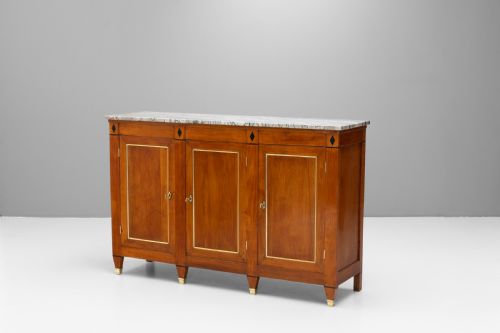
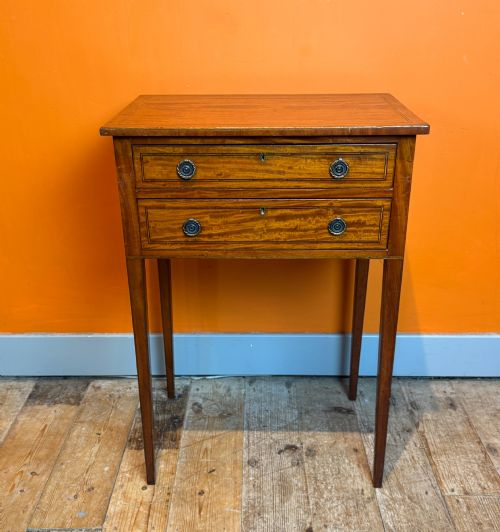
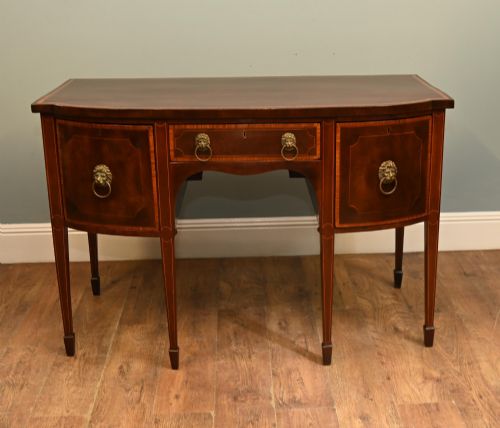

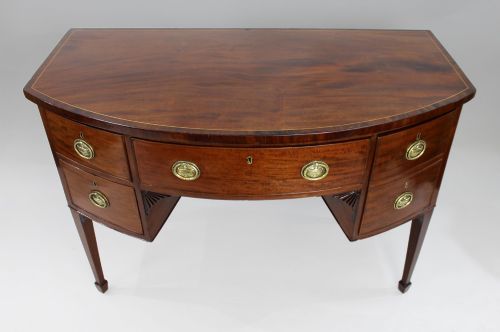
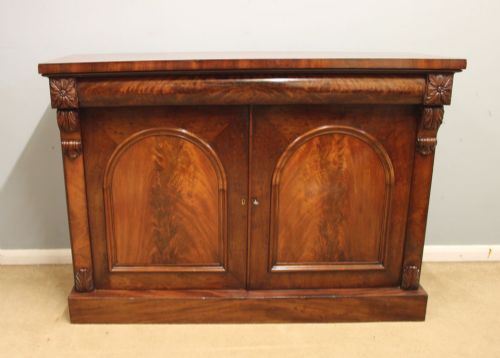
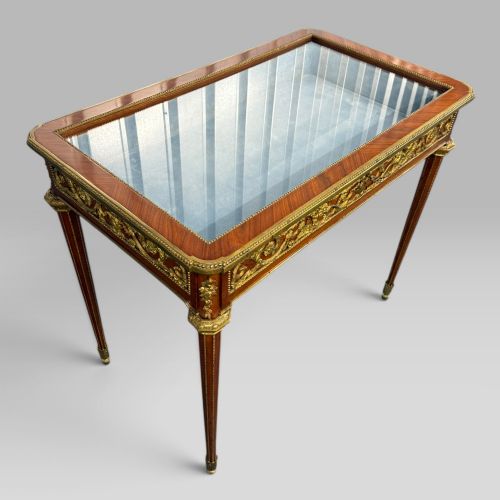
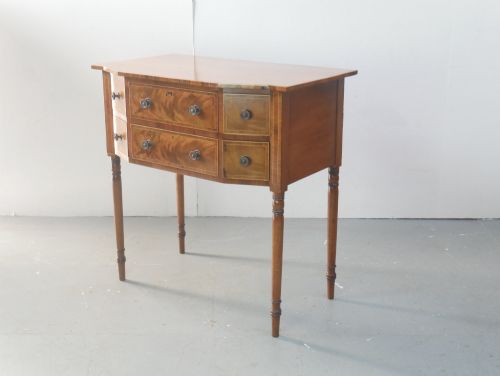
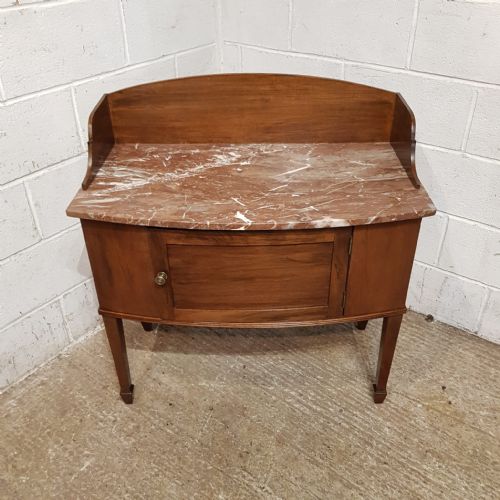
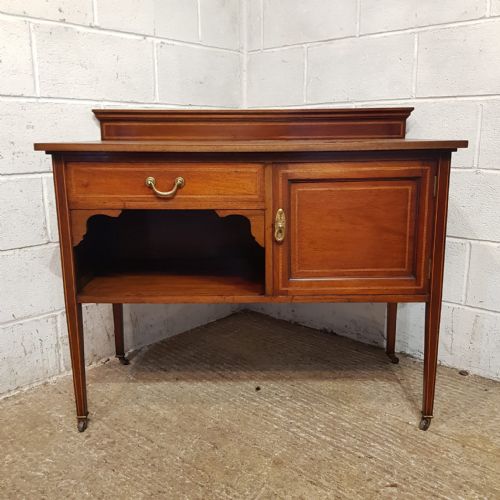
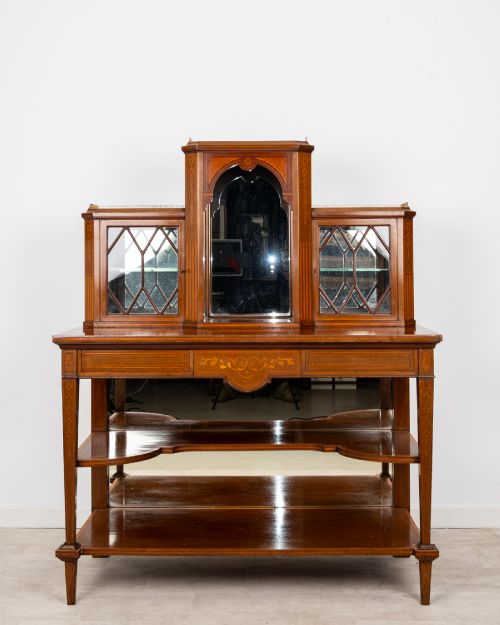
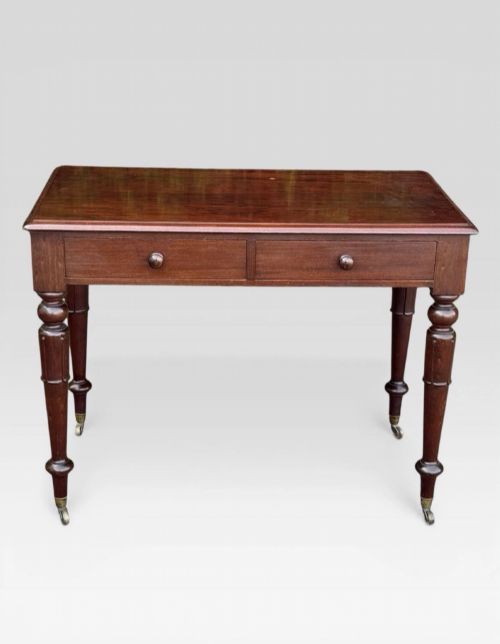
Mahogany Console Cabinet
A mahogany console cabinet anchors a room with timber grain and surface utility, combining the reach of a table with enclosed storage.
Mahogany Console Cabinet
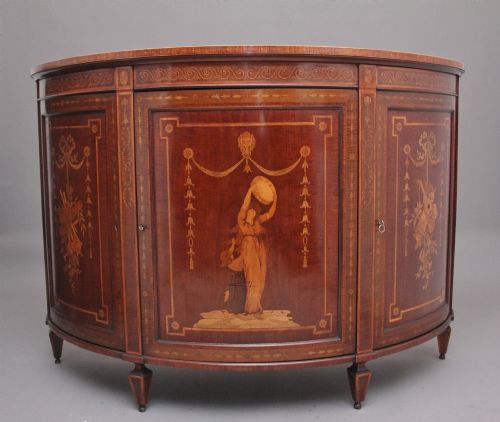
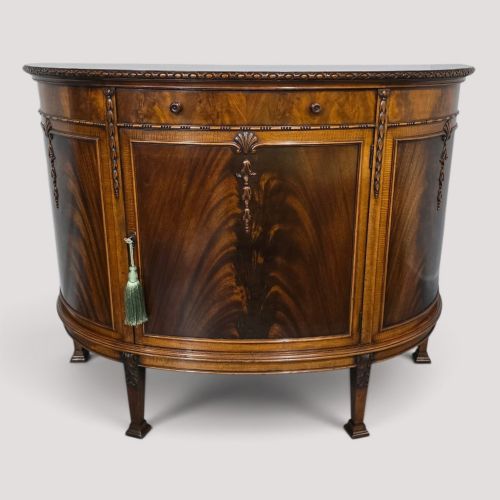
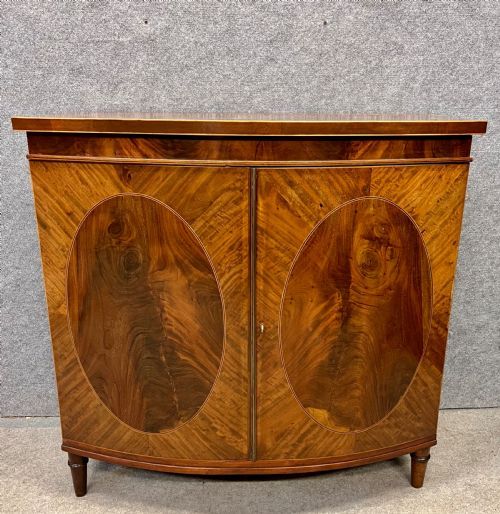
A mahogany console cabinet brings together the structural traits of wall tables, sideboards, and compact cupboards across several centuries. You encounter these pieces most frequently in Edwardian and Victorian guises, often adopting demi-lune shapes or flat-fronted side configurations.
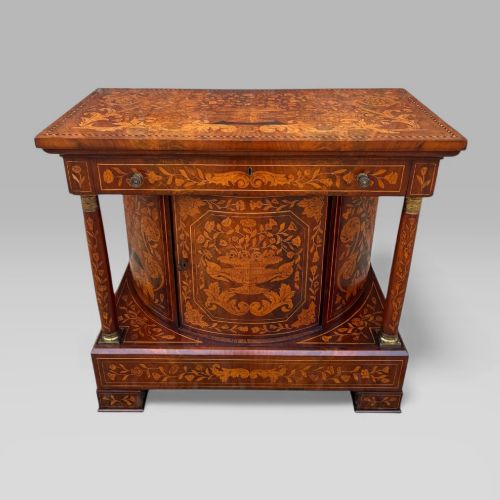
The lineage stretches from Georgian proportions through to Sheraton Revival interpretations and French Empire influences. Makers adapted the console format to serve as washstands, display tables, and small sideboards depending on the domestic requirements of the period.
Distinction in Craft
The calibre of a mahogany console cabinet rests upon the selection of timber veneers and the precision of inlaid stringing. Subtle contrasts in grain pattern and the crispness of carved elements distinguish refined workshops from standard production.
Structural integrity relies on the tightness of joints in curved doors and semi-circular frames. Original hardware, balanced proportions, and well-fitted marble or wooden tops elevate the standing of a piece within its period.
Mahogany Console Cabinet Retail Price Guide 2026
Typical asking prices for mahogany console cabinet among the pieces listed under this phrase on Sellingantiques today, from the lower quarter to the upper quarter. They describe what is for sale here now, not the wider market.
Some tambour front cupboards include secret compartments designed to hide correspondence from wandering eyes.
J A Mein·François Linke
The Mahogany Console Cabinet Glossary
- Demi-lune
- A half-moon shape characteristic of console tables and commodes designed to sit flush against a wall.
- Marquetry
- Decorative patterns formed by the insertion of different coloured woods and veneers into a solid ground.
- Ormolu
- Gilt-bronze mounts applied as decorative ornaments to cabinet frames and furniture corners.
- Chiffonier
- A small sideboard or cabinet featuring shelves or drawers, popular during the Victorian era.
- Satinwood
- A luminous hardwood utilised for contrasting inlay work and decorative banding.
Mahogany Console Cabinet: Frequently Asked Questions
What is a mahogany console cabinet?
These items are versatile case pieces designed to stand against a wall, functioning as side tables, small cupboards, or display surfaces. They combine timber framing with enclosed storage or open display space.
Craftsmen built them in various shapes, including flat fronts, bow fronts, and half-round demi-lune formats, making them adaptable to narrower hallways and principal rooms alike.
Where were these cabinets used?
Historically, households placed them in reception rooms, dining areas, and hallways to serve practical functions such as serving food, holding wash basins, or displaying ornaments.
In modern interiors, they continue to serve similar roles in entrance halls and living spaces, offering surface area without occupying excessive floor space.
How do I identify the period?
Dating relies on observing structural characteristics, timber selection, and decorative motifs associated with specific eras like the Georgian, Victorian, or Edwardian periods. Revival styles often incorporate earlier design vocabulary executed with later manufacturing techniques.
Examining the secondary woods, internal construction methods, and hardware styles provides further clues to the decade of manufacture.
How do I care for mahogany?
Maintenance involves keeping the timber away from direct heat sources and strong sunlight to prevent the mahogany surface and veneers from drying out. Regular dusting with a soft, dry cloth preserves the finish.
Applying appropriate wax polishes sparingly helps maintain the natural sheen of the timber without building up heavy residues over time.