





Demilune Side Cupboards
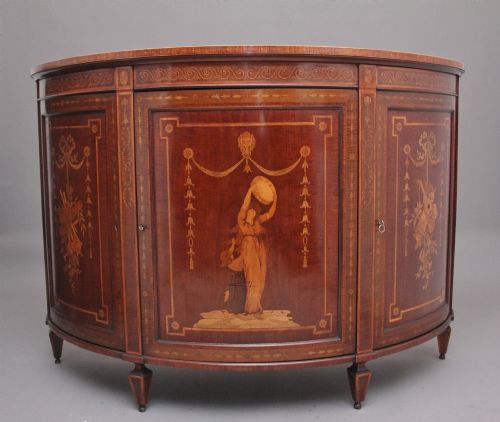
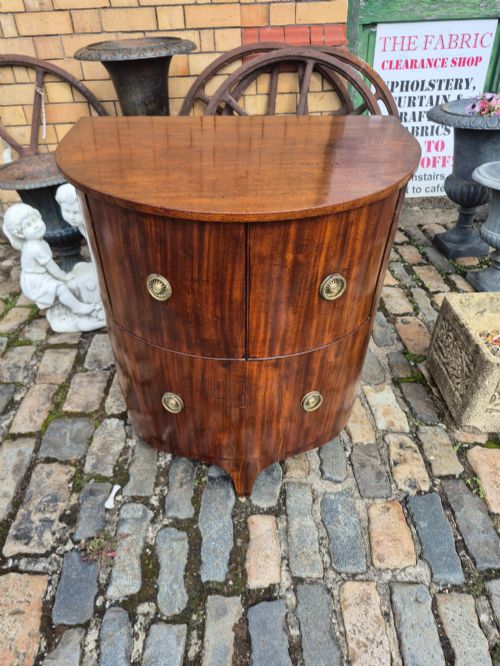
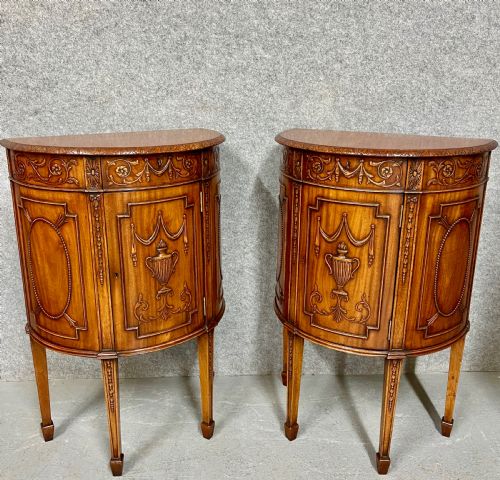
Demilune side cupboards bring a semicircular profile to domestic spaces, offering shallow storage and distinctive decorative facades.
Demilune Side Cupboards
Demilune side cupboards take the form of semicircular cabinets, commodes, and console pieces designed to stand flush against a wall. When you search for demilune side cupboards, you encounter pieces spanning the eighteenth century through to the art deco period, reflecting varied stylistic revivals.
The materials recorded in the evidence range from mahogany and satinwood to marble tops and painted finishes. Most examples lean towards classical European revival styles, including Louis XV, Sheraton, and Adam designs.
Construction and Materials
The construction of these pieces relies on curved timber frames, often utilising mahogany, satinwood, burr elm, and kingwood veneers. Marquetry inlay, vernis martin painting, and applied ormolu or brass details frequently enrich the curved wooden surfaces.
Many cabinets incorporate inset marble slabs to their upper surfaces, combining stone with timber cabinetwork. Joinery techniques accommodated the curved demilune shape, demanding precise bending and shaping of wood veneers.
Demilune Side Cupboards Retail Price Guide 2026
Typical asking prices for demilune side cupboards among the pieces listed under this phrase on Sellingantiques today, from the lower quarter to the upper quarter. They describe what is for sale here now, not the wider market.
Some music cabinets secretly housed sheet scores alongside their decorative painted doors.
Evaluating Quality
Quality separates simple production from finer cabinetmaking through the crispness of marquetry work and the weight of materials used. The integration of bronze or ormolu mounts and the selection of figured timbers like burr yew or satinwood elevate individual pieces.
Structural integrity in curved furniture depends on stable timber movement and well-fitted doors or drawers. Superior examples display refined hand-painted decoration or precise parquetry patterns across the semicircular facade.
Maurice Adams·Kaufman
The Demilune Side Cupboards Glossary
- Demilune
- Having the shape of a half-moon or semicircle. This profile allows the cabinet to project less into a room than a full circle or square.
- Marquetry
- Decorative patterns formed by the insertion of pieces of wood, shell, or ivory into a veneer. It creates detailed pictorial or geometric designs on the cabinet front.
- Ormolu
- Gilded bronze mounts applied to furniture for decoration. It frames panels and accents corners on continental and revival pieces.
- Commode
- A low chest of drawers or cabinet with doors. The term often describes French or formal English pieces of the eighteenth and nineteenth centuries.
Demilune Side Cupboards: Frequently Asked Questions
Where should I place a demilune cupboard?
These semicircular pieces suit narrow hallways, entrance spaces, and reception rooms where a deep cabinet might obstruct movement. Their flat back allows them to sit flush against the wall while the curved front softens room angles.
They also function effectively beneath mirrors or large artwork in dining rooms and living areas, providing surface display space alongside enclosed storage.
How do I identify a Georgian demilune piece?
Georgian examples often feature finely figured mahogany, satinwood, or burr woods paired with delicate stringing and classical neoclassical motifs. Look for proportions and construction methods typical of the eighteenth century and revival periods like Sheraton and Adam.
Makers of these periods focused on balanced proportions and understated inlay rather than heavy gilt mounts or painted pictorial scenes.
What is the difference between a commode and a side cabinet?
A commode typically designates a low piece with drawers or cupboard doors, frequently associated with French design and marble tops. Side cabinets encompass a broader category of storage furniture built for domestic rooms.
Both terms frequently overlap in antique descriptions depending on whether the piece opens with doors or pulls out via drawer fronts.
How do I care for antique veneered furniture?
Keep wooden cabinets away from direct sunlight and steady heat sources to prevent veneer lifting or timber cracking. Dust regularly with a dry cloth and apply appropriate wax sparingly to maintain the polish.
Marble tops benefit from prompt wiping of spills to protect the stone from staining, using mild soapy water for cleaning rather than harsh chemicals.