



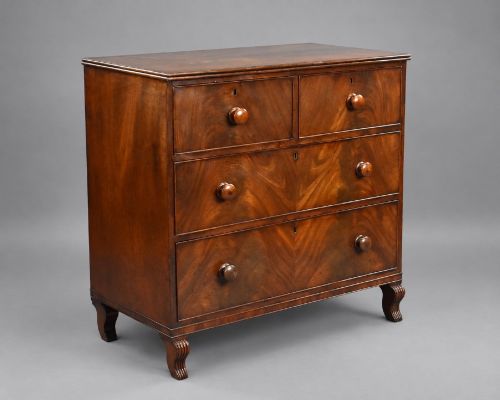
Mahogany Commode Drawers
When you search for mahogany commode drawers, you are looking at substantial case furniture that combines practical storage with decorative presence across several centuries of design.
Mahogany Commode Drawers
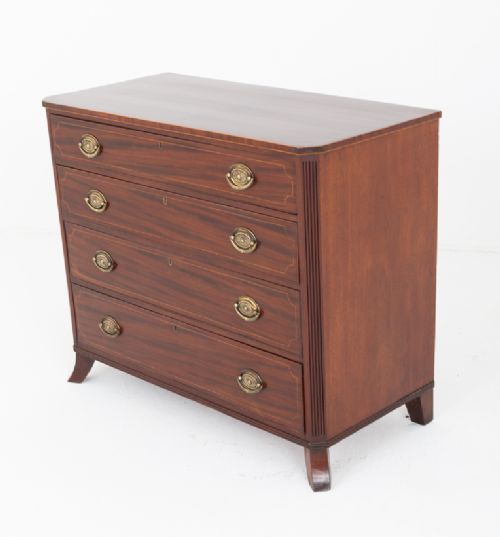
The phrase mahogany commode drawers covers both English chests of drawers and continental commodes that share a timber frame and multiple drawer tiers. You will most frequently encounter Georgian and Regency pieces alongside Victorian examples and continental designs.
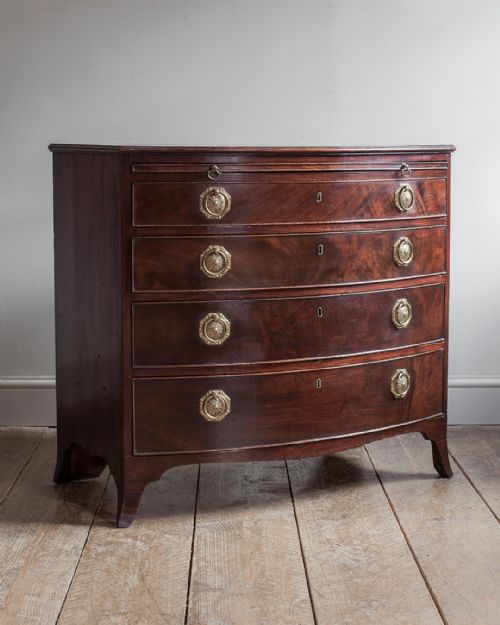
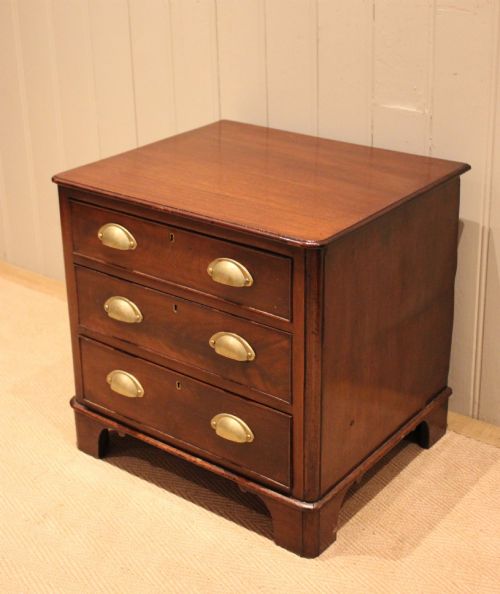
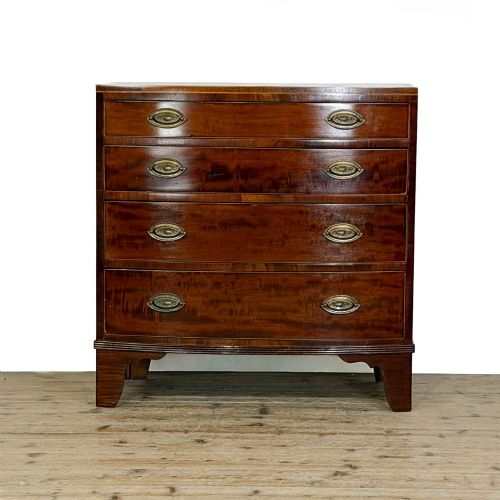
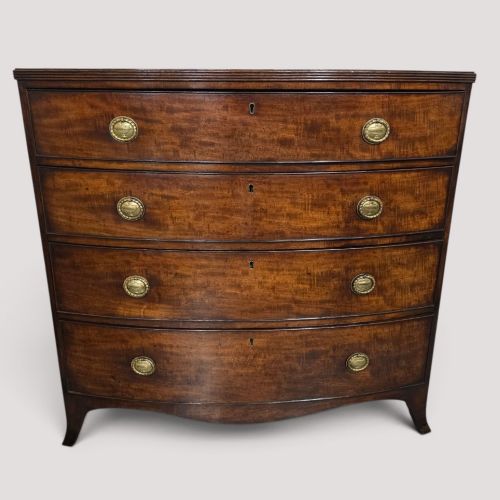
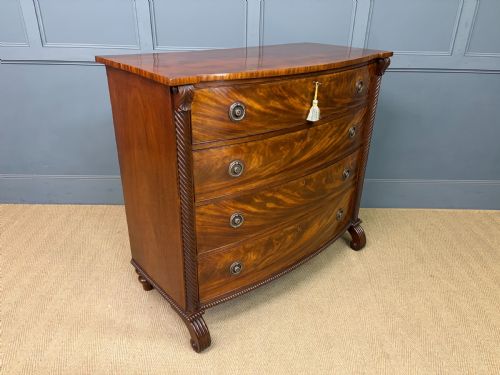
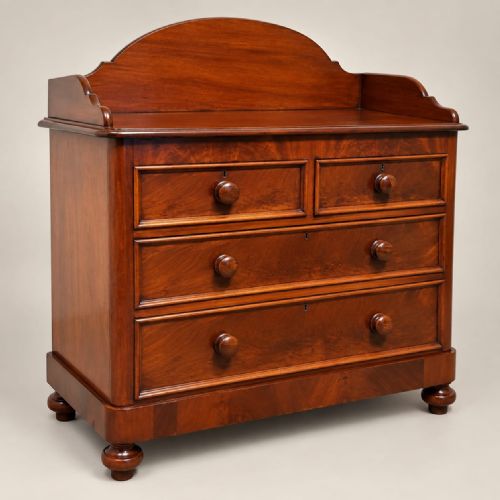
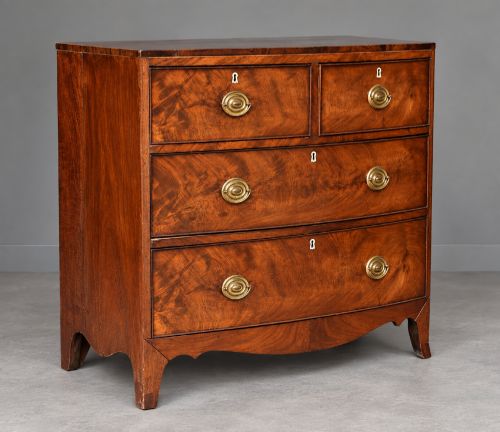
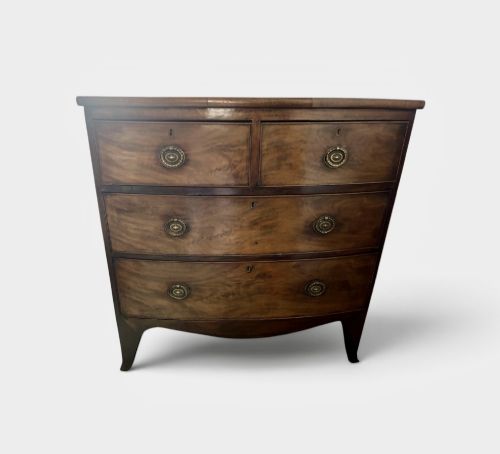
Forms range from straight-fronted chests to bow-front, serpentine, and demi-lune shapes, occasionally incorporating brushing slides or marble tops on continental pieces. Miniature versions and disguised forms also appear within the selection.
Origins span English workshops of the 18th and 19th centuries as well as French and Biedermeier production, showing how cabinetmakers adapted the chest of drawers format for domestic utility.
How they were made
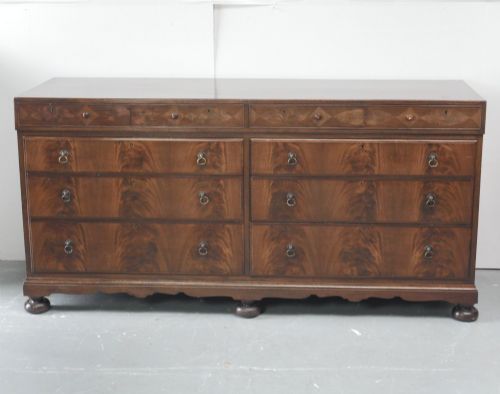
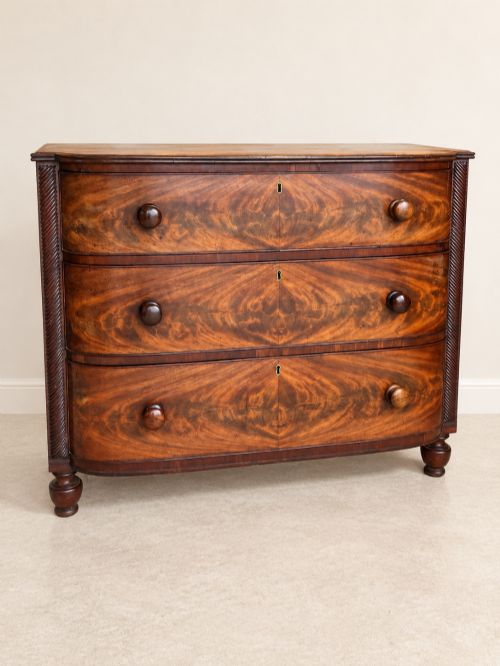
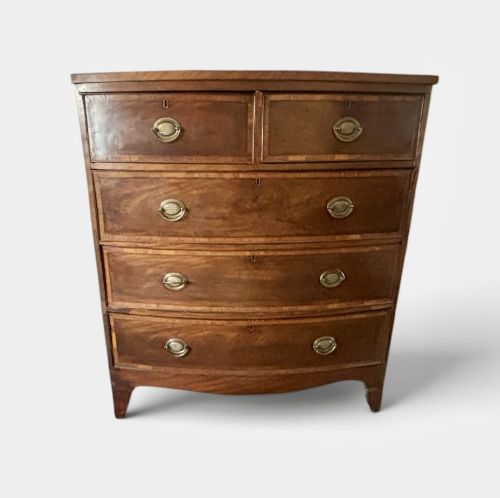
Makers utilised solid mahogany and applied flame mahogany veneers over secondary timbers such as oak, creating patterned grain effects across the drawer fronts. Cabinetmakers enhanced these surfaces with satinwood banding, crossbanding, and inlay work.
Hardware typically included cast brass handles and escutcheons secured through the drawer faces, while heavier continental commodes frequently integrated marble slabs onto their upper surfaces.
Listings span the 18th, 19th, and 20th centuries, uniting English Georgian and Regency chests with continental marble-topped commodes.
What varies in quality
Construction standards depend on the selection of timber veneers and the precision of the drawer linings, where oak carcases and hand-cut dovetails indicate higher workshop skill. The symmetry of flame mahogany matching across multiple drawer tiers also defines better examples.
Whytock & Reid
The Mahogany Commode Drawers Glossary
- Commode
- A low chest of drawers or cabinet, often of continental origin and frequently topped with marble. The term overlaps closely with traditional English chests of drawers.
- Bow front
- A cabinet front that curves outward in a convex arc. This shape gained popularity during the Georgian and Regency periods.
- Serpentine
- A front outline that curves outward in the centre and inward at the ends. It requires considerable woodworking skill to execute properly.
- Brushing slide
- A pull-out shelf integrated above the top drawers. It provided a clean surface for folding clothes or writing.
- Crossbanding
- A border of veneer laid perpendicular to the grain of the surrounding surface. It frames drawer fronts and tabletops on finer pieces.
Mahogany Commode Drawers: Frequently Asked Questions
What is a commode chest of drawers?
A commode chest of drawers is a low storage unit with multiple horizontal tiers designed to hold clothing and domestic items. The designation bridges English cabinet pieces and continental forms.
Continental versions frequently feature marble tops, while English examples rely entirely on timber construction and decorative veneer work.
How do I tell Georgian from Victorian pieces?
Georgian pieces generally display lighter proportions, restrained bracket feet or slender legs, and fine mahogany veneers with subtle stringing. They date from the 18th and early 19th centuries.
Victorian chests tend to be heavier and more robust, often featuring bolder mahogany grain, plinth bases, and larger turned drawer pulls reflecting mid to late 19th-century taste.
Where were these pieces used?
These pieces served primarily as bedroom storage for garments, linens, and personal effects. Their decorative fronts also suited them for placement in hallways and drawing rooms.
Some variations included sliding shelves for sorting laundry or specialised compartments for household administration.
What does flame mahogany mean?
Flame mahogany refers to a distinctive veneer figure harvested from the fork of the mahogany tree where branches join the trunk. This creates a flickering, flame-like pattern.
Cabinetmakers matched these symmetrical veneers across drawer fronts to create striking decorative effects on high-status furniture.